




Organic Farming and Irrigation
Organic farming uses natural processes to grow crops without synthetic chemicals.
Irrigation supplies consistent water that supports plant growth.
Farmers can integrate both approaches to support sustainable agriculture.
This combination can optimize crop yield while preserving the environment.
Understanding Organic Farming Practices
Organic farming relies on natural methods rather than synthetic chemicals.
It combines crop rotation, composting, and biological pest control.
Together, these practices support sustainable crop production.
Core Principles of Organic Farming
Crop rotation helps farmers manage soil fertility and reduce recurring pest problems.
Composting adds organic material that supports healthy soil.
Additionally, biological pest control uses beneficial organisms to limit harmful pests.
Environmental and Health Benefits
Organic farming promotes biodiversity across agricultural environments.
It also reduces soil erosion and minimizes pesticide exposure.
Consequently, these practices can benefit both environmental conditions and human health.
Challenges Without Synthetic Chemicals
Managing pests and diseases remains a significant challenge for organic farmers.
Farmers must use alternative methods, such as beneficial insects and crop rotation, to manage these problems.
Moreover, organic farming often demands more labor and time than conventional practices.
That demand can create an obstacle for some farmers.
Despite these challenges, organic farming remains valuable for environmental sustainability and human health.
Irrigation for Crop Production
Irrigation applies water artificially to soil or farmland, helping crops grow during dry periods.
It also supplements natural rainfall when precipitation does not meet crop needs.
Therefore, farmers can manage water availability while pursuing reliable crop production.
Methods for Distributing Irrigation Water
Farmers choose irrigation methods according to how they want water distributed across fields.
Each method offers distinct benefits and limitations for water delivery.
Consequently, selecting a suitable method can improve water use during crop production.
- Drip irrigation delivers water directly to plant roots, reducing waste and improving water efficiency.
- Sprinkler irrigation distributes water across crops, simulating rainfall and supporting uniform coverage.
- Flood irrigation covers fields with water, allowing soil absorption and root access.
Water Management and Crop Yield
Proper irrigation gives plants suitable amounts of water at appropriate times.
Additionally, timely watering supports plant growth, development, and crop yields.
Careful management can optimize harvests while minimizing unnecessary water waste.
You Might Also Like: Agricultural Technician Salary Insights
Challenges of Integrating Organic Farming with Irrigation
Organic farming prohibits synthetic chemicals, which can conflict with irrigation systems using chemical fertilizers and pesticides.
Additionally, irrigation chemicals can leach into water sources and create risks for human health and the environment.
Therefore, organic farms need sustainable irrigation practices that protect water resources and support long-term agricultural viability.
- Chemical fertilizers and pesticides used with conventional irrigation can conflict with organic farming principles.
- Runoff and leaching from irrigation can contaminate water sources and threaten environmental quality.
- Organic farms need eco-friendly irrigation methods that conserve water and reduce pollution.
Sustainable Irrigation Strategies for Organic Farms
Organic farmers can adopt irrigation techniques that align with organic principles.
These methods can conserve water, limit pollution, and support crop productivity.
Moreover, soil and water management can reduce dependence on frequent irrigation.
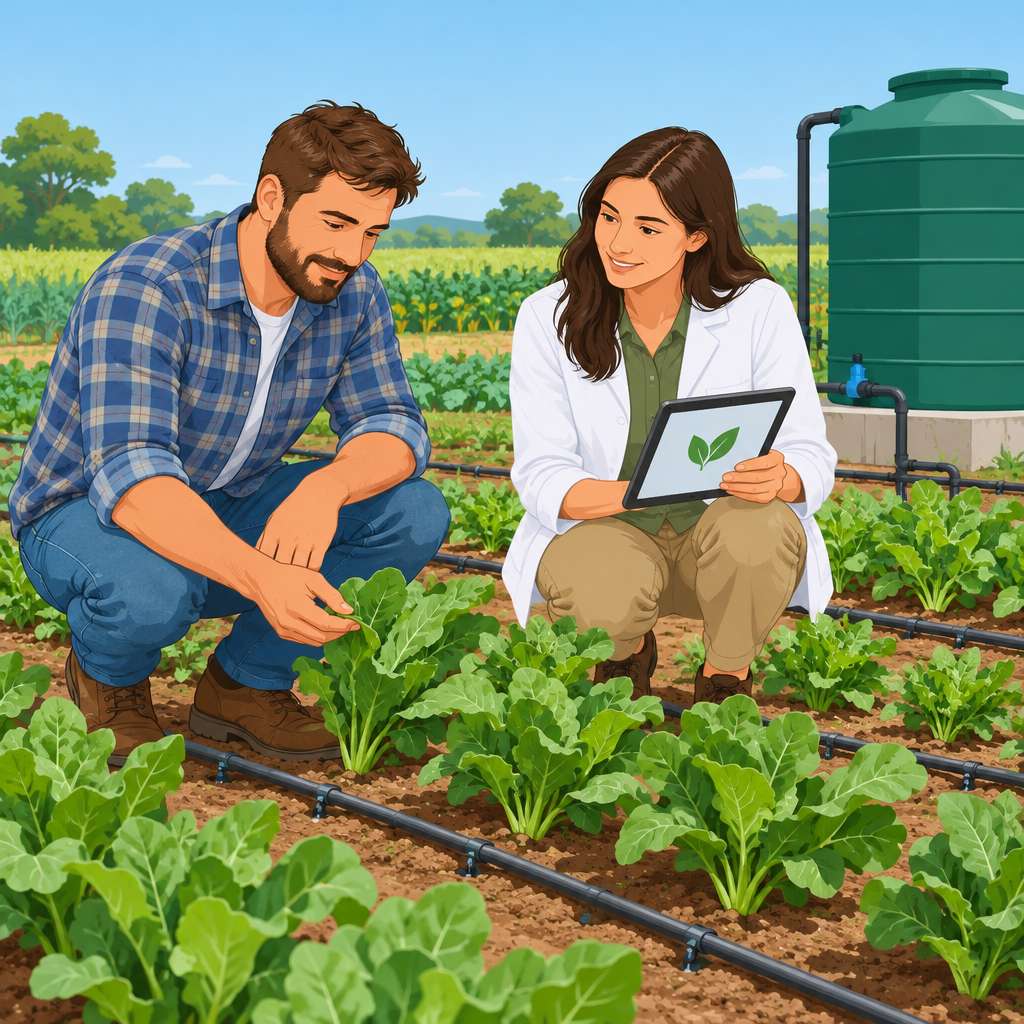
- Drip irrigation delivers water directly to plant roots, minimizes waste, and reduces the risk of chemical runoff.
- Rainwater harvesting stores rainfall for irrigation and reduces dependence on potentially contaminated groundwater and surface water.
- Organic mulch retains soil moisture, reduces evaporation, suppresses weeds, and lowers the need for frequent irrigation.
- Crop rotation improves soil health, increases water retention, and helps farmers use water more efficiently.
- Cover crops protect soil from erosion, improve structure, enhance infiltration, and reduce irrigation needs.
Explore Further: Professional Associations for Dairy Scientists
Sustainable Irrigation Practices for Organic Farming
- Introducing Sustainable Irrigation Methods
- Benefits of Rainwater Harvesting and Recycled Water
- Improving Water Efficiency through Soil Conservation Practices
Introducing Sustainable Irrigation Methods
Organic farming uses sustainable practices to protect soil, crops, and the broader environment.
Irrigation systems should conserve water while limiting environmental effects.
Sustainable methods improve efficiency, reduce waste, and preserve natural resources.
Benefits of Rainwater Harvesting and Recycled Water
Rainwater harvesting collects precipitation and stores it for later irrigation.
Transform Your Career Today
Unlock a personalized career strategy that drives real results. Get tailored advice and a roadmap designed just for you.
Start NowThis approach reduces reliance on freshwater sources.
It can also help prevent soil erosion and improve water quality.
Recycled water consists of treated wastewater reused for irrigation.
These alternatives reduce farms’ water footprints and encourage conservation.
Improving Water Efficiency through Soil Conservation Practices
Soil conservation practices improve water efficiency in organic farming.
Mulching, cover cropping, and contour plowing help retain soil moisture and reduce erosion.
These techniques also support healthy root development.
Furthermore, they improve water infiltration and reduce frequent irrigation needs.
Farmers can therefore create more sustainable farming systems.
Integrated Water Stewardship
Organic farming and sustainable irrigation together support responsible environmental management.
Rainwater harvesting, recycled water, and soil conservation can reduce environmental impacts.
These practices also conserve water resources and support agriculture’s long-term viability.
You Might Also Like: Building a Career as a Rangeland Manager: Tips
Importance of Proper Irrigation Planning and Design
Effective organic farming requires careful irrigation planning and system design.
Proper design distributes water efficiently and supports crop growth and yield.
Farmers should consider farm layout and crop types when selecting suitable irrigation systems.
- Evaluate soil type, topography, climate, and water availability during irrigation planning.
- Design the irrigation layout to match each crop’s water requirements.
- Proper planning reduces water waste, limits resource use, and improves farm productivity.
Technology Integration in Irrigation Systems
Technology has changed irrigation practices in organic farming.
Farmers can use sensors and automated controllers to improve water management.
These tools help farmers match irrigation with crop needs and support efficient production.
- Soil moisture sensors provide current data about moisture levels in the soil.
- Farmers can adjust irrigation schedules according to plant water requirements.
- Automated controllers manage water application precisely and reduce unnecessary waste.
- Technology can improve crop health, reduce labor, and conserve water resources.
Scheduling Irrigation for Efficient Water Use
Careful irrigation scheduling helps farmers use water efficiently.
Farmers can adjust water applications to meet crop needs without creating waste.
Regular monitoring and maintenance further support efficient water distribution.
- Monitor weather forecasts and adjust schedules when rainfall may occur.
- Use drip or furrow irrigation to deliver water near plant roots.
- These methods minimize water loss through evaporation.
- Divide the farm into zones according to crop water requirements.
- Inspect and maintain irrigation systems regularly to prevent leaks and clogs.
- Prompt maintenance prevents malfunctions that can waste water and affect crop growth.
Delve into the Subject: Work Environment of a Dairy Scientist
Importance of Water Conservation in Organic Farming Systems
Water conservation supports environmental sustainability.
It protects the health of crops.
Therefore, organic farms need efficient water management practices.
Strategies for Reducing Water Waste and Optimizing Water Use
Farmers can reduce water waste through targeted delivery.
They can store rainwater for irrigation.
They can also monitor soil moisture to prevent overwatering.
- Implement drip irrigation systems to deliver water directly to plant roots.
- Collect and store rainwater for irrigation purposes.
- Use water-efficient techniques, such as micro-sprinklers or soaker hoses.
- Monitor soil moisture levels regularly to avoid overwatering.
Role of Cover Cropping and Mulching in Retaining Soil Moisture
Cover crops protect soil from water evaporation and erosion.
Mulch reduces evaporation and suppresses weed growth.
Both practices improve soil structure, fertility, and water retention.
- Cover cropping helps protect the soil from water evaporation and erosion.
- Mulching conserves moisture by reducing evaporation and suppressing weed growth.
- Both practices improve soil structure and fertility, enhancing water retention capabilities.
Efficient water management promotes crop health and environmental sustainability.
Organic farms can integrate these practices to conserve water effectively.
Practical Integration of Organic Farming and Irrigation
Farmers can integrate organic methods with targeted irrigation to support sustainable crop production.
First, drip systems deliver water directly to plant roots.
This approach limits water waste and reduces soil erosion risks.
Additionally, farmers can collect rainwater to supplement irrigation needs.
Rainwater collection conserves water and reduces reliance on external sources.
Crop rotation and cover cropping improve soil fertility and water retention.
Transform Your Career Today
Unlock a personalized career strategy that drives real results. Get tailored advice and a roadmap designed just for you.
Start NowTogether, these practices can strengthen crop health.
Natural fertilizers and compost can further support soil health and water quality.
Efficient irrigation helps organic farms maintain soil health and crop productivity.
Long-Term Benefits of Integrated Farm Management
Therefore, sustainable irrigation practices can support long-term agricultural success.
Farmers should combine efficient watering with organic soil management.
This approach can improve crop yields while minimizing environmental impacts.
Integrated management remains important for agriculture’s future.
Additional Resources
Google search results for How to Integrate Organic Farming with Irrigation Agricultural
Bing search results for How to Integrate Organic Farming with Irrigation Agricultural


