




Agricultural Economics and Environmental Sustainability
Agricultural economics studies how people allocate resources within agricultural production.
It supports sustainable development by encouraging efficient resource use and higher agricultural output.
At the same time, it connects farm decisions with long-term ecosystem health.
Economic Analysis of Environmental Externalities
Environmental sustainability requires economists to balance farmers’ economic needs with ecosystem health.
They compare the costs and benefits of agricultural practices.
Consequently, they can promote techniques that protect environmental resources.
Externalities describe unintended production effects that influence the environment.
Pollution and soil degradation provide important examples.
Agricultural economists study these effects and develop strategies to reduce their harm.
Sustainable Land Use and Agricultural Productivity
Sustainable land use also depends on careful economic evaluation.
Economists compare returns from different land use options.
Therefore, they can advise policymakers while protecting natural resources and maintaining productivity.
Economic Policies for Environmental Challenges
Agricultural economics also addresses water scarcity, deforestation, and climate change.
Policymakers can examine incentives that encourage sustainable agricultural practices.
They can also identify disincentives that discourage environmental damage.
These policies help balance economic growth with environmental conservation.
This interdisciplinary approach supports a more sustainable future for agriculture and the planet.
Definition of Agricultural Economics
Agricultural economics examines how people use resources in farming.
It combines economic principles with agricultural practices to explain farming decisions.
This field supports efficient resource use and sustainable agricultural development.
- It combines economics and agriculture to explain farming practices.
- The field focuses on maximizing resources for sustainable agricultural development.
Importance of Agricultural Economics in Farming Practices
Agricultural economics influences decisions and outcomes throughout farming activities.
Farmers use economic analysis to evaluate production, pricing, and marketing choices.
Policymakers also use this field to guide agricultural development strategies.
- It helps farmers make informed production, pricing, and marketing decisions.
- Cost and benefit analysis improves resource allocation and farming efficiency.
- It informs policies supporting agricultural development and environmental conservation.
Economic Principles in Agricultural Production and Distribution
Economic principles guide production and distribution decisions in agriculture.
Market conditions influence how farmers price and distribute agricultural products.
Resource choices determine farming efficiency, returns, and potential losses.
- Supply and demand influence agricultural product prices in the market.
- Economies of scale affect farm size and operational efficiency.
- Opportunity cost helps farmers select the most rewarding resource use.
- Risk management protects farmers from potential financial losses.
- Sustainable development principles guide agricultural practices for long-term environmental benefits.
How Agricultural Economics Supports Farming Decisions
Agricultural economics connects farming decisions with broader economic principles.
Farmers can improve resource allocation by evaluating costs, benefits, and risks.
Understanding these relationships helps agriculture pursue efficient development.
- Resource optimization strengthens agricultural decision-making.
- Economic understanding supports efficient farming practices.
Importance of Environmental Sustainability
Environmental sustainability helps balance economic growth with environmental conservation.
It also ensures that agricultural practices protect the environment.
- Maintaining a Balance
Sustainable practices prevent economic growth from causing environmental degradation and harming agriculture. - Supporting the Future of Agriculture
As the global population grows, sustainable practices can meet food demand without depleting natural resources.
Sustainable agriculture supports the long-term viability of food production.
It can provide food for a growing population while protecting the environment for future generations.
Discover More: Top Challenges Faced by Farm Managers Today
Role of Agricultural Economics in Environmental Sustainability
Environmental sustainability requires urgent attention today.
Agriculture contributes significantly to environmental degradation.
Agricultural economics can guide farming toward conservation and productivity.
Sustainable Farming Practices
Agricultural economists compare the costs and benefits of different farming methods.
They can recommend organic farming, crop rotation, and integrated pest management.
These methods reduce harmful chemical use while maintaining agricultural productivity.
Transform Your Career Today
Unlock a personalized career strategy that drives real results. Get tailored advice and a roadmap designed just for you.
Start NowEconomic Incentives for Conservation
Economic incentives can encourage farmers to adopt environmentally friendly practices.
Subsidies or rewards can support conservation tillage and agroforestry.
These payments can offset transition costs and make sustainable choices more feasible.
Market-Based Environmental Protection
Market-based mechanisms can connect environmental protection with farm decisions.
Under cap-and-trade systems, farmers receive limits on permitted pollution.
Farmers exceeding limits purchase carbon credits from those reducing emissions below limits.
This arrangement creates financial motivation to reduce agricultural carbon footprints.
Research and Innovation in Sustainable Agriculture
Agricultural economics also evaluates research and innovation in sustainable agriculture.
Economists study whether new technologies and practices remain economically viable.
Precision agriculture can optimize inputs and minimize waste.
Consequently, this technology can reduce farming’s environmental impact.
Policy Development for Environmental Protection
Finally, agricultural economists help shape policies for environmental protection.
They conduct cost-benefit analyses and assess economic effects of policy options.
This work helps policymakers balance resource protection with economic growth.
Partnerships with government agencies and nonprofit organizations can strengthen these efforts.
Together, these approaches support more sustainable agricultural systems.
They also help protect natural resources for future generations.
Their work links environmental conservation with practical economic decision-making.
Delve into the Subject: Artificial Insemination and Animal Welfare Concerns
Case Studies
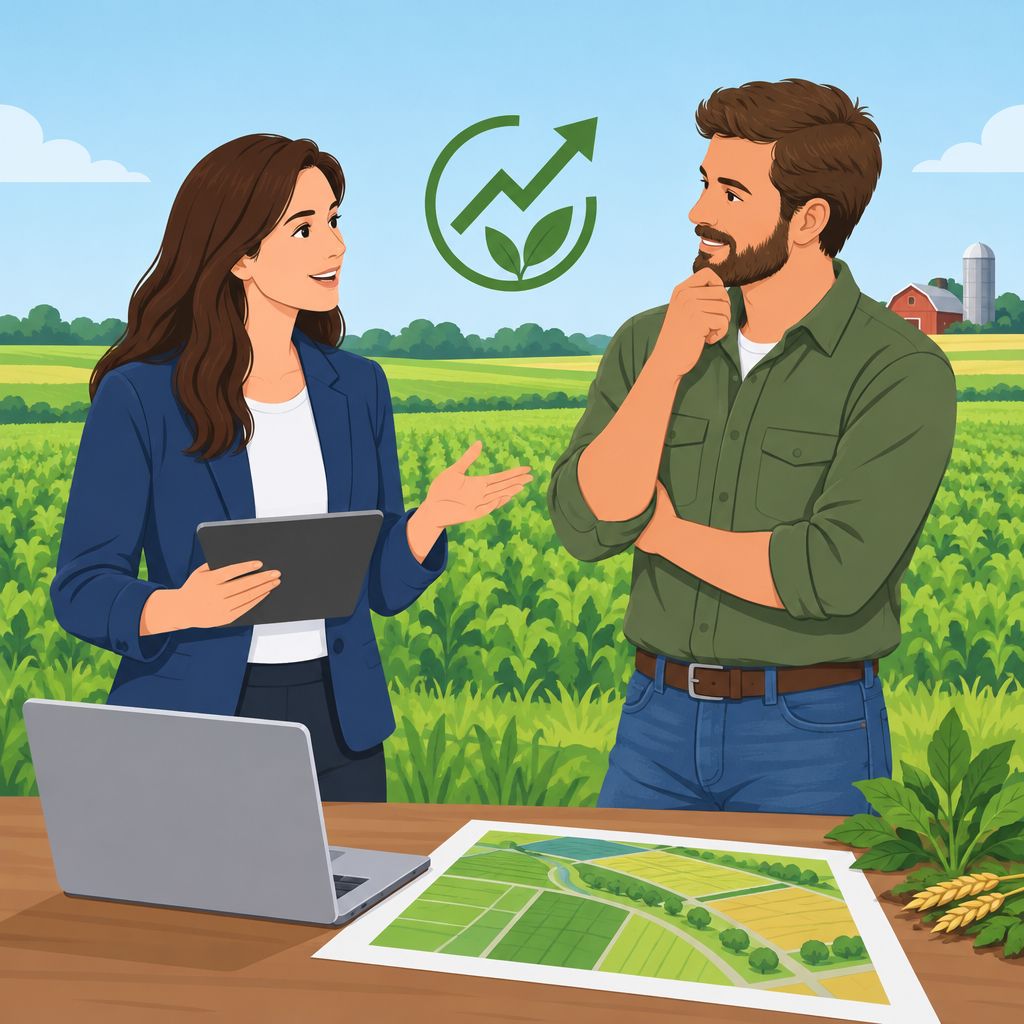
These examples show successful applications of agricultural economics.
They connect economic decisions with environmental goals.
They also describe benefits for farming systems and communities.
Agroecology in Practice
Agroecology applies ecological principles and local knowledge to farming.
Farmers can increase biodiversity and improve soil health through these practices.
They can also reduce synthetic inputs and strengthen resilience to climate change.
Payment for Ecosystem Services
Payment for Ecosystem Services programs address deforestation threats in some regions.
These programs pay farmers to maintain forest cover or manage land sustainably.
Consequently, economic incentives support conservation while creating opportunities for farmers.
Precision Agriculture
Precision agriculture uses GPS mapping, sensors, and drones to guide farm decisions.
Farmers can apply water, fertilizer, and pesticides more efficiently.
Therefore, they reduce waste, runoff, pollution, and soil degradation while lowering costs.
Community Supported Agriculture
Community Supported Agriculture connects consumers directly with local farmers.
This arrangement gives producers reliable markets and strengthens community relationships.
Moreover, it encourages organic cultivation, crop diversity, shorter food miles, and local economic support.
Sustainable Intensification
Sustainable intensification increases agricultural productivity while limiting environmental damage.
Crop rotation, integrated pest management, and agroforestry can support this approach.
As a result, farmers can raise yields without expanding farmland or sacrificing natural habitats.
Economic Pathways Toward Sustainable Agriculture
These case studies show how economic principles can encourage sustainable farming practices.
Innovative approaches and strategic investments can help farmers address environmental challenges.
At the same time, these strategies can provide economic benefits and protect future food security.
Transform Your Career Today
Unlock a personalized career strategy that drives real results. Get tailored advice and a roadmap designed just for you.
Start NowSee Related Content: Innovative Programs Led by 4-H Youth Agents
Challenges in Implementing Sustainable Agriculture Practices
Sustainable agriculture requires farmers to adopt practices that protect resources and support long-term productivity.
However, several barriers can make this transition difficult for farming communities.
These challenges include financial concerns, limited knowledge, changing conditions, and uncertain market demand.
- Many farmers lack awareness of sustainable practices and their potential benefits.
- Initial transition costs can create financial challenges for farmers.
- Some farmers resist changing traditional practices they understand and regularly use.
- Limited knowledge can prevent farmers from applying sustainable methods effectively.
- Insufficient consumer demand may provide farmers with little incentive to produce sustainable products.
- Changing weather patterns and extreme events can disrupt sustainable agricultural practices.
Solutions Supporting Sustainable Agriculture
Education can help farmers understand sustainable methods and apply them with greater confidence.
Financial assistance can reduce the burden of adopting new agricultural practices.
Meanwhile, research, certification, and supportive policies can strengthen sustainable agriculture.
- Training programs can teach farmers about sustainable practices and explain their benefits.
- Governments can offer subsidies and grants that help farmers adopt sustainable methods.
- Demonstration farms can show farmers how sustainable practices work in agricultural settings.
- Research and development can produce technologies and practices that support sustainable agriculture.
- Certification programs can verify sustainable practices and increase consumer market demand.
- Supportive government policies can encourage farmers to adopt sustainable agricultural methods.
Addressing these barriers can help agriculture move toward more sustainable practices.
Stakeholders must collaborate to support farmers, protect the environment, and serve consumers.
See Related Content: Top Environmental Laws Every Scientist Should Know
Policy Implications
Government policies shape agriculture’s progress toward environmental sustainability.
These policies can guide farming practices while protecting natural resources.
Moreover, targeted measures can support both environmental protection and agricultural productivity.
Government Policies for Environmental Sustainability
- Governments can regulate chemical inputs to minimize environmental pollution.
- Conservation programs can protect natural resources, including soil and water.
- Subsidies and tax breaks can encourage farmers to adopt sustainable practices.
- Governments can enforce waste management rules and reduce greenhouse gas emissions.
Economic Policies for Sustainable Agriculture
- Research and development investments can advance sustainable agricultural techniques.
- Marketing programs and certification can support organic farming.
- Price support mechanisms can promote consumer choices involving eco-friendly products.
- Crop diversification and rotation can improve soil health and biodiversity.
Furthermore, economic policies can encourage farmers to adopt environmentally friendly practices.
This transition can create long-term benefits for the environment and the agricultural sector.
Agricultural Economics and Environmental Sustainability
Agricultural economics plays a crucial role in environmental sustainability.
By analyzing farming practices, policies, and technologies, this field helps reduce agriculture’s environmental impact.
Throughout this discussion, agricultural economics has shown several ways to influence sustainable agriculture.
It promotes eco-friendly practices and assesses the economic viability of conservation strategies.
These contributions help protect the planet’s long-term health.
Furthermore, agricultural economics provides a framework for balancing agricultural productivity with environmental conservation.
By weighing economic incentives, costs, and benefits, economists help farmers make informed decisions.
Those decisions can support both farm profitability and environmental protection.
Therefore, society should recognize agricultural economics as essential to sustainable agriculture.
Integrating economic principles with environmental concerns can create a more resilient agricultural sector.
This approach can meet the needs of present and future generations.
Additional Resources
Google search results for Agricultural Economics: Role in Environmental Sustainability Agricultural
Bing search results for Agricultural Economics: Role in Environmental Sustainability Agricultural


