




Introduction
A veterinary technician supports veterinarians while they provide medical care to animals.
Animal rehabilitation helps animals recover from injuries or surgeries through physical therapy.
Together, veterinary technicians and rehabilitation therapies support animal recovery and ongoing care.
Veterinary Technician Definition
This trained professional assists veterinarians with animal medical care.
Veterinary technicians contribute practical support during treatment and rehabilitation.
Their responsibilities include administering treatments and monitoring each animal’s progress.
Animal Rehabilitation
Animal rehabilitation uses various therapies to help animals recover from injuries or surgeries.
Physical therapy forms part of this recovery-focused care.
Veterinary technicians assist with rehabilitation treatments as animals progress.
Veterinary Technician Contributions to Animal Rehabilitation
Veterinary technicians administer treatments during animal rehabilitation.
They monitor progress and work closely with veterinarians on treatment plans.
Additionally, their expertise and compassion help improve the quality of life for rehabilitating animals.
Veterinary Technicians in Animal Rehabilitation
Veterinary technicians support animal rehabilitation in several important ways.
They help guide recovery activities and observe each animal’s condition.
Their practical care promotes animal well-being during rehabilitation sessions.
Assisting With Physical Therapy Exercises
Veterinary technicians guide animals through physical therapy exercises.
They support movements that improve strength, flexibility, and mobility.
They also observe each activity and assist animals throughout the session.
Monitoring Vital Signs During Rehabilitation
During rehabilitation sessions, technicians monitor each animal’s vital signs.
They track heart rate, respiratory rate, temperature, and general condition.
They record these measures while the animal participates in rehabilitation.
Administering Medications During Recovery
Veterinary technicians administer prescribed medications during rehabilitation.
They provide the correct dosage at the appropriate time.
Consequently, medication administration supports the animal’s recovery process.
Providing Emotional Support to Animals
Technicians also provide emotional support during rehabilitation.
They create a comforting, reassuring environment that reduces stress and anxiety.
As a result, calm care can positively influence the animal’s recovery.
Specialized Training for Animal Rehabilitation
Veterinary technicians need specialized training to excel in animal rehabilitation.
This training helps them assist animals recovering from injuries or surgery.
It also prepares them to support recovery through appropriate rehabilitation care.
- Courses in physical therapy techniques
- Certification in rehabilitation therapy
- Hands-on experience in rehabilitation facilities
First, physical therapy courses teach technicians how to support strength, mobility, and function.
These courses also introduce targeted exercises and treatments for animal recovery.
Additionally, rehabilitation therapy certification confirms essential knowledge and practical skill.
Certification helps technicians provide consistent care during rehabilitation.
Meanwhile, hands-on experience exposes technicians to real-life rehabilitation cases.
Experienced professionals guide this work and help technicians strengthen their practical abilities.
Together, these training opportunities prepare technicians to provide high-quality rehabilitation care.
You Might Also Like: Common Health Issues in Pets and How to Assist
Collaboration With Veterinarians and Other Professionals
As veterinary technicians specializing in animal rehabilitation, we collaborate with veterinarians and other professionals.
This teamwork helps us provide coordinated care for animal patients.
Transform Your Career Today
Unlock a personalized career strategy that drives real results. Get tailored advice and a roadmap designed just for you.
Start NowWe focus on each animal’s rehabilitation needs, treatment goals, and overall well-being.
- We work closely with veterinarians to create customized treatment plans.
- We communicate effectively with clients about each animal’s rehabilitation progress.
- We collaborate with physical therapists and specialists to support comprehensive care.
First, we evaluate the animal’s condition and rehabilitation requirements with the veterinarian.
Based on that evaluation, we develop a treatment plan addressing the animal’s specific needs.
The plan may include therapies, exercises, and modalities that support recovery and restored function.
Throughout rehabilitation, we update veterinarians about progress and changes in the animal’s condition.
We also discuss treatment adjustments when the animal’s needs change.
This communication keeps the care team aligned and focused on the animal’s recovery.
Additionally, we collaborate with physical therapists and specialist veterinarians when animals need further support.
These professionals can address specific concerns or provide additional rehabilitation therapies.
Consequently, the team can use a multidisciplinary approach to address the animal’s recovery.
Each professional contributes distinct skills and expertise to the animal’s care.
For example, physical therapists can help incorporate exercises that improve strength, flexibility, and range of motion.
This coordinated approach addresses physical recovery while supporting the animal’s quality of life.
Through ongoing collaboration, the care team helps animals pursue recovery and improved well-being.
Gain More Insights: Dairy Scientist's Role in Herd Health Management
Rehabilitation Benefits for Animal Patients
Animal rehabilitation can restore mobility and function after injuries, surgeries, or other physical challenges.
Targeted exercises and therapies help animals rebuild strength during recovery.
Additionally, rehabilitation can improve movement patterns and reduce future health risks.
- Rehabilitation can improve an animal’s quality of life.
- Structured exercises can support faster recovery and renewed strength.
- Strengthening activities can help prevent future physical problems.
- Flexibility exercises can support safer and more comfortable movement.
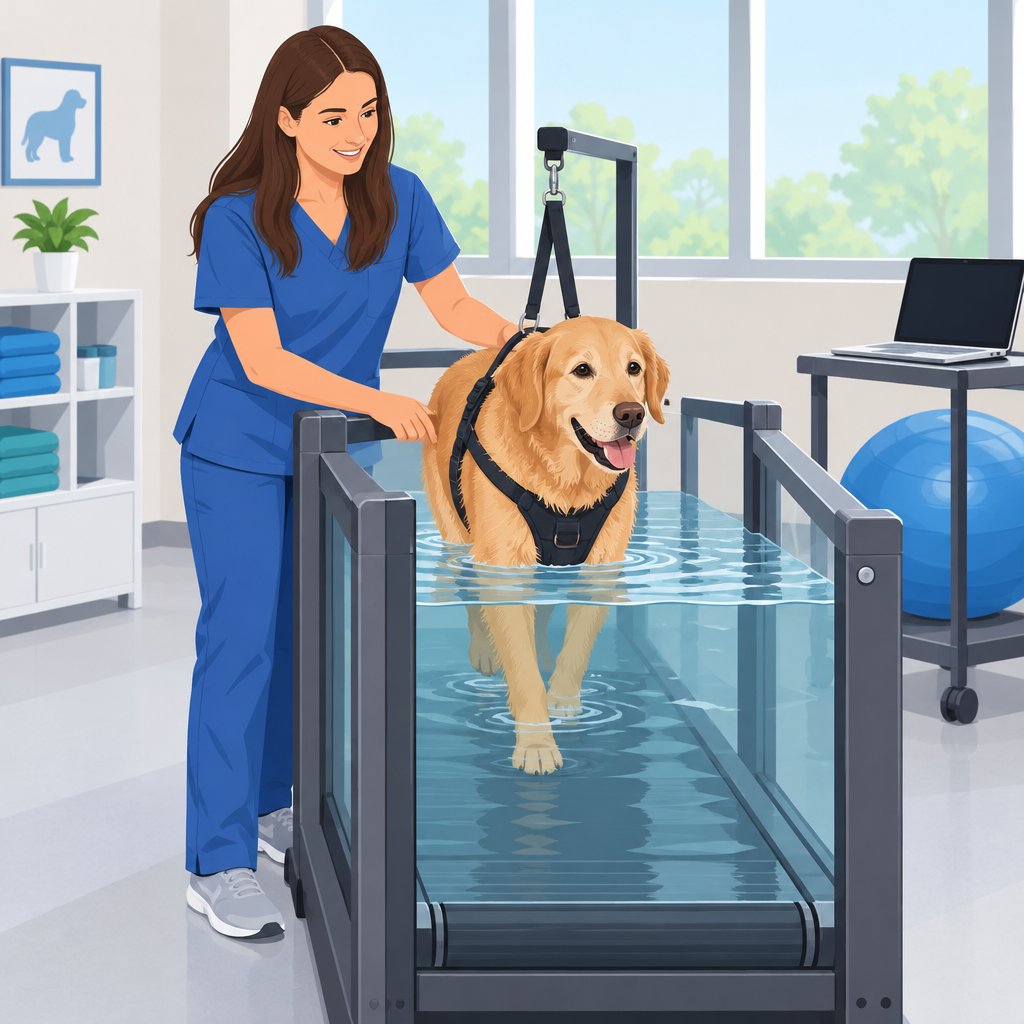
Patient Assessment and Rehabilitation Support
Veterinary technicians evaluate each animal’s condition, mobility, and rehabilitation needs.
They use these observations to support a rehabilitation plan tailored to the patient.
Throughout treatment, technicians monitor responses and document meaningful changes.
- Technicians assess mobility and identify the animal’s specific rehabilitation needs.
- They carry out prescribed exercises, treatments, and rehabilitation activities.
- They observe treatment responses and report changes to the care team.
- They adjust rehabilitation activities when the patient’s needs change.
- They document progress throughout the rehabilitation process.
Owner Guidance and Emotional Support
Veterinary technicians teach owners how to support rehabilitation at home.
They explain exercise techniques and demonstrate safe ways to handle the animal.
Moreover, technicians provide reassurance to animals and owners throughout treatment.
- Technicians explain recommended home exercises to pet owners.
- They demonstrate proper techniques for completing exercises safely.
- They describe practical ways owners can support ongoing rehabilitation.
- They comfort animals during challenging or unfamiliar activities.
- They encourage owners throughout the animal’s rehabilitation journey.
Specialized Rehabilitation Treatments
Technicians may assist with specialized rehabilitation procedures under appropriate professional direction.
They help deliver treatments while protecting the animal’s safety and comfort.
Each procedure requires careful observation and attention to the patient’s response.
- Hydrotherapy can form part of a structured rehabilitation plan.
- Therapeutic ultrasound may support prescribed rehabilitation treatment.
- Laser therapy may complement other rehabilitation interventions.
- Acupuncture may support an animal’s individualized rehabilitation care.
- Technicians monitor animals during each specialized treatment.
Assistive Devices for Mobility Impairments
Some technicians help design and fabricate devices for animals with mobility impairments.
They work with rehabilitation specialists to address each patient’s unique physical needs.
These solutions can provide practical support during movement and daily activities.
- Custom orthotics can support impaired limbs or altered movement.
- Prosthetics can help address certain mobility limitations.
- Assistive devices can provide additional support during rehabilitation.
- Technicians collaborate with specialists to develop suitable solutions.
Promoting Rehabilitation Awareness
Veterinary technicians can promote rehabilitation services within their practices and communities.
They educate colleagues, clients, and pet owners about available rehabilitation benefits.
Through this education, technicians can increase awareness and support for animal rehabilitation.
- Technicians explain how rehabilitation can support animal well-being.
- They share information about rehabilitation services with practice teams.
- They help pet owners understand rehabilitation’s role in recovery.
- They encourage greater community awareness of animal rehabilitation.
Uncover the Details: Common Challenges for Veterinary Technicians
Challenges Faced by Veterinary Technicians in Animal Rehabilitation
Animal rehabilitation offers veterinary technicians rewarding work, but it also presents demanding daily challenges.
These challenges involve patient safety, workload management, and changes in rehabilitation practice.
Technicians must respond carefully while supporting effective care for animals.
Handling Aggressive or Fearful Animals
Rehabilitation technicians often handle animals experiencing pain, fear, or aggression.
These behaviors can make treatment difficult and create safety concerns for everyone involved.
Therefore, technicians need patience, gentle methods, and appropriate handling skills.
Transform Your Career Today
Unlock a personalized career strategy that drives real results. Get tailored advice and a roadmap designed just for you.
Start Now- Injuries or medical conditions may cause animals to become fearful or aggressive.
- Technicians must provide treatment while protecting both the animal and themselves.
- Animal behavior training helps technicians manage difficult handling situations appropriately.
- A gentle approach can support safer and more effective rehabilitation sessions.
Balancing Multiple Cases and Treatment Plans
Rehabilitation facilities may manage many animals with different needs at the same time.
Consequently, technicians must organize treatment plans and distribute their time effectively.
Clear communication helps the veterinary team coordinate care across multiple cases.
- High caseloads can require technicians to manage several treatment plans simultaneously.
- Technicians must prioritize tasks so each animal receives necessary care.
- They also need to allocate available resources carefully among different cases.
- Communication and coordination support efficient management throughout the rehabilitation process.
Adapting to New Rehabilitation Techniques and Technologies
Animal rehabilitation continues to develop as professionals introduce new techniques and technologies.
Technicians must learn these advancements and adjust their practices when appropriate.
Continuing education helps technicians maintain the knowledge needed for high-quality care.
- New rehabilitation methods can improve care for animals during recovery.
- Technicians must stay informed about changes within the rehabilitation field.
- Training supports effective use of emerging rehabilitation techniques and technologies.
- Although adaptation can prove challenging, updated practices support better animal care.
Professional Impact of Rehabilitation Technicians
Veterinary technicians manage safety concerns, demanding workloads, and evolving rehabilitation practices.
Their dedication and practical skills support animals throughout the rehabilitation process.
Through careful attention and ongoing learning, technicians contribute meaningfully to animal care.
Gain More Insights: How to Advocate for Conservation Policies
Career Opportunities for Veterinary Technicians in Animal Rehabilitation
Animal rehabilitation offers veterinary technicians several career opportunities.
These opportunities include clinical employment, specialized therapy roles, and further education.
Each path can expand their ability to support animals during recovery.
- Employment in veterinary clinics, animal hospitals, or rehabilitation centers
- Advancement to specialized roles in rehabilitation therapy
- Potential for further education and certifications in animal rehabilitation
Employment in Veterinary Clinics, Animal Hospitals, or Rehabilitation Centers
Veterinary technicians can work in veterinary clinics, animal hospitals, or specialized rehabilitation centers.
In these settings, they provide rehabilitation services for animals recovering from injuries or surgeries.
They assist with treatment plans that address each animal’s specific needs.
Veterinarians and other healthcare professionals guide the broader treatment process.
Technicians may assist with physical therapy exercises and hydrotherapy sessions.
These rehabilitative techniques help animals regain strength, mobility, and function.
Advancement to Specialized Roles in Rehabilitation Therapy
Experience and additional training can help veterinary technicians advance into specialized rehabilitation roles.
Some technicians specialize in acupuncture, chiropractic care, or massage therapy for animals.
They can also pursue rehabilitation therapy certifications to strengthen their skills and knowledge.
This focused expertise allows technicians to provide more comprehensive care.
As a result, they can contribute to their patients’ health and well-being.
Their specialized roles can support animals throughout the rehabilitation process.
Further Education and Certifications in Animal Rehabilitation
Veterinary technicians can expand their rehabilitation skills through further education.
Many institutions offer courses and training programs focused on rehabilitation therapy.
These programs serve technicians who want to specialize in animal rehabilitation.
Certifications can demonstrate their expertise and commitment to high-quality animal care.
Additional training may open new career opportunities in animal rehabilitation.
It can also help technicians make a meaningful impact on animals needing rehabilitation.
Veterinary Technicians’ Continuing Impact in Animal Rehabilitation
Veterinary technicians remain essential to animal rehabilitation by guiding exercises, providing care, and monitoring each animal’s progress.
They coordinate with veterinarians, rehabilitation specialists, and pet owners to support appropriate recovery goals.
They also help create customized treatment plans for individual animals.
Additionally, technicians educate pet owners about home care and offer emotional support to animals and their owners.
Their dedication and compassion strengthen the rehabilitation process.
For aspiring veterinary technicians, rehabilitation offers a rewarding career path.
This work lets them positively affect animals and owners while expanding their skills and knowledge.
Furthermore, continuing education helps technicians learn current rehabilitation techniques and advancements.
Ongoing training enables technicians to provide better patient care and remain competitive in the industry.
Transform Your Career Today
Unlock a personalized career strategy that drives real results. Get tailored advice and a roadmap designed just for you.
Start NowAdditional Resources
Google search results for Veterinary Technician's Role in Animal Rehab Agricultural
Bing search results for Veterinary Technician's Role in Animal Rehab Agricultural


