




Safety Protocols for Veterinary Technicians
Veterinary technicians need safety protocols to prevent accidents and injuries.
These measures protect technicians, animals, and coworkers from harm.
Proper animal handling supports a safer clinic environment.
Additionally, technicians should use personal protective equipment and handle hazardous materials safely.
Emergency procedures guide responses when accidents occur.
Following these protocols helps maintain a safe and healthy veterinary clinic.
Proper Personal Protective Equipment
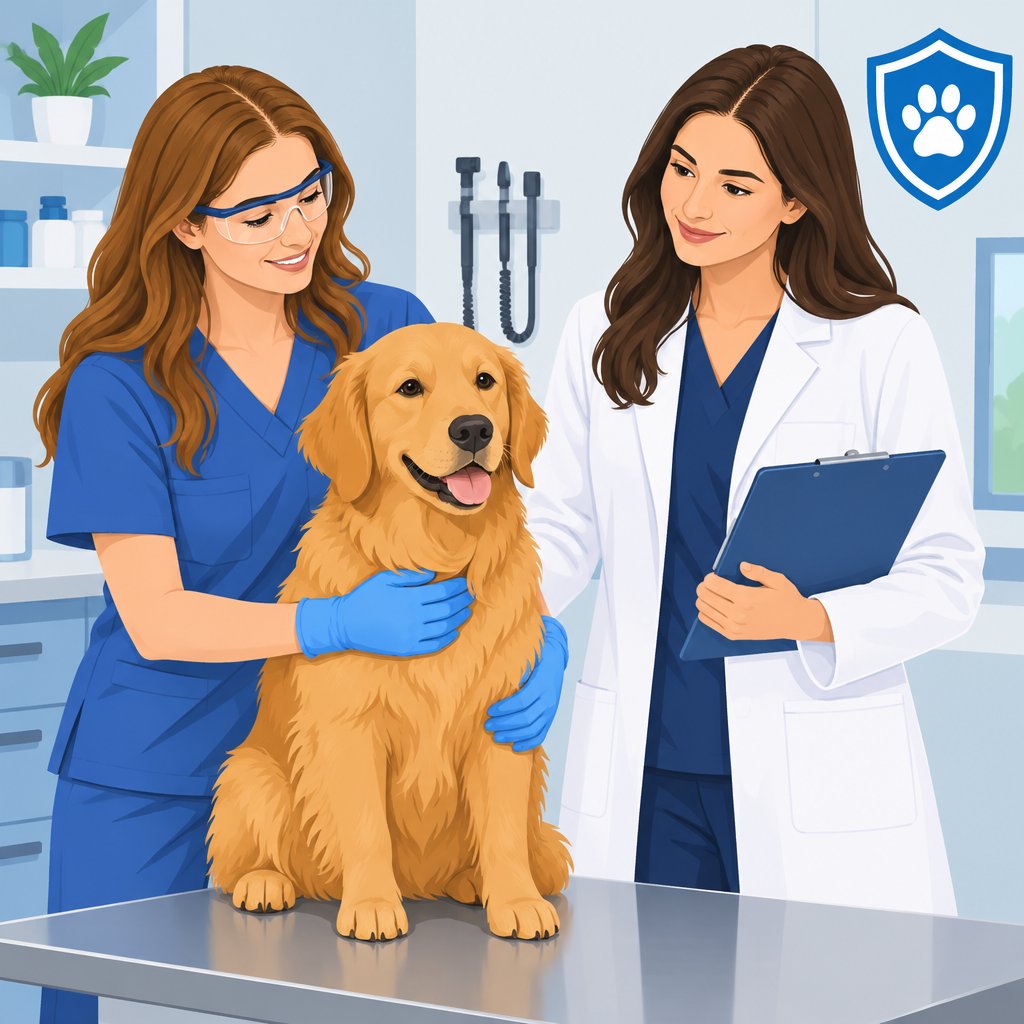
When working as a veterinary technician, prioritize your safety with appropriate personal protective equipment.
These items help protect you during animal handling, cage cleaning, and medical procedures.
Additionally, PPE helps reduce exposure to bacteria, viruses, bodily fluids, chemicals, and airborne pathogens.
- Wear disposable gloves when handling animals, cleaning cages, or performing medical procedures.
- Use protective goggles to shield your eyes from bodily fluids or chemicals.
- Wear a mask when dealing with infectious diseases to help prevent inhaling airborne pathogens.
PPE is not merely recommended.
Instead, it remains crucial for maintaining health and safety in the veterinary field.
Safe Handling Techniques
Proper animal handling helps prevent injuries to veterinary technicians and animals.
Calm, confident approaches can reduce stress and aggression.
Additionally, clear teamwork supports safer movements during handling.
- Approach animals calmly and confidently to reduce stress and aggression.
- Choose restraint equipment that matches the animal’s size and behavior.
- Keep a secure hold when restraining an animal to prevent escape or injury.
- Communicate clearly with team members to coordinate movements and avoid accidents.
- Observe the animal’s behavior before selecting a handling approach.
Proper Lifting Techniques
Proper lifting techniques help prevent back and muscle injuries.
Use your legs for support instead of bending at the waist.
When an animal feels too heavy, request assistance before lifting.
- Position yourself close to the animal and bend your knees for a secure grip.
- Keep the animal close to your body to reduce back strain.
- Keep your back straight while lifting and carrying the animal.
- Avoid twisting while carrying the animal, and move your feet instead.
- Use a lift or stretcher when the animal requires mechanical assistance.
- Squat with your legs and lower the animal gently.
- Take breaks and stretch regularly to reduce fatigue and strain.
Restraint Methods
Appropriate restraint protects both the veterinary technician and the animal.
Gentle, firm control can keep an animal positioned during procedures.
Calm communication and careful observation can help manage anxiety and fear.
- Apply gentle but firm pressure to hold the animal in place.
- Use suitable restraints, including harnesses, muzzles, or towels.
- Approach from the side or rear to reduce bite and scratch risks.
- Avoid excessive force to prevent injury and distress.
- Speak calmly and soothingly to help reduce anxiety and fear.
- Watch body language and signals to anticipate aggressive behavior.
- Pause during prolonged restraint so the animal and handler can relax.
Learn More: Daily Responsibilities of a 4-H Youth Agent
Proper Handling and Disposal of Hazardous Materials
- Always wear appropriate personal protective equipment when handling chemicals or medications.
- Use designated areas for storing and handling hazardous materials to prevent cross-contamination.
- Follow manufacturer’s instructions when handling or diluting chemicals to minimize exposure risks.
- Never mix chemicals unless a veterinarian or supervisor directs you to avoid chemical reactions.
- Keep hazardous materials tightly sealed when not in use to prevent spills or leaks.
Safe Storage and Labeling Practices
- Store chemicals and medications in a well-ventilated, locked cabinet away from food and animal supplies.
- Use suitable containers and label hazardous materials clearly with their contents and expiration dates.
- Separate incompatible materials and medications to prevent accidental mixing.
- Inspect storage areas regularly for leaks, spills, or damaged containers, and address issues immediately.
- Dispose of expired or unused hazardous materials according to clinic protocols and local regulations.
Gain More Insights: Agronomist vs. Horticulturist: What's the Difference?
Emergency Protocols
Emergencies can happen at any time.
A clear plan helps staff respond effectively.
This approach supports animal and staff safety.
Steps for Emergency Response
Staff should follow consistent steps during every emergency.
These steps help teams prioritize urgent actions.
They also support accurate communication and follow-up care.
- Stay calm and remain focused during the emergency.
- Assess the situation and quickly evaluate its severity.
- Prioritize actions according to the emergency’s needs.
- Alert the veterinarian on duty about the situation.
- Secure the area to protect nearby animals and staff.
- Provide basic first aid when necessary.
- Document what happened and record the actions taken.
- Follow up with any needed treatments or procedures.
Guidance for Emergency Situations
Effective communication helps teams coordinate their emergency response.
Regular training prepares staff to use first aid and emergency protocols.
Practice drills help everyone understand their assigned roles.
- Communicate clearly with team members during emergencies.
- Ensure all staff members receive training in basic first aid.
- Keep a well-stocked emergency kit available.
- Conduct regular emergency drills to reinforce responsibilities.
- Stay informed about changes to emergency protocols.
- Prioritize your safety and the safety of others.
Following these protocols helps veterinary technicians manage unexpected situations.
The process supports the well-being of animals under their care.
Explore Further: Building Resilient Farm Ecosystems
Equipment Maintenance and Safety Checks
Regular equipment inspections help protect veterinary technicians from avoidable equipment-related hazards.
They identify wear and tear before equipment problems cause accidents or injuries.
They also confirm that equipment remains in good working condition.
Safety Checks for Veterinary Equipment
Several checks support reliable equipment performance.
Each check focuses on damage, function, cleanliness, or delivery.
Therefore, staff can review these items regularly before procedures.
Transform Your Career Today
Unlock a personalized career strategy that drives real results. Get tailored advice and a roadmap designed just for you.
Start Now- Check stethoscope tubing for cracks and ensure earpieces fit securely.
- Test thermometer accuracy with control solutions and check for damage.
- Inspect syringes for leaks and ensure the plunger moves smoothly.
- Check surgical instruments for rust or dull blades, then clean and sterilize them.
- Test anesthesia machines for leaks and check oxygen and gas delivery.
Following this checklist helps maintain equipment safety and effectiveness.
It supports the well-being of animals and technicians.
Gain More Insights: Soft Skills for Agricultural Technician Success
Disease Prevention and Control
Disease prevention and control protect animals and veterinary technicians within the clinic.
These measures also reduce opportunities for pathogens to move between patients, equipment, and staff.
Therefore, clinics need consistent procedures for hygiene, separation, and vaccination.
Protocols for Preventing Clinic Disease Transmission
Staff should apply disease prevention procedures during routine care and patient movement.
Clear protocols help teams respond consistently when animals may carry contagious illnesses.
Meanwhile, documented practices support a safer environment for everyone in the clinic.
- Technicians should wash their hands thoroughly and frequently to limit pathogen transmission.
- Staff should wear gloves, masks, and gowns when handling sick animals or contaminated materials.
- Clinics should separate sick animals from healthy animals to limit contagious disease spread.
- Staff should regularly clean and disinfect surfaces, cages, and equipment with appropriate products.
- Teams should follow quarantine procedures to prevent new diseases from entering the clinic.
Sanitation and Vaccination Practices
Proper sanitation removes pathogens from clinic surfaces, cages, and equipment.
Likewise, appropriate disinfectants help maintain clean areas for animals and staff.
Vaccination protects animals and technicians from preventable diseases, including zoonotic infections.
Technicians should keep their vaccinations current to reduce personal exposure risks.
By maintaining sanitation and vaccination practices, clinics can support a safer environment.
Communication and Teamwork
Clear communication helps team members protect everyone in a veterinary clinic.
Teamwork helps staff apply safety procedures consistently during daily clinic activities.
Together, these practices help clinics build a safer and more cooperative environment.
Clear Communication in Veterinary Clinics
Fast-paced clinic work requires clear communication to prevent accidents and errors.
Team members should share patient details, procedures, and risks with one another.
Additionally, proper communication channels can improve clarity and reduce misunderstandings.
- Face-to-face discussions can help staff communicate important information clearly.
- Digital platforms can support communication when team members need shared information.
- Effective communication builds trust and strengthens collaboration among team members.
- An open-door policy encourages staff to voice concerns and ask questions.
Teamwork in Safety Procedures
Teamwork supports the effective implementation of safety procedures in veterinary clinics.
Collaboration helps every team member understand and follow safety procedures consistently.
Moreover, staff members can support one another when applying safety guidelines.
- Shared responsibility helps teams work toward a common safety goal.
- Cooperation can make the clinic environment safer for everyone.
- Teamwork encourages accountability among team members.
Clear communication and effective teamwork strengthen safety practices throughout the clinic.
By emphasizing both elements, clinics can reduce the risk of incidents and accidents.
Maintaining a Consistent Safety Focus
Veterinary technicians can strengthen workplace safety by applying established protocols throughout daily care.
Consistent attention helps reduce preventable risks for staff and animals.
Protective gear and careful handling remain important parts of that routine.
In addition, technicians should prioritize their well-being while providing animal care.
This commitment supports a safer environment for everyone involved in veterinary services.
Additional Resources
Google search results for Veterinary Technician Safety Protocols Agricultural
Bing search results for Veterinary Technician Safety Protocols Agricultural


