




Importance of Herd Health Management
Effective herd health management supports successful dairy farming.
It helps keep cows healthy, productive, and free from disease.
Therefore, farms need organized health practices to protect herd well-being.
Dairy Scientists and Herd Health Assessment
Dairy scientists use their expertise to support optimal herd health.
They analyze herd health status and identify potential problems.
Based on their findings, they develop customized health protocols.
Preventive Health Protocols
Dairy scientists work with farm managers to apply preventive measures.
These measures include vaccination programs and disease control strategies.
Consequently, farms can strengthen protection against health challenges.
Research, Compliance, and Monitoring
Dairy scientists research trends, technologies, and practices that improve herd health management.
They also help farms follow animal health, welfare, and food safety regulations.
Through regular evaluation, they measure protocol effectiveness and make necessary adjustments.
Collaboration and Continuing Education
Dairy scientists collaborate with veterinarians, nutritionists, and other experts.
This collaboration supports comprehensive health management plans.
Additionally, continuous learning helps dairy scientists apply current herd health knowledge.
Responsibilities of a Dairy Scientist
- Conducting health assessments of dairy herds
- Developing and implementing herd health management plans
- Monitoring and evaluating individual animals and entire herds
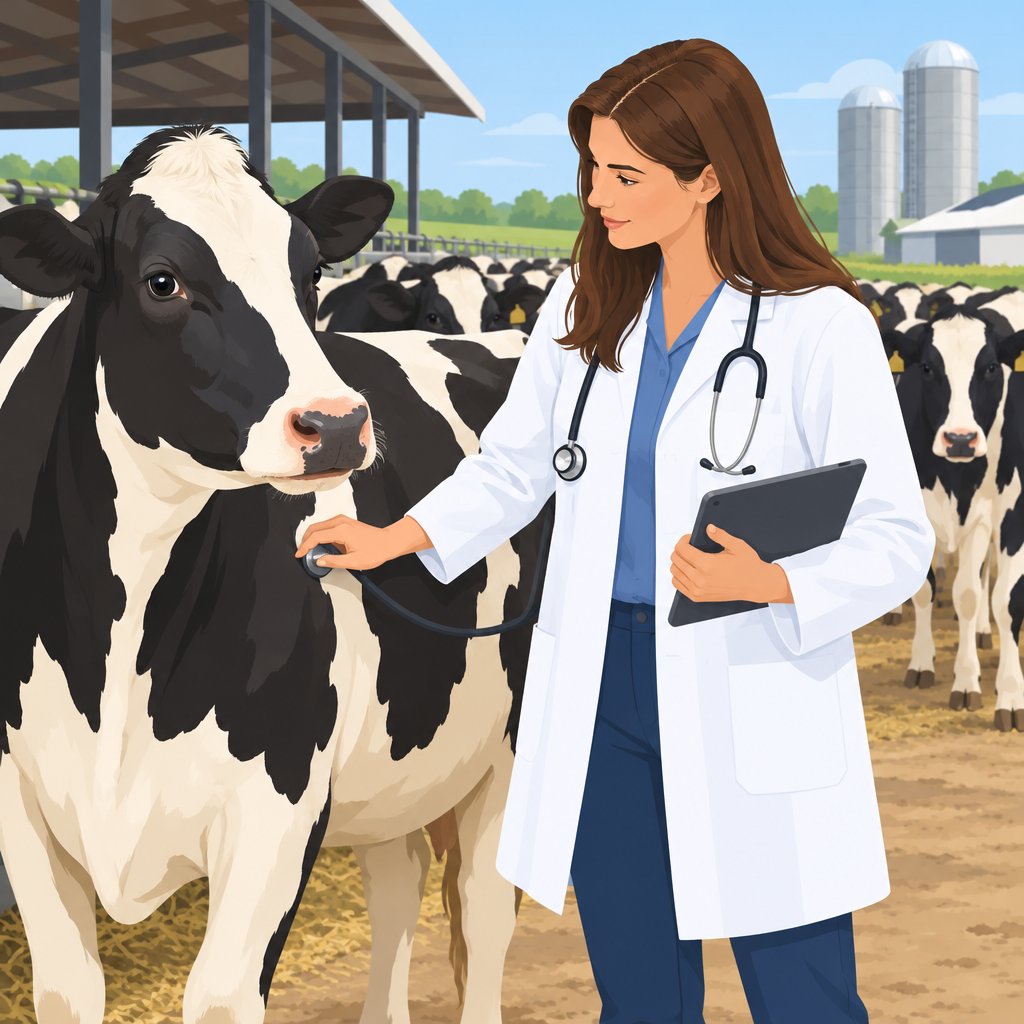
Dairy Scientists conduct health assessments by visiting farms and observing animal health and well-being.
Through regular assessments, they identify potential issues early and help prevent disease outbreaks.
Additionally, Dairy Scientists develop and implement herd health management plans.
These plans define protocols for vaccinations, nutrition, and disease prevention.
By tailoring management plans, Dairy Scientists support the health and productivity of dairy herds.
They also monitor individual animals and evaluate the herd’s overall health status.
Regular health checks, data analysis, and trend tracking support this responsibility.
Furthermore, monitoring reveals areas for improvement and supports informed herd health decisions.
Dairy Scientists therefore contribute to healthy dairy herds and successful farming operations.
Data Collection and Analysis
- Dairy scientists use technology to collect data about various herd health indicators.
- They use sensors and monitoring devices to track milk production, feed intake, and activity levels.
- By centralizing this information, scientists analyze trends and patterns that may reveal herd health issues.
- This analysis clarifies the animals’ health status and supports proactive management decisions.
- Dairy scientists also collaborate with veterinarians to interpret findings and develop preventive health plans.
- Continuous monitoring helps them detect early disease warnings and provide timely interventions.
- The collected data also covers economic and environmental factors that affect the herd.
- This comprehensive approach helps dairy scientists make informed herd health management decisions.
- Data-driven insights help them optimize health practices and improve productivity and profitability.
Technology for Herd Data Collection
- Dairy scientists use automatic milking systems, activity monitors, and rumination sensors.
- These technologies provide real-time information about individual animal health, behavior, and performance.
- Animal sensors track vital signs, rumination patterns, and movement as important health indicators.
- Cloud-based systems store the collected information for convenient access and analysis.
- Mobile applications and software let scientists monitor herds remotely and receive deviation alerts.
- Technology improves data accuracy while reducing the labor and time required for collection.
- Automated systems streamline collection, allowing scientists to focus on analysis and decision-making.
- By using technology, dairy scientists manage herd health efficiently and support animal well-being.
Analysis for Detecting Trends and Health Issues
- Dairy scientists use statistical analysis to identify trends and compare different health parameters.
- They use software to conduct predictive analytics and create herd health performance reports.
- Historical data helps scientists forecast potential health issues and develop proactive strategies.
- For example, declining milk production or changed feeding behavior may signal developing diseases.
- Data analysis reveals how different factors influence herd health and performance.
- Data visualization presents findings clearly and supports better management decisions.
- Comparing different periods helps scientists track improvements or declines in herd health.
- By identifying patterns and outliers, dairy scientists can take corrective action promptly.
Data-Informed Herd Health Decisions
- Data insights help dairy scientists create effective herd health management plans.
- Evidence-based information supports targeted interventions and treatments for the herd.
- Scientists collaborate with nutritionists, veterinarians, and other experts to support comprehensive herd management.
- Data-driven decisions help optimize resources, reduce costs, and increase herd productivity.
- Monitoring performance indicators helps scientists evaluate their interventions.
- Regular data reviews support continuous improvement in herd health practices.
- Data also helps dairy scientists meet regulatory requirements and animal welfare standards.
- A proactive, data-driven approach supports sustainable health outcomes and farm profitability.
You Might Also Like: Common Challenges for Veterinary Technicians
Disease Prevention and Control
- Implementing biosecurity measures to prevent disease introduction and spread
- Using vaccination programs to protect the herd from common diseases
- Developing disease control protocols for outbreak situations
Effective disease prevention and control remain key responsibilities of a dairy scientist in herd health management.
By implementing biosecurity measures, the dairy scientist can prevent diseases from entering and spreading throughout the herd.
These measures include restricting farm access, practicing proper sanitation, and monitoring incoming animals’ health status.
Furthermore, vaccination programs protect the herd from common diseases.
The dairy scientist must stay current with vaccine research and recommendations.
Then, the scientist works with veterinarians to create vaccination schedules for the herd’s specific needs.
During an outbreak, the dairy scientist must respond quickly to limit disease effects and prevent further spread.
Consequently, the scientist develops control protocols that support early detection, quarantine, and treatment.
These procedures help manage the situation effectively.
Learn More: How to Advocate for Conservation Policies
Nutrition Management
- Collaborating with nutritionists to develop balanced herd diets
- Monitoring feed quality and quantity to support optimal health
- Recommending nutritional supplements to address deficiencies
Nutrition management is a key responsibility of dairy scientists in herd health management.
They collaborate with nutritionists to develop balanced diets for the herd.
These diets provide nutrients that support overall health and productivity.
In addition, dairy scientists monitor feed quality and quantity carefully.
They ensure that feed meets high standards for nutrition and freshness.
Transform Your Career Today
Unlock a personalized career strategy that drives real results. Get tailored advice and a roadmap designed just for you.
Start NowThis monitoring helps prevent health issues related to poor nutrition.
Furthermore, dairy scientists recommend nutritional supplements when the herd has deficiencies.
These supplements fill dietary gaps and support the herd’s overall health.
By identifying specific deficiencies, scientists can recommend targeted supplements.
These recommendations help prevent problems associated with nutritional imbalances.
See Related Content: Volunteer Opportunities with Extension Agents
Reproductive Health
- Monitoring reproductive performance helps dairy scientists track heat detection, conception rates, and calving intervals.
- Dairy scientists design breeding programs that improve herd genetics and reproductive efficiency.
- They assess individual cows’ genetic potential and select suitable mates for desirable offspring traits.
Dairy scientists also guide farmers in managing reproductive disorders and improving breeding success.
They help identify and treat cystic ovaries, uterine infections, and poor conception rates.
Additionally, they recommend nutrition, housing, and management practices that support better breeding outcomes.
These efforts promote reproductive health and support the well-being and productivity of dairy herds.
Gain More Insights: How Plant Pathologists Help Farmers
Training and Education
Training and education form important parts of a dairy scientist’s herd health responsibilities.
These activities help farm staff support animal welfare and operational efficiency.
Furthermore, knowledgeable staff can apply consistent practices across daily herd management activities.
- Educating farm staff on best practices for herd health management
- Conducting training sessions on disease awareness and prevention
- Collaborating with veterinarians and other professionals to share knowledge and expertise
Farm staff education covers best practices for herd health management.
This instruction includes proper nutrition, housing, and animal handling practices.
By sharing this knowledge, dairy scientists help staff support herd health and welfare.
Training sessions also address disease awareness and prevention.
Staff learn to identify common diseases and understand their causes.
They also learn preventive measures that can reduce disease risks within the herd.
This proactive training can reduce treatment needs and support animal welfare.
Collaboration strengthens training and education programs for herd health management.
Dairy scientists work with veterinarians, nutritionists, and other specialists to exchange knowledge.
These professionals discuss best practices and develop comprehensive herd health strategies.
Through shared expertise, dairy scientists can improve disease prevention and control programs.
Regular education equips farm staff with practical knowledge and essential management skills.
Consequently, trained staff can contribute to herd well-being and dairy operation success.
Research and Innovation in Herd Health
Dairy scientists conduct research to improve herd health management practices.
They also track scientific developments and technologies to strengthen herd health and productivity.
Research helps scientists understand complex herd health dynamics and develop disease prevention strategies.
- Dairy scientists conduct research to improve herd health management practices.
- They explore technologies and methods for monitoring and improving herd health.
- They collaborate with industry partners to advance dairy science.
Scientists frequently study risk factors, diagnostic tools, and treatment protocols.
These studies support effective disease prevention and management.
By conducting field trials and experiments, dairy scientists assess management practices and interventions in real-world settings.
This evidence supports recommendations that help dairy farmers make informed herd health decisions.
Moreover, dairy scientists explore technologies and methods that monitor and improve herd health.
Sensors, monitoring devices, and genetic testing techniques provide evolving tools for this work.
By adopting these advances, dairy scientists can improve herd health management and support sustainable, efficient dairy operations.
Collaboration with industry partners also advances dairy science.
Veterinarians, nutritionists, equipment manufacturers, and other stakeholders contribute complementary expertise.
Together, these partners can develop comprehensive solutions for herd health challenges.
Transform Your Career Today
Unlock a personalized career strategy that drives real results. Get tailored advice and a roadmap designed just for you.
Start NowCollaborative research projects and knowledge-sharing initiatives combine resources and expertise.
They also encourage the adoption of effective practices throughout the dairy industry.
Research and innovation help dairy scientists address industry challenges and support its long-term viability.
Dairy Scientists’ Contributions to Sustainable Herd Operations
Dairy scientists connect specialized knowledge with practical decisions that shape the long-term performance of dairy operations.
They combine expertise in nutrition, genetics, and disease prevention to support consistent herd performance.
Furthermore, their integrated perspective helps farmers balance animal welfare, milk quality, and operational efficiency.
By interpreting herd information, they identify opportunities to strengthen management decisions and improve production outcomes.
These decisions can support higher milk quality while helping farms use available resources responsibly.
Because they continue learning and researching, dairy scientists can adapt their recommendations as herd needs change.
Their work also encourages sustainable practices that protect animal well-being and support profitable dairy farming.
Consequently, farmers gain informed guidance for maintaining healthy animals and dependable operations.
Through this partnership, dairy scientists contribute to a more resilient and efficient dairy industry.
Additional Resources
Google search results for Dairy Scientist's Role in Herd Health Management Agricultural
Bing search results for Dairy Scientist's Role in Herd Health Management Agricultural


