




Dairy Science and Product Development
A dairy scientist researches and develops new dairy products.
The scientist also improves milk production and ensures dairy product quality.
Moreover, dairy scientists support sustainable and efficient dairy production.
To become a dairy scientist, students pursue formal education in dairy science or a related field.
Related fields include animal science, food science, and agricultural science.
High School Education for Aspiring Dairy Scientists
- Take science and math courses to prepare for future dairy science studies.
- Join agriculture or science activities to gain valuable experience.
- Build a strong academic foundation for success in advanced studies.
High school gives aspiring dairy scientists a foundation for their academic and career goals.
Students should choose courses that strengthen their preparation for dairy science.
Science and math classes develop knowledge needed for future dairy science studies.
These subjects introduce biology, chemistry, physics, and mathematics.
Each area supports the skills required for studying dairy science.
Additionally, agriculture and science activities can provide valuable hands-on experience.
Students may join Future Farmers of America or participate in science fairs.
Such activities help students develop knowledge and skills for future education.
Students should also pursue strong grades, especially in science and math courses.
A strong academic record can support admission to competitive college programs.
Furthermore, high school study habits prepare students for demanding dairy science coursework.
Effective time management will help students handle more advanced studies.
Undergraduate Preparation for Dairy Scientists
- Pursue a degree in dairy science, animal science, or a related field.
- Gain practical experience through internships or research opportunities.
- Develop skills in data analysis, biology, and agriculture.
An undergraduate degree begins the education path for an aspiring dairy scientist.
Students can major in dairy science, animal science, or a related field.
These programs provide a strong foundation for future dairy science work.
During college, students should seek internships or research opportunities for practical experience.
This experience strengthens understanding and builds useful professional skills.
Additionally, students should develop abilities in data analysis, biology, and agriculture.
Dairy scientists analyze dairy production data, so data analysis skills support their work.
Furthermore, biology and agriculture knowledge helps students advance in dairy science.
These educational experiences prepare students for successful dairy science careers.
Gain More Insights: Preparing for a Career as a Dairy Scientist
Graduate Studies in Dairy Science
Graduate studies remain optional, but they strongly support professionals seeking advancement as dairy scientists.
A master’s degree in dairy science or a related field can build expertise for this industry.
- Advanced Education: A graduate program lets you explore dairy science’s complex concepts in greater depth.
- Specialized Knowledge: You can focus on dairy nutrition, genetics, or food safety.
- Research Opportunities: Graduate studies often involve research projects that provide valuable insights for the dairy industry.
In addition, researching dairy industry trends and technologies expands your understanding of the field.
This research also helps you stay current with the latest developments.
You can apply this knowledge in product development, quality control, or research roles.
Furthermore, a graduate degree can expand your career opportunities and increase your earning potential.
Employers often value advanced education when selecting candidates for higher-level positions.
Pursuing graduate studies can equip you with expertise and credentials for this dynamic industry.
See Related Content: Work Environment of an Artificial Insemination Technician
Professional Certification
As a dairy scientist, professional certification can advance your career.
It can also help the industry recognize your expertise.
Additionally, certification supports continued learning and professional growth.
- Obtain certifications in food safety or quality assurance.
- Stay updated on industry regulations and best practices.
- Demonstrate commitment to ongoing professional development.
Food Safety and Quality Assurance Certifications
Food safety certification helps dairy scientists understand product safety requirements.
Transform Your Career Today
Unlock a personalized career strategy that drives real results. Get tailored advice and a roadmap designed just for you.
Start NowIt also demonstrates knowledge of safety practices throughout dairy production.
Similarly, quality assurance certification shows expertise in maintaining dairy product standards.
Industry Regulations and Best Practices
Dairy scientists must stay informed about current industry regulations.
They should also follow recognized best practices within dairy production.
Furthermore, continuing education can strengthen compliance knowledge and professional credibility.
Ongoing Professional Development
Professional certification demonstrates a dairy scientist’s commitment to continued development.
This commitment can show employers that the scientist follows industry advancements.
Maintaining active certifications can also support future career growth.
Therefore, certification strengthens expertise, credibility, and opportunities in dairy science.
Gain More Insights: Innovative Projects for Agri-Science Students
Networking and Industry Involvement for Dairy Scientists
- Join professional organizations such as the American Dairy Science Association.
- Attend industry conferences and networking events.
- Build relationships with industry professionals and potential employers.
Networking and industry involvement help aspiring dairy scientists build successful careers.
These activities provide insights, expand knowledge, and strengthen career prospects.
First, professional organizations connect members with peers and provide useful resources.
Joining the American Dairy Science Association helps aspiring dairy scientists access publications and follow field developments.
Additionally, membership encourages connections with fellow professionals.
Industry conferences and networking events create opportunities to meet experts, researchers, and other professionals.
Through these events, aspiring dairy scientists exchange ideas, learn from experience, and establish valuable contacts.
Furthermore, relationships with dairy farmers, processors, researchers, and policymakers can reveal industry trends.
These connections can also highlight job opportunities and potential career pathways.
By engaging actively, aspiring dairy scientists can strengthen their professional direction in this dynamic field.
Uncover the Details: Importance of Quality Control in Agricultural Exports
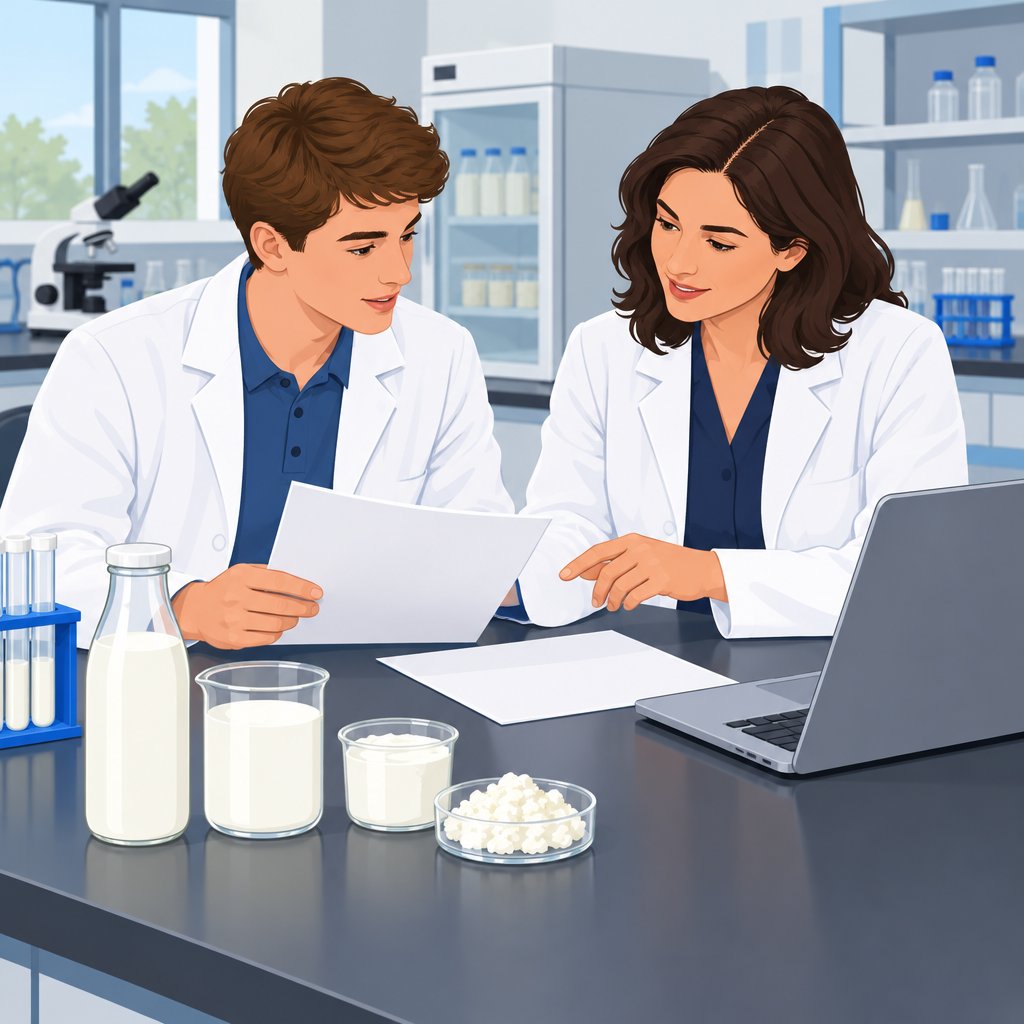
Practical Experience for Dairy Scientists
Practical experience helps aspiring dairy scientists apply theoretical knowledge in real-world settings.
It also develops essential skills and strengthens understanding of industry practices.
Furthermore, hands-on training prepares individuals for challenges across dairy production and research.
- Complete internships or co-op programs with dairy companies or research institutions.
- Work on dairy farms to gain practical knowledge of industry practices.
- Participate in hands-on projects related to dairy production or research.
Internships and Co-op Programs
Internships and co-op programs provide valuable entry points into the dairy industry.
Students can gain hands-on experience with dairy companies or research institutions.
Additionally, these programs expose participants to dairy production, research, and management practices.
Participants work closely with industry professionals and contribute to practical projects.
As a result, they strengthen their skills and build valuable industry connections.
Experience on Dairy Farms
Working on dairy farms develops practical knowledge of daily industry operations.
Individuals work directly with dairy animals and participate in important farm activities.
This experience reveals challenges throughout the dairy production process.
Workers observe animal care, feeding, milk processing, and distribution practices.
They also learn about sustainability, herd management, and farm regulations.
Hands-on Dairy Projects
Hands-on projects connect theoretical knowledge with real-world dairy production and research.
Participants conduct experiments, analyze data, and address practical challenges.
Projects may involve developing dairy products or studying animal nutrition and milk quality.
Through this work, individuals strengthen problem-solving and critical thinking abilities.
They also improve their research methods and gain experience applying scientific knowledge.
Therefore, practical experience helps aspiring dairy scientists develop skills for success in this dynamic field.
Transform Your Career Today
Unlock a personalized career strategy that drives real results. Get tailored advice and a roadmap designed just for you.
Start NowSpecialization and Advanced Training
After earning an undergraduate degree, dairy scientists can continue learning through specialization and advanced training.
This approach strengthens expertise and improves competitiveness in the job market.
Specialized study in animal nutrition or dairy genetics can help professionals develop focused knowledge.
- Pursue specialized training in animal nutrition or dairy genetics.
- Attend workshops or seminars to stay current on industry trends.
- Seek continuing education to enhance skills and knowledge.
Consequently, professionals can become experts in specific dairy science areas and add value to their work.
Workshops and seminars help dairy scientists follow industry trends and advancements.
These events also support professional networking and introduce current research and technologies shaping the dairy industry.
Continuing education keeps dairy scientists informed about developments in their field.
Online courses, certificate programs, and advanced degrees can expand skills and knowledge.
Therefore, specialized training and advanced education can support leadership within the dairy science industry.
This growth can benefit individual careers and encourage continued advancement across the field.
Exploring Job Opportunities
Dairy scientists can pursue varied roles across the dairy industry.
These opportunities include processing, research, quality control, and academia.
Each setting allows scientists to apply specialized knowledge and support dairy operations.
- Dairy processing involves overseeing production and maintaining product quality.
- Research teams develop dairy products and address industry challenges.
- Quality control specialists assess products against regulations and consumer expectations.
- Academic roles combine teaching with dairy science research.
Advancing a Dairy Science Career
Career growth can involve leading teams, departments, or projects.
Specialized expertise can strengthen a scientist’s value within the industry.
Furthermore, focused knowledge can support advancement in research institutions and dairy companies.
- Leadership roles involve guiding teams, departments, or projects.
- Dairy microbiology offers one area for specialized expertise.
- Dairy chemistry provides another possible specialization.
- Dairy technology supports focused professional development.
Contributing to Dairy Growth and Innovation
Dairy scientists help drive growth and innovation throughout the dairy industry.
Their work can advance products, processes, and sustainability practices.
By staying current with industry trends, scientists can support future dairy developments.
Cutting-edge research can help scientists address emerging industry needs.
Collaboration with industry partners can strengthen the impact of dairy science.
Whether they work in processing, research, quality control, or academia, dairy scientists can influence the industry’s future.
Educational Pathways for Dairy Scientists
Becoming a dairy scientist requires a bachelor’s degree in dairy science or a related field.
Afterward, graduates can gain field experience through internships or research opportunities.
Then, a master’s or Ph.D. program can help them specialize in a particular area of dairy science.
Furthermore, continuous learning and professional development help dairy scientists stay current with technological and research advances.
Aspiring dairy scientists can follow their passion and contribute meaningfully to the agricultural industry.
Additional Resources
Google search results for Education Path to Become a Dairy Scientist Agricultural
Bing search results for Education Path to Become a Dairy Scientist Agricultural


