




Introduction
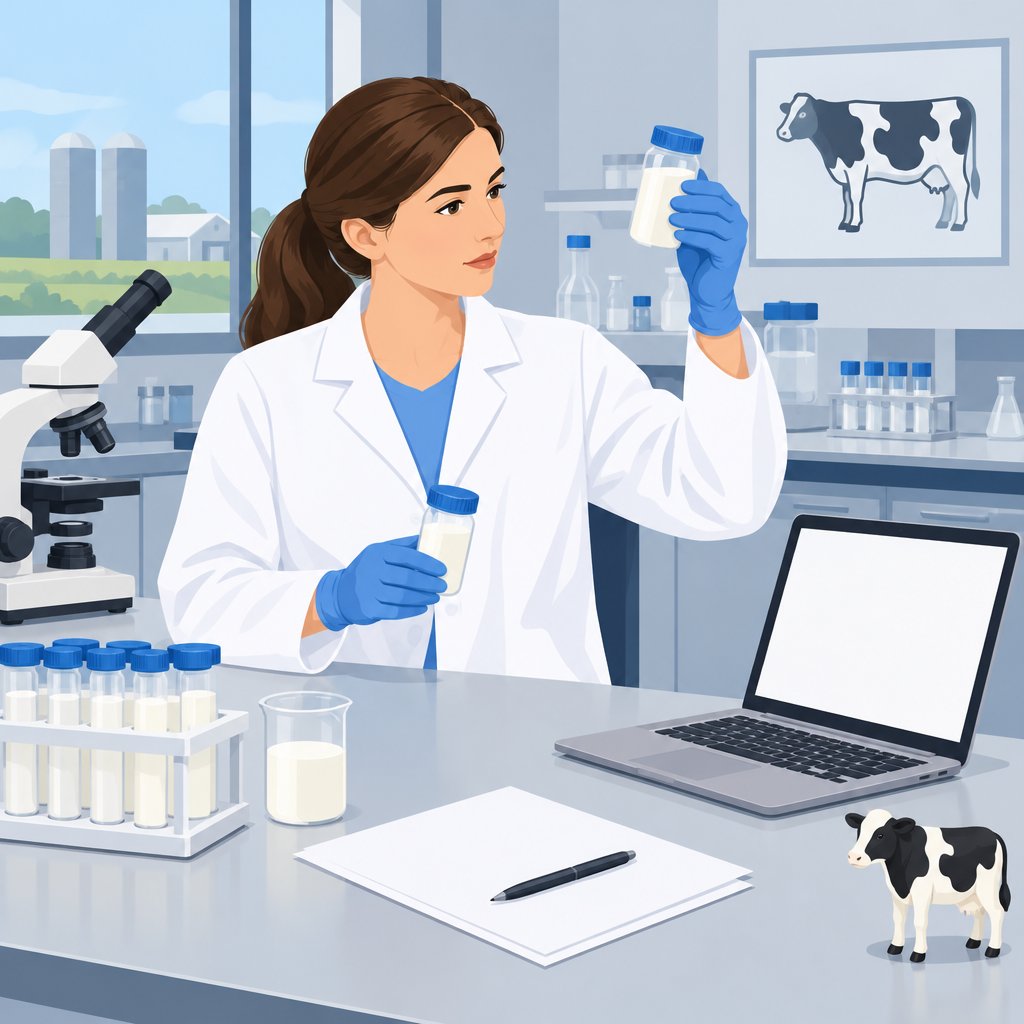
Dairy scientists study milk and dairy products.
Their work helps ensure safety and quality.
Additionally, they support agriculture by improving production and efficiency.
Brief Overview of Dairy Scientists
These professionals study milk.
They also examine dairy products.
Consequently, they help ensure safety and quality.
Importance of Dairy Scientists
Their work supports the agricultural industry.
Moreover, dairy scientists help improve production.
They also help improve efficiency.
Skills and Qualifications
Aspiring dairy scientists need a degree.
Dairy science is one relevant field.
Food science or a related field also qualifies.
Education and Training
Aspiring dairy scientists need a bachelor’s degree in dairy science, animal science, or a related field.
Some higher-level dairy science positions may require additional certifications or advanced degrees.
Practical experience through internships or hands-on training can strengthen preparation.
Students can gain this experience through internships at dairy farms or research labs.
A strong education and practical experience support success in dairy science.
Essential Skills for Dairy Scientists
Dairy scientists need technical knowledge and practical abilities to succeed in their field.
They apply these skills when studying animals, evaluating data, and addressing production challenges.
Furthermore, effective collaboration helps them connect research with dairy industry needs.
- Strong analytical and problem-solving skills
- Knowledge of animal physiology, nutrition, and genetics
- Attention to detail and ability to work in a team
- Communication skills for working with farmers, researchers, and industry professionals
Analytical and Problem-Solving Abilities
Dairy scientists analyze data to understand patterns and evaluate research findings.
They interpret evidence carefully before drawing meaningful conclusions.
Additionally, they solve production challenges involving milk quality and farm efficiency.
Animal Physiology, Nutrition, and Genetics
Knowledge of animal physiology helps dairy scientists understand how cows’ bodies function.
They also study nutritional needs that support high-quality milk production.
Moreover, genetic knowledge helps them select breeding stock and improve herd health.
Attention to Detail and Teamwork
Dairy scientists must collect data accurately and maintain reliable records.
Careful experimental design helps them produce dependable research results.
Meanwhile, teamwork allows them to collaborate with farmers, researchers, and industry professionals.
Communication Across the Dairy Industry
Effective communication helps dairy scientists share research findings with different audiences.
They explain complex scientific concepts clearly to farmers, policymakers, and industry leaders.
Strong professional relationships also support collaboration and innovation in dairy production.
By developing these abilities, aspiring dairy scientists can prepare for meaningful work in the field.
Uncover the Details: Work Environment of an Artificial Insemination Technician
Dairy Scientist Job Duties
- Conduct research on dairy products, genetics, or herd management.
- Develop technologies that improve milk production and quality.
- Work with farmers on animal welfare and sustainability practices.
- Analyze data and report findings to stakeholders.
Dairy scientists perform varied duties that advance dairy production.
They combine research, technology development, field collaboration, and data analysis.
These responsibilities support productive, sustainable, and welfare-focused dairy operations.
Research on Dairy Products, Genetics, and Herd Management
Dairy scientists research dairy products to improve nutritional value and meet consumer demands.
They also study dairy cattle genetics to strengthen breeding programs.
Genetic research can identify markers linked to milk production and disease resistance.
Transform Your Career Today
Unlock a personalized career strategy that drives real results. Get tailored advice and a roadmap designed just for you.
Start NowMeanwhile, herd management research examines feeding, disease prevention, and animal welfare.
Technologies for Milk Production and Quality
Dairy scientists develop technologies that improve milk production and quality.
These innovations can include advanced milking machines and automated cow health monitoring systems.
Farmers can use these technologies to increase efficiency and reduce operating costs.
Improved milking techniques may also increase yields and support better milk quality.
Farmer Collaboration for Welfare and Sustainability
Dairy scientists collaborate with farmers to apply animal welfare best practices.
They may assess farms and identify opportunities for improvement.
Scientists can also provide training on animal care standards.
Additionally, they help farmers develop sustainable practices that conserve resources.
Data Analysis and Stakeholder Reporting
Dairy scientists collect and analyze data from different areas of dairy production.
Their analysis produces insights that guide decisions and support industry improvements.
They report findings to farmers, industry organizations, and government agencies.
Clear reporting helps stakeholders make informed decisions and support useful policy changes.
See Related Content: Innovative Projects for Agri-Science Students
Career Paths in Dairy Science
- Research institutions
- Government agencies
- Dairy farms
- Food companies
Research institutions allow dairy scientists to conduct studies, experiments, and trials that advance dairy science.
Government agencies employ dairy scientists in policy development, food safety inspections, and industry research.
Dairy farms offer practical roles involving milk production, animal health, nutrition, technology, and sustainability.
Food companies hire dairy scientists for product development, formulation improvement, quality assurance, and regulatory affairs.
Advancement and Specialization in Dairy Science
- Management positions within the dairy industry
- Specialized roles in dairy nutrition, reproduction, genetics, or animal welfare
- Leadership roles in research, development, production, or quality assurance
As dairy scientists gain experience, they can advance into management positions across the dairy industry.
Specialization lets professionals focus on nutrition, reproduction, genetics, or animal welfare.
Experienced scientists can lead research, development, production, or quality assurance teams.
These opportunities help professionals match their interests with specific needs across the dairy industry.
Explore Further: Importance of Quality Control in Agricultural Exports
Salary and Job Outlook
When considering a career as a dairy scientist, review salary information and employment trends.
These details help candidates evaluate potential opportunities in this field.
Location, experience, and education can influence individual earning potential.
- Median salary for dairy scientists in the United States
- Projected growth rate for jobs in this field
- Factors affecting salary levels, such as location and experience
Median Salary for Dairy Scientists
Recent data places the median annual salary for United States dairy scientists at about $68,000.
However, individual earnings may differ because employers value experience and education differently.
Professionals should compare salary information with their career goals and qualifications.
Projected Growth Rate for Dairy Science Jobs
Employment prospects for dairy scientists appear positive over the next decade.
Available positions may grow by 7% during that period.
This rate matches the national average for all occupations.
Factors Affecting Salary Levels
Location can significantly influence salary levels for dairy scientists.
Professionals in urban areas often earn more than those working in rural areas.
Experience also affects compensation, with seasoned scientists typically earning more than entry-level professionals.
Advanced degrees and certifications may further increase earning potential.
Understanding these factors helps aspiring dairy scientists plan their professional development.
Gain More Insights: Work-Life Balance Tips for Agricultural Laborers
When you pursue a dairy science career, focus on academic qualifications, networking, and professional development.
Industry connections can reveal valuable opportunities.
Transform Your Career Today
Unlock a personalized career strategy that drives real results. Get tailored advice and a roadmap designed just for you.
Start NowThey also help you follow new trends and advancements in dairy science.
Networking Opportunities in Dairy Science
Networking helps dairy scientists gain valuable industry insights.
It also supports market awareness and relationships with potential employers.
Furthermore, professional connections can encourage research collaboration.
- Join industry organizations like the American Dairy Science Association.
- Attend conferences, workshops, and continuing education courses.
- Participate in industry events and trade shows to meet professionals.
- Use LinkedIn to connect with professionals in the dairy industry.
- Seek research collaborations with other dairy scientists.
Active networking can strengthen your understanding of the dairy industry.
It can also help you recognize market trends and employment possibilities.
Additionally, collaboration can expand your professional relationships and research experience.
Professional Development for Dairy Scientists
Professional development helps dairy scientists maintain current knowledge and practical skills.
It also supports continued growth in a changing field.
Moreover, lifelong learning can help professionals remain competitive.
- Update your knowledge through workshops and training programs.
- Obtain certifications and credentials relevant to dairy science.
- Seek mentorship from experienced dairy professionals.
- Pursue advanced degrees or specialized training when appropriate.
- Follow current research findings and technological advancements in dairy science.
These activities can strengthen your expertise and support long-term career growth.
They also help you contribute more effectively to the dairy industry.
By combining networking with continuous learning, you can position yourself for professional success.
Strategies for Career Success in Dairy Science
Career success in dairy science requires ongoing learning and active professional involvement.
Staying current with research helps you remain knowledgeable about industry developments.
Additionally, practical participation and thoughtful feedback can strengthen your professional growth.
- Stay current on developments in dairy science through literature and research.
- Volunteer for projects or committees to gain experience and visibility.
- Seek feedback from mentors or supervisors to improve skills and performance.
Regularly reviewing literature and research can position you as an informed dairy science professional.
Meanwhile, volunteering provides hands-on experience and increases your visibility within the field.
Finally, mentors and supervisors can offer constructive insights that guide your career development.
Building a Career in Dairy Science
A career as a dairy scientist can provide rewarding and fulfilling professional opportunities.
Build a strong foundation in science, agriculture, and dairy production to prepare for this field.
Dairy scientists conduct research, analyze data, and develop solutions for dairy products and production processes.
This work requires dedication, passion, and commitment to positive industry improvements.
Therefore, seek educational opportunities, internships, and mentorship programs to strengthen your knowledge and skills.
These steps can help you contribute to dairy science and support farmers, consumers, and the industry.
Resources for Dairy Science Careers
For additional guidance, contact academic advisors, industry professionals, and organizations such as the American Dairy Science Association.
These contacts can help you understand pathways into the field.
Also, explore internships, research programs, and networking events to expand your dairy science expertise.
With dedication and hard work, you can pursue your goal of becoming a successful dairy scientist.
Additional Resources
Google search results for Preparing for a Career as a Dairy Scientist Agricultural
Bing search results for Preparing for a Career as a Dairy Scientist Agricultural


