




Role of Seed Technologists
A seed technologist analyzes seeds for planting.
Additionally, the technologist tests and develops seeds for planting.
This work helps ensure crop quality and yield in agriculture.
Education and Training for Seed Technologists
Seed technologists need focused education and practical training to succeed in this field.
They build their expertise through academic study, specialized preparation, and ongoing professional development.
These learning opportunities strengthen their understanding of seed production, quality, and performance.
Academic Requirements
A bachelor’s degree provides the academic foundation for a career in seed technology.
Relevant studies develop knowledge of plants, agriculture, and technical processes.
Additionally, advanced degrees can support research opportunities and higher-level industry roles.
- Most employers require a bachelor’s degree in agronomy, plant science, or agricultural engineering.
- A strong foundation in biology, chemistry, and plant genetics supports work with seed technology.
- Advanced degrees, including master’s degrees or Ph.D.s, can support research positions.
- These degrees can also prepare professionals for higher-level roles in the seed industry.
Specialized Training and Certifications
Specialized training helps candidates develop practical knowledge for seed technology careers.
Employers often value preparation that addresses seed production, germination, and disease resistance.
Moreover, workplace experience allows aspiring professionals to apply their academic knowledge.
- Many employers prefer training in seed production, germination, and disease resistance.
- Certifications from the American Society of Agronomy can demonstrate professional expertise.
- Certifications from the Crop Science Society of America can also demonstrate expertise.
- Internships or apprenticeships with seed companies provide practical skills and industry knowledge.
Continuous Learning in Seed Technology
Seed technologists must continue learning as the field develops.
Regular professional development helps them maintain relevant knowledge and strengthen specialized skills.
Furthermore, industry events create opportunities to expand knowledge and connect with experts.
- Professionals should follow the latest advancements in seed technology.
- Conferences, workshops, and seminars can expand knowledge and professional networks.
- Online courses can strengthen skills in specific areas of seed technology.
- Professional development programs can enhance expertise throughout a career.
Skills and Qualities for Seed Technologists
Successful seed technologists need several skills and qualities to perform effectively in this field.
These attributes support accurate testing, careful observation, practical problem-solving, and productive collaboration.
Furthermore, ongoing development helps professionals thrive in seed technology’s demanding environment.
- Analytical skills: Seed technologists analyze and evaluate seeds for quality and purity.
They use testing methods and equipment to assess viability and germination rates. - Attention to detail: Seed technologists carefully observe seeds for abnormalities or defects.
This attention helps maintain quality standards throughout seed production. - Problem-solving abilities: Seed technologists troubleshoot issues during seed production or storage.
They identify seed degradation causes and develop solutions to improve quality. - Communication skills: Seed technologists collaborate with colleagues, clients, and other industry stakeholders.
Clear communication supports quality discussions, result sharing, and useful recommendations.
Together, these abilities support daily work in seed technology.
Therefore, professionals should continue strengthening these qualities as the field remains dynamic and challenging.
Find Out More: How to Become a Precision Agriculture Specialist
Seed Technologist Job Duties and Responsibilities
Seed Technologists perform several duties that support seed production and distribution.
Their work combines testing, evaluation, breeding, storage management, and regulatory compliance.
These responsibilities help maintain seed quality throughout production and distribution.
- Seed Technologists test and analyze seeds to determine quality, germination rates, and purity.
- They evaluate seed quality and purity against established industry standards.
- They develop new seed varieties through breeding programs that select and cross parent plants.
- They monitor storage conditions to preserve seed viability and quality.
- They ensure seed production processes comply with regulations and industry standards.
Discover More: Key Skills for Successful Extension Agents
Career Growth and Opportunities
Experienced seed technologists can pursue broader responsibilities, specialized work, and leadership opportunities.
Career growth may occur within companies, research institutions, consulting practices, or agricultural startups.
These pathways allow professionals to apply their knowledge while supporting innovation across seed and crop development.
- Advancement opportunities for experienced seed technologists
- Possibility of moving into roles such as seed production manager or research scientist
- Options for specialization in specific types of seeds or crops
Advancement and Career Paths
Experience can help seed technologists qualify for positions with greater responsibility and decision-making authority.
Some professionals advance into seed production management roles that coordinate teams, processes, and operational priorities.
Others become research scientists who develop seed varieties or improve crop development techniques.
Specialization and Research Opportunities
Seed technologists can specialize in particular crops or seed types as their interests and experience develop.
This focus helps professionals build expertise and contribute meaningful knowledge within a defined area.
Additionally, research and development projects let professionals explore innovations that advance seed technology.
Leadership and Advisory Work
Experienced professionals may lead teams within companies or research institutions.
These leaders oversee projects, guide staff, and support strategic initiatives affecting seed technology.
Meanwhile, consulting and advisory roles allow seasoned technologists to share expertise with other organizations.
Entrepreneurship and Professional Education
Entrepreneurial seed technologists can establish companies or launch agricultural startups.
This path allows innovators to develop creative solutions and introduce new technologies.
Continuing education through degrees, certifications, and specialized training can strengthen long-term career development.
Transform Your Career Today
Unlock a personalized career strategy that drives real results. Get tailored advice and a roadmap designed just for you.
Start NowGlobal Development and Professional Networking
International positions give seed technologists opportunities to gain cross-cultural experience and expand professional networks.
Through global work, professionals can support agricultural development and contribute to food security.
Furthermore, conferences, industry events, and professional organizations help technologists discover trends and career resources.
Delve into the Subject: Challenges of Organic Grape Production
Work Environments of Seed Technologists
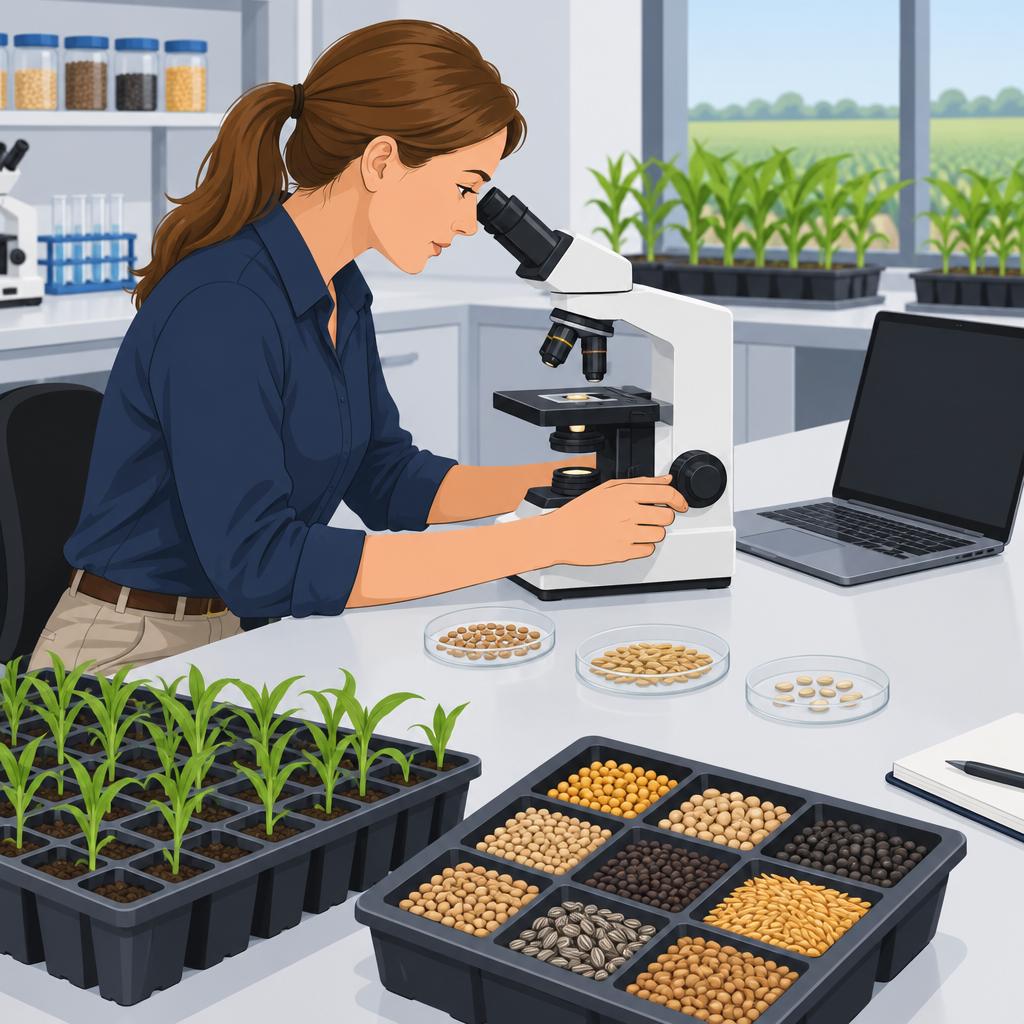
Seed technologists work across several settings that support seed observation, testing, and agricultural research.
These environments provide controlled facilities and practical locations for examining seed performance.
Additionally, collaboration with agricultural professionals connects laboratory findings with field conditions.
Laboratory Settings
Laboratories give seed technologists controlled spaces for testing seed quality and characteristics.
They conduct experiments under precise conditions to support careful research and study.
Consequently, laboratory work helps them examine seeds consistently and document relevant observations.
Field Station Work
Field stations let seed technologists observe seeds in their natural habitat.
They study growth patterns and behavior while varieties develop under real-world conditions.
This hands-on setting adds practical context to findings from controlled laboratory work.
Agricultural Research Centers
Agricultural research centers employ seed technologists alongside other agriculture professionals.
They collaborate with agronomists, plant breeders, and additional specialists on agricultural research.
Together, these teams investigate seed development and conditions affecting agricultural performance.
Professional Collaboration in Agriculture
Agronomists provide insights into soil conditions and climatic factors affecting seed quality.
Plant breeders work with seed technologists to create varieties with specific traits.
These traits can include disease resistance, high yield potential, and adaptability to different growing conditions.
Meanwhile, soil scientists, entomologists, and agricultural engineers contribute complementary perspectives.
Together, this interdisciplinary approach supports innovative solutions for seed quality and crop productivity.
This dynamic environment gives seed technologists opportunities to advance agriculture through research and innovation.
Learn More: How to Improve Irrigation Efficiency on a Budget
Salary and Benefits for Seed Technologists
Compensation remains an important factor when choosing a career in seed technology.
Seed technologists can receive competitive salaries and valuable benefits.
Education, experience, location, and industry sector can influence compensation.
Average Salary Range for Seed Technologists
- Seed technologists can earn an average salary ranging from $45,000 to $70,000 per year.
- Education, experience, and industry sector can affect the salary range.
- Entry-level professionals may start lower, while experienced technologists may earn closer to the upper range.
Benefits for Seed Technologists
- Healthcare coverage may include medical, dental, and vision insurance.
- Retirement plans may include 401(k) options with employer matching.
- Employers may provide professional development opportunities through conferences or workshops.
Factors Affecting Salary
- Location can significantly affect salary, especially in regions with higher living costs.
- Years of experience can increase compensation as professionals strengthen their skills.
- Specialized skills or certifications can also influence salary levels.
Seed technologists can enjoy competitive salaries and valuable benefits in this career field.
These compensation features can support professional growth and advancement opportunities.
Challenges of Working With Living Organisms
- Seed technologists face complexity when they work with living organisms such as plants.
- Moreover, unpredictable environmental factors can influence plant development and crop production.
- Weather, pests, and diseases can significantly affect seed development and agricultural results.
- Therefore, professionals must observe conditions carefully and make timely decisions.
- They also need effective problem-solving skills to manage changing agricultural conditions.
- Furthermore, plant genetic variability creates additional challenges during seed production.
- Careful procedures and technical knowledge help maintain genetic purity and seed stability.
- Consequently, seed technologists must keep learning while developing resilience and adaptability.
Rewards of Advancing Seed Technology
- Despite these challenges, seed technology offers professionals meaningful and fulfilling rewards.
- By advancing seed technology, technologists can help improve crop yields significantly.
- Developing varieties with enhanced traits allows them to support agricultural innovation.
- Higher yields can benefit farmers economically while supporting food security and sustainability.
- Seeing improved food production can give seed technologists a strong sense of accomplishment.
- Their work also creates satisfaction because it helps feed growing populations.
- Additionally, agricultural research and innovation can provide lasting purpose and career fulfillment.
Personal Satisfaction in Food Production and Sustainability
- Seed technologists gain personal satisfaction when their work directly supports food production.
- They also help strengthen food security for the growing global population.
- Moreover, their efforts can promote sustainable agricultural practices and environmental responsibility.
- Developing seeds that need fewer pesticides or fertilizers can reduce farming’s ecological footprint.
- Knowing that their work supports future generations can provide pride and motivation.
- Participation in the agricultural community can deepen their connection to global food production.
- Ultimately, meaningful challenges and rewards make seed technology a deeply fulfilling career path.
Building a Meaningful Career in Seed Technology
Becoming a seed technologist requires a strong foundation in agriculture and biology.
Moreover, passion for agriculture and dedication to continuous learning can support progress in this field.
Education and practical skills provide important preparation for work as a seed technologist.
Individuals interested in this career can find opportunities for growth and meaningful impact.
Seed technology plays a critical role in global food security and sustainability.
By combining a love for plants with commitment to innovation, you can contribute meaningfully to agriculture.
Therefore, people who enjoy working with plants may consider pursuing seed technology careers.
Stay curious, continue learning, and pursue excellence to make a positive impact on the world.
Additional Resources
Google search results for Career Path: Becoming a Seed Technologist Agricultural
Bing search results for Career Path: Becoming a Seed Technologist Agricultural


