




Organic grape production involves growing grapes without synthetic pesticides or fertilizers.
Organic farming is vital in agriculture because it promotes sustainability and reduces environmental impact.
Thesis Statement: Organic grape production faces challenges involving pest management, disease control, and soil health.
Certification and compliance create significant financial challenges for organic grape producers.
These expenses affect growers during certification and throughout production.
Small-scale producers often feel these pressures most strongly.
Cost of Certification
Growers pay for inspections and certification services before receiving organic approval.
Certification agencies base their fees on operation size and complexity.
Therefore, these charges can quickly strain small-scale producers’ budgets.
Cost of Compliance
Organic practices also create ongoing expenses beyond certification fees.
Growers often use labor-intensive methods, including hand weeding and natural pest control.
Additionally, organic fertilizers and soil amendments may cost more than conventional products.
Cover cropping and crop rotation can require further investment.
Financial Burden on Small-Scale Producers
Small-scale growers face substantial financial pressure when they transition to organic production.
They may struggle to cover upfront certification and compliance expenses.
Moreover, limited access to capital and resources makes these costs harder to absorb.
Some growers therefore rely on external funding or assistance during the transition.
Support for Organic Grape Producers
Reducing certification and compliance costs would help organic grape producers sustain their operations.
Access to resources could also ease the transition for small-scale growers.
These forms of support remain crucial to the long-term sustainability of organic grape farming.
Pest and Disease Management
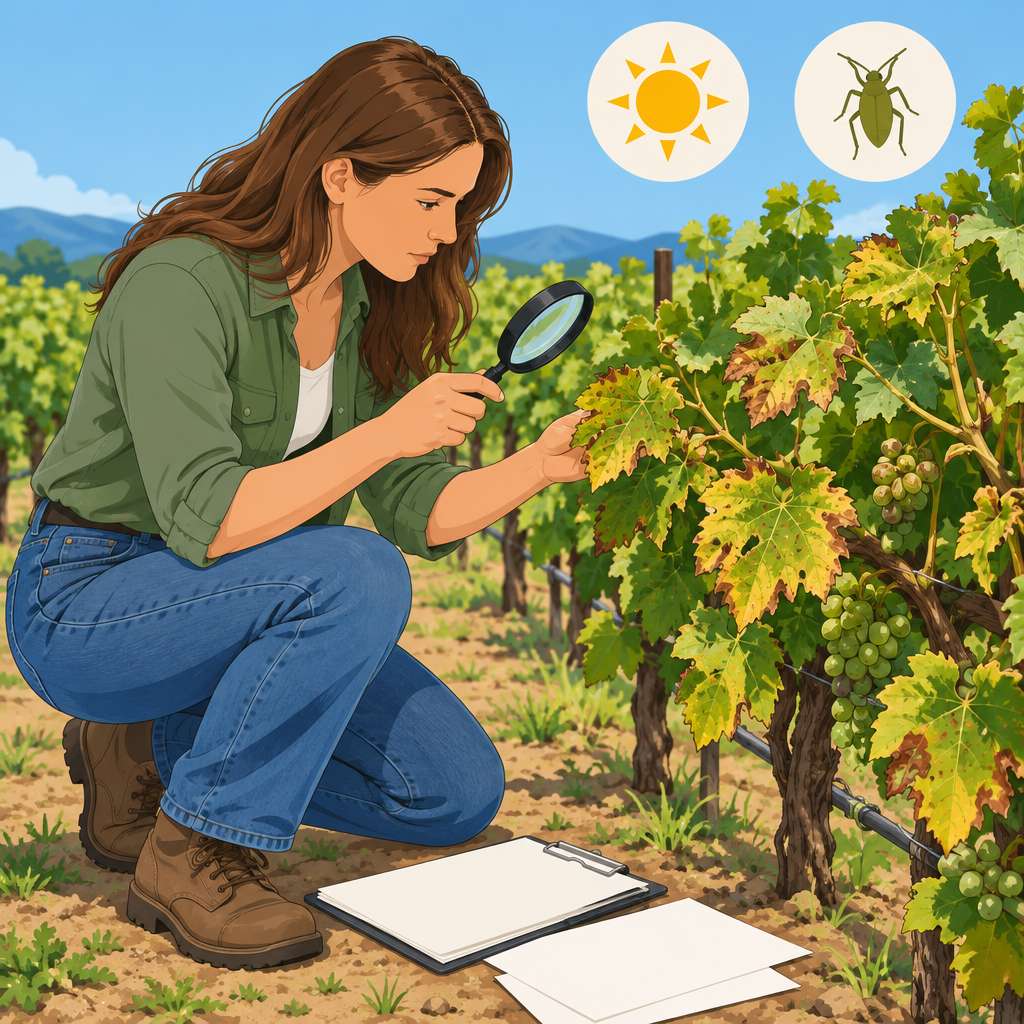
Grapevine growers face challenges when they manage pests and diseases without synthetic chemicals.
Organic methods can reduce pest pressure, but they may require frequent applications and careful planning.
Additionally, cultural practices, biological controls, and new technologies can support vineyard protection.
Limitations of Organic Pest Control Methods
Organic pest control methods may not match the effectiveness of synthetic chemicals.
Natural predators and deterrents may reduce pest populations without eliminating them completely.
Consequently, growers may experience crop damage and need more frequent pesticide applications.
- Organic methods may provide less effective pest control than synthetic chemicals.
- Natural predators or deterrents may not completely eliminate pests.
- Organic pesticides may require frequent applications to maintain pest control.
Grape diseases can spread quickly when growers cannot use synthetic fungicides.
Powdery mildew and downy mildew create particular management challenges for organic vineyards.
Therefore, growers must consider both treatment effectiveness and protection longevity.
Challenges of Preventing Common Grape Diseases
Organic growers may find powdery mildew and downy mildew difficult to manage.
Without synthetic fungicides, disease prevention can become more difficult throughout the vineyard.
Moreover, organic treatments may provide shorter-lasting protection than chemical alternatives.
- Powdery mildew can challenge organic disease management programs.
- Downy mildew can spread throughout vineyards without effective prevention.
- Organic treatments may provide less protection or longevity than chemical alternatives.
Proactive vineyard management can help growers prevent pest and disease outbreaks.
Proper spacing and canopy management improve conditions for organic pest and disease control.
Meanwhile, biological controls and resistant grape varieties can expand available management options.
Proactive Measures and Alternative Solutions
Growers can use proper vineyard spacing and canopy management to reduce outbreak risks.
Biological controls, including ladybugs and beneficial nematodes, can help manage pest populations.
Furthermore, pheromone traps and resistant grape varieties offer alternatives to traditional methods.
- Proper vineyard spacing can help prevent pest and disease outbreaks.
- Canopy management can support healthier vineyard conditions.
- Ladybugs and beneficial nematodes can help manage pests biologically.
- Pheromone traps can provide an alternative pest management solution.
- Resistant grape varieties can support disease management efforts.
Discover More: How to Improve Irrigation Efficiency on a Budget
Challenges of Weed Management in Organic Vineyards
Organic grape production requires careful weed control.
Transform Your Career Today
Unlock a personalized career strategy that drives real results. Get tailored advice and a roadmap designed just for you.
Start NowWithout synthetic herbicides, growers must use alternative methods to manage weed populations.
Manual removal requires substantial time and effort, which increases production costs.
Meanwhile, weeds compete with grapevines for water, nutrients, and sunlight.
That competition can reduce grape yield and quality when growers leave weeds unmanaged.
Effects of Weeds on Grape Yield and Quality
Weeds can reduce grape yield and quality in several ways.
They deprive grapevines of essential resources, which can limit growth and development.
Additionally, weeds may host pests and diseases that spread to grapevines.
Such damage can lower yields and compromise grape quality.
Furthermore, weeds interfere with pruning, harvesting, cultivation, and other vineyard operations.
Therefore, growers need sustainable weed management practices to protect production and organic farming standards.
Delve into the Subject: Extension Agent Resources for Small Farms
Soil Fertility Challenges in Organic Grape Production
Organic grape production requires growers to maintain soil fertility without synthetic fertilizers.
Soil fertility directly affects vine health, grape quality, and yield.
Therefore, growers must balance nutrients through natural soil-building practices.
Natural Sources of Soil Nutrients
Organic growers often use compost, manure, and cover crops as nutrient sources.
However, these materials may remain unavailable in sufficient quantities or release nutrients slowly.
Consequently, vines can experience deficiencies when soil supplies do not match crop needs.
Limitations of Organic Fertilizers
Organic fertilizers generally release nutrients more slowly than synthetic fertilizers.
Their lower concentration can delay nutrient availability and create soil imbalances.
Moreover, inadequately processed materials may introduce weed seeds or pathogens.
Excessive rainfall or irrigation can also leach released nutrients before roots absorb them.
This loss gradually reduces fertility and affects grape production.
Strategies for Improving Nutrient Uptake
Cover crops add organic matter, improve structure, suppress weeds, and retain moisture.
They can also attract beneficial insects that support broader soil health.
Meanwhile, crop rotation can reduce compaction, interrupt pest cycles, and improve nutrient availability.
Compost teas and microbial inoculants can introduce beneficial microbes that support nutrient uptake.
Soil Testing and Nutrient Management
Soil testing helps growers identify nutrient deficiencies and monitor changing soil conditions.
Furthermore, nutrient management planning helps growers apply appropriate organic amendments.
Soil pH tests and tissue analysis support accurate, data-driven decisions.
These practices help growers sustain soil health and produce high-quality grapes.
They also support environmental protection and promote a healthy vineyard ecosystem.
See Related Content: Environmental Impact of Pest Control Methods
Climate Pressures on Organic Grape Production
Climate change significantly affects organic grape production through rising temperatures, shifting precipitation, and more frequent extreme weather.
These conditions threaten both harvest reliability and grape quality.
Therefore, growers need practical responses that protect vineyards while sustaining organic production.
Weather Risks Affecting Vineyard Performance
Unpredictable weather creates serious risks for organic grape farmers.
Sudden frosts, hailstorms, and droughts can reduce yields or destroy entire crops.
Moreover, heatwaves can sunburn grapes and damage their taste, appearance, and market value.
Adaptive Strategies for Climate-Smart Grape Farming
Organic producers can strengthen vineyard resilience by combining water management, crop diversity, technology, and soil care.
These strategies help farmers respond more effectively when climatic conditions change.
Transform Your Career Today
Unlock a personalized career strategy that drives real results. Get tailored advice and a roadmap designed just for you.
Start NowTogether, they support more reliable production of high-quality organic grapes.
- Cover cropping, mulching, and water conservation can reduce the effects of extreme weather.
- Growing grape cultivars with different maturity times can spread risks linked to weather unpredictability.
- Weather monitoring systems, drip irrigation, and shade nets can improve vineyard management.
- Composting, organic fertilization, and soil conservation can help vines withstand difficult conditions.
Learn More: Dairy Science Certifications and Licensing
Organic grape producers face market access challenges while responding to consumer demand.
They must distinguish their products and communicate quality clearly.
Organic Grape Marketing Challenges
The organic grape market includes many producers competing for consumer attention.
Therefore, producers need clear strategies that distinguish their grapes from competing products.
Consumer demand also influences how producers present and market organic grapes.
- Organic grape producers compete in a crowded market with many other suppliers.
- Producers may struggle to build recognizable brands in a saturated market.
Consumer Expectations for Organic Grapes
Consumers expect clear and accurate information about the organic grapes they purchase.
Transparent labeling helps producers communicate product information directly to consumers.
Moreover, producers must provide high-quality organic grapes to meet consumer expectations.
- Producers should use transparent labeling to describe their organic grapes accurately.
- Quality assurance remains essential for meeting consumer expectations and supporting market success.
Strategies for Expanding Market Access
Producers can create unique brand identities that help their organic grapes stand out.
They can also collaborate with retailers, distributors, and other industry participants.
These partnerships can help producers expand their market reach.
- Strategic branding gives organic grape producers a distinct identity within competitive markets.
- Partnerships with retailers and distributors can broaden access to potential consumers.
Effective marketing requires producers to understand consumer expectations and differentiate their brands.
By prioritizing transparency and quality, producers can address important consumer concerns.
Strategic partnerships can further help organic grape producers improve market access.
Strengthening Organic Grape Farming Practices
Organic grape production faces challenges involving pest management, disease control, and weed competition.
However, innovation, research, and collaboration can help grape farmers overcome these obstacles.
Therefore, continuous improvement and sustainable practices will support organic grape farming’s future.
These approaches also promote long-term success and environmental stewardship.
Additional Resources
Google search results for Challenges of Organic Grape Production Agricultural
Bing search results for Challenges of Organic Grape Production Agricultural


