




Logistics Technicians and Supply Chain Operations
Logistics technicians support efficient business operations.
They manage goods and services across supply chains.
As a result, products reach customers in a timely manner.
These professionals coordinate and monitor inventory movement.
They also analyze data to improve logistics processes.
Additionally, logistics technicians collaborate with departments to streamline operations.
They optimize transportation routes, minimize costs, and maintain inventory levels.
Therefore, businesses can meet customer demand more effectively.
Their expertise improves operational efficiency and customer satisfaction.
It also helps businesses gain a competitive edge in the market.
Key Responsibilities of Logistics Technicians
Logistics technicians manage essential tasks that support production and distribution activities.
They track goods, coordinate movement, and maintain information throughout logistics operations.
These responsibilities help businesses maintain organized and reliable supply chain processes.
- Logistics technicians track inventory levels to maintain sufficient stock for production or distribution.
- They coordinate transportation services and select cost-effective delivery methods.
- They oversee storage, picking, packing, and distribution activities.
- They maintain accurate records of inventory, shipments, and logistics information.
Impact on Business Efficiency
Logistics technicians help businesses operate their supply chains smoothly.
They improve efficiency by managing inventory, transportation, warehousing, distribution, and documentation.
Their work supports cost savings, timely deliveries, accurate fulfillment, and informed operational decisions.
Benefits of Effective Inventory Management
Accurate inventory management gives businesses better control over available products.
It also helps technicians identify shortages and limit unnecessary stock.
Consequently, businesses can serve customers promptly while managing storage costs and cash flow.
- Technicians prevent stockouts by monitoring inventory levels and maintaining steady product supplies.
- Effective management reduces excess stock, storage costs, and pressure on cash flow.
- Proper inventory control helps businesses fulfill customer orders promptly and accurately.
Advantages of Efficient Transportation Coordination
Transportation coordination connects products with their intended destinations.
Logistics technicians organize deliveries while considering timing, routes, and transportation costs.
Therefore, efficient coordination supports reliable service and responsible resource use.
- Efficient coordination reduces transportation costs and supports stronger business results.
- Timely deliveries help businesses meet customer demands and maintain positive reputations.
- Route planning can reduce delivery times and fuel consumption.
Importance of Streamlined Warehousing and Distribution
Warehousing and distribution processes determine how efficiently businesses handle stored goods.
Logistics technicians organize these activities to support accurate and prompt order fulfillment.
In addition, structured operations help businesses improve productivity and reduce avoidable mistakes.
- Streamlined processes help businesses fulfill orders accurately and promptly.
- Efficient practices reduce mispicks, misships, and other distribution errors.
- Optimized operations increase productivity and help businesses meet customer demands.
Significance of Meticulous Documentation and Record-Keeping
Accurate documentation gives businesses dependable information about logistics activities.
Logistics technicians record inventory, shipments, and other details that support operational control.
Furthermore, these records help businesses demonstrate compliance and evaluate performance.
- Accurate records help businesses follow regulations and avoid related penalties or fines.
- Documentation supports product traceability, transparency, and accountability across the supply chain.
- Recorded data helps businesses analyze performance and make informed improvement decisions.
Business Efficiency Through Logistics Coordination
Logistics technicians directly influence business efficiency, productivity, and financial performance.
By streamlining supply chain activities, they help businesses move materials and products efficiently.
They also support customer satisfaction by coordinating dependable deliveries.
Cost Control Through Transport and Warehousing
Logistics technicians optimize routes and delivery schedules to reduce delays and disruptions.
They coordinate shipments with suppliers, manufacturers, and distributors while monitoring inventory levels.
This coordination helps businesses avoid stockouts and overstock situations.
They also negotiate favorable carrier rates and improve warehouse layouts to control shipping and storage costs.
Faster Fulfillment and Improved Customer Satisfaction
Logistics technicians streamline order processing and fulfillment, which shortens delivery times.
Advanced tracking systems help technicians identify bottlenecks and inefficiencies quickly.
Reliable deliveries protect product condition and strengthen the customer experience.
Furthermore, optimized inventory management keeps needed products available and reduces backorders.
These improvements can support customer satisfaction and retention.
Transform Your Career Today
Unlock a personalized career strategy that drives real results. Get tailored advice and a roadmap designed just for you.
Start NowDelve into the Subject: Job Outlook and Salary Expectations for Maritime Pilots
- Use software for inventory management.
- Implement tracking systems for real-time updates.
- Automate routine tasks to increase efficiency.
Improving Efficiency Through Technology
Technology helps companies remain competitive in today’s fast-paced business environment.
It also helps companies meet changing customer demands more effectively.
Furthermore, technology can strengthen logistics operations through software, tracking systems, and automation.
Software for Inventory Management
Logistics technicians can use inventory software to organize stock information efficiently.
The software tracks stock levels, monitors product movements, and supports warehouse space planning.
Consequently, technicians save time and reduce errors during inventory control.
Tracking Systems for Real-Time Updates
Real-time shipment visibility supports effective decision-making across global supply chains.
Tracking systems show shipment locations and provide status updates during transportation.
As a result, technicians can address potential delays or issues proactively.
Automation of Routine Tasks
Automation reduces the time required for manual and repetitive logistics activities.
Technicians can automate data entry, order processing, and inventory replenishment.
Therefore, they can focus more attention on strategic activities that support business operations.
Business Value of Integrated Logistics Technology
Integrated technology helps logistics technicians work more efficiently and effectively.
It improves inventory control, shipment visibility, and task management across logistics operations.
Ultimately, businesses can strengthen competitiveness, improve customer satisfaction, and support long-term growth.
Learn More: Common Freight Broker Mistakes and How to Avoid Them
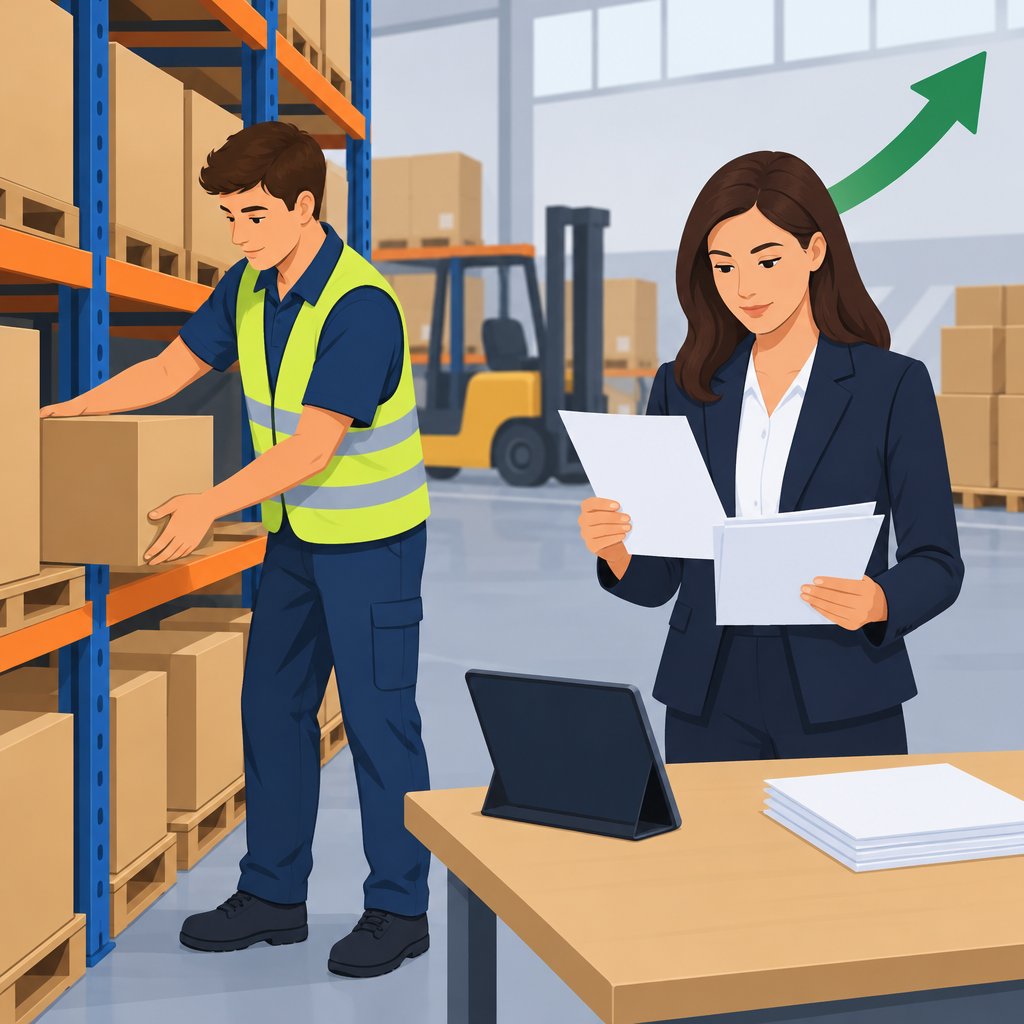
Collaboration With Other Departments
Logistics technicians collaborate across departments to keep operations smooth and improve efficiency.
- Coordination with procurement for timely material supply
- Communication with sales and marketing for accurate demand forecasting
- Cooperation with production for seamless scheduling
They coordinate with procurement to secure materials on time.
This coordination helps production avoid delays and maintain steady goods flow.
Additionally, logistics technicians communicate with sales and marketing teams to forecast product demand accurately.
They use market trends and customer preferences to adjust logistics strategies.
Consequently, businesses can reduce overstocking and prevent stockouts.
Logistics technicians also cooperate with production teams to support seamless schedules.
They align transportation and delivery schedules with production timelines.
This alignment improves workflow and helps reduce operational bottlenecks.
Effective collaboration helps logistics technicians minimize disruptions across business operations.
Learn More: Safety Tips Every Delivery Driver Should Know
Continuous Training for Logistics Technicians
Continuous training helps logistics technicians improve their performance and support business efficiency.
Furthermore, ongoing development prepares technicians to respond effectively to changing operational demands.
Businesses can therefore strengthen productivity, reduce costs, and improve customer satisfaction through regular learning.
Awareness of Industry Trends and Best Practices
Logistics continues to evolve as businesses adopt new trends and best practices.
Continuous training keeps technicians informed about these developments and their potential operational applications.
As a result, technicians can adjust strategies to meet changing customer demands and maintain competitiveness.
Technical Skills for Emerging Technologies
Modern logistics operations depend on tools and systems that streamline processes and increase efficiency.
Regular development enables technicians to use new technologies confidently and accurately.
Moreover, stronger technical skills help technicians optimize workflows, minimize errors, and improve operational performance.
Communication and Interpersonal Development
Effective communication supports smooth coordination among logistics technicians and their colleagues.
Training can improve clear information sharing, conflict resolution, and teamwork across logistics activities.
Consequently, technicians can reduce delays and support more consistent supply chain management.
Transform Your Career Today
Unlock a personalized career strategy that drives real results. Get tailored advice and a roadmap designed just for you.
Start NowBusiness Results from Ongoing Development
Well-trained logistics technicians can contribute significantly to successful business operations.
Their updated knowledge and stronger skills support improved productivity and lower operating costs.
Additionally, effective coordination can help businesses deliver better service and increase customer satisfaction.
Uncover the Details: Historical Evolution of Railroad Engineering
Case Studies Showing the Impact of Logistics Technicians
These case studies show how logistics technicians influence manufacturing, order fulfillment, and global supply chain expansion.
First, they apply lean principles to reduce waste and increase manufacturing efficiency.
Additionally, they optimize logistics operations and establish transportation and distribution channels.
Lean Principles in Manufacturing
Logistics technicians implemented lean principles within a manufacturing company.
They reduced waste throughout the manufacturing process.
As a result, the company increased process efficiency.
Order Fulfillment and Backorder Reduction
Logistics technicians optimized operations to streamline order fulfillment.
Consequently, customers received deliveries faster.
The improved process also reduced backorders.
Global Supply Chain Expansion
Logistics technicians supported the company’s global supply chain expansion.
They established efficient transportation channels for the expanding network.
They also created effective distribution channels to support global operations.
Logistics technicians play a crucial role in streamlining operations and reducing costs.
Their expertise in supply chains, inventory, and transportation helps businesses deliver goods on time and in optimal condition.
Meanwhile, continuous improvement remains essential in this evolving business environment.
Logistics technicians must adapt to market changes, technological advances, and customer demands.
By embracing innovation and refining processes, businesses can remain competitive and meet consumer expectations.
Therefore, businesses should invest in developing their logistics teams.
Training, tools, and resources empower technicians to perform effectively and support operational excellence.
A skilled and well-equipped logistics workforce supports sustainable growth and profitability.


