




Historical Evolution of Railroad Engineering
Railroads have played a crucial role in transportation systems for centuries.
Their development revolutionized transportation worldwide.
This section examines key milestones in railroad engineering.
Early Beginnings
Early railroads used wooden rails to transport goods.
These systems applied simple rail paths to moving materials.
Thus, early practices established a foundation for later railroad development.
Industrial Revolution
During the Industrial Revolution, steam-powered locomotives emerged.
Iron tracks supported the expansion of rail transportation.
Together, these changes reshaped railroad engineering during the eighteenth and nineteenth centuries.
Technological Advancements
Electric and diesel trains later replaced steam engines.
These technologies made rail travel faster and safer.
Consequently, railroads continued advancing beyond steam-powered systems.
Modern Innovations
High-speed rail has transformed the railway industry in recent years.
Maglev trains represent another modern railway technology.
Automation has also changed how the railway industry operates.
Environmental Impact
Railroads have become an eco-friendly mode of transportation.
They reduce carbon emissions and traffic congestion.
Therefore, rail systems support environmental goals alongside transportation needs.
Future Prospects
Ongoing research focuses on sustainability and efficiency.
These priorities guide continued development in railroad engineering.
As a result, the future of railroad engineering looks promising.
Early Developments in Railroad Engineering
Early railroad engineering produced significant advances that established foundations for modern rail transportation.
These developments changed how trains moved people and goods.
They also shaped later railway construction and locomotive design.
Steam-Powered Locomotives
Engineers introduced steam-powered locomotives as a major advancement in railroad engineering.
This innovation enabled trains to move faster and farther than before.
Moreover, steam locomotives pulled heavy loads across long distances.
Engineers developed these machines during the early nineteenth century.
They quickly became the primary power source for trains.
Construction of Early Railway Lines
Engineers constructed the first railway lines during the early nineteenth century.
These lines transported goods and passengers between key cities and industrial centers.
For example, the Stockton and Darlington Railway opened in England in 1825.
That railway demonstrated rail transportation’s potential.
Consequently, railway construction expanded across Europe and North America.
Influence on Modern Railroad Design
Early engineering techniques continue to influence modern railroad design.
Engineers developed methods for laying tracks, building bridges, and constructing tunnels.
They also designed locomotives using principles that remain relevant today.
Furthermore, early engineers emphasized efficiency, safety, and durability.
These principles guide rail transportation systems around the world.
Expansion of Railroads in the United States
Railroads played a crucial role in westward expansion during the 19th century.
Transform Your Career Today
Unlock a personalized career strategy that drives real results. Get tailored advice and a roadmap designed just for you.
Start NowThey connected the eastern and western parts of the country.
They also facilitated trade, transportation, and communication across long distances.
Railroads and Westward Expansion
Railroads opened western territories to settlement and development.
They provided faster and more efficient transportation for people and goods.
Railroad routes encouraged economic growth and supported natural resource exploration.
- Railroads linked remote areas with urban centers and expanded the frontier.
- They helped settlers and businesses reach newly developing western territories.
- They improved connections between communities, markets, and transportation routes.
Development of Transcontinental Railway Systems
Constructing the transcontinental railroad required a monumental engineering effort.
The first transcontinental railway in the United States opened in 1869.
It connected the country’s eastern and western regions while reducing cross-country travel time.
- The railway system revolutionized travel and trade across the country.
- Multiple transcontinental railways later expanded the national transportation network.
- These routes strengthened connections between distant regions and commercial centers.
Railroad Engineering and Urban Industrial Growth
Railroad engineering transformed small settlements into thriving cities and industrial hubs.
Businesses and industries established operations along railway lines.
Improved transportation allowed raw materials and finished goods to move across long distances.
- Railroads boosted commerce by connecting producers, businesses, and markets.
- Mining expanded as railways supported natural resource transportation.
- Agriculture benefited from improved access to distant markets.
- Manufacturing grew as railroads moved materials and finished products efficiently.
Railroad expansion connected people and places across the United States.
It also shaped urbanization and supported the nation’s economic development.
Gain More Insights: Freight Broker vs. Freight Forwarder: Key Differences
Modern Railroad Engineering
Railroad technology has evolved significantly over the years.
Advancements in several areas have transformed how trains operate and travel.
These developments have improved efficiency, safety, and sustainability in rail transportation.
Diesel and Electric Locomotives
The transition from steam engines to diesel and electric locomotives marked a major transportation milestone.
Diesel engines emerged during the early twentieth century and improved efficiency.
They also reduced maintenance costs compared with steam engines.
Electric locomotives use overhead wires or third rails for power.
Consequently, they became popular in urban areas and high-speed rail lines.
Their cleaner operation and faster acceleration supported these applications.
Track Design and Maintenance
Railway track design and construction have also improved significantly over time.
Modern tracks use high-quality steel and concrete to support durability.
These materials also help provide smoother train operation.
Meanwhile, advanced maintenance techniques strengthen railroad safety and efficiency.
Ultrasonic testing helps identify conditions that require attention.
Automated track inspection vehicles further improve maintenance processes.
Railroad Signaling and Safety Systems
Railroad signaling systems support the safe and efficient movement of trains.
Automatic block signaling helps manage train movements along railway lines.
Interlocking systems coordinate routes and reduce collision risks.
Positive train control technology provides another important safety advancement.
Additionally, grade crossing protection improves security near railway crossings.
Train control systems further protect passengers and railway personnel.
Continued Railroad Innovation
Continuous innovation has shaped modern railroad engineering.
Locomotive improvements, stronger tracks, and advanced signaling support better train operations.
Together, these technologies continue to enhance efficiency, safety, and sustainability in rail transportation.
Uncover the Details: Legal Considerations for Couriers: Know Your Rights
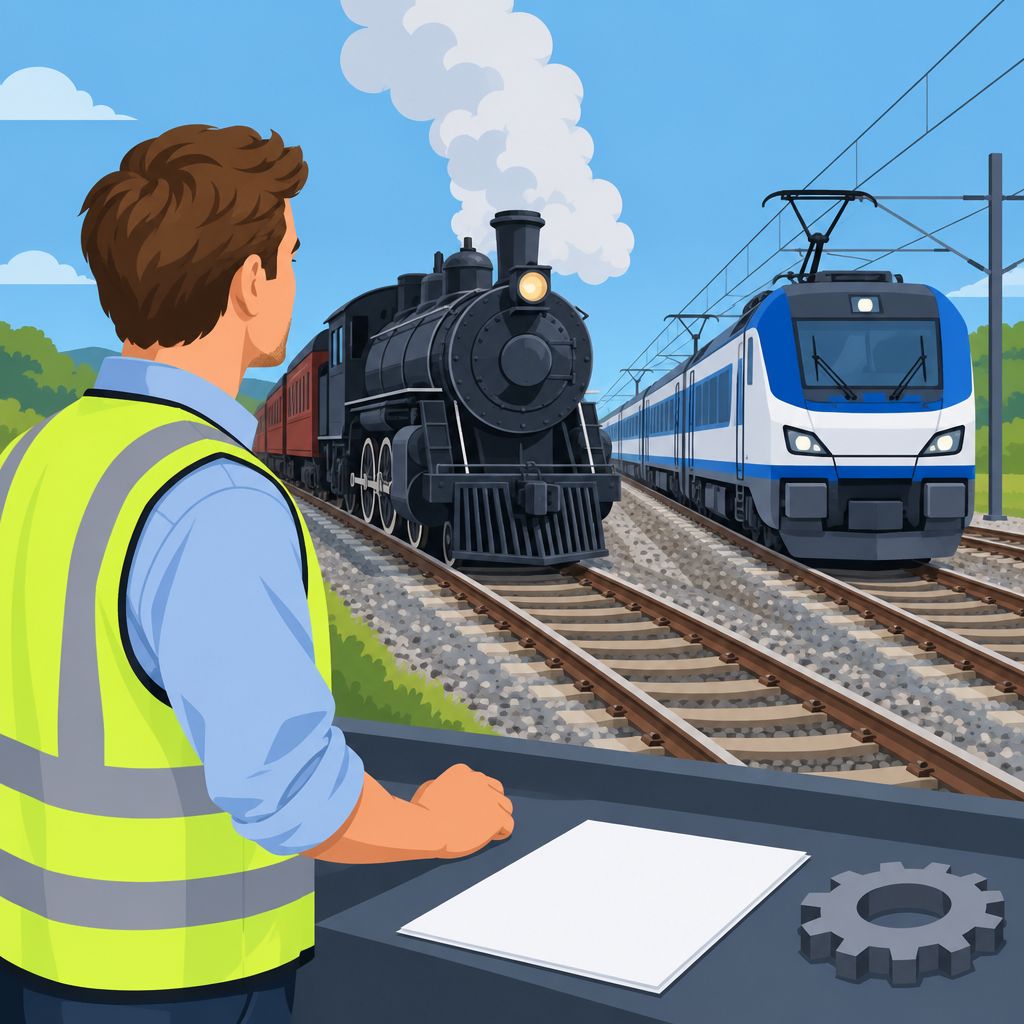
Railroad Engineering during the Industrial Revolution
Railroad engineering advanced significantly during the Industrial Revolution.
Transform Your Career Today
Unlock a personalized career strategy that drives real results. Get tailored advice and a roadmap designed just for you.
Start NowTechnological innovations transformed railroad construction and transportation efficiency.
These developments established foundations for modern rail transportation systems and influenced society, economies, and globalization.
Technological Innovations in Railroad Construction
- Steam locomotives revolutionized transportation efficiency.
- Iron and steel tracks improved durability and load-bearing capacity.
- Telegraph communication improved operational safety and coordination.
Standardization of Rail Gauges and Equipment
Railway operators adopted standard gauges to improve interoperability and connectivity.
Standardized components supported mass production and equipment interchangeability.
Consequently, standardization improved efficiency and reduced railroad maintenance costs.
- Standard rail gauges ensured interoperability between connected railways.
- Standardized equipment facilitated mass production and interchangeability.
- Standardization reduced maintenance costs for railroad operators.
Expansion of Railroad Networks across Continents
Railroad construction integrated local economies into national and global networks.
Transcontinental railroads connected distant regions and facilitated trade and migration.
Railway expansion encouraged urbanization, industrial growth, and population mobility.
- Railroad construction integrated local economies into broader networks.
- Transcontinental railroads connected distant regions and supported trade.
- Railway expansion encouraged urbanization and industrial growth.
Industrial Revolution railroads combined technological progress, standardization, and network expansion.
These developments shaped modern rail transportation and transformed society, economies, and global connections.
See Related Content: Common Myths and Misconceptions About Bus Drivers
Impact of Railroad Engineering on Society
Railroad engineering has profoundly changed society.
It has reshaped travel, commerce, employment, and urban development.
Its influence continues to appear in modern communities and transportation systems.
Transformation of Travel and Commerce
Railroads made travel faster and more efficient for people and goods.
They connected cities and regions, which encouraged trade and economic growth.
Moreover, reliable freight service helped businesses move large quantities across long distances.
Railroads supported industries such as agriculture, manufacturing, and mining.
Passenger trains broadened public travel and supported tourism.
Creation of Engineering and Labor Opportunities
Railroad construction and operation created many jobs for engineers and laborers.
Civil engineers designed tracks, bridges, and tunnels.
Mechanical engineers developed locomotives and rolling stock.
Meanwhile, skilled workers maintained infrastructure and operated trains.
The industry also expanded steel manufacturing and related employment.
Influence on Urban Planning and Architecture
Railroad construction influenced urban planning and architecture.
Stations became focal points for development, commerce, and community activity.
Grand stations and terminal buildings became architectural landmarks.
Additionally, rail access encouraged neighborhoods to develop around transportation hubs.
People could commute farther, supporting city expansion and suburban growth.
Discover More: What Does a Transportation Planner Do?
Environmental Considerations in Modern Railroad Engineering
Modern railroad engineering places environmental considerations at the center of infrastructure planning.
Engineers reduce ecological effects through sustainable construction, efficient locomotives, and environmentally conscious design.
These approaches support cleaner railway development while addressing ecosystems, emissions, noise, and visual surroundings.
Sustainable Practices in Infrastructure Development
Engineers use recyclable materials when developing and maintaining railway infrastructure.
They also reduce waste generation throughout construction and maintenance activities.
Furthermore, these practices help minimize disturbance to surrounding ecosystems.
Energy-Efficient Technologies in Locomotives
Engineers develop energy-efficient locomotives to reduce fuel consumption and emissions.
Regenerative braking can recover energy during train operation.
Hybrid propulsion systems and improved aerodynamics can further support efficient locomotive performance.
Eco-Friendly Design for Reduced Environmental Impact
Engineers design railway systems with environmental considerations from the planning stage.
Transform Your Career Today
Unlock a personalized career strategy that drives real results. Get tailored advice and a roadmap designed just for you.
Start NowThey optimize track alignments to reduce noise pollution near railway corridors.
Additionally, green spaces along corridors can promote biodiversity and reduce visual impact.
Challenges Facing Contemporary Railroad Engineering
Contemporary railroad engineering faces infrastructure, capacity, and technology challenges.
Engineers must support safe and efficient transportation while rail networks continue operating.
These demands affect passenger and freight services.
Aging Infrastructure and Maintenance Issues
Aging railroad systems have operated for many decades.
Consequently, tracks, bridges, and tunnels experience wear and tear.
Regular maintenance supports network safety and efficiency.
However, maintenance can be costly and time-consuming.
Engineers must balance maintenance needs with ongoing railroad operations.
That balance helps meet passenger and freight demands.
Increasing Demand for High-Speed Rail Systems
Growing populations and expanding urban centers increase demand for high-speed rail systems.
High-speed trains provide faster transportation and a more environmentally friendly travel option.
However, engineers need significant investment to implement these systems.
Therefore, they must design and build lines that remain safe, efficient, and cost-effective.
Adoption of Emerging Transportation Technologies
Emerging technologies create new possibilities for railroad engineering.
Maglev trains use magnetic levitation to propel trains at high speeds.
They can provide smoother and quieter rides than traditional rail systems.
Elon Musk proposed the hyperloop concept as a high-speed transportation system.
Hyperloop pods would travel through vacuum tubes to reduce travel times.
Yet regulatory, financial, and technical hurdles complicate adoption.
Engineers must address these hurdles before such systems become practical options for mass transportation.
Railroads as a Continuing Transportation Foundation
Railroads continue to connect distant regions and support modern transportation systems.
Their engineering evolution spans steam locomotives, contemporary high-speed trains, and ongoing technological improvements.
Rail construction enables goods and people to move between regions, supporting economic growth.
Although air travel and road networks have advanced, railroads remain essential to global transportation infrastructure.
Rail transportation offers cost-effective movement and can support environmentally friendly transportation goals.
Consequently, engineers must develop railroad systems that operate more efficiently and safely.
They must also address environmental concerns as demand for sustainable transportation solutions increases.
Meanwhile, stakeholders should invest in research and development for railroad engineering.
Such investment can encourage new technologies and effective engineering practices.
As a result, railroads can remain a vital part of modern transportation networks.
Additional Resources
Google search results for Historical Evolution of Railroad Engineering Transportation and Logistics
Bing search results for Historical Evolution of Railroad Engineering Transportation and Logistics


