




Workplace Safety for Traffic Managers
Traffic managers encounter various workplace risks and hazards each day.
Therefore, they must actively manage safety across the workplace.
Strong safety practices help traffic managers reduce risks and protect employees.
Identifying Workplace Risks
Traffic managers must identify potential risks throughout the workplace.
They should examine workplace conditions and recognize hazards before accidents occur.
This approach helps managers address risks before they affect employees.
Developing Safety Procedures
Traffic managers should develop clear procedures that address workplace risks.
They must also implement those procedures throughout the workplace.
As a result, effective procedures help reduce hazards and support safer work.
Providing Proper Training
Traffic managers should provide employees with proper safety training.
Training should explain the safety protocols employees must follow.
Consequently, informed employees can apply safety practices more consistently.
Conducting Regular Inspections
Traffic managers should conduct regular workplace inspections.
Inspections help them identify hazards that require attention.
Managers can then take corrective action to improve workplace safety.
Using Personal Protective Equipment
Traffic managers should ensure that employees use appropriate protective equipment.
Proper equipment helps prevent accidents during workplace activities.
Additionally, managers should reinforce equipment use through safety procedures.
Maintaining Effective Communication
Team members need effective communication to maintain a safe work environment.
Traffic managers should encourage employees to share relevant safety information.
Clear communication helps teams respond to workplace concerns more effectively.
Preparing an Emergency Response Plan
Traffic managers should create an emergency response plan.
The plan can guide their actions when accidents occur.
Therefore, emergency planning helps managers respond more effectively.
Encouraging Safety Reporting
Traffic managers should encourage employees to report safety concerns.
Employees should also report incidents when they occur.
These reports can help managers prevent similar accidents in the future.
Supporting Continuous Safety Improvement
Traffic managers should regularly review their safety protocols.
They should update those protocols when workplace needs change.
Continuous review can strengthen workplace safety over time.
Conducting Risk Assessments
Identifying and assessing potential workplace risks helps traffic managers protect employees.
Risk assessments help organizations recognize hazards before accidents occur.
They also support safer decisions and stronger workplace controls.
Importance of Identifying and Assessing Risks
Effective risk identification helps prevent workplace accidents and injuries.
It also supports compliance with applicable safety regulations.
Furthermore, risk management protects employees and property while minimizing financial losses.
- Prevention of accidents and injuries
- Compliance with safety regulations
- Protection of employees and property
- Minimization of financial losses
Tips for Conducting Thorough Risk Assessments
Traffic managers should identify every potential hazard in the workplace.
They should assess each risk according to its likelihood and severity.
Employee involvement can improve findings, recommendations, and control measures.
- Identify all potential hazards in the workplace
- Assess the likelihood and severity of each risk
- Involve employees in the risk assessment process
- Document all findings and recommendations
- Implement control measures to mitigate risks
Significance of Regular Risk Assessments
Regular assessments help organizations maintain ongoing workplace safety.
Transform Your Career Today
Unlock a personalized career strategy that drives real results. Get tailored advice and a roadmap designed just for you.
Start NowThey prevent complacency and keep employees aware of changing risks.
They also support safer processes and strengthen the organization’s safety culture.
- Ensures ongoing safety in the workplace
- Prevents complacency and maintains awareness
- Adapts to changes in work environment or processes
- Improves overall safety culture within the organization
Regular risk assessments help traffic managers identify and address workplace risks proactively.
Clear Safety Procedures for Traffic Managers
Clear safety procedures give traffic managers practical guidance for reducing potential risks and hazards.
Additionally, effective communication ensures that every staff member understands the required safety protocols.
Regular training keeps everyone informed about current safety procedures and practices.
- Clear procedures: Traffic managers use practical guidance to reduce potential risks and hazards.
- Effective communication: Traffic managers use meetings, emails, and signage to explain protocols clearly.
- Regular training: Sessions keep staff informed about current safety procedures and practices.
You Might Also Like: Freight Agent Tools and Software to Know
Providing Personal Protective Equipment
Personal Protective Equipment supports traffic managers working in potentially hazardous environments.
Employers must provide appropriate PPE to support employee safety and well-being.
Proper equipment helps workers address exposure related to their tasks.
Importance of Appropriate PPE
Appropriate PPE reduces the likelihood of injuries and accidents.
It also helps employers meet applicable safety regulations.
Furthermore, reliable PPE promotes workplace safety and strengthens employee confidence.
- Protects against potential injuries or accidents
- Ensures compliance with safety regulations
- Promotes a culture of safety in the workplace
- Boosts employee morale and confidence
Types of PPE for Traffic Managers
Traffic managers may need different PPE based on their assigned tasks.
Visibility equipment supports safer work near roads and moving traffic.
Additional equipment protects the head, eyes, hands, hearing, and feet.
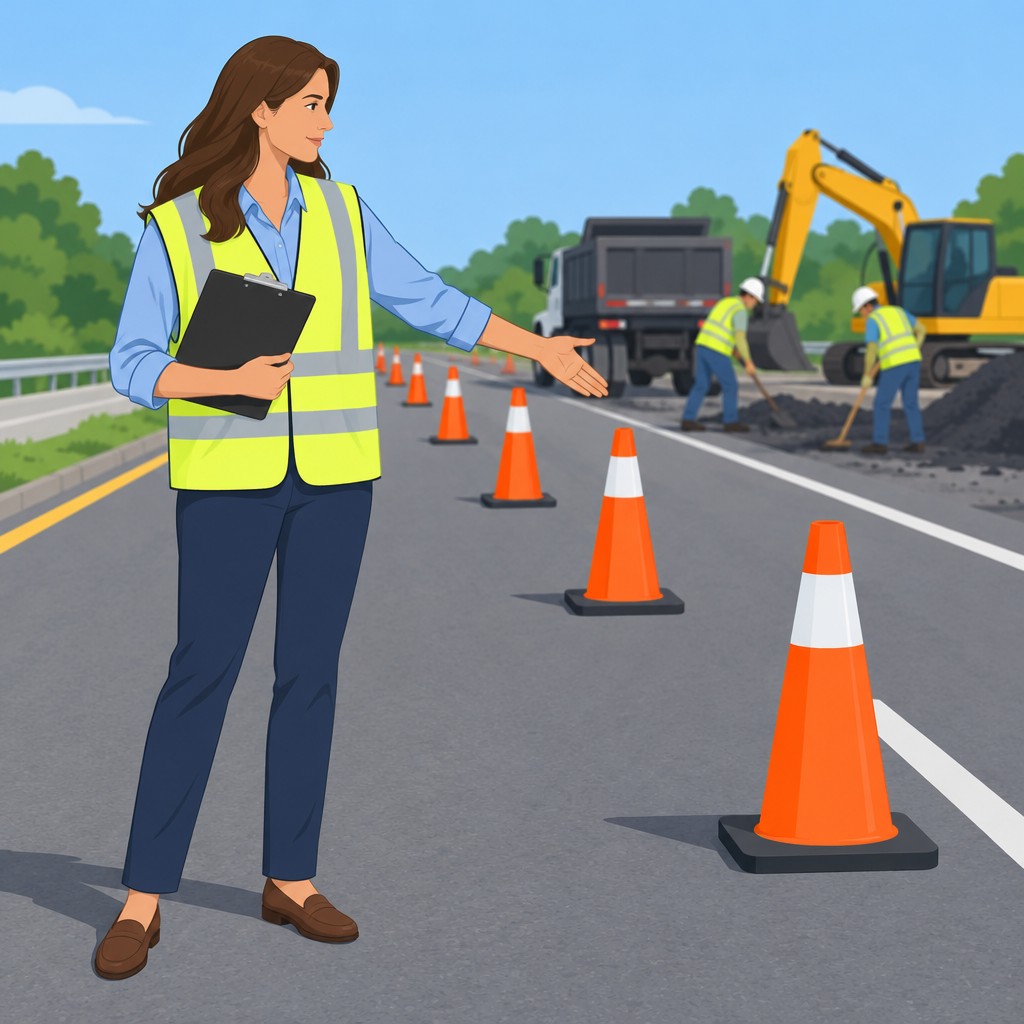
- Safety vests for visibility on the road
- Hard hats to protect against head injuries
- Safety goggles or glasses for eye protection
- Gloves to safeguard hands from cuts or abrasions
- Earplugs or earmuffs for hearing protection
- Steel-toed boots for foot protection
Proper PPE Usage and Maintenance
Employers should train employees to wear and use PPE correctly.
Regular inspections help identify damaged or worn-out equipment.
Employees should report PPE issues or discomfort promptly.
- Provide training on how to correctly wear and use PPE
- Regularly inspect and replace damaged or worn-out PPE
- Encourage employees to report PPE issues or discomfort
- Store PPE in a clean and dry area when not in use
- Follow manufacturer’s instructions for cleaning and maintenance
Adequate PPE helps traffic managers protect themselves from potential workplace hazards.
It also supports a safe and productive work environment for employees.
Delve into the Subject: Collaboration in Urban and Transportation Planning
Implementing Traffic Control Measures
Effective traffic control measures help protect employees and visitors in the workplace.
Proper traffic management reduces confusion and supports safer movement throughout the workplace.
Traffic managers should coordinate vehicle and pedestrian movement to reduce accident risks.
Risk Reduction Through Traffic Flow Management
Traffic managers can reduce congestion by studying workplace traffic patterns and identifying potential hazards.
Clear directions help employees and visitors understand where vehicles and pedestrians should travel.
Physical controls can further guide movement and limit unsafe traffic interactions.
- Assess workplace traffic patterns and potential hazards thoroughly.
- Use clear signage and markings to guide traffic effectively.
- Establish separate pathways for pedestrians and vehicles.
- Use speed bumps, barricades, and physical barriers to control traffic flow.
- Train employees in safe driving practices and traffic management protocols.
Compliance with Traffic Laws and Regulations
Traffic managers should ensure that employees and visitors follow applicable traffic laws.
Following speed limits and stop signs helps reduce collisions and injuries.
Compliance also helps prevent legal liabilities and supports efficient workplace operations.
Gain More Insights: Workplace Culture for Dock Workers in Logistics
Building a Shared Safety Culture
A strong safety culture helps traffic managers and staff prioritize safe decisions at work.
When leaders emphasize safety, employees understand its importance in daily tasks.
This shared focus encourages responsibility and accountability across the staff.
- Lead by example: Traffic managers demonstrate their commitment to safety through their own actions.
- Empower employees: Managers encourage staff members to take ownership of daily safety practices.
- Provide training: Regular sessions keep employees informed about current protocols and procedures.
- Communicate effectively: Open communication channels help employees report safety concerns promptly.
- Recognize contributions: Managers acknowledge employees who actively support a safe work environment.
By involving every staff member, traffic managers can make safety a shared workplace priority.
This collaborative approach strengthens responsibility and accountability among employees.
A safety-conscious environment can reduce accidents and injuries.
It can also improve morale, productivity, and job satisfaction.
When safety becomes a core value, it protects employees and supports organizational success.
Transform Your Career Today
Unlock a personalized career strategy that drives real results. Get tailored advice and a roadmap designed just for you.
Start NowLearn More: Designing Urban Spaces for Efficient Transportation
Conducting Regular Safety Inspections
Regular safety inspections help traffic managers maintain safer workplaces for their teams.
These inspections reveal potential hazards before they cause accidents or injuries.
They also confirm that teams follow safety protocols and address necessary changes.
Importance of Regular Safety Inspections
Traffic managers can use inspections to evaluate workplace conditions consistently.
Furthermore, inspections help managers correct safety concerns before workers face harm.
This proactive approach supports safer decisions and strengthens workplace safety practices.
Key Areas for Inspection
During inspections, traffic managers should examine several factors affecting team safety.
They should confirm that traffic managers have proper tools and training for vehicle guidance.
They should also review signage, markings, work zones, and emergency procedures.
- Traffic flow management requires proper tools and training for safe vehicle guidance.
- Signage and markings should remain clear, visible, and current.
- Work zones should use suitable layouts and markings to protect workers.
- Team members should understand and practice emergency procedures.
How Inspections Prevent Accidents and Injuries
Safety inspections help traffic managers identify hazards before accidents occur.
Managers can then address those hazards and create safer conditions for team members.
Regular reviews also encourage employees to maintain consistent attention to workplace safety.
Sustaining Workplace Safety Outcomes
Workplace safety remains essential for traffic managers maintaining a secure working environment.
Consistent safety measures can prevent accidents and support safer daily operations.
Traffic managers should review safety audits, communication practices, and protocol enforcement regularly.
These actions can help teams work more efficiently and productively.
Therefore, traffic managers should apply safety guidance consistently throughout the workplace.
Such consistency helps protect employees and strengthen a safety-conscious culture.
Team well-being must remain the first priority, and managers should never compromise safety.
Additional Resources
Google search results for Workplace Safety Tips for Traffic Managers Transportation and Logistics
Bing search results for Workplace Safety Tips for Traffic Managers Transportation and Logistics


