




Lumberjack Techniques for Safe Tree Felling
When lumberjacks fell trees, safety remains a critical aspect of their work.
Lumberjacks must follow proper procedures to prevent accidents and injuries.
One wrong move during tree felling can cause catastrophic consequences for workers and nearby people.
By understanding correct felling techniques, lumberjacks can create a safer, more efficient work environment.
Understanding Tree Felling Basics
- Proper knowledge and skills are essential for safe tree felling.
- Assessing the surroundings and potential hazards helps prevent accidents.
Proper knowledge and practical skills make tree felling safer and more effective.
Workers should understand tree species, growth patterns, and physical characteristics before selecting a felling approach.
They should also assess tree health and interpret visible signs before planning the operation.
Accurate cuts and controlled direction help bring down a tree safely.
Training with chainsaws and other equipment helps workers avoid accidents during the operation.
Assessing Surroundings and Potential Hazards
Before felling begins, workers must assess the surroundings and identify potential hazards.
Buildings, power lines, and nearby trees can obstruct the intended path of the falling tree.
The tree’s lean and weight distribution influence the safest direction for the fall.
Workers must identify potential hang-ups, dead branches, decayed wood, and hidden obstacles.
They should also establish a clear escape route before beginning the felling process.
Selecting the Right Tools for Felling Trees
When felling trees safely, selecting the right tools remains essential.
- Axe: An axe suits small to medium-sized trees and should remain sharp and well-balanced.
- Chainsaw: A chainsaw handles larger trees and should remain well-maintained and fueled.
- Wedges: Wedges help control the tree’s fall direction and prevent binding on the cutting tool.
- Safety Equipment: Helmets, goggles, gloves, and steel-toed boots provide vital personal protection.
Importance of Keeping Tools Maintained and Sharp
Maintaining and sharpening tools supports efficient and safe tree felling.
- Efficiency: Sharp tools simplify cutting, reduce fatigue, and lower potential accident risks.
- Safety: Dull tools can slip, while sharp tools support clean cuts and precise control.
- Longevity: Regular maintenance extends tool life and reduces replacement needs, saving time and money.
Choosing suitable tools and maintaining them properly supports safer and more effective tree felling.
Discover More: How to Maintain Quality Standards as an Assembler
Planning the Cutting Direction
When felling trees, workers must plan the cutting direction carefully.
This choice affects how safely and efficiently the tree falls.
Therefore, workers should evaluate the tree and surrounding area before cutting.
Determining the Tree’s Natural Lean
First, workers should assess the tree’s natural lean by observing its trunk and branches.
Next, they should identify obstacles or structures that could affect the fall.
Wind direction and other environmental factors also influence the safest cutting direction.
- Assess the tree’s natural lean by observing its trunk and branches.
- Identify obstacles or structures that may affect the tree’s fall.
- Use the natural lean to help choose the safest cutting direction.
- Removing the tree opposite its lean can cause an unpredictable fall.
- Account for wind direction and other environmental factors during planning.
- Ignoring the natural lean can cause accidents and property damage.
Choosing the Appropriate Cutting Direction
After assessing the lean, select a direction that allows a predictable fall.
Choose an area that provides enough space for the tree to land safely.
Also, plan an escape route before starting the cuts.
- Select a direction that allows the tree to fall safely and predictably.
- Aim for an area with ample space and no obstructions.
- Avoid cutting toward structures, power lines, or other dangerous objects.
- Plan an escape route if the tree does not fall as expected.
Creating the Notch and Back Cut
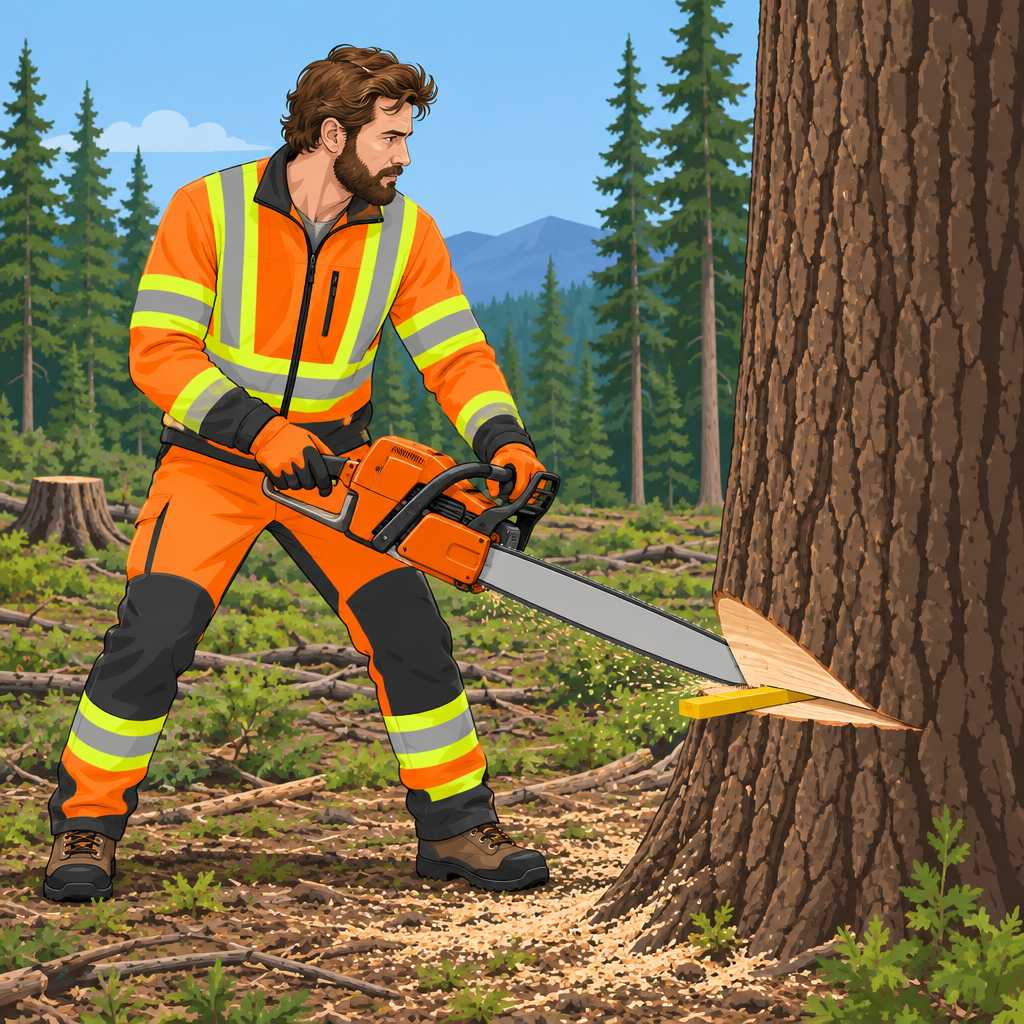
Begin by creating a notch on the side facing the desired falling direction.
Then, make the back cut on the opposite side while preserving a guiding hinge.
Finally, monitor the tree and retreat when it begins to fall.
- Create a notch facing the desired falling direction.
- Cut the notch at a 45-degree angle.
- Extend the notch one-third into the tree’s diameter.
- Make a horizontal back cut slightly above the notch’s bottom.
- Leave a hinge of uncut wood to guide the fall.
- Keep the back cut level and straight for better control.
- Monitor the tree’s movement and retreat to a safe location.
Careful direction planning helps workers fell trees more predictably.
These steps also help minimize accidents and property damage during tree removal.
Learn More: Day in the Life of a Waste Management Worker
Safety Precautions for Tree Felling
- Wear protective gear, including hard hats, safety glasses, gloves, and steel-toe boots.
- Keep a clear escape route available if the tree falls unexpectedly or in the wrong direction.
- Work with a partner who can assist you and watch for potential hazards.
- Maintain constant communication so every team member understands the situation.
- Assign roles and responsibilities before starting the tree felling process.
- Discuss the game plan before cutting begins to prevent confusion or accidents.
- Monitor weather conditions because strong winds or rain can create additional risks.
- Inspect tools and equipment before each use to confirm they work properly.
- Take breaks and stay hydrated during extended tree felling sessions to maintain focus.
- If fatigue or uncertainty develops, take a break and reassess the situation.
You Might Also Like: Apprenticeship Programs for Aspiring Boilermakers
Monitoring the Tree’s Fall
During felling, closely monitor the tree’s movement.
This attention supports a safe and successful operation.
It also helps you respond when the tree changes direction.
Importance of Monitoring
- By monitoring the tree’s fall, you can anticipate unexpected movements and take appropriate action.
- Furthermore, monitoring lets you adjust your cutting technique or position to guide the tree appropriately.
- This practice helps prevent accidents, property damage, or injuries caused by an unpredictable fall.
Tips for Monitoring
- Stay focused on the tree while observing how it responds to your cutting.
- Also, watch for leaning or shifting that suggests the tree may change direction.
- Keep an escape plan ready if the tree moves toward you or another hazardous direction.
- Use hand signals or communication tools when the fall trajectory changes suddenly.
- Remain calm and composed, avoiding sudden movements that could cause accidents or injuries.
By monitoring the tree closely and preparing for changes, you support a safe and efficient felling process.
Gain More Insights: How to Maintain and Repair Installed Glass Structures
Clearing the Area and Cleanup
After felling a tree, workers must clear the area and remove surrounding debris.
Transform Your Career Today
Unlock a personalized career strategy that drives real results. Get tailored advice and a roadmap designed just for you.
Start NowThis process maintains a safer work environment and supports efficient tree removal.
Workers should use suitable techniques when cutting, moving, and disposing of tree debris.
Importance of Clearing the Area
Clearing logs and branches removes tripping hazards from the work site.
A less cluttered area also reduces risks while workers operate chainsaws and log splitters.
Additionally, removing obstacles allows workers and equipment to move more easily.
- Clear felled trees and debris to prevent workers from tripping over logs or branches.
- Remove clutter to support safer use of chainsaws and log splitters.
- Keep pathways open so workers and equipment can move efficiently around the site.
Proper Techniques for Cutting Trees into Sections
Workers should assess the tree’s size, shape, structure, and nearby obstacles before cutting.
They should select sharp, well-maintained tools that suit the cutting task.
Strategic cuts help workers create manageable sections while controlling movement during cutting.
- Evaluate the tree’s structure and surrounding obstacles before choosing a cutting approach.
- Choose a sharp, well-maintained chainsaw or axe for the task.
- Cut branches from the trunk, moving from the bottom toward the top.
- Make horizontal trunk cuts to create manageable sections.
- Watch for tension points and release them through controlled, strategic cuts.
- Wear gloves, safety glasses, and steel-toed boots while cutting sections.
Techniques for Cleanup
Begin cleanup by removing large branches, trunks, and other heavy debris.
Next, reduce smaller branches and twigs into pieces that workers can dispose of more easily.
Finally, clean the surface and dispose of waste according to local requirements.
- Use a log splitter or tractor to move heavy logs away from the site.
- Cut small branches and twigs into smaller pieces for easier disposal.
- Use a chipper to turn suitable small debris into mulch.
- Sweep away sawdust, wood chips, and other remaining debris.
- Recycle or compost tree waste whenever possible.
- Avoid burning waste unless local regulations permit it.
These clearing and cleanup practices support a safer and more efficient tree removal process.
Workers should continue using suitable tools and careful techniques while handling trees and debris.
Applying Safe Tree Felling Practices
Proper procedures remain essential when workers fell trees safely.
First, inspect the tree and surrounding area thoroughly.
Next, assess the tree’s lean and plan clear escape routes.
Also, wear appropriate safety gear and select tools suited to the task.
Use an open-face notch and back cut to guide the tree’s fall.
Meanwhile, stay alert and monitor your surroundings throughout the process.
These measures can significantly reduce accidents and injuries during tree work.
Therefore, prepare carefully and approach tree felling with caution.
Respect the potential dangers involved in every cutting operation.
Whether experienced or new, every tree worker should prioritize safety.
Following established guidelines supports a safer, more successful felling process.
A proactive approach can help prevent accidents and injuries.
By applying these practices, workers can approach tree felling more safely.
Additional Resources
Google search results for Lumberjack Techniques: Felling Trees Safely Construction and Manual Labor
Bing search results for Lumberjack Techniques: Felling Trees Safely Construction and Manual Labor


