




Mining Safety and Efficiency
Mining supplies raw materials for various sectors.
The industry must protect workers while maintaining productive operations.
Therefore, safety and efficiency remain essential priorities in mining.
Safety Priorities in Mining Operations
Safety measures help prevent accidents, injuries, and fatalities among workers.
Mining companies protect their workforce by implementing effective safety practices.
Furthermore, safer operations can strengthen overall productivity.
Efficiency and Technological Progress
Efficient mining operations improve cost-effectiveness and competitiveness.
Companies can optimize resources, reduce waste, and increase output through greater efficiency.
Meanwhile, technological advances continue transforming mining processes.
Technology for Safer Mining
Autonomous vehicles and drones support surveying and operational activities.
Real-time monitoring systems provide information that can improve mining decisions.
Additionally, proximity detection, wearable devices, and advanced ventilation reduce workplace risks.
Smarter and More Productive Operations
Automation streamlines processes and helps mining companies manage operations efficiently.
Machine learning and data analytics support better decisions and reduce downtime.
By adopting these innovations, mining companies can pursue a safer, more efficient future.
Mining Safety Innovation and Worker Protection
Mining has historically involved serious dangers for workers.
Accidents and fatalities have occurred when companies lacked effective safety protocols.
Therefore, mining companies need technology that strengthens protection and supports safer operations.
Challenges in Traditional Mining Safety
Traditional mining methods can expose workers to unsafe working conditions.
Additionally, limited ventilation and poor underground communication can increase operational risks.
Emergency response weaknesses can also worsen dangers involving collapses and explosions.
- Unsafe working conditions
- Limited ventilation
- Poor underground communication systems
- Inadequate emergency response protocols
- Risks involving mine collapses or explosions
Technology Advancing Mining Safety
Modern technology helps mining companies identify hazards and monitor working environments.
For example, drones can survey areas while reducing the need for direct exposure.
Meanwhile, automation, tracking systems, wearables, and artificial intelligence support safer decisions.
- Drones for surveying and monitoring
- Automated machinery that reduces human involvement
- Real-time systems that track miners
- Wearable technology that monitors health and safety conditions
- Artificial intelligence for predictive maintenance and hazard detection
Operational Benefits of Safety Innovation
Safety innovations can reduce workplace accidents and fatalities.
They can also improve efficiency, productivity, and compliance with regulations.
Furthermore, preventive maintenance can lower costs while sustainable practices reduce environmental impacts.
- Fewer workplace accidents and fatalities
- Improved efficiency and productivity
- Lower costs through preventive maintenance
- Stronger compliance with regulations and standards
- Reduced environmental impact through sustainable practices
Mining companies can strengthen worker protection by adopting safety-focused technologies.
These investments can support safer workplaces and more efficient operations.
Consequently, innovation can help the mining industry pursue long-term success and sustainability.
Use of Drones in Mining Operations
Drones have changed mining operations by supporting aerial data collection and remote site observation.
This section describes their practical uses across mining sites.
Technology also helps teams examine areas from safer distances.
Aerial Surveys and Inspections
- Drones use cameras and sensors to capture high-resolution images of mining sites from the air.
- These aerial surveys create detailed maps of topography, mineral deposits, and mining infrastructure.
- Moreover, drones inspect hazardous or difficult areas for potential safety hazards and structural weaknesses.
- They can fly near structures and provide close visual inspections without exposing workers to unnecessary risks.
- Real-time monitoring helps teams respond quickly when mining operations encounter problems.
Benefits of Drones in Mining
- Drones reduce worker exposure by limiting the need to enter dangerous areas.
- They improve safety by providing current information about hazards and mining conditions.
- Additionally, drones streamline surveys and inspections, saving time and labor costs.
- Their precise data collection supports better-informed operational decisions.
- Drones also help teams monitor environmental effects on ecosystems and local communities.
Drones have transformed mining practices by combining remote observation with detailed data collection.
As technology advances, mining teams may gain additional tools for safer and more efficient operations.
These developments can also support environmental monitoring across mining areas.
See Related Content: Importance of Time Management in Construction
Implementation of Autonomous Vehicles
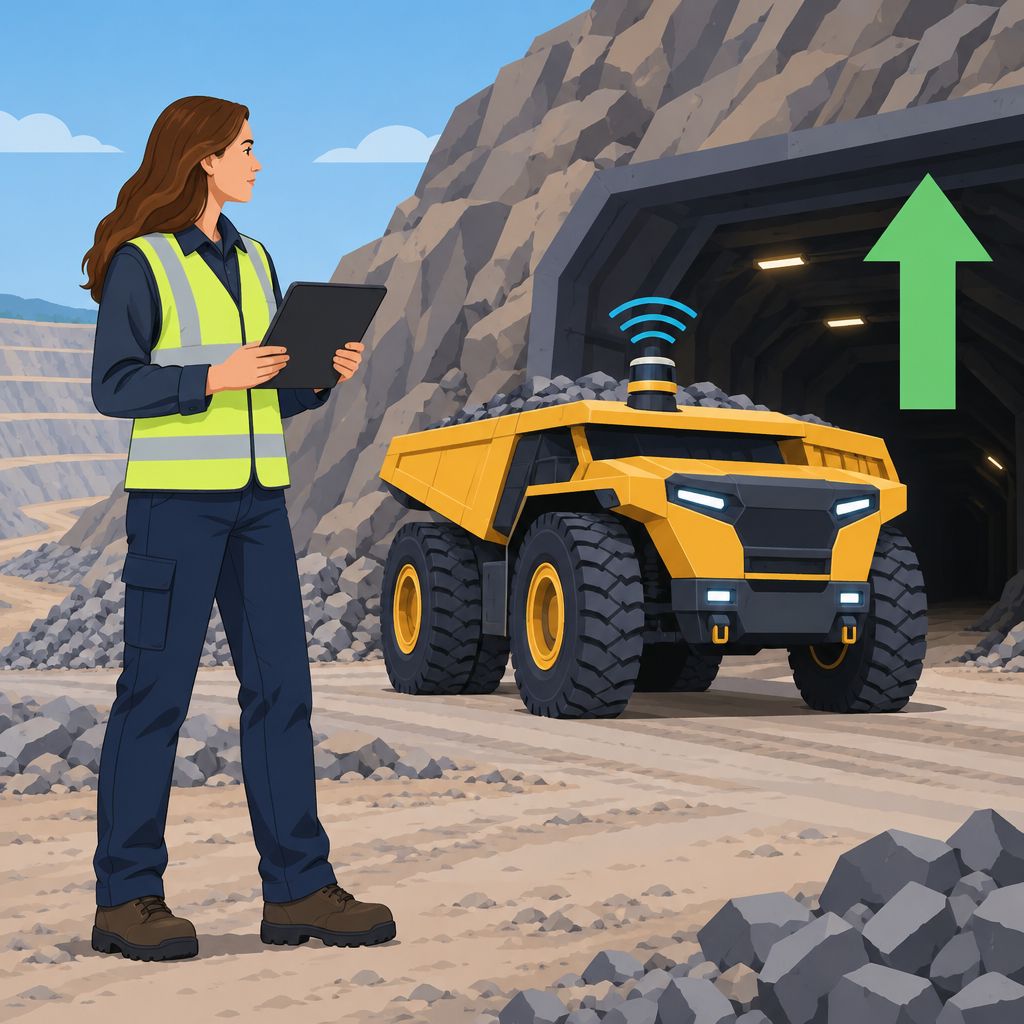
Autonomous vehicles are transforming mining operations by improving safety and efficiency.
Mining companies increasingly use self-driving trucks and equipment across various operations.
These technologies support safer work practices while helping teams complete essential tasks more efficiently.
Transform Your Career Today
Unlock a personalized career strategy that drives real results. Get tailored advice and a roadmap designed just for you.
Start NowEnhanced Safety Through Autonomous Vehicles
Autonomous vehicles reduce accident risks by removing many opportunities for human error.
Additionally, advanced sensors and cameras constantly monitor the vehicles’ surroundings.
As a result, self-driving trucks can navigate challenging terrain without placing human operators at risk.
- Autonomous vehicles reduce the risk of accidents by eliminating human error.
- Advanced sensors and cameras constantly monitor surrounding conditions.
- Self-driving trucks navigate challenging terrain without exposing human operators to unnecessary risks.
- These vehicles detect obstacles in real time and help operators avoid collisions.
- Furthermore, autonomous vehicles follow safety protocols and guidelines consistently.
Efficiency Gains from Autonomous Equipment
Autonomous vehicles can operate continuously, which increases productivity during mining operations.
Moreover, continuous operation reduces delays and supports faster task completion.
Optimized routes and precise programming also help mining teams manage resources more effectively.
- Autonomous vehicles operate continuously, increasing productivity in mining operations.
- They complete tasks without breaks, helping teams finish work more quickly.
- Self-driving trucks follow optimized routes that can reduce fuel consumption and operating costs.
- Precise programming improves accuracy during mining tasks.
- Consequently, autonomous vehicles support a more streamlined and efficient workflow.
Autonomous vehicles strengthen mining operations by combining safer practices with more consistent performance.
They also help companies optimize tasks while maintaining continuous operational support.
As technology advances, mining operations may achieve further improvements through autonomous equipment.
Learn More: Common Misconceptions About Waste Management Workers
Innovations Making Mining Safer and More Efficient
Mining companies use innovative technologies to improve worker safety.
These technologies also help personnel respond effectively to dangerous situations.
Virtual reality provides one practical method for strengthening mining training.
Virtual Reality Training for Mining Personnel
Virtual reality technology creates immersive simulations of dangerous mining scenarios.
Workers can practice responses within controlled environments without facing actual hazards.
This approach makes safety training more engaging, practical, and memorable.
Simulating Dangerous Mining Scenarios
VR technology lets mining personnel experience hazardous situations in controlled environments.
For example, simulations can recreate cave-ins, equipment malfunctions, and harmful substance exposure.
Trainees interact with virtual environments while practicing safety protocols and emergency responses.
- VR technology presents hazardous situations without creating actual risks for trainees.
- Simulations recreate cave-ins, equipment malfunctions, and harmful substance exposure.
- Headsets and controllers let trainees interact with virtual mining environments.
- Realistic audio and visual effects make training more engaging and memorable.
- Feedback tools help trainers assess performance and provide targeted guidance.
Safety Benefits of VR Training
Immersive simulations help workers understand the risks associated with mining activities.
Meanwhile, virtual practice prepares trainees to follow procedures during real emergencies.
Mining companies can also tailor simulations to their specific operating environments.
- VR simulations strengthen safety awareness through realistic training experiences.
- Trainees practice safety procedures and emergency protocols in virtual settings.
- Virtual training reduces the need for physical mock-ups and expensive equipment.
- Customized modules provide relevant training for specific mining environments.
- Immersive practice improves knowledge retention and emergency response recall.
Uncover the Details: How to Ensure Quality in Construction Projects
Air Quality Monitoring in Mines
Mine operators monitor air quality to protect workers and maintain efficient operations.
Poor air quality can expose miners to dangerous gases and harmful environmental conditions.
Advanced sensors now help operators identify changing conditions and respond quickly.
Health Risks from Harmful Gases
High concentrations of carbon monoxide, methane, or sulfur dioxide can threaten miner health.
Exposure may cause respiratory problems, dizziness, or death.
Continuous monitoring helps operators detect abnormal air composition before conditions worsen.
Advanced Sensors for Mine Environments
Mining equipment can use sensors that measure gas concentration, temperature, humidity, and airflow.
These devices collect information from inside the mine and support timely hazard detection.
Operators can then implement appropriate safety measures based on current conditions.
Real-Time Data Supports Rapid Decisions
Real-time sensor data shows operators how air conditions change.
For example, a sudden rise in carbon monoxide can trigger an evacuation.
Consequently, workers can leave the mine before serious health effects occur.
Preventing Air Quality Accidents
Continuous monitoring can help prevent gas explosions, fires, and ventilation-related accidents.
Operators can use current readings to address inadequate ventilation and other hazards.
These proactive measures protect miners while reducing operational disruption.
Supporting Safer Mine Operations
Sensor technology supports safer and more efficient mining operations.
By combining sensor readings with timely decisions, mine operators can strengthen workplace protection.
Transform Your Career Today
Unlock a personalized career strategy that drives real results. Get tailored advice and a roadmap designed just for you.
Start NowBetter air quality awareness also helps teams maintain productive operations.
Uncover the Details: Landscape Architect: Working with Historic Properties
Rock fragmentation breaks rock apart so mining teams can extract valuable minerals.
Technology innovations have made this process safer and more efficient.
These advances support controlled extraction across mining operations.
New Drilling and Blasting Techniques
- Advances in drilling techniques enable more precise and controlled blasting.
- Specialized drilling equipment helps operators create blast holes with greater accuracy.
- Modern blasting techniques reduce vibrations and flyrock, which improves safety.
- New explosive formulations optimize fragmentation while minimizing environmental impact.
Improved Efficiency in Extracting Minerals
- Enhanced drilling and blasting techniques produce better rock fragmentation.
- Improved fragmentation makes mineral extraction from the ore body easier.
- Efficient rock fragmentation increases productivity and reduces operational costs.
- Reduced oversize material lowers the energy required to process ore.
Better fragmentation supports easier mineral extraction and higher productivity.
Consequently, mining companies can lower operational costs while minimizing environmental impact.
Advancements in Underground Communication Technology
Improved technologies, including leaky feeder systems, have revolutionized underground communication.
Additionally, fiber optic cables provide high-speed, reliable communication during mining operations.
Wireless systems help miners stay connected without restricting movement with wires.
Meanwhile, real-time tracking systems monitor personnel and equipment throughout the mine.
RFID technology helps teams locate miners during underground emergencies.
Digital communication platforms also help miners exchange information in real time.
Enhanced Safety and Coordination
Stronger communication systems help miners quickly share critical information.
During emergencies, miners can promptly notify rescue teams through improved communication channels.
Furthermore, efficient communication helps teams coordinate rescue efforts and evacuation procedures.
Real-time personnel tracking enables faster responses when accidents occur.
Clear communication reduces errors and miscommunication during mining operations.
Communication systems also strengthen coordination between mining departments.
Communication Technology Improves Mining Operations
Advancements in underground communication technology have improved mining safety and operational efficiency.
These innovations help miners communicate more effectively and respond faster during emergencies.
Therefore, mining operations benefit from investing in reliable communication systems.
Innovations Supporting Sustainable Mining Practices
Mining companies have introduced various innovations to improve safety and efficiency in mining operations.
These innovations include advanced drones, automated vehicles, and wearable technology.
Additionally, real-time monitoring systems and artificial intelligence strengthen safety protocols and operational efficiency.
Together, these tools help mining companies reduce risks associated with traditional mining methods.
They also help companies increase productivity across mining operations.
By adopting these innovations, companies can protect miners from workplace hazards.
At the same time, technology supports sustainable and profitable mining practices.
These advances therefore support the industry’s future while improving operational performance.


