




Reliable and Skilled Surveyors
A reliable and skilled surveyor provides accurate information for important decisions.
Choosing the right professional helps you trust the data and measurements you receive.
That confidence supports work in construction, real estate, land development, and environmental studies.
Surveyors Across Different Industries
Surveyors gather information, conduct measurements, and provide essential data for decision-making.
In construction, they identify property boundaries, determine elevation levels, and support proper site preparation.
Meanwhile, real estate professionals use surveyors for property assessment and evaluation.
Surveying for Development and Environmental Studies
Land development projects rely on surveyors for planning and design.
Environmental studies also use surveyors to assess potential risks and environmental impacts.
These responsibilities make surveying valuable across several types of projects.
Benefits of Hiring a Qualified Surveyor
A qualified surveyor delivers accurate measurements and precise data collection.
Furthermore, that professional provides reliable reports based on knowledge, skills, and experience.
Accurate work can save time, reduce costs, and prevent potential problems later.
Risks of Choosing the Wrong Surveyor
The wrong surveyor can produce costly mistakes and inaccurate results.
Such errors may create legal issues, delay timelines, and affect project quality.
Therefore, research credentials and request recommendations before hiring a surveyor.
Research and Identify Your Specific Surveying Needs
Begin by identifying the specific surveying services your project requires.
For example, you may need land surveying, construction surveying, or boundary surveying.
Clearly defining these needs helps narrow your surveyor search.
Determine the Type of Surveying Expertise Required
Next, determine which type of surveying expertise matches your project.
Different surveyors specialize in different surveying services.
Therefore, construction projects require a surveyor with construction surveying experience.
Consider the Scale and Complexity of the Project
Consider your project’s scale and complexity before selecting a surveyor.
Larger projects may require extensive experience and qualifications.
Similarly, complex projects require a surveyor who can manage the full scope effectively.
Evaluate Experience and Qualifications
After defining your needs, evaluate each potential surveyor’s experience and qualifications.
Look for a proven record of completing projects similar to yours.
This evaluation helps match the surveyor’s capabilities with your project’s requirements.
- Research and identify your specific surveying needs
- Determine the type of surveying expertise required for your project
- Consider the scale and complexity of the project
- Evaluate the experience and qualifications of potential surveyors
Certifications and Licenses
Check whether the surveyor possesses the necessary certifications and licenses.
These qualifications indicate whether the surveyor can practice legally.
Therefore, review each credential before making your selection.
Professional Affiliations and Memberships
Verify the surveyor’s professional affiliations and memberships with relevant organizations.
These affiliations can support your evaluation of the surveyor’s credibility and expertise.
Additionally, consider this information when comparing potential surveyors.
Positive Reviews and Testimonials
Look for positive reviews and testimonials from past clients.
Past client feedback can reveal perceptions of the surveyor’s reputation and work quality.
However, review several testimonials before forming your assessment.
References and Previous Work
Request references and examples of the surveyor’s previous work.
Review these examples to assess the surveyor’s experience and project scope.
Then, compare the previous work with the requirements of your project.
Choosing a surveyor requires thorough research and careful consideration.
Transform Your Career Today
Unlock a personalized career strategy that drives real results. Get tailored advice and a roadmap designed just for you.
Start NowEvaluate qualifications, reputation, references, and previous work together.
This approach helps you hire a professional who can deliver accurate, high-quality results.
Discover More: Exploring Historical Landscape Architecture Styles
Local Regulations and Industry Standards
When choosing a reliable surveyor, verify their knowledge of local regulations.
That knowledge should include zoning laws and building codes.
Moreover, familiarity with industry standards supports accurate and compliant survey work.
Ask about experience in your area to assess local regulatory familiarity.
Surveying Technology and Equipment
Modern surveying technology can improve measurement accuracy and project efficiency.
Ask which tools and equipment the surveyor uses, and confirm that they remain up to date.
For example, GPS and drones can provide precise measurements and detailed data.
Therefore, state-of-the-art equipment can support higher-quality survey results.
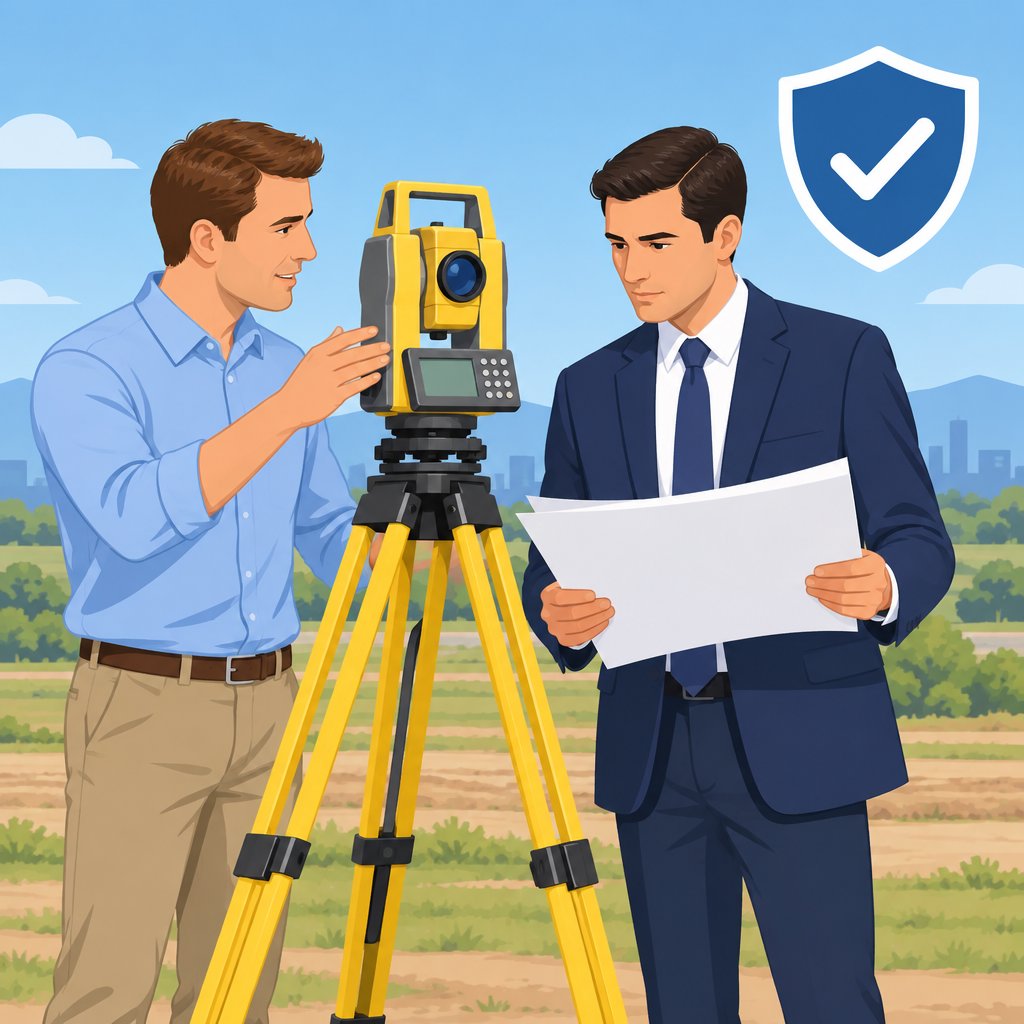
Communication and Responsiveness
Effective communication helps ensure that the surveyor addresses your needs.
A reliable surveyor should explain the process and results clearly.
Additionally, prompt responses can resolve questions and concerns throughout the project.
Clear communication reduces misunderstandings and supports a successful survey.
Availability and Project Deadlines
Before hiring a surveyor, discuss their availability and project schedule.
Confirm that they can meet your deadlines and complete the survey promptly.
Furthermore, a reliable surveyor should provide a realistic timeline and follow it.
Ensure that the surveyor can prioritize your project and dedicate sufficient attention.
Gain More Insights: Balancing Speed and Quality in Housekeeping
Scope of Work, Timeframe, and Fees Negotiation
When choosing a surveyor, negotiate the scope of work, timeframe, and fees upfront.
This approach gives both parties a clear understanding of the project requirements.
It also clarifies the financial expectations before the project begins.
Review and Sign a Written Agreement
After agreeing on the scope, timeframe, and fees, review a written agreement.
Both parties should sign the document before the surveying project begins.
The agreement should outline deliverables, timelines, terms, conditions, and payment schedules.
Establish Clear Communication and Expectations
Establish clear communication and expectations with the surveyor from the start.
Set regular check-ins and provide feedback throughout the surveying project.
Address concerns promptly to support smooth project execution.
Monitor Progress and Provide Feedback
Monitor the surveyor’s progress throughout the project.
Provide feedback whenever necessary to keep the work aligned with expectations.
These actions help the surveyor make adjustments and deliver quality results.
Uncover the Details: Landscape Architect's Guide to Xeriscaping
Address Concerns Promptly With the Surveyor
When working with a surveyor, address concerns or issues promptly.
Whether concerns involve the process or results, maintain open communication.
Raise questions about the surveyor’s methods or findings without hesitation.
Addressing concerns early prevents misunderstandings and clarifies your needs and requirements.
Resolve Disagreements Through Open Communication
Open and honest communication helps resolve disagreements with a surveyor.
If issues arise, discuss them directly instead of allowing confusion to continue.
Clearly explain your concerns, and listen carefully to the surveyor’s perspective.
Transform Your Career Today
Unlock a personalized career strategy that drives real results. Get tailored advice and a roadmap designed just for you.
Start NowTransparent discussions can produce a resolution that supports both parties.
Seek Additional Professional Opinions When Necessary
If doubts remain about the surveyor’s work, consider seeking a second opinion.
Other professionals can provide additional insights and perspectives about the survey results.
Furthermore, independent feedback can help you evaluate the surveyor’s findings more confidently.
This approach supports informed decisions based on reliable surveying information.
Evaluate the Surveying Experience and Results
After the project ends, reflect on your experience working with the surveyor.
Consider whether the surveyor met your expectations and project requirements.
Review the surveyor’s communication style, professionalism, and expertise.
Also, identify areas where the surveyor excelled or fell short.
This reflection can help you assess the work’s quality and future suitability.
These steps support successful surveying projects and accurate results.
See Related Content: How to Start Your Career as an Assembler in Construction
Selecting a Surveyor for Project Confidence
When choosing a surveyor, conduct thorough research and due diligence before making your decision.
Prioritize quality, expertise, and professionalism to support accurate and reliable survey results.
A skilled surveyor can significantly influence your project, so find a professional who fits your needs.
Also, request references and verify relevant experience before making an informed choice.
These steps help you select a professional who can manage your surveying project carefully.
Furthermore, a reliable surveyor can deliver precise results and support your project’s success.
Choose wisely, and you can gain greater peace of mind throughout the project.
Additional Resources
Bing search results for How to Choose a Reliable and Skilled Surveyor Construction and Manual Labor


