




Handling Difficult Guests
Hosts and hostesses may encounter difficult guests at some point.
Maintaining professionalism remains crucial in these situations.
Moreover, composure helps staff handle challenging situations effectively.
Clear Expectations for Guests
- Communicate rules and expectations clearly before guests arrive.
- Ensure guests understand the house rules and guidelines.
Clear expectations help hosts prevent misunderstandings during a guest’s stay.
Effective communication also supports a smoother experience for everyone involved.
Share your expectations before guests arrive at your home.
Use written instructions, emails, or a phone call to explain important details.
These methods help guests understand what you expect during their stay.
Provide house rules that describe quiet hours and smoking policies.
Include any additional guidelines that apply specifically to your home.
Early guidance gives guests a clear understanding of acceptable behavior.
Invite guests to ask questions about the rules or guidelines.
Answering questions can prevent confusion before it develops into a problem.
Also, welcome feedback that may clarify the guest experience.
Share useful information about the local area before or during their stay.
Recommendations can include restaurants, attractions, and transportation options.
This information can help guests feel more comfortable in your home.
Clear communication and practical guidance create a more enjoyable stay for everyone.
Stay Calm and Composed
- Keep your composure when guests become difficult.
- Avoid emotional reactions that could escalate the situation.
Handling difficult guests requires skill, patience, and professionalism.
Although these situations can challenge hosts and hostesses, they can also create opportunities to serve guests well.
Therefore, calm responses help protect the experience for everyone.
Always keep your cool when a guest behaves poorly.
This approach requires a level head and control over your emotions.
Otherwise, an emotional response can intensify the problem.
Before answering, take a deep breath and count to ten.
That pause gives you time to collect your thoughts and choose your words carefully.
It can also prevent unnecessary conflict.
Next, practice active listening during the conversation.
Engage fully with the guest’s concerns and show empathy for their perspective.
Consequently, you can understand the issue better and identify common ground.
This approach may reduce tension and encourage a more positive interaction.
If a guest becomes aggressive or hostile, remain firm and respectful.
Set clear boundaries and communicate them assertively.
Do not respond with rudeness or anger.
A professional demeanor helps you maintain authority while respecting the guest.
Often, difficult guests seek attention or validation for their complaints.
Acknowledge their concerns and offer practical solutions.
This response shows that you take their feedback seriously.
Additionally, it can reduce tension and demonstrate your commitment to a positive guest experience.
Calm, patient, and assertive responses help resolve conflicts effectively.
Transform Your Career Today
Unlock a personalized career strategy that drives real results. Get tailored advice and a roadmap designed just for you.
Start NowSee Related Content: Work-Life Balance Tips for Casino Dealers
Listening to Guest Concerns
Guest concerns can arise from accommodations, service, or other aspects of a stay.
Listening carefully helps hosts understand each complaint before they respond.
Empathy also shows guests that their feedback matters.
- Stay composed while the guest explains the concern.
- Avoid interrupting or responding defensively during the explanation.
- Ask questions that clarify the source of the dissatisfaction.
- Repeat the concern to confirm your understanding.
Responding to Guest Feedback
After hearing the concern, hosts should respond with understanding and practical assistance.
First, an apology can acknowledge any inconvenience or discomfort the guest experienced.
Additionally, hosts can thank guests for sharing feedback and confirm that they take it seriously.
- Offer a fair and reasonable resolution.
- Address the concern promptly and professionally.
- Follow up after resolving the issue.
Timely responses can transform a negative experience into a more positive interaction.
Moreover, professional resolutions can influence guests’ perceptions of a host’s hospitality.
You Might Also Like: Networking Tips for Restaurant Managers
Offer Solutions
Propose solutions to address the guest’s issues or complaints.
Be proactive in finding ways to resolve the situation peacefully.
Start by actively listening to the guest’s concerns and complaints.
Understand their perspective to find the root cause.
Apologize to the guest for any inconvenience caused, regardless of who is at fault.
A sincere apology can go a long way.
Provide compensation such as discounts, vouchers, or complimentary services to address the inconvenience.
Suggest alternative solutions to meet the guest’s needs and preferences.
Offer different options to accommodate their requests.
Follow up with the guest after resolving the issue to ensure satisfaction.
Show that you care about their experience.
If the complaint highlights a recurring issue, take proactive steps to prevent it from happening again.
Ensure that your staff receives training for handling difficult situations.
Empower staff to make decisions that resolve issues promptly.
Ask the guest how you can improve their experience in the future.
Use their feedback to enhance your services.
If the situation escalates beyond your control, involve a manager or higher authority.
Allow the manager or authority to mediate and find a resolution.
Monitor guest feedback and reviews to identify recurring issues.
Learn from past experiences to enhance your hosting skills.
Discover More: Fitness Center Staff: Health and Safety Practices
Seeking Assistance During Escalating Guest Interactions
When a guest interaction escalates, involve colleagues or supervisors before the situation exceeds your ability to manage it.
Staff should recognize when additional support can protect everyone and help resolve the interaction appropriately.
Seeking assistance demonstrates sound judgment rather than weakness.
Use these steps when you need support during a challenging guest interaction.
- Ask a colleague for help when you feel overwhelmed or unable to manage the guest effectively.
- Explain the issue clearly and provide relevant details so your team can respond appropriately.
- Consult supervisors because their experience can guide your response to challenging guest behavior.
- Collaborate with colleagues to develop a solution that addresses the guest’s needs and protects the establishment.
- Escalate the matter to supervisors or security when the guest becomes hostile or the situation feels unsafe.
Communicate promptly so your colleagues understand what happened and what assistance you need.
Supervisors can offer direction while helping the team maintain appropriate service standards.
Team cooperation allows staff to use different strengths while addressing the guest’s concerns professionally.
Gain More Insights: Host/Hostess Salary Expectations and Benefits
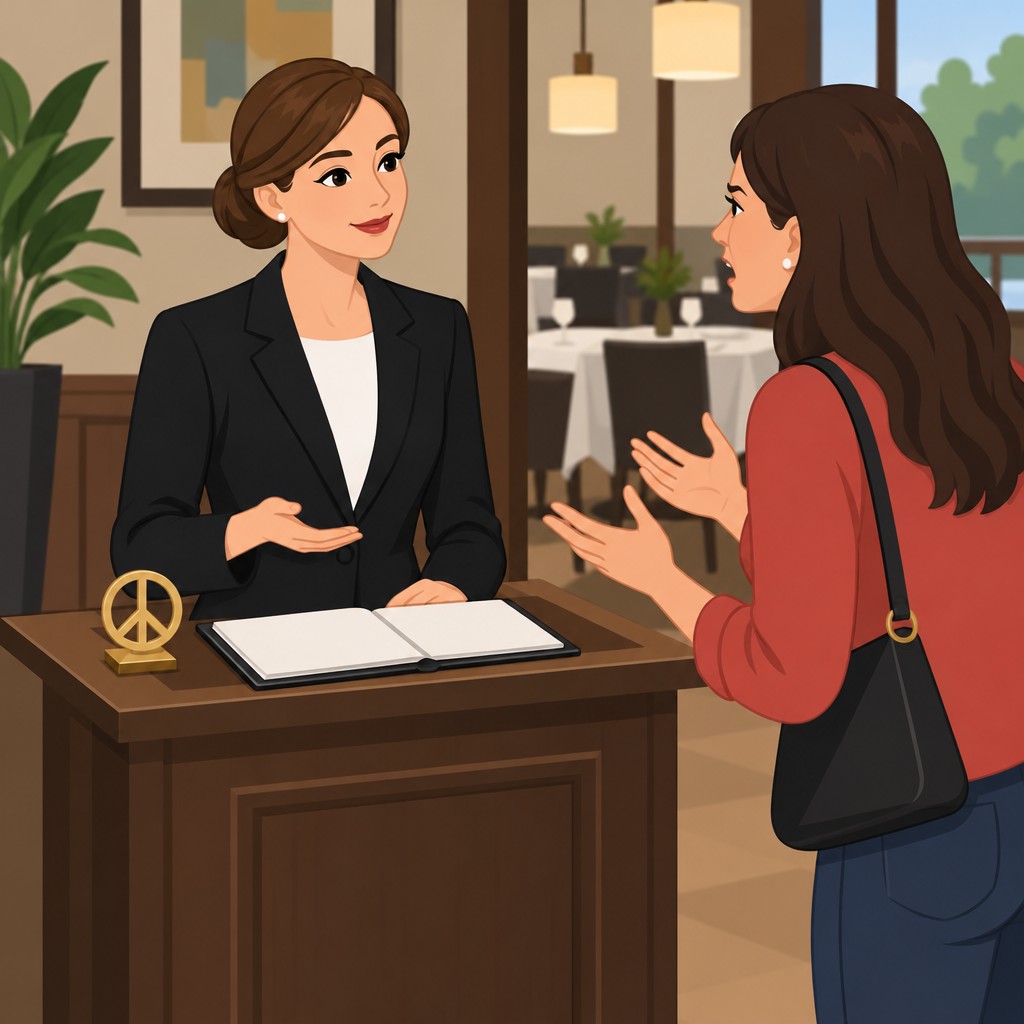
Sincere Apologies for Guest Dissatisfaction
A sincere apology can recognize inconvenience or dissatisfaction without assigning blame.
Transform Your Career Today
Unlock a personalized career strategy that drives real results. Get tailored advice and a roadmap designed just for you.
Start NowIt also shows that staff value the guest’s feedback and concerns.
Additionally, a genuine apology can support a respectful conversation about the guest’s experience.
- Offer a genuine apology for any inconvenience or dissatisfaction caused.
- Show that you value the guest’s feedback and remain committed to addressing their concerns.
Guest Follow-Up After Issue Resolution
After resolving an issue, follow up with the guest to check their satisfaction.
Thank the guest for bringing the matter to your attention.
The follow-up also demonstrates appreciation for the guest’s patience.
- Follow up with the guest after resolving the issue.
- Thank the guest for raising the matter and showing patience.
Learning from Guest Feedback
Each challenging guest interaction can provide an opportunity to improve hosting skills.
Soliciting feedback helps staff identify ways to enhance future guest experiences.
Furthermore, constructive feedback can guide better responses during later interactions.
- View challenging guest interactions as opportunities to learn and improve.
- Ask guests how staff can enhance their experience in the future.
Positive Hospitality After Difficult Interactions
A positive outlook helps staff focus on constructive next steps.
Maintaining a welcoming atmosphere can support a better experience for everyone.
Each guest interaction offers an opportunity to demonstrate hospitality skills.
- Remain positive and optimistic when facing difficult guest interactions.
- Focus on solutions while preserving a friendly, welcoming atmosphere.
Follow-Up After Guest Concerns
After addressing a guest’s concerns, follow up to confirm that the resolution meets their expectations.
That contact shows genuine care for the guest’s experience and respect for their feedback.
Furthermore, a thoughtful follow-up can strengthen the relationship and reveal any remaining concerns.
- Follow up after addressing the guest’s concerns.
- Confirm that the guest feels satisfied with the resolution.
- Show that you value the guest’s experience and feedback.
Importance of Follow-Up
Follow-up demonstrates that staff treated the guest’s concerns as important.
It also creates another opportunity to address issues that remain unresolved.
Moreover, this step reinforces the team’s commitment to attentive customer service.
- Show that you take the guest’s concerns seriously.
- Provide another opportunity to address lingering issues.
- Demonstrate your commitment to customer service.
Methods of Follow-Up
A personalized email can thank the guest for sharing their feedback.
Alternatively, a phone call can help identify any additional concerns.
In some situations, a future-visit incentive can acknowledge the guest’s experience.
- Send a personalized email thanking the guest for their feedback.
- Call the guest to ask about additional concerns.
- Offer a discount or complimentary service during a future visit.
Key Points for Effective Follow-Up
Prompt communication shows that staff respond proactively to guest concerns.
Genuine concern helps the guest recognize that staff value their experience.
Requesting feedback can reveal ways to improve future service.
- Follow up promptly to demonstrate a proactive approach.
- Express genuine concern for the guest’s experience and satisfaction.
- Ask how you can improve future service.
Professional Boundaries During Difficult Guest Interactions
If a guest becomes aggressive, avoid escalating the interaction through arguments or emotional reactions.
Instead, maintain polite, professional language while addressing the situation.
At the same time, set firm boundaries without becoming confrontational.
Reinforce relevant policies respectfully and explain the limits of acceptable behavior.
Afterward, reflect on the interaction and identify ways to prevent similar problems.
Each difficult encounter can help hosts and hostesses improve their future approach.
Although some guests remain challenging, a positive attitude supports consistent professionalism.
Additional Resources
Google search results for How to Handle Difficult Guests as a Host/Hostess Service Industry
Bing search results for How to Handle Difficult Guests as a Host/Hostess Service Industry


