




Health and Safety Practices in Fitness Centers
Health and safety practices in fitness centers protect members and support their well-being.
Therefore, fitness centers need knowledgeable, well-trained staff to maintain safe environments.
This section examines health and safety practices that staff should follow.
These practices help promote members’ overall health and wellness.
Effective staff training supports health and safety practices in fitness centers.
Importance of Staff Training
- Staff need health and safety training so they can respond appropriately during emergencies.
- Proper training helps staff use fitness equipment correctly and reduces accident and injury risks.
- Additionally, training teaches cleaning and sanitation procedures that help prevent germs and infections.
Staff Responsibilities for a Safe Environment
- Staff help maintain safe, healthy conditions by enforcing fitness center rules and guidelines.
- They should monitor equipment for wear and tear to reduce malfunction and injury risks.
- Furthermore, staff must keep every fitness center area clean and hygienic to help prevent illness.
Risks of Inadequate Training
- Without proper training, staff may respond poorly during emergencies and endanger members.
- Inadequately trained staff may misuse equipment, causing accidents and potential legal liabilities for the center.
- Moreover, poor sanitation training can spread infections among members and damage the center’s reputation.
Staff training upholds health and safety practices in fitness centers and supports safe conditions for staff and members.
Health and Safety Certifications for Fitness Center Staff
Fitness center staff need relevant certifications to protect clients and maintain professional service standards.
These credentials show that staff understand emergency response, exercise guidance, and nutrition support.
Certification also demonstrates commitment to responsible client care.
CPR and First Aid Certification
CPR and First Aid certification prepares staff to respond during medical emergencies.
Staff learn lifesaving techniques and basic first aid procedures.
These skills can provide immediate assistance before additional help arrives.
Personal Training Certification
Personal Training Certification supports staff who provide individual training sessions.
The training covers safe and effective workout program development.
It also demonstrates professional knowledge and expertise in fitness services.
Nutrition Certification
Nutrition Certification helps staff understand nutrition’s role in health and fitness.
Certified staff can guide clients toward appropriate nutrition choices.
This knowledge can support clients’ fitness goals and dietary planning.
Courses and Programs for Certification
Several courses and programs help fitness center staff earn relevant credentials.
These programs develop knowledge and skills for different staff responsibilities.
Staff can select courses that match their roles and professional goals.
American Red Cross CPR Certification
The American Red Cross offers widely recognized CPR and First Aid courses.
These courses cover essential lifesaving techniques and emergency protocols.
Consequently, staff can approach emergencies with greater confidence and competence.
National Academy of Sports Medicine Personal Training Certification
The National Academy of Sports Medicine provides comprehensive personal training programs.
Course topics include anatomy, physiology, nutrition, and program design.
These subjects help staff create personalized training plans for clients.
International Sports Sciences Association Nutrition Certification
The International Sports Sciences Association offers nutrition certification programs.
Participants study nutrition fundamentals, meal planning, and dietary guidelines.
Certified staff can educate clients about food choices supporting fitness goals.
Benefits of Certified Fitness Center Staff
Certified staff benefit clients and fitness facilities in several important ways.
Their training supports safer services and more informed client guidance.
Facilities also demonstrate stronger professional standards when staff maintain relevant credentials.
Enhanced Safety and Risk Management
Certified staff can respond effectively to emergencies and identify potential risks.
Their safety knowledge helps reduce the likelihood of accidents and injuries.
As a result, clients receive support from staff prepared to manage urgent situations.
Professionalism and Credibility
Relevant certifications show that staff value professional development and responsible service.
Clients may trust certified staff when seeking fitness and nutrition guidance.
Furthermore, credentials strengthen the facility’s professional reputation.
Improved Quality of Services
Certification gives staff specialized knowledge for delivering higher-quality services.
Transform Your Career Today
Unlock a personalized career strategy that drives real results. Get tailored advice and a roadmap designed just for you.
Start NowTrained staff can develop tailored workouts and provide personalized client support.
Therefore, clients can receive guidance that supports their individual fitness objectives.
Gain More Insights: Host/Hostess Salary Expectations and Benefits
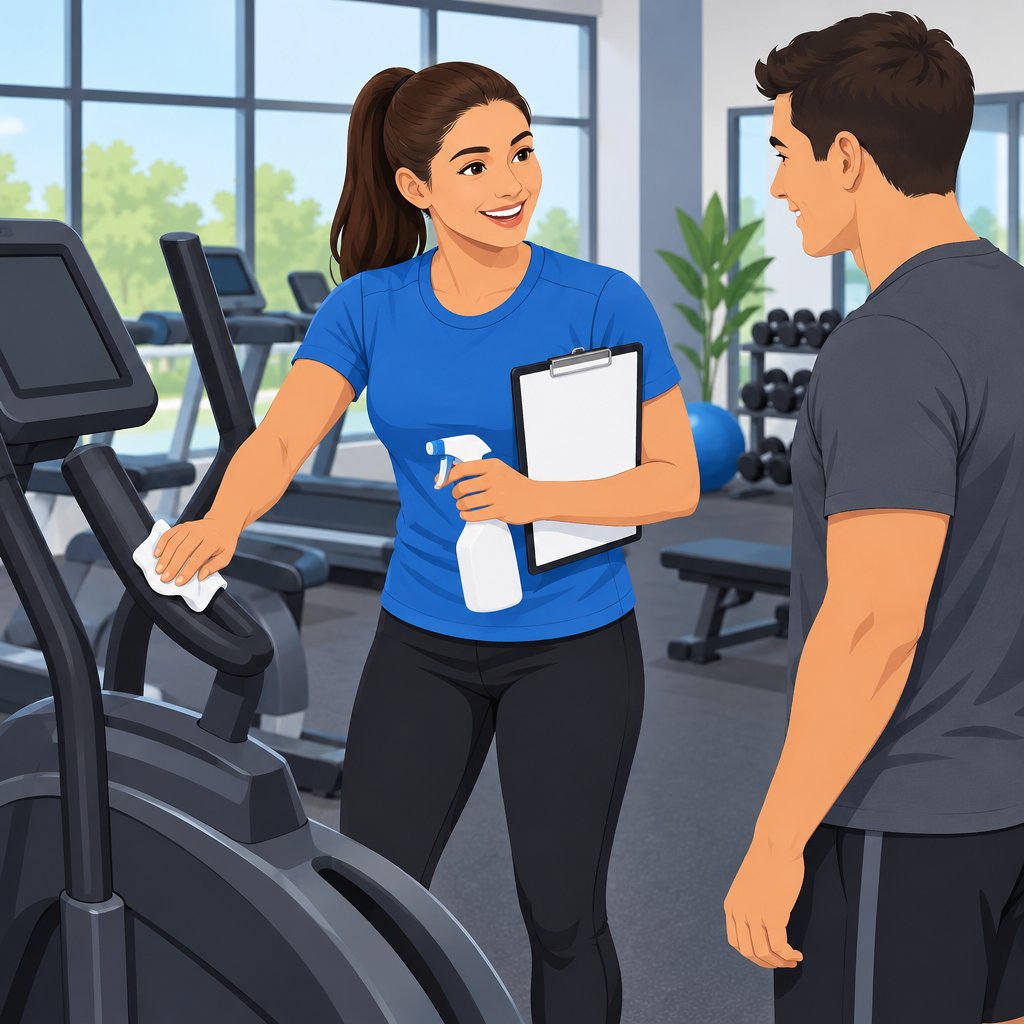
Staff Responsibilities for Fitness Center Cleanliness
Fitness center staff must prioritize cleanliness throughout the facility.
A clean environment improves the member experience and supports facility hygiene.
Therefore, staff should follow consistent cleaning practices during every operating period.
Essential Cleaning Duties for Staff
Staff should regularly clean and disinfect fitness equipment.
They must also maintain clean locker rooms, showers, floors, mats, and other surfaces.
Additionally, staff should empty trash bins and sanitize frequently touched areas.
- Regularly disinfect and clean equipment
- Maintain cleanliness in locker rooms and showers
- Clean floors, mats, and other surfaces
- Empty trash bins and keep the facility tidy
- Sanitize high-touch areas, including doorknobs and countertops
Importance of Regular Cleaning and Disinfecting
Regular cleaning and disinfecting help reduce the spread of illnesses.
Sweat, germs, and bacteria can accumulate on equipment and facility surfaces.
Consequently, a consistent cleaning schedule helps staff maintain a safer environment for members.
Effective Cleanliness Practices for Staff
Staff should create a daily schedule that assigns cleaning tasks to different areas.
They should use EPA-approved disinfectants and suitable cleaning products.
Furthermore, regular inspections and proper training help staff maintain effective sanitation practices.
- Set a daily cleaning schedule for different facility areas
- Use EPA-approved disinfectants and cleaning products
- Encourage members to wipe equipment before and after use
- Inspect and replace worn-out cleaning supplies regularly
- Train staff in proper sanitation procedures and techniques
Uncover the Details: How to Handle Difficult Customers as a Casino Dealer
Staff Responsibilities in Enforcing Safety Protocols
Staff members enforce facility rules through consistent observation and timely intervention.
Their presence helps members understand expectations and avoid unsafe conduct.
Clear enforcement supports a professional environment where members exercise responsibly.
The Importance of Consistent Safety Enforcement
Staff members serve as the first line of defense against unsafe behavior.
They protect members by applying safety guidelines consistently throughout the fitness center.
Additionally, their example encourages members to respect facility rules and safety expectations.
How Staff Guide Member Behavior
Staff monitor member activities and identify actions that could cause accidents or injuries.
They provide guidance when members need help using equipment correctly.
When unsafe behavior continues, staff intervene promptly and explain the correct procedure.
Safety Protocols Staff Should Enforce
Staff should communicate each protocol clearly and apply the rules fairly.
They should also remain alert while members use equipment and participate in activities.
The following protocols help staff maintain safe conditions throughout the fitness center.
- Ensure members use fitness equipment correctly and safely.
- Enforce sanitization practices that support a clean, hygienic environment.
- Monitor member activities and correct unsafe equipment use.
- Follow emergency response procedures after accidents or injuries.
- Enforce social distancing guidelines to maintain safe distances between members.
Explore Further: Adapting to Different Casino Dealer Roles
Fitness center staff need emergency preparedness training to protect members and coworkers.
This training provides knowledge and skills for responding effectively to different emergencies.
Prepared staff can support safer responses when emergencies affect the facility.
Benefits of Emergency Preparedness Training
Training increases staff confidence when emergencies require immediate action.
It also reduces panic and confusion during emergency situations.
Additionally, preparation supports safer outcomes and helps meet training requirements.
- Enhances staff confidence in handling emergencies
- Reduces panic and chaos during emergency situations
- Increases the likelihood of successful outcomes in emergencies
- Ensures the safety of staff and members
- Meets regulatory requirements for emergency preparedness training
Emergency Situations Requiring Staff Preparation
Staff should prepare for medical emergencies that may affect members or coworkers.
They also need plans for fires, severe weather, violence, outages, and equipment problems.
Recognizing these situations helps staff select appropriate safety procedures.
- Medical emergencies such as heart attacks or seizures
- Fires or smoke incidents
- Weather-related emergencies like tornadoes or floods
- Violent incidents or threats
- Power outages or equipment malfunctions
Effective Staff Responses During Emergencies
Staff should remain calm and assess each situation before taking action.
They should activate the emergency response plan and communicate clearly with everyone present.
Transform Your Career Today
Unlock a personalized career strategy that drives real results. Get tailored advice and a roadmap designed just for you.
Start NowAssigning roles helps staff follow safety protocols and manage emergency responsibilities.
- Stay calm and assess the situation before taking action
- Activate the emergency response plan immediately
- Communicate clearly and effectively with staff and members
- Assign specific roles and responsibilities to staff members
- Follow safety protocols and guidelines for each type of emergency
Regular drills help reinforce emergency preparedness across the fitness center.
Practice scenarios also give staff opportunities to apply their training.
Prepared teams can create a safer environment for staff and members.
Delve into the Subject: Effective Marketing Strategies for Financial Advisors
Communication About Health and Safety Practices
Communication about health and safety practices helps fitness center members understand and follow facility guidelines.
It also supports a safe and healthy environment for everyone.
Staff members play an important role by sharing this information clearly and consistently.
The Importance of Staff Communication
Staff members represent the fitness center and communicate expectations directly to members.
They help members follow health and safety practices that reduce injuries and accidents.
Furthermore, clear communication builds awareness and encourages a shared culture of safety.
Effective Communication Methods
Staff should explain each practice clearly so members understand the expected behavior.
Using simple language helps members understand instructions without confusion.
Additionally, demonstrations and visual aids can reinforce verbal explanations.
- Staff should speak clearly and concisely.
- Staff should use simple language when explaining safety practices.
- Staff should provide visual aids or demonstrations when appropriate.
- Staff should encourage questions and address concerns promptly.
- Staff should update members when health and safety protocols change.
Staff Education for Member Safety
Staff members enforce health and safety practices while helping members understand their purpose.
They can answer questions, address concerns, and explain why safe behavior matters.
Consequently, education empowers members to take responsibility for their health and safety.
This education also fosters community and responsibility among members.
Continuous Health and Safety Improvement
- Staff protect members and colleagues by prioritizing health and safety practices throughout the fitness center.
- Moreover, continuous education helps staff strengthen their knowledge and improve workplace practices.
- Therefore, staff should pursue training, certifications, and current industry guidance to develop their skills.
Additional Resources
Google search results for Fitness Center Staff: Health and Safety Practices Service Industry
Bing search results for Fitness Center Staff: Health and Safety Practices Service Industry


