




Community Education in Wildland Firefighting
Community education matters in wildland firefighting.
It helps communities learn about fire prevention and safety measures.
Additionally, it equips individuals with knowledge and skills to prevent and manage wildfires effectively.
Wildland Firefighters and Their Roles
Wildland firefighters protect lives, property, and natural resources from destructive wildfires.
These specially trained professionals suppress and control fires in forests, grasslands, and other wild areas.
They use specialized roles to detect, contain, and manage wildfire threats.
Several firefighter types support wildfire response and prevention efforts.
- Hotshot Crews: These highly skilled teams fight dangerous wildfires through direct attack and containment.
- Smokejumpers: These elite firefighters parachute into remote areas to respond quickly to new wildfires.
- Fire Prevention Specialists: These experts teach communities about fire safety, prevention, and mitigation strategies.
- Wildfire Prevention Educators: These individuals conduct outreach programs, workshops, and events about wildfire risks and safety measures.
- Fire Lookouts: These professionals monitor lookout points to detect and report wildfires before they escalate.
- Airtanker Pilots: These pilots operate aircraft that drop fire retardants onto wildfires, supporting ground containment efforts.
- Helitack Crews: These specialized teams use helicopters to transport firefighters, equipment, and water to remote wildfires.
Community education strengthens wildfire prevention and helps communities reduce the effects of fire emergencies.
It gives residents practical knowledge about risks, prevention practices, detection, preparedness, and response.
Furthermore, informed communities can coordinate more effectively with agencies and authorities during wildfire threats.
Community Education and Wildfire Awareness
Education increases awareness of wildfire risks and the potential effects on communities.
It also encourages residents to recognize hazards and report potential fire threats quickly.
Moreover, shared knowledge supports cooperation among community members, agencies, and authorities.
- Educated communities understand wildfire risks more clearly.
- Residents learn how wildfires can affect their communities.
- Informed individuals can identify and report potential hazards quickly.
- Education encourages cooperation among residents and authorities.
Education as a Foundation for Wildfire Prevention
Community education promotes fire safety practices that can reduce ignition sources.
It also supports environmental protection and encourages safer decisions over time.
Additionally, educated residents can help develop evacuation plans and manage available firefighting resources.
- Residents follow fire safety guidelines more consistently.
- Communities can create effective evacuation plans.
- Education supports responsible environmental practices.
- Knowledge helps communities manage firefighting resources.
- Ongoing instruction can encourage lasting behavioral changes.
Community Preparedness and Wildfire Response
Training programs give community members skills for wildfire prevention and emergency response.
Communication networks help residents receive wildfire alerts and share important updates.
Regular drills allow communities to practice procedures before an actual wildfire emergency occurs.
Education also helps residents become familiar with firefighting equipment and tools.
In addition, informed communities can assess risks and apply mitigation measures proactively.
These efforts strengthen resilience and help protect lives and property from wildfire impacts.
- Training programs develop prevention and response skills.
- Communication networks support wildfire alerts and updates.
- Community drills help residents practice emergency procedures.
- Education builds familiarity with firefighting equipment and tools.
- Risk assessments help communities apply mitigation measures early.
See Related Content: Counterterrorism Specialist: Collaborative Investigations
Wildland Firefighters and Community Education
Wildland firefighters educate communities about fire safety through interactive workshops, presentations, and outreach events.
They explain wildfire risks and practical safety measures during public activities.
As a result, residents gain clearer guidance about prevention and emergency safety.
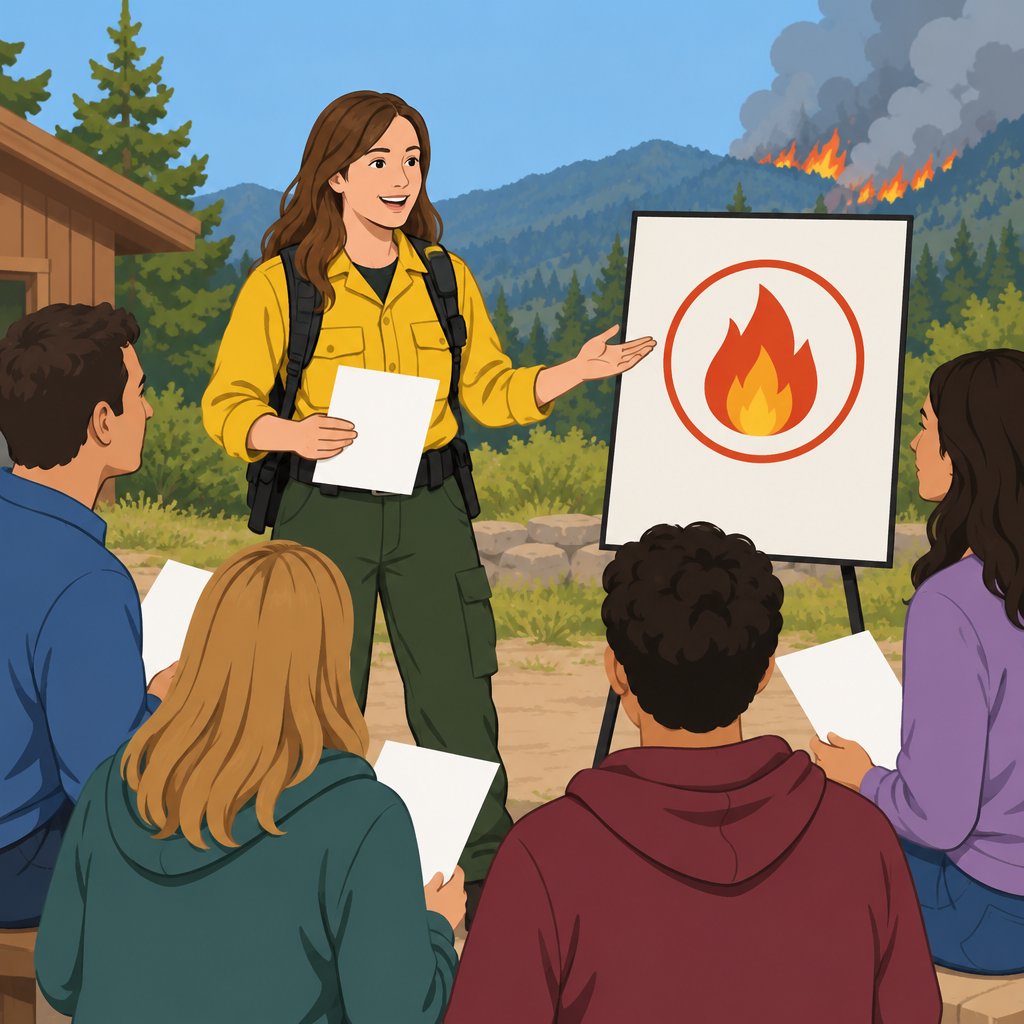
Programs Supporting Fire Safety Awareness
Their programs address residents, students, volunteers, and community members.
For example, school visits cover fire safety practices and evacuation procedures.
Meanwhile, agency collaboration supports comprehensive fire safety plans for communities.
- Wildland firefighters engage local communities to raise awareness about fire prevention and safety measures.
- They conduct public presentations about wildfire risks and methods for staying safe.
- They visit schools to teach fire safety practices and evacuation procedures.
- They organize workshops that demonstrate firefighting techniques and proper equipment use.
- They offer training sessions about fire prevention strategies for volunteers and community members.
- They collaborate with other agencies to develop comprehensive community fire safety plans.
Find Out More: Women in the Bomb Squad Technician Field
Collaborative Educational Program Development
- Wildland firefighters often partner with local authorities and organizations to develop educational programs.
- This collaboration shares resources, expertise, and knowledge to create impactful initiatives.
- By working together, partners tailor wildfire prevention messages to specific community needs and demographics.
- Local authorities provide access to infrastructure, funding, and community outreach support.
Partnerships Expand Community Reach
- Partnerships with local authorities and organizations help firefighters reach broader audiences with educational efforts.
- Furthermore, collaboration shares resources and maximizes the impact of educational programs.
- Through partnerships, firefighters access existing community networks and relationships.
- These connections also engage diverse groups and populations who may face wildfire risks.
Delve into the Subject: Wildland Firefighter Preparedness Drills
Training and Certification
Wildland firefighters involved in community education undergo rigorous training and certification.
These processes prepare them for their educational responsibilities.
Their preparation combines classroom instruction, practical experience, and formal assessment.
- Wildland firefighters typically begin with classroom instruction and hands-on practice.
- They must complete a physical fitness test for their demanding responsibilities.
- Certification requirements vary by state and organization.
- These requirements usually include a written exam and a field assessment.
- Some firefighters pursue EMT or paramedic training to expand their skills.
Ongoing Education and Professional Development
Because wildland firefighting evolves constantly, ongoing education remains essential.
Firefighters involved in community education must maintain current knowledge and skills.
They use regular training, professional development, and research to support that work.
- Wildland firefighters stay current on firefighting techniques, equipment, and technology through regular training.
- Workshops and seminars help firefighters expand their community education knowledge and skills.
- Leadership training and incident command system courses strengthen their educational abilities.
- Research and industry updates help firefighters maintain expertise and credibility.
Find Out More: Top Certifications for Nuclear Security Officers
Success Stories
- Wildland firefighters in Pine Grove organized regular community workshops on fire safety.
- Firefighters taught residents to create defensible spaces around their homes, reducing property damage.
Examples of Communities
Transform Your Career Today
Unlock a personalized career strategy that drives real results. Get tailored advice and a roadmap designed just for you.
Start Now- In Summit City, local firefighters conducted door-to-door campaigns and distributed fire prevention pamphlets.
- As a result, wildfires in the area decreased significantly, saving forest land from destruction.
Community Fire Safety Outreach
Wildland firefighters educate residents about practical techniques for preventing fires.
They engage communities directly, which raises awareness of fire risks and safety measures.
Through workshops, drills, and seminars, firefighters show residents how to protect their homes.
Furthermore, their outreach helps communities create emergency response plans.
They also work with local schools to teach students essential fire safety principles.
Meanwhile, firefighters explain evacuation procedures and emphasize the value of early detection.
By sharing their expertise, they encourage individuals to take proactive prevention steps.
As a result, residents receive guidance for responding to wildfire threats.
This educational outreach supports safer and more resilient communities facing wildfires.
Additional Resources
Google search results for Wildland Firefighter Role in Community Education Protective Services
Bing search results for Wildland Firefighter Role in Community Education Protective Services


