




Preparedness Drills for Wildland Firefighters
Wildland firefighters face unpredictable and dangerous conditions.
Preparedness drills strengthen readiness before wildfire season.
They also help crews prepare for injuries and life-threatening emergencies.
Understanding the Importance of Preparedness Drills
These drills address the safety challenges firefighters face during wildfires.
Regular practice prepares firefighters to handle changing conditions.
Therefore, teams can approach dangerous situations with greater readiness.
Preventing Injuries and Saving Lives
Firefighters practice crucial skills during regular drills.
Repeated practice can improve response times and team coordination.
As a result, crews may reduce injuries and protect lives.
Swift and Effective Response
Wildfires demand quick decisions in dangerous conditions.
Drills help firefighters react promptly when pressure increases.
Fast responses can support safer actions during emergencies.
Enhancing Communication and Teamwork
Teams practice clear communication during drills.
They also learn to work as cohesive units.
Meanwhile, mutual support helps firefighters manage high-stress situations.
Minimizing Risk and Maximizing Safety
Well-executed drills prepare firefighters for worst-case scenarios.
This preparation reduces the likelihood of accidents.
Consequently, teams can maintain a higher level of safety.
Building Confidence and Resilience
Drills boost firefighter confidence.
That confidence helps them navigate challenging situations with composure.
Furthermore, repeated preparation can strengthen resilience during demanding responses.
Importance of Physical Fitness
Wildland firefighting demands excellent physical fitness because firefighters perform strenuous tasks in challenging conditions.
Firefighters hike long distances, carry heavy equipment, and work through extreme weather.
Therefore, strong physical abilities help firefighters perform their duties effectively and safely.
Physical Demands of Wildland Firefighting
Wildland firefighters regularly move across rugged terrain while carrying essential gear.
They also handle chainsaws and other equipment during physically demanding operations.
Additionally, high temperatures can increase the difficulty of extended firefighting tasks.
- Hiking over rugged terrain with heavy gear
- Carrying chainsaws and other equipment
- Working in high temperatures
- Performing demanding tasks for extended periods
Consequently, firefighters need enough strength and endurance to complete these responsibilities efficiently.
How Preparedness Drills Enhance Physical Fitness
Preparedness drills develop several physical abilities through varied movements and repeated practice.
Running and hiking activities build cardiovascular endurance for demanding fieldwork.
Meanwhile, strength exercises improve the muscles firefighters use during operational tasks.
- Building cardiovascular endurance through running and hiking
- Strengthening muscles with squats, push-ups, and lunges
- Improving flexibility and mobility through stretching and yoga routines
- Enhancing agility and coordination through simulated firefighting drills
Furthermore, drills combine these abilities so firefighters develop balanced physical capabilities.
Specific Exercises and Activities for Preparedness Drills
Training sessions can combine strength, cardiovascular, flexibility, agility, and coordination exercises.
Circuit training allows firefighters to move between stations that target different physical skills.
Likewise, interval runs can represent the repeated effort required on rough terrain.
- Circuit training with strength and cardiovascular stations
- Interval runs that simulate movement across rough terrain
- Team-based drills that develop coordination and communication
- Functional exercises that imitate firefighting movements
Teams can tailor these activities to address the specific demands of wildland firefighting.
Regular practice helps firefighters improve their physical abilities for demanding field assignments.
Strong fitness supports safer, more effective performance during wildland firefighting operations.
Fire Behavior and Safety
Understanding fire behavior helps wildland firefighters anticipate how fires may spread and change.
Fire safety protocols protect firefighters, communities, and the natural environment.
Transform Your Career Today
Unlock a personalized career strategy that drives real results. Get tailored advice and a roadmap designed just for you.
Start NowTogether, these practices support informed decisions during changing fire conditions.
- Firefighters should understand fire behavior and follow safety protocols.
- Preparedness drills help firefighters practice responses to different fire scenarios.
- Communication and coordination during drills help teams maintain safety.
Understanding Fire Behavior
Wind can influence how quickly and widely a wildland fire spreads.
Terrain can change the direction and movement of fire across the landscape.
Available fuel also affects fire behavior and helps firefighters plan their response.
Fire Safety Protocols
Firefighters follow safety protocols to reduce risks during wildfire operations.
Maintaining a safe distance from the fire line helps limit exposure to hazards.
Firefighters also use proper protective gear and communicate with the incident command team.
Preparedness Drills for Firefighters
Preparedness drills give firefighters opportunities to practice responses in controlled conditions.
Teams can test their skills and communication strategies during different fire scenarios.
These exercises also help crews evaluate their coordination efforts before responding to actual fires.
Practice and Decision-Making
Drills can simulate real-life fire situations and strengthen decision-making skills.
Repeated practice helps firefighters develop consistent response tactics.
Regular exercises also help teams work efficiently and effectively during operations.
Communication and Coordination
Effective communication supports successful firefighting operations.
During drills, firefighters practice relaying important information clearly.
Crews also coordinate resources and work together to achieve shared objectives.
Safety Improvements Through Drills
Incorporating safety protocols into drills helps firefighters identify and reduce operational risks.
Exercises can reveal areas that require improvement before an actual fire response.
Teams can then refine strategies and strengthen their overall safety practices.
Find Out More: Top Certifications for Nuclear Security Officers
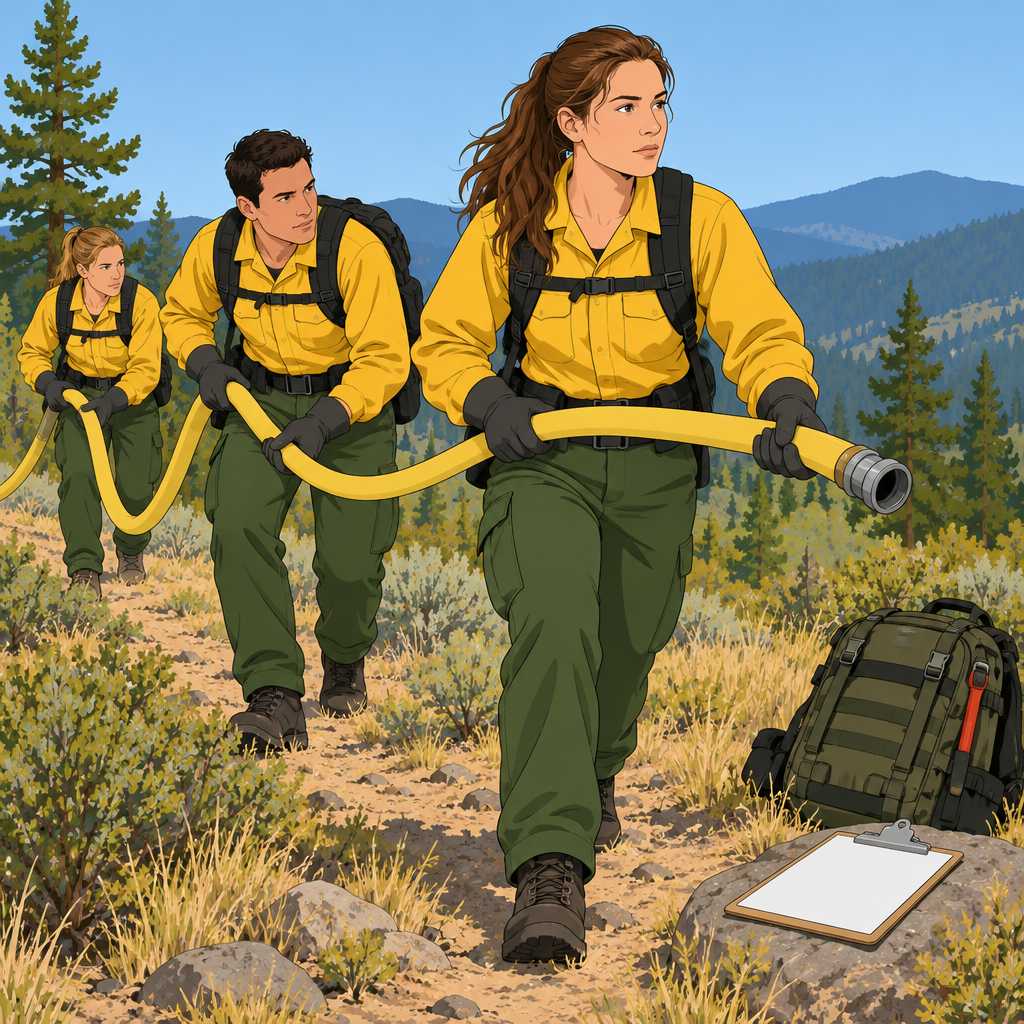
Equipment Familiarization
Effective equipment use supports safer and more successful wildland firefighting operations.
Firefighters must understand how each tool functions before using it during emergency response operations.
Hands-on practice helps crews develop confidence and proficiency with essential firefighting equipment.
Effective Firefighting Equipment Use
Wildland firefighters often encounter challenging situations that demand quick and efficient equipment use.
Proper operation helps firefighters control and extinguish fires more effectively.
Additionally, equipment knowledge improves firefighter effectiveness during emergency response operations.
Equipment Familiarity Through Practice
Preparedness drills let firefighters practice using different gear and tools in simulated fire scenarios.
This practical experience teaches firefighters each tool’s function and proper operating method.
Repeated practice builds confidence and improves equipment proficiency during actual firefighting operations.
Hands-On Equipment Training Activities
Training activities should reflect the equipment firefighters may use during wildland firefighting operations.
Instructors can combine repeated practice with simulated tasks to strengthen operational skills.
The following activities address hoses, tools, pumps, communication devices, and protective equipment.
- Firefighters can practice deploying hoses quickly and connecting them to water sources.
- Crews can use axes, shovels, and fire rakes to improve tool-handling proficiency.
- Firefighters can practice operating pumps that deliver water to fire lines.
- Teams can use radios and communication devices to improve coordination during operations.
- Firefighters can practice wearing fire-resistant clothing, helmets, gloves, and boots correctly.
Uncover the Details: Case Studies: Successful Security Consulting Projects
Emergency Response Training
Wildland firefighters must respond quickly and effectively during emergency situations.
Preparedness drills help firefighters practice emergency response procedures in controlled environments.
This practice familiarizes crews with the protocols and steps required during real emergencies.
During drills, firefighters simulate wildfires, building collapses, hazardous material spills, and other emergency scenarios.
By practicing these situations, firefighters improve response times and decision-making under pressure.
Importance of Emergency Readiness
Emergency readiness can determine whether people survive a dangerous incident.
Wildland firefighting conditions can change rapidly and unpredictably.
Transform Your Career Today
Unlock a personalized career strategy that drives real results. Get tailored advice and a roadmap designed just for you.
Start NowTherefore, trained teams can respond with greater speed and coordination.
When firefighters prepare effectively, they can respond swiftly and efficiently to emergencies.
Consequently, they can minimize damage and protect themselves and others.
Preparedness drills also help firefighters maintain skills and readiness for potential threats.
Teamwork and Leadership During Emergency Response
Teamwork and leadership help coordinate emergency response efforts during training exercises.
In high-stress environments, effective communication and collaboration support successful responses.
Strong leaders guide team actions and coordinate responsibilities during challenging situations.
Good leaders keep firefighters focused, organized, and motivated throughout each exercise.
Team members leverage their individual strengths while addressing different aspects of an emergency.
By practicing together, firefighters build trust and confidence in one another.
Emergency response training strengthens preparedness through practiced procedures, coordinated teamwork, and focused leadership.
Learn More: The Future of K-9 Units in Law Enforcement
Mental Preparedness
Wildland firefighting challenges crews with intense demands that require mental preparedness.
Firefighters must manage long hours, physical exhaustion, extreme weather, and pressure to protect lives and property.
Therefore, steady preparation helps crews maintain focus while performing their duties.
Addressing Mental Stress and Challenges
These demands can strain firefighters’ mental well-being over time.
Consequently, some firefighters may experience anxiety, burnout, or other mental health issues.
Recognizing these risks helps crews address stress before it affects performance.
Role of Preparedness Drills
Preparedness drills help firefighters develop mental resilience and adaptability.
During realistic simulations, crews practice staying calm, making quick decisions, and working together.
These exercises let crews rehearse mental responses before actual incidents occur.
Strategies for Coping with Stress
Firefighters need practical methods to manage stress during drills and actual firefighting situations.
These methods can help them maintain focus while managing demanding conditions.
Support from teammates and professionals can also help firefighters address ongoing challenges.
- Practice deep breathing and visualization to remain focused and calm.
- Exercise and stretch to reduce tension and release endorphins.
- Take regular breaks and drink water to prevent physical and mental fatigue.
- Seek support from fellow firefighters, mental health professionals, or support groups.
- Use post-drill debriefings to reflect, discuss issues, and learn from the experience.
Mental preparedness helps wildland firefighters manage stress and perform their duties effectively.
Gain More Insights: Famous DEA Operations and Their Impact
Incident Command System Training
ICS coordinates wildland firefighting operations through a standardized organizational structure.
It establishes clear communication lines, supports resource management, and guides effective decision-making.
Consequently, firefighting teams can operate cohesively and respond swiftly during emergencies.
- Understanding the Significance of ICS for Coordinating Firefighting Operations
Preparedness drills help firefighters practice the ICS structure in simulated situations.
These exercises clarify the roles and responsibilities within an incident management team.
Firefighters can rehearse positions such as Incident Commander, Operations Section Chief, and Safety Officer.
- Utilizing Drills to Practice ICS Structure
Clear communication supports effective incident management within the ICS framework.
Firefighters practice concise radio transmissions to relay critical information accurately and promptly.
Decision-making exercises develop quick, informed responses under pressure.
- Emphasizing Clear Communication and Decision-Making
Regular ICS training strengthens coordination during wildland firefighting operations.
Drills improve firefighters’ familiarity with ICS roles, communication protocols, and decision-making procedures.
These practices support more effective operations during emergency responses.
Mock Scenarios and Simulations for Wildland Firefighters
Realistic scenarios make wildland firefighting preparedness drills more urgent and engaging.
Simulations let firefighters practice different fire situations within a controlled training environment.
Transform Your Career Today
Unlock a personalized career strategy that drives real results. Get tailored advice and a roadmap designed just for you.
Start NowThese exercises also strengthen readiness, teamwork, communication, and decision-making skills.
Benefits of Realistic Training Scenarios
Realistic drills help firefighters experience pressure without facing an actual emergency.
They also test communication protocols and emergency response plans during changing situations.
Furthermore, controlled practice improves coordination and teamwork among firefighting crews.
- Scenarios create urgency and realism during training.
- Firefighters experience different fire situations in controlled surroundings.
- Exercises strengthen quick thinking and decision-making under pressure.
- Crews improve coordination while working through simulated emergencies.
- Drills test communication protocols and emergency response plans.
Problem-Solving Skills Developed Through Simulations
Simulations require firefighters to think quickly and adapt as circumstances change.
They encourage critical thinking, strategic planning, and practical responses to complex situations.
Additionally, firefighters can learn from mistakes without facing the risks of an actual fire.
- Firefighters adapt their decisions as simulated conditions change.
- Crews practice strategic planning during complex firefighting situations.
- Hands-on exercises build experience with challenging responses.
- Safe training environments allow firefighters to learn from mistakes.
Simulation Exercises for Enhanced Preparedness
Fire departments can use several exercises to prepare crews for different operational demands.
Each exercise focuses on practical responses, coordination, or changing firefighting conditions.
For example, departments can combine individual practice with larger multi-agency exercises.
- Structural fire simulations can represent urban and rural settings.
- Wildfire behavior simulations can model rapid spread and shifting winds.
- Search and rescue simulations can practice locating injured individuals.
- Emergency response drills can test multiple agencies’ coordination and communication.
- Nighttime exercises can practice firefighting techniques in low-light conditions.
Sustaining Operational Readiness
Wildland firefighters should sustain their skills through consistent, comprehensive training.
Regular practice helps crews apply sound techniques and coordinate their efforts during demanding operations.
Moreover, continued preparation encourages proactive decisions when conditions change quickly.
That commitment strengthens firefighting operations and helps protect communities from wildfire impacts.
Additional Resources
Google search results for Wildland Firefighter Preparedness Drills Protective Services
Bing search results for Wildland Firefighter Preparedness Drills Protective Services


