




Visual Effects in Television Production
Visual effects (VFX) digitally enhance films and television shows.
These effects create immersive experiences that captivate audiences.
They also help creators bring imaginative visions into stories.
For example, fantastical creatures and intricate environments can elevate narratives.
The entertainment industry has experienced remarkable growth in VFX.
Technological advances have expanded creative possibilities.
Today, artists use powerful software and hardware to produce stunning visuals.
Furthermore, demands for quality and realism continue to drive innovation.
Creating television VFX differs significantly from film and video game work.
Television production often imposes unique time constraints.
Unlike films, television shows operate on tight schedules.
Consequently, VFX teams must work efficiently without sacrificing quality.
Budget limitations also shape television VFX.
Television typically provides smaller VFX budgets than blockbuster films.
Therefore, artists must solve problems creatively while achieving high-quality results.
They rely on ingenuity and resourcefulness to maximize their output.
Genre expectations also influence television VFX styles.
Viewers may expect different aesthetics from dramas and science fiction.
As a result, shows must meet those expectations while maintaining cohesive visual styles.
This flexibility demands versatility from VFX artists.
The episodic nature of television further complicates VFX creation.
As audiences invest in characters, continuity becomes vital.
Consistent effects across episodes help maintain immersion.
However, continuity becomes challenging when seasons have significant gaps.
Despite these challenges, television VFX continues to evolve.
For instance, real-time rendering can improve workflow and productivity.
As the industry adapts, creators will continue using these advancements.
Thus, television VFX offers exciting possibilities for the future.
Television production follows a structured process that supports efficient, high-quality content creation.
The process includes planning, filming, and finishing work.
VFX artists contribute throughout each stage, supporting visual continuity and creative direction.
- Pre-Production
- Production
- Post-Production
Planning Visual Effects During Pre-Production
Pre-production establishes the creative and practical foundation for a television project.
Producers, directors, and other key personnel collaborate to define the project’s direction.
During this stage, teams handle screenwriting, casting, and location scouting.
VFX artists examine scripts to identify scenes that require visual effects.
This review helps artists estimate the complexity of each effect.
They also present techniques that could support the director’s intended vision.
Concept art helps the team communicate and refine those ideas.
VFX artists coordinate with art and production design teams.
They align the effects with the project’s broader visual style.
Transform Your Career Today
Unlock a personalized career strategy that drives real results. Get tailored advice and a roadmap designed just for you.
Start NowThe team develops a shooting script that identifies effect-heavy scenes.
This document guides filming decisions and later post-production work.
Supporting Effects Work During Production
Production brings the written script to life through filmed performances and coordinated crew work.
Directors, actors, and crew members work together throughout the filming process.
VFX artists often remain available on set for effects-related guidance.
They record important details that will support later visual effects work.
Artists check camera angles, lighting, and other elements during filming.
This preparation helps post-production teams create smoother visual transitions.
VFX artists may also place visual markers for later reference.
Close coordination with cinematographers keeps each shot compatible with planned effects.
Continuous communication reduces errors and keeps production decisions aligned.
Building the Final Images During Post-Production
Post-production completes the project after filming ends.
At this stage, VFX artists create the required effects with specialized software.
These effects add detail, energy, and immersion to filmed scenes.
Artists work with editors to synchronize effects with scene timing.
This cooperation helps the finished program maintain a cohesive rhythm.
Color grading and sound design also develop during post-production.
Directors and producers review the effects during regular sessions.
VFX artists present their work and respond to creative feedback.
They then revise the effects until the work supports the director’s vision.
Coordinating Departments for a Unified Production
VFX artists depend on strong relationships with several production departments.
They must align their work with the project’s broader storytelling goals.
Effective coordination keeps visual and narrative elements cohesive.
Understanding the Director’s Vision
Directors guide the project’s central creative decisions.
VFX artists study the director’s vision before developing visual solutions.
Regular meetings clarify expectations and strengthen creative communication.
This dialogue shows how effects can support the story.
Aligning Effects with Production Design
The art department establishes the television project’s overall visual appearance.
VFX artists consult production designers to maintain a consistent aesthetic.
They consider color palettes, textures, and other visual details.
Consistency helps effects blend naturally into filmed scenes.
Synchronizing Effects with Sound Design
Sound designers and VFX artists coordinate audio and visual timing.
Their cooperation increases the impact of important scenes.
For example, an explosion’s sound should match its visual action.
Accurate synchronization helps the event appear more convincing.
Matching Effects to Editorial Pacing
Editors assemble footage into a clear and engaging narrative.
VFX artists follow the cuts and transitions established during editing.
They study pacing so effects fit each scene’s structure.
Close communication protects the story’s flow during revisions.
Developing VFX Skills Through Teamwork
Understanding television production helps VFX artists manage each stage effectively.
Transform Your Career Today
Unlock a personalized career strategy that drives real results. Get tailored advice and a roadmap designed just for you.
Start NowEvery stage presents different responsibilities and creative challenges.
Strong collaboration helps artists deliver polished work that supports one unified vision.
As television changes, VFX artists will continue adapting their methods and responsibilities.
Technical mastery and dependable teamwork will remain important to their success.
By strengthening these relationships, artists can continue creating memorable visual experiences.
Limitations in TV Production
Television production operates within specific constraints that shape creative and technical decisions.
These limitations strongly influence how teams plan, create, and refine visual effects.
Time, budget, collaboration, and technology all affect the final visual result.
Time Constraints
Television shows often follow demanding schedules that require frequent episode releases.
Consequently, production teams have limited time for extensive post-production work.
VFX artists must complete complex shots quickly while maintaining consistent quality.
- Production schedules may last only a few weeks for each episode.
- VFX artists deliver shots under pressure to meet scheduled air dates.
- Complex sequences require efficient solutions during tight production periods.
By comparison, film productions often provide longer timelines for planning and execution.
Film VFX teams can spend months refining effects, while television teams must maintain faster workflows.
Budget Limitations
Budget restrictions also shape the resources available to television productions.
Networks often manage limited funds, which can reduce the scale of VFX work.
Therefore, production teams must balance visual ambition with practical financial decisions.
- Many television shows assign smaller budgets to VFX than major films.
- Teams often select cost-effective tools and techniques for demanding shots.
- Some productions replace sophisticated solutions with cheaper visual alternatives.
High-budget films may hire leading VFX studios and support extensive CGI work.
Television shows can also use advanced techniques, but they often apply them on a smaller scale.
As a result, viewers may notice differences between television effects and polished film effects.
Effects on VFX Quality
Time and budget pressures can directly affect the quality of television VFX.
Artists frequently adjust their methods to meet deadlines and available resources.
Those adjustments can produce effects that appear less intricate or engaging.
- Short schedules reduce the time artists can spend refining individual shots.
- Limited funding can reduce available personnel, equipment, and production resources.
- Software shortcuts may create noticeable differences between intended and finished visuals.
Nevertheless, VFX teams continue to search for practical ways to preserve visual impact.
They often combine efficient workflows with creative alternatives that reduce cost and production time.
Creative Solutions for Production Challenges
Television teams can overcome limitations through careful planning and inventive production choices.
They often combine practical effects with CGI to achieve convincing results efficiently.
Several television series demonstrate how resourceful teams can work within demanding conditions.
- Game of Thrones: The series combined practical effects and CGI for landscapes and battle scenes.
- The Mandalorian: The production used digital sets and real-time rendering technology.
- Stranger Things: The series blended practical effects with VFX to create an authentic appearance.
These examples show how creative planning can stretch limited resources.
Moreover, efficient methods help artists deliver memorable visuals without excessive costs or delays.
Team Collaboration in Television VFX
Strong collaboration helps television departments coordinate creative goals and practical limitations.
VFX artists, directors, and producers can align their expectations through regular communication.
This cooperation helps teams manage schedules, budgets, and visual consistency more effectively.
- Direct communication clarifies expectations and identifies production limitations early.
- Shared tools and software can streamline communication and workflow management.
- Collaborative brainstorming encourages practical ideas that suit available budgets.
Additionally, collaboration allows departments to address problems before they expand.
As a result, teams can create VFX that meet or exceed production expectations.
Future Trends in TV VFX
Technology continues to create new opportunities for television VFX production.
Streaming services have increased demand for visually impressive television content.
This demand encourages greater investment, faster workflows, and continued technical experimentation.
- Some series receive larger budgets because networks recognize VFX importance.
- Advances in software and hardware make high-quality effects more accessible.
- Artificial intelligence may streamline selected VFX processes and production timelines.
Although production limitations will remain, television teams continue to adapt their methods.
Innovative techniques can expand what creators achieve within available schedules and budgets.
These developments support increasingly compelling visual experiences for television audiences.
Transform Your Career Today
Unlock a personalized career strategy that drives real results. Get tailored advice and a roadmap designed just for you.
Start NowYou Might Also Like: Educational Pathways to Media Relations Specialist
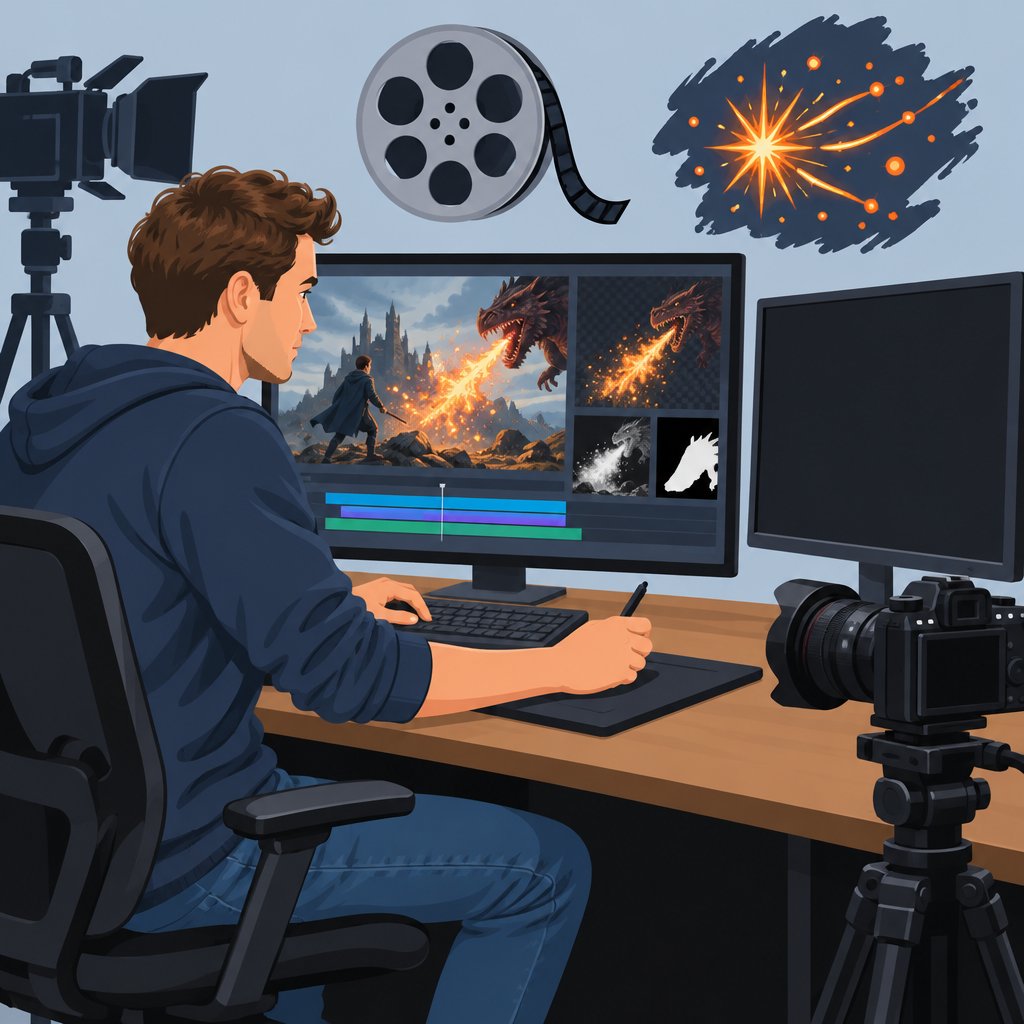
Software and Tools Commonly Used in Creating VFX for TV
High-quality television VFX requires a reliable set of specialized tools.
These platforms help artists develop, combine, and refine visual elements efficiently.
- Adobe After Effects: This industry-standard software supports compositing and motion graphics work.
- Autodesk Maya: Maya supports three-dimensional modeling, character animation, and environment creation.
- Foundry Nuke: This node-based tool manages complex compositing tasks with precise control.
- Blackmagic Design Fusion: Fusion provides a detailed compositing environment and integrates with DaVinci Resolve.
- Houdini: Houdini creates advanced particle simulations, explosions, fluid effects, smoke, and fire.
Each platform serves a distinct purpose within the creative process.
Therefore, production teams select tools according to each project’s specific requirements.
Advancements in Technology for High-Quality VFX
Recent technological advancements have changed how television productions create visual effects.
These innovations help teams produce detailed effects while improving production efficiency.
Consequently, artists can visualize, develop, and refine effects more effectively.
- Real-time Rendering: Modern hardware and software let artists view changes immediately.
- Virtual Reality and Augmented Reality: These technologies support interactive VFX design and integration.
- Cloud Computing: Cloud systems support collaboration between teams working from different locations.
- Artificial Intelligence and Machine Learning: These tools automate repetitive tasks and expand creative possibilities.
- Advanced Simulation Software: This software creates realistic smoke, fire, water, and other natural effects.
These advancements improve VFX quality and help teams accelerate production timelines.
As technology develops, creators can achieve increasingly detailed results with greater efficiency.
The Importance of Staying Updated with VFX Technology Trends
VFX professionals must monitor technological developments because the industry continues to evolve.
Learning current tools and techniques helps artists remain capable and competitive.
Furthermore, ongoing learning supports stronger creative and technical decisions.
- Enhances Skill Set: New software and techniques expand an artist’s professional capabilities.
- Improves Work Quality: Current tools can strengthen the quality of finished visual effects.
- Keeps Up with Industry Standards: Updated knowledge helps artists meet changing production expectations.
- Encourages Innovation: Emerging trends inspire artists to experiment with new creative approaches.
- Creates Networking Opportunities: Workshops and seminars connect artists with other industry professionals.
Ultimately, the VFX industry depends on adaptable artists and effective technologies.
Artists who embrace new developments can create compelling television visuals and respond to changing production needs.
Continuous learning also expands storytelling possibilities as television technology advances.
Gain More Insights: Successful Crowdfunding Strategies for Film Producers
Attention to Detail
Creating television VFX demands exceptional attention to detail.
This meticulous approach significantly influences the final product’s quality.
Each nuanced element strengthens storytelling and engages viewers.
Every detail contributes to the viewer’s experience, from eye glints to explosive fluid movement.
The Importance of Attention to Detail
Small details often hold immense importance in VFX.
They create realism and immersion for the audience.
Ignoring these details can break the viewer’s connection with the story.
- Enhances Realism: Minor adjustments make scenes appear more realistic through accurate lighting and lifelike textures.
- Supports Narrative: Specific details often underline story themes through carefully designed surroundings.
- Increases Engagement: Intricate details deepen immersion and strengthen the audience’s emotional response.
- Sets Standards: Detailed productions raise industry standards and challenge competing shows.
The Impact of Small Details
Individual elements might seem insignificant when viewed alone.
However, these elements can collectively create a powerful effect.
Layering minor effects can transform an average scene into a compelling moment.
- Particle Effects: Dust motes and sparks add atmospheric layers and realism to scenes.
- Textures and Surfaces: Realistic metal, wood grain, and other materials ground props and environments.
- Dynamic Elements: Moving foliage and flowing water make environments feel alive and lived-in.
- Lighting: Light and shadow add depth while subtle changes shape a scene’s mood.
Examples of Excellence in Attention to Detail
Many television shows demonstrate the power of detailed VFX work.
Their commitment to detail strengthens storytelling and visual credibility.
The following examples illustrate this level of excellence.
- “Game of Thrones”: The VFX team created lifelike dragons with detailed scales and movements.
- “Stranger Things”: Textured environments made the Upside Down feel separate from the real world.
- “The Mandalorian”: Virtual backgrounds displayed meticulous detail and created immersive worlds.
- “Westworld”: Detailed settings and lifelike robots elevated the show’s storytelling.
How Detail Influences Audience Perception
Audience perception depends significantly on visual detail.
Detailed scenes draw viewers deeper into the story.
Consequently, viewers may experience stronger emotions and deeper narrative connections.
- Connection to Characters: Detailed expressions and body language convey emotional depth.
- World-Building: Detailed environments establish fictional worlds through visual cues.
- Heightened Suspense: Shadows and textures can intensify tension in thriller scenes.
- Communication of Themes: Subtle background symbols can reinforce central messages.
Challenges in Maintaining Attention to Detail
Production teams often face challenges when maintaining detailed VFX.
Time constraints and budget limitations can reduce thoroughness.
Nevertheless, creative processes and tools can help teams overcome these hurdles.
- Team Communication: Open dialogue helps team members share insights and protect quality.
- Asset Libraries: Existing models and textures save time for customized elements.
- Feedback Loops: Regular critiques reveal areas that need refinement.
- Efficient Workflows: Streamlined software workflows support quick iterations and greater productivity.
The Lasting Value of Detailed VFX
Attention to detail remains a cornerstone of effective television VFX.
Every minor element contributes to a production’s overall success.
Viewers notice these efforts and experience greater immersion.
As technology evolves, meticulous detail will become even more important.
Transform Your Career Today
Unlock a personalized career strategy that drives real results. Get tailored advice and a roadmap designed just for you.
Start NowArtistic integrity and dedication will continue shaping compelling television experiences.
Find Out More: Essential Skills for a Successful Media Planner Career
Collaboration and Communication in VFX Production
Creating remarkable visual effects for television requires extensive collaboration.
Successful VFX execution depends heavily on communication between diverse production teams.
Directors, producers, VFX artists, and other creative professionals all contribute to this process.
The Importance of Collaboration
Collaboration serves as the backbone of every VFX project.
Close cooperation between VFX teams, directors, and producers creates a more cohesive vision.
Each participant brings unique skills that support a well-rounded production approach.
- Ensure consistent vision across all departments
- Foster creative problem-solving
- Encourage a supportive environment for feedback
- Avoid misunderstandings that can derail projects
VFX teams can collaborate during several stages of production.
Early involvement during planning improves the overall project outcome.
Concept and storyboard discussions give artists valuable context for their work.
Clear Communication for VFX Success
Clear communication remains essential throughout VFX production.
Defined communication channels help everyone understand their responsibilities.
When teams share information effectively, they reduce the risk of errors.
- Clarify expectations for VFX deliverables
- Align project timelines and deadlines
- Facilitate quick iterations and feedback loops
- Strengthen relationships among team members
Regular meetings and check-ins contribute significantly to project clarity.
These gatherings allow VFX teams to raise concerns and share updates.
Directors can also explain their visions and desired outcomes during these discussions.
Frequent touchpoints keep everyone focused on shared goals.
Challenges Affecting Collaboration
Despite its importance, collaboration can create several production challenges.
Recognizing these obstacles helps teams improve their communication strategies.
Different working conditions can make consistent cooperation more difficult.
- Differences in creative vision among team members
- Time constraints affecting meeting availability
- Geographical separation between team members
- Complex requirements that create confusion
Each challenge can hinder effective teamwork.
However, proactive strategies can help teams address these difficulties.
Clear responsibilities and consistent updates can reduce confusion.
Strategies for Overcoming Collaboration Challenges
Teams can address collaboration challenges through deliberate planning.
They can establish dependable communication practices from the beginning.
These practices help participants remain accountable and informed.
- Establish clear communication platforms and tools
- Schedule regular meetings to foster accountability
- Encourage open feedback sessions for creative discussions
- Use project management software for better organization
These strategies can minimize misunderstandings across production teams.
They can also create an environment that supports creative thinking.
Stronger collaboration can lead to higher-quality VFX output.
Artists feel heard when their input informs the broader project.
The Roles of Directors and Producers
Directors and producers play vital roles in the VFX collaboration process.
Their involvement can elevate discussions and guide teams toward successful results.
Directors provide creative direction that helps artists focus their work.
They can explain their visions and provide context for desired visual outcomes.
Producers manage resources and timelines throughout production.
They ensure that VFX teams receive the support required for their work.
Budget information helps artists make informed creative and technical decisions.
This clarity reduces the risk of overspending or misallocating resources.
Building a Collaborative VFX Culture
A collaborative culture benefits everyone involved in VFX production.
Transform Your Career Today
Unlock a personalized career strategy that drives real results. Get tailored advice and a roadmap designed just for you.
Start NowSupportive environments encourage creativity and thoughtful risk-taking.
Team members feel more confident when they can share their ideas.
- Promote team-building activities that strengthen relationships
- Recognize individual contributions to team success
- Provide regular opportunities for skill-sharing and learning
- Encourage brainstorming sessions that include every voice
These practices can support innovation and improve production quality.
Effective communication helps teams combine their individual talents.
Consequently, coordinated artists can create stronger VFX experiences for audiences.
Coordinated VFX Work Supports Stronger Television Production
Collaboration and communication remain vital throughout television VFX production.
They help diverse teams maintain alignment while developing visual work.
By addressing challenges and supporting open communication, productions can work more smoothly.
A well-coordinated team can bring compelling visuals to life for viewers.
Discover More: How to Balance Multiple Projects as an Editorial Assistant
Post-Production Process
Post-production shapes the final presentation of television VFX.
It connects editorial decisions with compositing, rendering, and sound alignment.
Each stage prepares visual elements for coherent integration with live-action footage.
- Editing: Editors select strong takes and arrange them to establish the story’s flow.
- Sound and Visual Alignment: Editors align visuals and sound so VFX artists can work accurately.
- Compositing: Compositors layer VFX elements over live-action footage for a seamless appearance.
- Scene Matching: Artists match shadows, highlights, and colors across each scene.
- Rendering: Rendering converts 3D models and animations into 2D images for final delivery.
- Processing: Complex scenes require substantial computing power and processing time.
Refining VFX Shots
Refining VFX shots helps effects blend naturally with live-action footage.
This process strengthens the narrative and prevents visual elements from distracting viewers.
Teams improve each shot through detailed reviews, feedback, technical checks, and repeated adjustments.
- Attention to Detail: Compositors inspect edges and shadows to remove unnatural lines.
- Feedback Loops: Editors, directors, and VFX artists review shots and recommend improvements.
- Quality Control: Artists check resolution, frame rate, and compatibility with surrounding shots.
- Iteration: Artists create multiple versions to explore different approaches.
The Role of Color Grading
Color grading enhances the visual character of VFX shots.
Colorists adjust hues, tones, and contrast to support visual storytelling.
They also connect separate shots through a consistent visual treatment.
- Setting the Mood: Colorists adjust hues to support the scene’s emotional tone.
- Visual Consistency: Colorists maintain uniformity across shots filmed at different times or locations.
- Enhancing Effects: Grading can add warmth to an explosion and increase its impact.
- Correcting Errors: Grading can harmonize differences in lighting or exposure between shots.
Post-production combines editing, compositing, rendering, refinement, and color grading.
Editing, compositing, and rendering establish the foundation for integrating VFX with live-action elements.
Careful refinement helps teams create effects that support the story without interrupting viewer immersion.
Color grading strengthens visual storytelling by connecting individual shots into a cohesive sequence.
Understanding these stages helps teams plan and execute VFX work more efficiently.
As production methods evolve, teams must continue developing their post-production skills.
Television VFX Challenges and Opportunities
Television VFX teams face different demands than film and video game teams.
Productions often provide smaller budgets and stricter deadlines.
Consequently, artists must deliver polished work through efficient workflows and inventive solutions.
Moreover, episodic structures can change VFX requirements from one episode to another.
This variety requires artists to adapt techniques for different narratives and visual styles.
Films usually follow one unified vision, which can support greater visual consistency.
Audience expectations also shape television VFX decisions.
Viewers watch shows across platforms, including mobile devices.
Therefore, artists must optimize effects for different resolutions and screen sizes.
They also need to keep effects engaging across varied viewing formats.
Meanwhile, streaming platforms have expanded opportunities for television VFX.
Audiences increasingly expect effects that match the quality associated with major films.
This expectation encourages teams to raise their standards and demonstrate their skills.
Additionally, serialized storytelling gives VFX more opportunities to support character development.
Artists can enhance emotional moments and narrative arcs across multiple episodes.
Transform Your Career Today
Unlock a personalized career strategy that drives real results. Get tailored advice and a roadmap designed just for you.
Start NowThey can also build intricate effects that increase excitement and deepen viewer engagement.
Ultimately, rapid execution, budget limits, and episodic storytelling shape television’s VFX landscape.
Each effect reflects creative judgment, technical skill, and careful adaptation to the production.
Together, these efforts strengthen storytelling for audiences worldwide.
Additional Resources
Google search results for Creating VFX for TV: What's Different? Media and Communication
Bing search results for Creating VFX for TV: What's Different? Media and Communication


