




Transportation Security Screener Role
Transportation security protects airports from potential incidents.
The TSA screens all passengers and helps maintain airport safety.
Transportation Security Screeners identify potential threats and protect travelers.
This role requires vigilance, attention to detail, and dependable judgment.
Screeners also work effectively in high-pressure situations.
This career offers a meaningful opportunity to support public safety.
Application and Training Requirements
Applicants can visit the TSA website to find available job openings.
They should review each position’s requirements and qualifications carefully.
Next, candidates must create an account on USAJOBS.
They can submit a resume, cover letter, and other required documents.
The process includes a thorough background check and an interview.
During interviews, candidates should discuss relevant experience.
They should demonstrate knowledge of security procedures and regulations.
Additionally, candidates should explain how they manage high-pressure situations.
After hiring, new screeners receive extensive training on security protocols.
They screen passengers, baggage, and cargo as part of their duties.
Their vigilance and attention to detail support safe airport operations.
Following these steps helps candidates pursue this important job opportunity.
Researching a Career as a Transportation Security Screener
A Transportation Security Screener supports security operations at transportation facilities.
The position requires careful observation, clear communication, and consistent attention to procedures.
Additionally, candidates should understand the role’s responsibilities, qualifications, and workplace challenges.
Duties and Responsibilities
Screeners inspect passengers, baggage, and cargo during transportation security operations.
They use screening equipment to identify prohibited items and possible security concerns.
Furthermore, they maintain checkpoint control and coordinate with other security personnel.
- Conduct security screenings of passengers, baggage, and cargo.
- Operate screening equipment to detect prohibited items.
- Maintain security and control of the screening checkpoint.
- Communicate effectively with passengers and fellow team members.
- Collaborate with other security personnel to support safety.
Qualifications and Skills
Most employers typically require a high school diploma or equivalent qualification.
Candidates must also pass a background check and drug test.
Strong interpersonal skills help screeners communicate effectively in demanding situations.
- Hold a high school diploma or equivalent qualification.
- Pass a background check and drug test.
- Demonstrate strong attention to detail and observation skills.
- Use excellent communication and interpersonal skills.
- Work effectively in a high-pressure environment.
Work Environment and Potential Challenges
Transportation Security Screeners work in airports, seaports, and other transportation facilities.
The job may require extended standing and repeated performance of screening tasks.
Moreover, screeners must adjust to changing security protocols while assisting frustrated passengers.
- Work in airports, seaports, and other transportation facilities.
- Stand for long periods during screening operations.
- Perform repetitive tasks throughout the workday.
- Manage interactions with frustrated or difficult passengers.
- Adapt to changing security protocols and regulations.
- Prioritize passenger and transportation system safety.
Understanding these conditions helps candidates assess whether this career matches their interests and abilities.
Application Steps
Begin by visiting the official TSA website and searching for openings in your area.
Next, review each job description and confirm that you meet its qualifications.
Accurate information and complete documents can help support a smooth application process.
- Search for available Transportation Security Screener positions on the official TSA website.
- Read the job description and verify that you meet the listed requirements.
- Create an account on the TSA website to begin your application.
- Complete the online application with accurate, current information.
- Submit any required documents, including a resume or cover letter.
- Wait for a TSA confirmation email about your application status.
- If selected, participate in an interview or assessment process.
- After a successful interview, follow the instructions for the next hiring steps.
Required Documents and Background Checks
The TSA requires applicants to provide identification and other requested documentation.
Meanwhile, background checks verify information related to your history and eligibility.
Provide truthful details because discrepancies or false information may end your consideration.
- Provide valid identification, such as a driver’s license or passport.
- Complete a background check covering employment history, criminal records, and relevant information.
- Submit proof of citizenship or residency if the TSA requests it.
- Complete a security threat assessment to determine your eligibility.
- Correctly report your information to avoid disqualification during review.
TSA Requirements and Guidelines
Applicants must meet the TSA’s stated requirements before they can receive consideration.
Prior security or law enforcement experience may provide an advantage during hiring.
Successful candidates must also complete required screenings and comprehensive training.
Transform Your Career Today
Unlock a personalized career strategy that drives real results. Get tailored advice and a roadmap designed just for you.
Start Now- Applicants must be at least 18 years old.
- Applicants must hold a high school diploma or equivalent education.
- Security or law enforcement experience may strengthen an application.
- Candidates must pass a medical examination and drug screening.
- Selected candidates must complete comprehensive training before starting their duties.
Carefully review every TSA instruction before submitting your application.
Keep your documents accurate and ready for each stage of the process.
Meeting the stated requirements can help you progress through the application process.
Discover More: Pros and Cons of Being a Dock Worker in the U.S.
Preparing Application Materials
A strong application should present your most relevant skills and experience clearly.
Your resume and cover letter should reflect the transportation security screener position.
Additionally, careful preparation can help you demonstrate your qualifications effectively.
Tailoring Your Resume and Cover Letter
Customize both documents to emphasize security, customer service, and attention to detail.
Use relevant keywords from the job posting throughout your application materials.
Also, identify certifications or training related to security screening and aviation security.
- Emphasize experience connected to security and customer service.
- Include keywords that match the position requirements.
- Highlight relevant security screening certifications or training.
Relevant Experience and Skills
Describe security-related experience from law enforcement, military service, or airport security.
Show how you handle fast-paced, high-pressure environments while maintaining careful attention to detail.
Furthermore, explain how you communicate clearly and support effective teamwork.
- Outline experience from security-related positions.
- Demonstrate focus during demanding work situations.
- Present communication and teamwork abilities clearly.
Showcasing Your Qualifications
Provide specific examples that connect your background with the position requirements.
Whenever possible, quantify achievements such as passengers screened or incidents resolved.
Finally, describe innovative approaches that improved security or screening procedures.
- Connect past experience directly to the position requirements.
- Quantify relevant achievements whenever possible.
- Describe improvements to security or screening procedures.
Proofread every application document carefully before submitting it.
Present your qualifications clearly so reviewers can understand your suitability for the role.
Find Out More: Impact of Technology on Aviation Maintenance Technicians
Submitting the Application
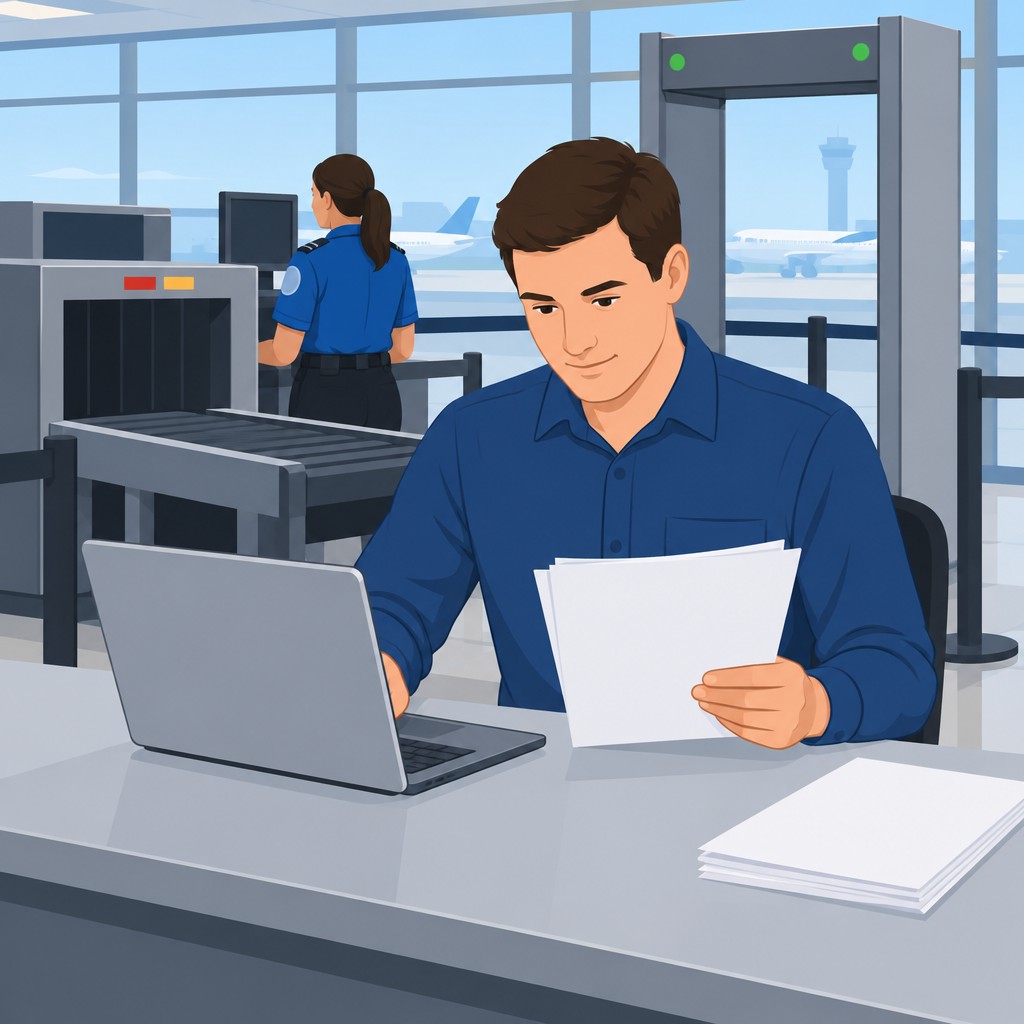
Applicants can submit the application online or by mail.
The online option requires applicants to complete the form on the TSA website.
Alternatively, applicants can print the form and mail it to TSA headquarters.
- Visit the TSA website and complete the online application form.
- Print the application form and mail it to TSA headquarters.
Timeline for Receiving a Response
The TSA typically takes 4-6 weeks to process applications.
Applicants may receive an email or phone call during the hiring process.
The notification may explain the next steps in the hiring process.
- Allow 4-6 weeks for the TSA to process the application.
- Watch for an email or phone call about the next steps.
Following Up After Submitting Your Application
Applicants can follow up after submitting their applications.
A thank-you email can express gratitude for the opportunity to apply.
Applicants can also contact the TSA HR department for application updates.
- Send a thank-you email expressing gratitude for the application opportunity.
- Call the TSA HR department to ask about the application status.
See Related Content: Women in Dock Work: Breaking Stereotypes
Interview Process
- The typical interview process for a Transportation Security Screener position includes several stages.
- First, a phone screening may discuss your qualifications and interest in the role.
- Next, you will likely attend an in-person interview with a hiring manager or panel.
- During the interview, expect questions about your experience, skills, and security screening knowledge.
- Additionally, interviewers may ask situational or behavioral questions about various scenarios.
Preparing for Common Interview Questions
- Research common security screener interview questions and practice your responses.
- Be ready to discuss your customer service, problem-solving, and attention-to-detail experience.
- Prepare examples showing how you work under pressure and follow security protocols.
- Also, practice explaining your knowledge of security procedures and regulations.
Professionalism and Knowledge During the Interview
- Professionalism plays an important role when you interview for a Transportation Security Screener position.
- Dress appropriately in business attire and arrive on time for your interview.
- Show your security screening knowledge and commitment to safety.
- Furthermore, demonstrate clear communication, a positive attitude, and willingness to learn.
- Emphasize your ability to collaborate and follow strict security protocols.
Gain More Insights: Common Mistakes in Inventory Control and Solutions
Training and Certification
Thorough training prepares Transportation Security Screeners to protect passengers and their belongings.
Newly hired screeners complete training covering security procedures, X-ray screening techniques, and suspicious-item protocols.
They also gain practical experience under the supervision of experienced screeners.
- Initial training: New screeners complete a comprehensive program covering essential security procedures and screening techniques.
- On-the-job training: Experienced screeners supervise new employees as they build practical skills.
- Annual training: Screeners complete yearly instruction covering updated security protocols and procedures.
Certifications and security clearances support the screening process and demonstrate professional readiness.
Applicants must pass a background check before receiving the required security clearance.
These requirements help confirm a screener’s trustworthiness and suitability for the position.
- Security clearances: Screeners undergo background checks to identify criminal records or terrorist connections.
- Certifications: Screeners obtain TSA certification to demonstrate proficiency in security screening procedures.
- Importance: Clearances and certifications help maintain public and government trust in screeners.
Ongoing instruction helps screeners respond to changing security threats and updated procedures.
Regular sessions and workshops strengthen skills while reinforcing required practices.
Refresher courses can help screeners remain prepared for emerging security threats.
- Continuing education: Screeners attend regular sessions and workshops to improve their skills.
- Refresher courses: Periodic courses reinforce readiness for security threats that may arise.
- Regulatory compliance: Screeners follow training requirements to meet regulatory standards.
This rigorous process helps Transportation Security Screeners perform their duties effectively.
Transform Your Career Today
Unlock a personalized career strategy that drives real results. Get tailored advice and a roadmap designed just for you.
Start NowCertifications, clearances, and continued training support passenger safety and transportation security.
Starting the Job
New transportation security screeners begin their roles through structured preparation and practical experience.
The onboarding process builds knowledge, confidence, and proficiency before screeners manage regular responsibilities.
Career development can also support long-term advancement within transportation security.
Onboarding Process for New Transportation Security Screeners
Orientation introduces new hires to workplace policies and required procedures.
Training then develops their screening techniques, equipment skills, and understanding of security protocols.
Experienced screeners provide practical guidance while new hires prepare for their responsibilities.
- New hires attend orientation to learn about policies and procedures.
- They receive training on screening techniques, equipment use, and security protocols.
- New screeners shadow experienced employees to gain practical knowledge and hands-on experience.
- Mock scenarios test their skills and confirm their readiness for job responsibilities.
- Supervisors gradually increase workloads to build confidence and screening proficiency.
Benefits and Perks of Working in Transportation Security
Transportation security positions offer compensation and benefits that support employees throughout their careers.
These roles also provide stability within a critical sector of national infrastructure.
Additionally, employees can pursue training and advancement opportunities within the Transportation Security Administration.
- Employees receive competitive salaries with opportunities for overtime pay.
- Health and retirement benefits may include medical, dental, and 401(k) plans.
- Workers gain job stability and security in a critical infrastructure sector.
- Employees access ongoing training and career development programs.
- Screeners can pursue advancement opportunities within the Transportation Security Administration.
Strategies for Career Growth in Transportation Security
Strong performance requires consistent attention to changing security expectations and workplace responsibilities.
Employees can strengthen their careers by improving communication, judgment, and professional relationships.
Training, feedback, and networking can help screeners identify opportunities for future advancement.
- Stay updated on security regulations and current best practices.
- Develop strong communication and decision-making skills.
- Seek feedback from supervisors and peers to improve performance.
- Use training and development opportunities offered by the Transportation Security Administration.
- Network with professionals to explore growth opportunities in the field.
Transportation Security Screener Career Opportunity
The application process begins with an online form requiring detailed personal information.
After candidates pass initial screening, they undergo a thorough background check.
If selected, candidates attend training to learn the skills required for the position.
Moreover, this career offers an opportunity to support national security.
Applicants can find more information on the official Transportation Security Administration website.
Therefore, interested candidates can begin pursuing this career opportunity today.


