




Introduction:
In the realm of modern assembly work, technology plays a crucial role in enhancing efficiency and productivity.
Gone are the days of manual labor-intensive processes.
Technology has redefined the way assembly work is carried out.
The significance of technology in transforming assembly work processes cannot be overstated.
Automated machinery, robotics, and artificial intelligence have revolutionized the industry.
They streamline operations and reduce human errors.
The purpose of this blog post is to delve into the various ways in which technology has shaped modern assembly work.
This will highlight its benefits and implications on the workforce and productivity.
Evolution of Technology in Assembly Work
Assembly work has come a long way since its inception.
Technology has played a crucial role in its evolution.
Let’s delve into the historical perspective of assembly work and how technology has transformed the way things are done.
Historical Perspective of Assembly Work
- Initially, assembly work was done manually, with workers using basic tools and equipment to assemble products.
- With the industrial revolution, assembly work saw the introduction of machinery like conveyor belts and automated systems.
- This shift increased the speed and accuracy of assembly processes, paving the way for mass production.
Key Technological Advancements
- The introduction of robotics revolutionized assembly work by allowing for precise and repetitive tasks to be automated.
- Computer-aided design (CAD) software has streamlined the design process, making it easier to create and modify assembly plans.
- 3D printing technology has enabled rapid prototyping and customization, leading to more efficient production processes.
Impact of Modern Technology on Efficiency and Productivity
- Modern technology has significantly improved the efficiency of assembly work by reducing human error and speeding up production times.
- Automation has allowed for 24/7 operation, leading to increased productivity and faster time-to-market for products.
- Data analytics and artificial intelligence have enabled predictive maintenance, ensuring machine uptime and preventing breakdowns.
The role of technology in modern assembly work is undeniable.
From manual labor to advanced robotics and AI, technology has transformed the way products are assembled.
This evolution has made processes more efficient and productive than ever before.
Automation in Assembly Work:
Automation in assembly work involves the use of technology to streamline and optimize production processes.
The benefits of automation in assembly work include increased efficiency, precision, and productivity.
Robotics have revolutionized assembly lines by performing repetitive tasks with precision and speed.
Artificial intelligence (AI) is used to optimize production schedules and identify inefficiencies in the assembly process.
Machine learning algorithms are employed to improve the quality control of products in assembly lines.
Examples of Companies Implementing Automation:
- Tesla has automated much of its manufacturing process, including the assembly of electric vehicles.
- Amazon utilizes robots in its warehouses to pick, pack, and ship products efficiently.
- Foxconn, a major electronics manufacturer, has automated assembly lines for products like iPhones.
- BMW employs robots in its factories to assemble cars with precision and consistency.
- Siemens uses AI and automation in its production processes to improve efficiency and quality.
Automation has transformed modern assembly work by increasing efficiency, reducing errors, and enhancing productivity in various industries.
Learn More: Boilermaker Inspection Processes and Standards
Enhanced Safety Measures:
Technology has revolutionized safety measures in assembly work.
Sensors and cameras are used to prevent accidents in real-time.
These tools ensure the well-being of assembly line workers.
Technology plays a crucial role in creating a safer environment.
Automated systems can detect errors before they become hazards.
Workers are equipped with wearable technology for communication and tracking.
Emergency response systems can be triggered automatically in case of accidents.
Virtual reality training is used to simulate dangerous scenarios for practice.
Robots are employed to handle high-risk tasks to protect human workers.
Data analytics are utilized to identify trends and potential safety risks.
- Technology has revolutionized safety measures in assembly work.
- Sensors and cameras are used to prevent accidents in real-time.
- These tools ensure the well-being of assembly line workers.
- Technology plays a crucial role in creating a safer environment.
- Automated systems can detect errors before they become hazards.
- Workers are equipped with wearable technology for communication and tracking.
- Emergency response systems can be triggered automatically in case of accidents.
- Virtual reality training is used to simulate dangerous scenarios for practice.
- Robots are employed to handle high-risk tasks to protect human workers.
- Data analytics are utilized to identify trends and potential safety risks.
Explore Further: Community Impact of Waste Management Workers
Increased Precision and Accuracy:
Technology has revolutionized assembly work by enhancing precision and accuracy.
Advanced tools like 3D printers and automated guided vehicles play a crucial role.
These tools help in reducing errors and improving the overall quality of products.
3D printers can create intricate parts with precise measurements, ensuring a perfect fit.
Automated guided vehicles navigate assembly lines with precision, minimizing human error.
Accuracy is vital in assembly work to ensure seamless functioning of complex machinery.
Technology has raised the standards of precision and accuracy in assembly processes.
High levels of precision lead to better efficiency, productivity, and reduced waste in production.
Transform Your Career Today
Unlock a personalized career strategy that drives real results. Get tailored advice and a roadmap designed just for you.
Start NowBy utilizing technology, manufacturers can achieve consistent quality in their products.
The reliability of automated systems ensures a higher level of consistency in assembly work.
Discover More: How Waste Management Workers Keep Cities Clean
Training and Skill Development:
Technology is used to train assembly line workers effectively in modern assembly work.
Virtual reality simulations and online training programs are crucial for skill development.
Continuous learning and adaptation to new technologies are essential in the assembly work industry.
Training assembly line workers in modern assembly work is crucial for the success of any manufacturing operation.
With the rapid advancements in technology, it has become increasingly important to provide workers with the necessary skills and knowledge to operate efficiently and effectively.
One way technology is being used to train assembly line workers is through the use of virtual reality simulations.
These simulations allow workers to practice their skills in a virtual environment, providing a realistic training experience without the risk of damaging actual equipment.
Workers can familiarize themselves with assembly processes, machinery operation, and safety protocols in a controlled setting, which can help them feel more confident and prepared for their job responsibilities.
Online training programs are another valuable tool for preparing workers for modern assembly work.
These programs offer flexibility and convenience, allowing employees to access training materials from anywhere at any time.
Workers can learn at their own pace, which can be especially beneficial for those who may have differing learning styles or require additional support.
Online programs can provide comprehensive training on specific assembly processes, machinery operation, and safety procedures, ensuring that workers have the knowledge and skills needed to perform their job duties effectively.
Continuous learning and adaptation to new technologies are essential for assembly line workers to stay competitive in the industry.
As technology continues to evolve at a rapid pace, it is crucial for workers to stay up-to-date on the latest advancements and trends.
This may involve attending workshops, seminars, or online courses to expand their knowledge and skills.
By staying informed and adaptable, workers can remain versatile and valuable assets to their employers, contributing to the overall success of the assembly work industry.
You Might Also Like: Daily Routine of a Construction Worker: A Detailed Look
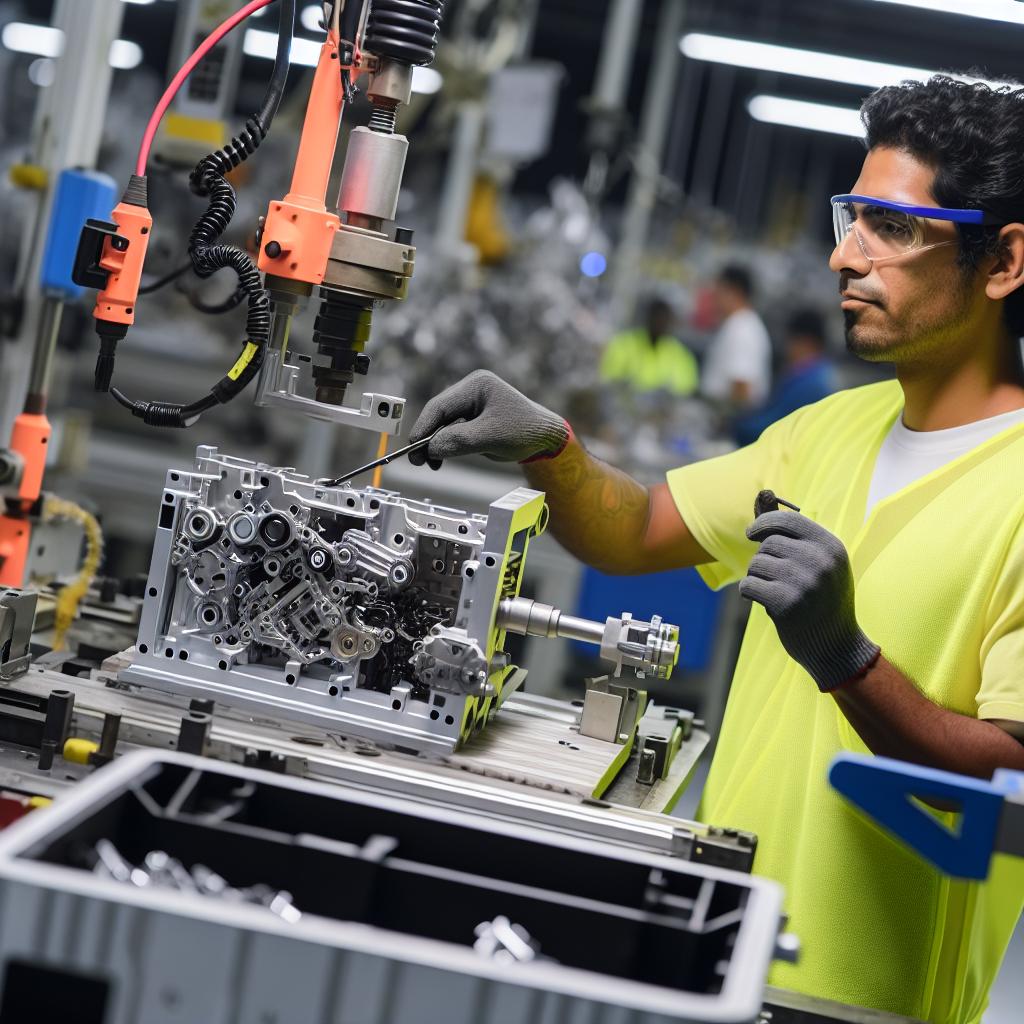
Sustainability and Environmental Impact:
Role of Technology in Promoting Sustainability:
Technology plays a crucial role in promoting sustainability in modern assembly work.
By incorporating advanced automation and monitoring systems, companies can optimize energy usage, reduce waste, and enhance overall efficiency.
Automated processes ensure that resources are utilized efficiently, minimizing the environmental impact of assembly work.
Integration of Green Technologies and Renewable Energy Sources:
- Green technologies, such as solar panels, wind turbines, and energy-efficient equipment, are being integrated into assembly processes to reduce the reliance on traditional energy sources.
- Renewable energy sources play a significant role in powering assembly plants, reducing carbon emissions, and lowering the overall environmental footprint of manufacturing operations.
- By harnessing renewable energy, companies can mitigate the environmental impact of their operations and contribute to a more sustainable future.
Importance of Environmentally Friendly Practices:
Implementing environmentally friendly practices in modern assembly work is essential to minimize the ecological footprint of manufacturing processes.
By adopting sustainable practices, companies can reduce waste generation, lower energy consumption, and protect natural resources.
Challenges and Concerns:
One potential challenge is the fear of job displacement among assembly workers.
Technology advancements may lead to certain skill gaps among the workforce.
Cybersecurity threats become a significant concern in a technology-driven assembly work environment.
Job Displacement:
With the increased adoption of technology in assembly work, there is a legitimate concern about traditional manual labor jobs being replaced by machines and automation.
This can create anxiety and uncertainty among workers who fear losing their jobs to technology.
To address this challenge, companies must prioritize reskilling and upskilling programs to help employees adapt to new roles that complement technology.
This can involve training workers to operate and maintain advanced machinery or specialized tools, ensuring job security and career progression.
Skill Gaps:
As assembly work becomes more automated and technology-dependent, there is a growing need for workers with specialized technical skills.
This shift can create skill gaps among the existing workforce, making it crucial to bridge these differences to ensure operational efficiency.
Employers should invest in training programs that equip employees with the necessary technical competencies to thrive in a technology-driven environment.
By promoting continuous learning and development, companies can empower their workforce to adapt to emerging technologies and remain competitive in the industry.
Cybersecurity Threats:
The integration of technology in assembly work also exposes organizations to cybersecurity risks, such as data breaches and malicious attacks.
As assembly processes become increasingly digitized and interconnected, protecting sensitive information and intellectual property becomes paramount.
To mitigate cybersecurity threats, companies must implement robust security measures, such as encryption protocols and multi-factor authentication systems.
Regular security audits and employee training on cybersecurity best practices are essential to safeguard critical data and prevent potential cyber threats from disrupting operations.
Transform Your Career Today
Unlock a personalized career strategy that drives real results. Get tailored advice and a roadmap designed just for you.
Start NowPossible Solutions:
- Implement comprehensive reskilling and upskilling programs for assembly workers.
- Invest in training initiatives to bridge skill gaps and enhance technical competencies.
- Adopt stringent cybersecurity measures to protect against data breaches and cyber attacks.
By addressing these challenges and concerns proactively, companies can navigate the transition to a technology-driven assembly work environment successfully.
Embracing innovation while supporting employees through training and cybersecurity protocols is essential to drive sustainable growth and competitiveness in the modern manufacturing landscape.
Role of Technology in Modern Assembly Work
Technology integration has revolutionized the assembly work industry.
Automation and robotics have improved efficiency, accuracy, and productivity.
Embracing technology can ensure worker safety by minimizing human error.
This approach reduces the risk of workplace accidents.
Protecting employees increases overall productivity and output.
Additionally, technology contributes to sustainability efforts by optimizing resources.
It helps reduce waste and minimizes environmental impact.
Companies can operate in an eco-friendly manner, aligning with societal demands for sustainability.
Businesses must stay informed about emerging technologies in assembly work.
Keeping up with trends helps companies remain competitive.
It enhances processes and allows for effective market adaptation.
The role of technology in modern assembly work is crucial.
Embracing advancements improves efficiency, safety, and sustainability.
Companies should prioritize technological integration to stay competitive.
Additional Resources
The Role of Technological Job Displacement in the Future of Work …