




Agricultural Research and Its Role
Agricultural research improves food production.
It also supports sustainability and resource management.
Together, these goals strengthen agricultural progress.
The Importance of Agriculture in Society
Agriculture supports food security.
It contributes to economic stability.
Additionally, it helps preserve the environment.
Technology’s Role in Agricultural Research
Technology advances agricultural research.
It enables precision farming and data analysis.
Furthermore, genetic engineering expands research capabilities.
Recent Technologies in Agricultural Research
Recent research uses drones for crop monitoring.
Artificial intelligence supports pest control.
Meanwhile, gene editing helps improve crops.
Drones in Agricultural Monitoring
Drones represent one of the latest technologies revolutionizing agricultural research.
These unmanned aerial vehicles have transformed crop and livestock monitoring.
They also change how farmers and researchers monitor and manage crops and livestock.
How Drones Support Agriculture
Drones carry cameras and sensors that provide valuable data for farmers.
Farmers use them to monitor crop health, identify pests, and assess soil quality.
They can also track livestock across fields and pastures.
Drones capture high-resolution images and videos while flying over fields or pastures.
These images help farmers spot issues early and respond quickly.
Consequently, real-time data supports decisions that can improve crop yields and animal health.
Benefits of Drone Monitoring
Drones support precision agriculture by revealing detailed field conditions.
Investing in this technology can produce long-term savings by reducing waste.
Additionally, monitoring crops and livestock can encourage sustainable farming practices.
- Increased efficiency helps farmers inspect large areas with less labor.
- Precision agriculture guides more efficient use of water, fertilizers, and pesticides.
- Cost-effective operations can improve productivity while limiting waste.
- Sustainable practices can minimize agriculture’s environmental impact.
Successful Agricultural Drone Applications
Several companies and organizations have implemented drone technology in agriculture.
In Japan, drones spray pesticides on rice paddies, reducing manual labor and chemical exposure.
In the United States, farmers survey fields and identify crop diseases early.
This proactive approach helps farmers prevent crop losses and maximize yields.
Additionally, researchers use drones to study animal behavior and monitor endangered species remotely.
These applications show how drones can provide insights for agricultural productivity, sustainability, and profitability.
Artificial Intelligence
Artificial Intelligence is a cutting-edge technology.
It has made significant strides in agricultural research.
Moreover, AI automates tasks, analyzes large datasets, and provides useful insights.
AI Applications in Crop Prediction and Disease Detection
Researchers use AI algorithms to process complex agricultural datasets.
These systems help researchers make more informed decisions.
Additionally, AI systems predict crop yields using weather patterns, soil quality, and crop health.
AI-powered drones use sensors to identify crop diseases at an early stage.
Future Potential of AI in Agriculture
AI could support precision farming, automated machinery, and drone technology.
Consequently, these capabilities may increase efficiency, reduce waste, and improve productivity.
As AI evolves, it may support sustainable farming and address global food security challenges.
Transform Your Career Today
Unlock a personalized career strategy that drives real results. Get tailored advice and a roadmap designed just for you.
Start NowTherefore, AI may offer innovative solutions that benefit farmers and consumers.
Delve into the Subject: Effective Livestock Breeding Techniques
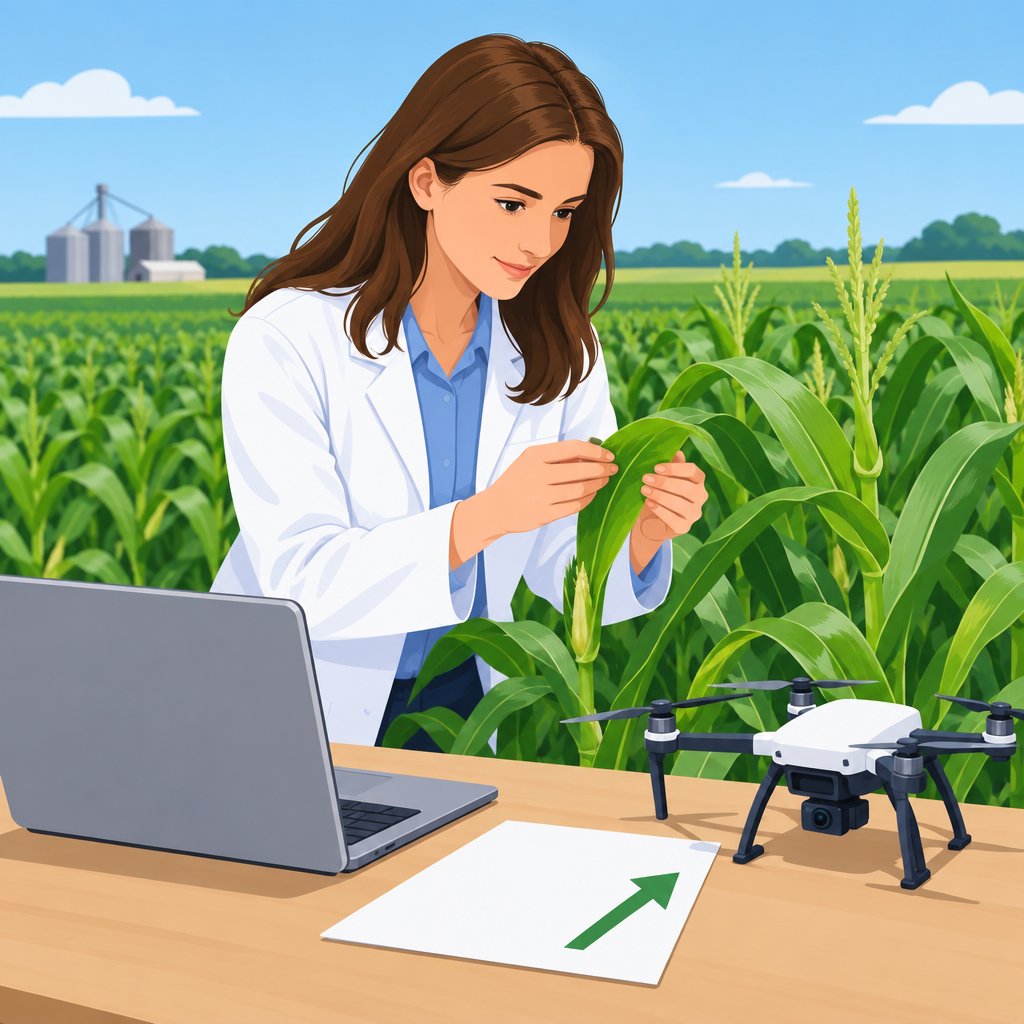
Precision Agriculture
Precision agriculture uses technology to optimize crop production.
This approach helps farmers make informed decisions about farming practices.
Farmers collect data about soil moisture, crop health, and weather conditions.
Definition and Significance of Precision Agriculture
Precision agriculture, also called precision farming or satellite farming, uses technology to manage crop production.
Farmers analyze soil pH, temperature, and moisture content before making production decisions.
Therefore, they can improve planting, fertilizing, and harvesting practices.
Techniques That Optimize Crop Production
Precision agriculture uses GPS, drones, and sensors to collect information about soil and crop conditions.
Farmers analyze this information to create detailed field maps.
These maps identify areas that require specific treatments.
Efficiency and Resource Conservation
Precision agriculture helps farmers customize treatments for specific field areas.
Consequently, farmers can reduce input costs while maximizing crop yields.
More precise applications also reduce waste and environmental impact.
- GPS-guided tractors apply fertilizers or pesticides where farmers need them.
- Targeted applications provide crops with appropriate amounts of essential inputs.
- Efficient water, fertilizer, and pesticide use supports sustainable farming practices.
Discover More: Student Guide: Plant Pathology Degree Programs
Gene Editing in Agricultural Research
Gene editing allows scientists to make precise changes to an organism’s DNA.
This technology supports agricultural research by targeting specific genetic traits.
Researchers can use gene editing to modify crops for various agricultural purposes.
Gene Editing Technologies Like CRISPR
- CRISPR stands for Clustered Regularly Interspaced Short Palindromic Repeats.
- This tool enables researchers to target specific genes with high precision.
- Scientists can delete, insert, or modify genes in crops and other organisms.
Improving Crop Yields and Disease Resistance
- Gene editing can help scientists develop crops with higher yields and improved nutritional content.
- It can also strengthen crop resistance to pests, diseases, drought, and extreme temperatures.
- These improvements could support food security through greater agricultural productivity and sustainability.
Ethical Concerns in Agricultural Gene Editing
- Gene editing may affect biodiversity, which creates important ethical concerns.
- Unintended effects could produce superweeds or reduce genetic diversity.
- The technology also raises questions about ownership, control, and intellectual property rights.
Gene editing represents a significant advancement in agricultural research.
It could transform crop production and strengthen global food security.
However, researchers and society must carefully consider its ethical and social consequences.
Explore Further: Challenges Faced by Livestock Managers
Internet of Things in Agriculture
The Internet of Things connects devices that communicate and share data without human intervention.
In agriculture, IoT provides real-time information that supports data-driven farm management decisions.
Consequently, farmers can monitor conditions, improve operations, and manage resources more effectively.
IoT Applications in Farm Management
Farmers use sensors, monitoring devices, and actuators to collect information throughout their farms.
These devices measure conditions such as temperature, humidity, soil moisture, and crop growth.
Furthermore, farmers can analyze this information to improve yields, reduce costs, and respond quickly.
- IoT devices collect and transmit data from different areas of the farm.
- Farmers use collected information to optimize operations and improve crop production.
- Remote monitoring helps farmers identify changing conditions and potential problems.
IoT for Soil Health and Irrigation
Soil sensors help farmers assess conditions and make informed decisions about fertilization.
Meanwhile, smart irrigation systems combine soil moisture readings with weather forecasts.
As a result, automated water management can reduce waste and support healthier crops.
- Soil sensors measure nutrient levels, pH, and moisture.
- Farmers use these measurements to evaluate soil health and adjust fertilization.
- Smart irrigation systems schedule watering according to real-time conditions.
- IoT-enabled drones survey fields and identify areas of crop stress.
- Farmers also use drones to monitor irrigation effectiveness.
Challenges of Implementing IoT in Agriculture
Farmers may face significant costs when purchasing and installing IoT equipment.
They must also integrate new devices with existing management systems and software.
Additionally, connectivity, security, and privacy concerns can complicate implementation in rural areas.
- Initial installation costs can make IoT adoption difficult for some farmers.
- Existing farm systems may not integrate easily with new IoT technology.
- Cyber-attacks and data breaches may expose sensitive farm information.
- Unreliable rural internet connections can hinder successful IoT implementation.
Uncover the Details: Salary Expectations for Plant Pathologists
Robotics in Agriculture
In recent years, robotics has played a significant role in transforming agriculture.
Farmers now use robots for harvesting, planting, and crop monitoring.
This technology continues to revolutionize agricultural work.
How Farmers Use Agricultural Robots
- Robots automate tasks such as harvesting fruits and vegetables.
- They also plant seeds, remove weeds, and monitor crop health.
- Sensors and cameras help these robots navigate fields with precision.
Benefits of Agricultural Robotics
- Increased Efficiency: Robots can work 24/7, increasing productivity and accelerating task completion.
- Reduced Labor Costs: Farmers can reduce labor expenses and allocate resources more efficiently.
- Improved Accuracy: Robots perform tasks precisely, supporting better crop yields and quality.
Examples of Agricultural Robotics
- Harvesting Robots: Agrobot and Harvest CROO Robotics developed robots for picking strawberries and citrus fruits.
- Planting Robots: The AgriRobo and DOT Power Platform support new approaches to crop planting.
- Weeding Robots: FarmWise and Blue River Technology’s See & Spray help farmers reduce herbicide use.
Robotics is proving to be a game-changer in agriculture.
It offers farmers innovative solutions to increase efficiency, reduce costs, and improve crop output.
Transform Your Career Today
Unlock a personalized career strategy that drives real results. Get tailored advice and a roadmap designed just for you.
Start NowFurther technological advances may create more agricultural applications for robotics.
Technology and Sustainable Food Production
Researchers must incorporate modern technologies to support sustainable food production.
This approach can help agriculture address changing food production demands.
Consequently, technological progress remains important for the future of farming.
Operational Benefits of Agricultural Technology
Technology enables farmers to manage agricultural activities with greater precision.
It can also increase productivity while reducing agriculture’s environmental impact.
These benefits support more efficient and responsible farming practices.
Technologies Reshaping Farming Practices
Drones can help farmers monitor crops across agricultural areas.
Meanwhile, artificial intelligence can support predictive analysis in farming.
Together, these technologies can transform established agricultural practices.
Wider Adoption of Advanced Agricultural Tools
Farmers should explore advanced technologies that improve agricultural efficiency.
Researchers must also evaluate how these tools can support farming progress.
Ultimately, broader adoption can help address global food security challenges.
Additional Resources
Google search results for Latest Technologies in Agricultural Research Agricultural
Bing search results for Latest Technologies in Agricultural Research Agricultural


