




Seed Treatment Techniques
Seed treatment techniques apply chemical, biological, or physical agents to seeds before planting.
These treatments protect seeds from diseases, pests, and environmental stress.
Additionally, they improve germination, seedling vigor, and overall crop productivity.
Seed treatment techniques have evolved from traditional practices to modern innovations.
Historical Seed Treatment Practices
Centuries ago, farmers soaked seeds in water or coated them with ash to protect against pests and diseases.
They also mixed seeds with natural plant extracts or fermented them in animal dung to improve germination.
However, these labor-intensive methods produced inconsistent results, crop failures, and low productivity.
Scientific Advances in Seed Treatment
Advances in science and technology addressed the limitations of traditional seed treatment methods.
During the 19th century, chemical seed treatments improved protection against pests, diseases, and environmental stress.
Today, farmers use seed priming, pelleting, coating, and genetic modification to enhance seed performance.
Furthermore, Bayer, Syngenta, and Corteva AgriScience lead research into innovative seed treatment solutions.
This progress supports sustainable agriculture and strengthens global food security.
Chemical Seed Treatment
Chemical seed treatment uses synthetic chemicals to protect seeds from pests, diseases, and environmental stressors.
This approach improves germination, plant growth, and overall crop productivity.
Common treatment chemicals include fungicides, insecticides, and nematicides.
Farmers apply these chemicals by dipping, spraying, or coating seeds.
These treatments control seedborne and soilborne pathogens, pests, and other harmful organisms.
Furthermore, chemical treatment protects seeds from several threats.
It helps seeds reach their potential and gives plants a healthy start.
Biological Seed Treatment
Biological seed treatment uses beneficial bacteria, fungi, and other microorganisms.
These living organisms protect seeds from pathogens and pests.
The technique uses their natural defense mechanisms to improve seed quality and plant health.
Additionally, biological treatment offers an eco-friendly approach with minimal environmental impact.
It promotes natural pest control and enhances soil fertility.
Consequently, plants can grow healthier and produce higher yields.
Beneficial microorganisms can provide a safe alternative to chemical treatments.
They also support symbiotic relationships that improve nutrient absorption and disease resistance.
Physical Seed Treatment
Physical seed treatment uses mechanical and physical methods to improve seed quality and performance.
These methods improve seed purity, germination rates, and uniformity.
These improvements support optimal plant growth and development.
Common methods include seed coating, pelleting, and priming.
These methods protect seeds from mechanical damage and improve handling and sowing efficiency.
They can also strengthen seedling vigor under adverse conditions.
Moreover, physical treatment helps maintain seed quality during storage and transportation.
It keeps seeds viable and healthy until they germinate.
Consequently, seedlings can establish strong, productive crops.
Choosing Appropriate Seed Treatment Methods
Farmers can select chemical, biological, or physical treatments according to their specific needs.
Each option addresses seed protection, quality, or plant establishment in different ways.
Together, these innovations help improve seed performance and crop productivity.
Find Out More: Career Path: Becoming a Biotechnology Specialist
Transform Your Career Today
Unlock a personalized career strategy that drives real results. Get tailored advice and a roadmap designed just for you.
Start NowAdvantages of Seed Treatment Techniques
Seed treatment techniques offer several benefits to farmers.
They can support more efficient agricultural practices.
These benefits can improve crop quality and farm profitability.
- Increased crop yield: Seed treatments can increase crop yields.
- Protection against pests and diseases: Protective agents help safeguard seeds from common threats.
- Improved seed germination rates: Treated seeds have a higher likelihood of germinating successfully.
Discover More: Navigating Agricultural Regulations with Extension Agents
Seed treatment remains a crucial step in modern agriculture.
Recent innovations have transformed how farmers treat seeds before planting.
Precision Seed Coating Technology
Precision seed coating technology applies beneficial substances uniformly to seed surfaces.
This approach delivers nutrients, pesticides, and other treatments directly to seeds.
Farmers can therefore maximize treatment effectiveness while minimizing waste and environmental impact.
Using only necessary treatment amounts helps farmers optimize resources and reduce their carbon footprint.
Moreover, this technology allows farmers to customize treatments for seed types and crop varieties.
They can also adjust treatments according to specific environmental conditions.
Such customization can improve crop yields and overall plant health.
Nanotechnology in Seed Treatment
Nanotechnology enhances treatment effectiveness and improves seed performance.
Nanoparticles can deliver nutrients, pesticides, and other treatments directly to seeds.
They can also provide targeted and controlled treatment release.
As a result, farmers can achieve better nutrient absorption and stronger crop health.
Nanotechnology can increase resistance to pests and diseases.
It can also improve germination rates and seedling vigor.
These improvements can support higher crop yields.
Meanwhile, researchers continue exploring new nanotechnology applications for seed treatment.
For example, nanosensors can monitor plant health and environmental conditions in real time.
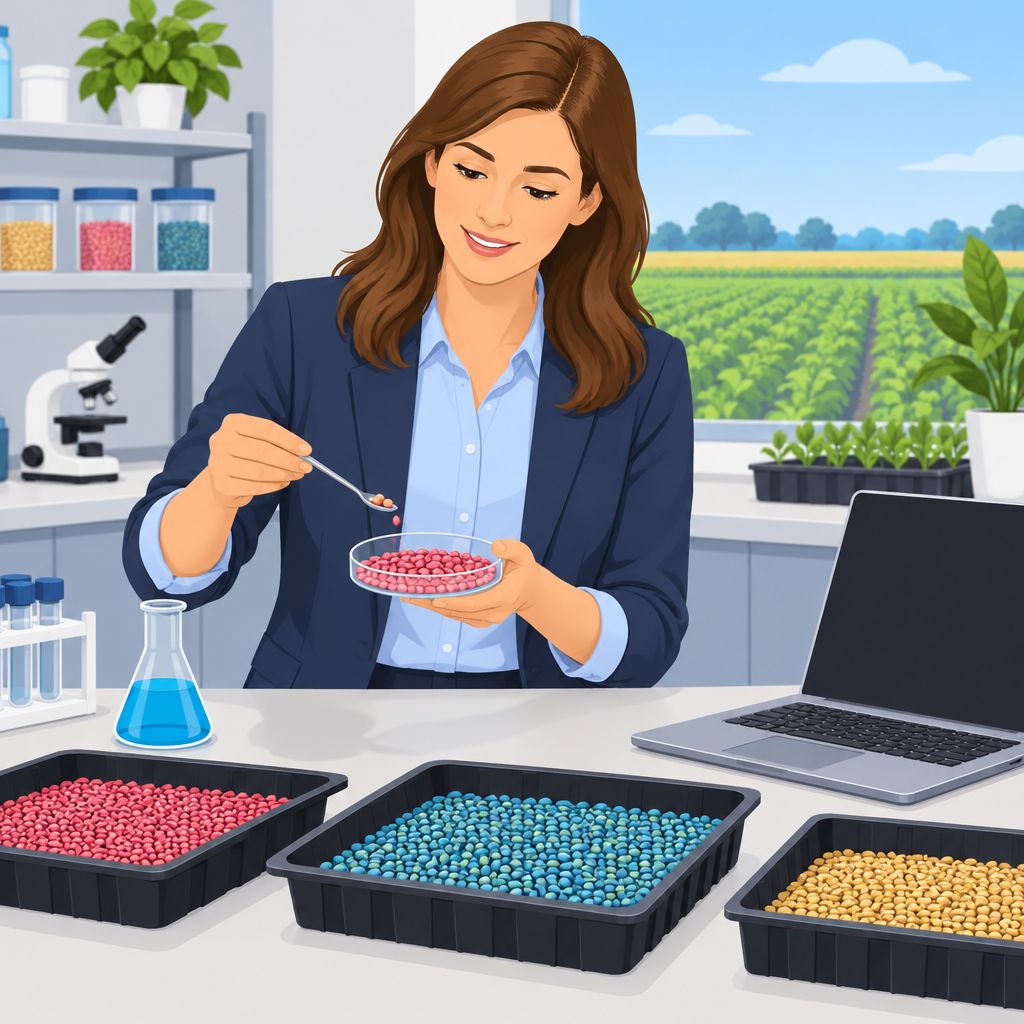
Biological Agents in Seed Treatments
Farmers increasingly use beneficial microbes and natural predators in seed treatments.
These biological agents offer sustainable and environmentally friendly treatment options.
They can protect plants from pests and diseases while improving soil health.
Additionally, biological agents can enhance nutrient uptake.
Biological treatments can reduce reliance on chemical pesticides and fertilizers.
This approach promotes a more balanced and resilient ecosystem.
By using natural processes, farmers can improve crop productivity while reducing environmental impacts.
These treatments can also support healthier and more nutrient-dense crops.
They promote plant immunity and can improve crop quality and nutritional value.
Sustainable Advances in Modern Agriculture
These innovations can transform modern agriculture.
They improve crop productivity and plant health.
They also support more sustainable and environmentally friendly farming practices.
See Related Content: Role of Food Safety Specialists in Food Manufacturing
Environmental Impacts of Seed Treatment Techniques
Environmental choices in seed treatment can affect surrounding ecosystems.
Farmers must assess how treatment methods influence soil, water, and organisms.
Responsible practices can protect seeds while reducing environmental risks.
Chemical Seed Treatments and Environmental Risks
Chemical treatments protect seeds from pests and diseases.
However, these products can introduce environmental concerns.
Transform Your Career Today
Unlock a personalized career strategy that drives real results. Get tailored advice and a roadmap designed just for you.
Start NowRunoff from treated seeds may carry toxic chemicals into nearby water sources.
Such contamination can affect aquatic life and potentially harm human health.
Repeated chemical use can also encourage pesticide-resistant pests.
This resistance may increase dependence on stronger chemicals.
Sustainable Alternatives for Seed Treatment
Biological treatments use naturally occurring microorganisms to protect seeds from pests and diseases.
These methods can reduce reliance on synthetic chemicals.
Biodegradable seed coatings provide another option for protecting seeds.
Because these coatings break down, they can avoid harmful environmental residues.
Regulations Supporting Responsible Practices
Regulatory bodies have introduced guidelines for responsible seed treatment practices.
These rules may restrict which chemicals farmers can use.
They can also guide the disposal of treated seeds and equipment.
Following regulations helps minimize the environmental consequences of seed treatments.
These practices also support more sustainable agriculture.
Learn More: How to Get Started in Food Safety Specialization
Future Trends in Seed Treatment Techniques
Agriculture continues to evolve, creating promising opportunities for innovative seed treatment techniques.
Emerging approaches emphasize sustainability, precision, and treatments tailored to specific agricultural conditions.
These developments can improve treatment outcomes while supporting more efficient agricultural practices.
Eco-Friendly Seed Treatment Solutions
Farmers and seed treatment companies increasingly favor eco-friendly alternatives to traditional chemical treatments.
This shift can reduce environmental impacts while supporting consumer health and safety.
Biological treatments use naturally occurring microorganisms to protect plants from diseases and pests.
These treatments can reduce reliance on synthetic chemicals and appeal to environmentally conscious farmers.
Digital Technologies in Seed Treatment
Digital technologies are transforming seed treatment through precision application, remote monitoring, and data analysis.
Companies use artificial intelligence and machine learning to optimize treatment formulations and application rates.
These tools can improve treatment efficacy, reduce waste, and support better crop outcomes.
Internet of Things devices allow farmers to monitor treatment progress remotely.
Farmers can then make real-time adjustments and maintain greater control over treatment results.
Personalized Seed Treatments for Specific Conditions
Researchers are developing personalized seed treatments for specific soil conditions, crop varieties, and environmental factors.
These treatments can address the unique needs of individual farms or fields.
Farmers may therefore improve treatment effectiveness and optimize crop yields.
Customized approaches could eventually replace broad, one-size-fits-all solutions in some agricultural settings.
Together, these trends point toward a more sustainable and efficient future for agriculture.
Case Studies in Successful Seed Treatment
Innovative seed treatments now support companies seeking stronger agricultural outcomes.
The following examples show how companies applied different treatment approaches.
These approaches improved germination, resilience, disease protection, and farm profitability.
Company A and Improved Germination
Company A introduced a novel treatment that increased germination rates by 20 percent.
Farmers using those seeds achieved improved crop yields and quality.
As a result, the treatment strengthened crop establishment and production outcomes.
Company B and Environmental Resilience
Company B developed a seed treatment using organic compounds.
The treatment enhanced plant resilience against environmental stress.
Farmers reported a 15 percent increase in harvests after adopting the technique.
Transform Your Career Today
Unlock a personalized career strategy that drives real results. Get tailored advice and a roadmap designed just for you.
Start NowCompany C and Fungal Disease Protection
Company C invested in research to develop a treatment protecting crops against fungal diseases.
This approach reduced pesticide usage for participating farmers.
Consequently, farmers achieved higher profitability through improved crop protection.
Effects of Seed Treatments on Crop Production
Seed treatments influence crop production by supporting seed quality and plant health.
They can also improve crop performance throughout the growing season.
Farmers therefore use these techniques to pursue stronger yields and better-quality produce.
Improved Germination and Crop Establishment
Fungicide and insecticide treatments can reduce seed-borne diseases and pests.
This protection supports higher germination rates and more uniform crop growth.
Better stand establishment helps crops reach their yield potential.
Stronger Plant Health
Nutrient treatments, growth stimulants, and biostimulants can promote root development.
They can also improve nutrient uptake and increase plant vigor.
Consequently, treated crops may withstand drought and disease more effectively.
Reduced Dependence on Agrochemicals
Seed treatments can provide protection against certain pests and diseases.
Farmers may therefore reduce their reliance on synthetic pesticides and fungicides.
This reduction can lower input costs and support more sustainable production.
Higher Crop Quality
Seed treatments can encourage uniform plant development across a field.
They can also support disease resistance and nutrient uptake.
These effects help farmers produce higher-quality crops that meet market standards.
More Sustainable Crop Production
Treatments that promote plant health can support sustainable agricultural practices.
Reduced agrochemical use can lessen agriculture’s environmental impact.
Farmers can therefore pursue productivity while supporting the long-term viability of crop production.
Supporting Productive Agricultural Systems
Innovative seed treatments provide practical tools for improving crop production.
Companies have demonstrated benefits involving germination, resilience, disease protection, and crop quality.
These outcomes support productive and more sustainable agricultural systems.
Significant Advancements in Seed Treatment Techniques
Recent innovations in seed treatment technologies aim to improve crop yields.
Precision seed coating machines help farmers apply treatments with greater accuracy.
Seed priming hydrates seeds before sowing and can improve germination rates.
It also supports stronger crop performance after planting.
Biological seed treatments use beneficial microorganisms to promote plant growth.
Additionally, these treatments can suppress diseases affecting developing plants.
Nano-coating technology enables precise delivery of active ingredients.
Consequently, farmers can improve treatment effectiveness while applying suitable amounts.
Innovations in seed polymers have produced biodegradable coatings.
These coatings reduce environmental impact and improve seedling establishment.
Plant hormones in seed treatments may enhance stress tolerance and plant health.
Therefore, farmers can optimize crop production while reducing chemical inputs.
Advancing Sustainable Crop Production
Modern seed treatment advancements improve crop productivity and support agricultural sustainability.
Ongoing research remains essential for developing sustainable treatment technologies.
Continued innovation can optimize yields, reduce environmental impacts, and promote global food security.
Additional Resources
Google search results for Innovations in Seed Treatment Techniques Agricultural
Transform Your Career Today
Unlock a personalized career strategy that drives real results. Get tailored advice and a roadmap designed just for you.
Start NowBing search results for Innovations in Seed Treatment Techniques Agricultural


