




Technology and Water Management in Agriculture
Precision agriculture uses technology to optimize crop production.
Farmers use data-driven insights to guide agricultural decisions.
Water management affects crop growth, yields, and overall farm sustainability.
What Is Precision Agriculture?
Precision agriculture is an innovative farming method that helps farmers optimize crop production.
Farmers use precision technologies to improve crop yields and profitability.
These practices also support efficient resource use and agricultural sustainability.
Technologies Used in Precision Agriculture
- Global Positioning System (GPS) helps farmers map fields and monitor crop growth precisely.
- Geographic Information System (GIS) helps farmers analyze data and make informed crop management decisions.
- Drones collect real-time information about crop health and irrigation needs.
- Sensors measure soil moisture, temperature, and nutrient levels for targeted irrigation and fertilization.
- Variable Rate Technology (VRT) adjusts input application rates according to field variability.
- Automated machinery, including tractors and planters, streamlines farming operations.
- Remote sensing provides insights into crop health and soil conditions.
Precision agriculture enhances water management and supports broader agricultural sustainability.
The Role of Water Management in Precision Agriculture
Water management supports precision agriculture by guiding efficient water use during crop production.
It helps farmers match water supplies with crop needs and changing field conditions.
Furthermore, careful water use supports productive, sustainable, and resilient agricultural practices.
Importance of Water Management in Crop Production
Proper water management gives crops suitable amounts of water at appropriate times.
Consequently, crops can achieve stronger growth and improved yields.
Meanwhile, balanced water levels help farmers protect crops and conserve water resources.
- Proper water management can increase crop yields by supporting crop needs.
- Efficient water use conserves water and reduces pressure on agricultural water sources.
- Balanced water levels can prevent waterlogging and reduce conditions that support disease development.
- Effective water management helps agriculture adapt to changing climate patterns.
Benefits of Efficient Water Use in Agriculture
Efficient water use can lower water expenses and reduce operational costs.
As a result, farmers can improve profitability while maintaining productive farming practices.
Additionally, careful water management can support crop quality and environmental sustainability.
- Efficient water use can reduce water expenses and operational costs.
- Proper water management can improve crop quality and support better market prices.
- Efficient water use reduces waste and helps prevent environmental degradation.
- Effective water management helps farmers allocate fertilizers and other resources efficiently.
These practices help farmers optimize water use and increase agricultural productivity.
They also support sustainable farming and long-term food security.
Learn More: Precision Agriculture: Leveraging Machine Learning
Challenges of Water Management in Agriculture
Agricultural water management faces several challenges that threaten sustainable practices and farm productivity.
These challenges require careful planning because water supports crop growth, farm income, and environmental protection.
Therefore, farmers and other stakeholders must address resource constraints while responding to changing conditions.
Water Scarcity and Agricultural Production
Water scarcity limits agricultural production when competing sectors increase demand for available supplies.
Consequently, many farmers struggle to secure enough water for their crops.
Insufficient supplies can reduce yields and create economic losses.
Climate change worsens scarcity through unpredictable rainfall and prolonged droughts.
Climate Change and Agricultural Water Resources
Climate change alters water availability and distribution across agricultural regions.
Rising temperatures and shifting precipitation patterns change the hydrological cycle.
Moreover, floods and droughts can become more frequent and intense.
Farmers must adapt their water management practices to address these unpredictable conditions.
Building Resilience Through Collaboration
Effective responses can improve water efficiency and strengthen agricultural resilience.
Innovative practices can help farmers manage scarce supplies and climate-related pressures.
Meanwhile, stakeholders, policymakers, and researchers can collaborate on sustainable water management solutions.
Learn More: The Journey from Vineyard to Wine Bottle
Technologies for Improving Water Management in Precision Agriculture
Precision agriculture uses advanced tools to help farmers manage irrigation more accurately.
These tools provide timely field information that supports better decisions about water application.
Consequently, farmers can improve water efficiency while supporting crop productivity and sustainable farming practices.
Sensors for Monitoring Soil Moisture Levels
Soil moisture sensors measure the amount of water available within the soil.
Farmers use these measurements to decide when crops need irrigation.
They can also use sensor data to determine how much water each field requires.
Transform Your Career Today
Unlock a personalized career strategy that drives real results. Get tailored advice and a roadmap designed just for you.
Start NowAccurate monitoring helps farmers avoid both excessive irrigation and insufficient watering.
As a result, farms can use water more efficiently while supporting crop yields.
Capacitance sensors measure the soil’s dielectric constant to estimate moisture content.
In contrast, tensiometers measure soil moisture tension.
This tension indicates how much effort plants need to extract water from the soil.
Farmers can install sensors at different depths to examine moisture across root zones.
Therefore, sensor placement helps farmers create irrigation schedules for specific crops and soil conditions.
Furthermore, farmers can connect soil moisture sensors with weather stations and irrigation controllers.
These connections allow automated systems to respond to changing field conditions.
Farmers can then deliver suitable amounts of water at appropriate times.
Automated Irrigation Systems
Automated irrigation systems use information from sensors and other data sources.
They deliver water to crops with greater consistency and control.
These systems reduce the need for farmers to manage irrigation manually.
Consequently, farmers can save labor while maintaining regular water distribution.
Farmers can program systems to adjust schedules according to weather conditions.
They can also adjust irrigation according to soil moisture and crop water requirements.
Drip irrigation delivers water close to plant roots.
Precision sprinklers can also target crop areas more effectively.
These methods reduce evaporation and runoff during irrigation.
As a result, crops can receive more of the applied water.
Farmers can control many automated irrigation systems through mobile applications or computer interfaces.
Remote access allows them to monitor irrigation settings from different locations.
Moreover, farmers can respond quickly when field conditions change.
This flexibility supports more responsive and efficient water management.
See Related Content: Collaboration Between Food Safety and Other Departments
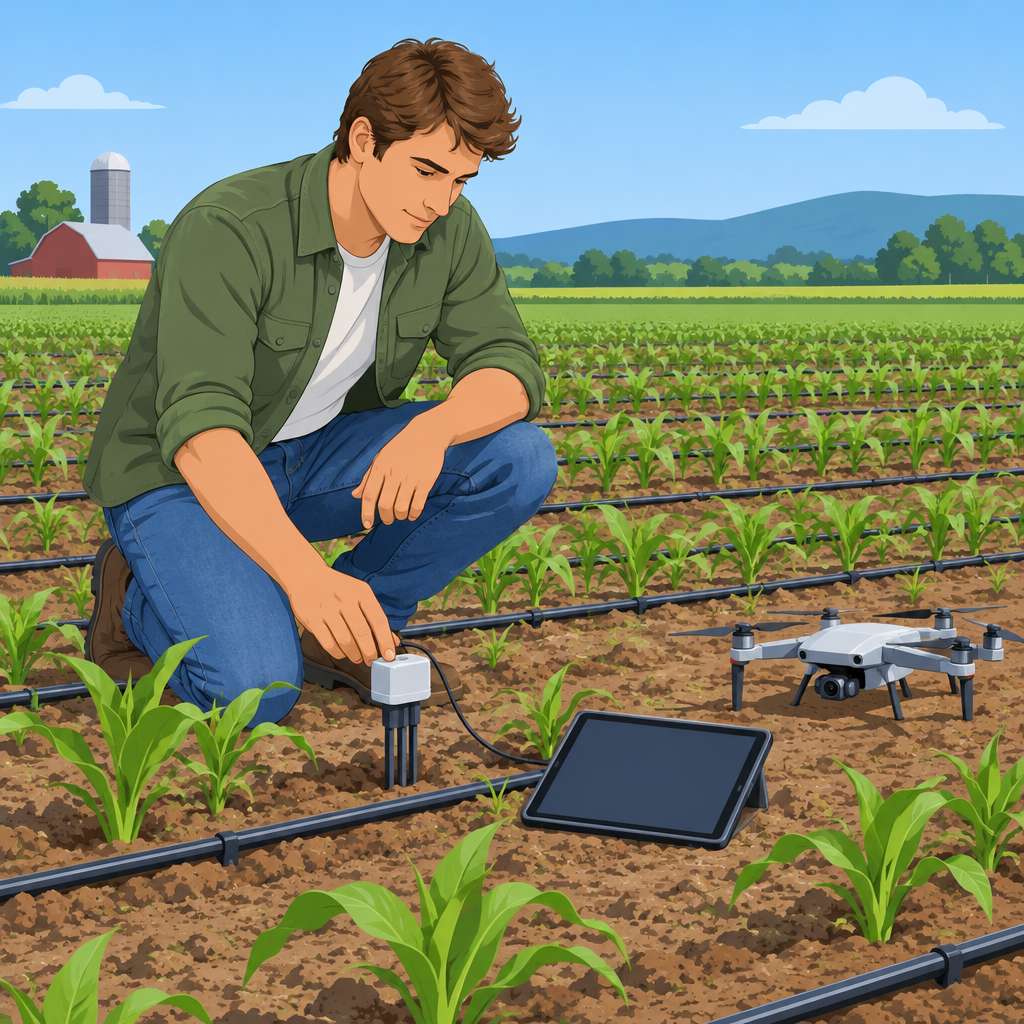
Data-Driven Decision Making in Precision Agriculture
Data-driven decisions now influence modern agricultural practices.
Farmers analyze field information to improve water management and crop performance.
This approach supports productive farming while encouraging responsible resource use.
Data Analytics for Water Management
- Soil moisture sensors provide real-time information about moisture levels in field soil.
- Farmers use these readings to decide when and how much water to apply.
- Weather forecasts reveal expected precipitation patterns and help farmers adjust irrigation schedules.
- These adjustments save water and reduce unnecessary runoff from agricultural fields.
- Satellite imagery shows crop health, water stress, and changing field conditions.
- Farmers interpret these images to identify areas that require additional irrigation attention.
- Drones capture detailed field images with sensors and cameras.
- Their data reveals crop conditions and moisture differences for more precise water management.
Benefits of Precision Agriculture for Water Use
- Variable-rate irrigation and automated systems help farmers apply water more efficiently.
- Accurate moisture monitoring helps farmers avoid overwatering and conserve available water.
- Well-timed irrigation gives crops appropriate water and supports stronger yields.
- Data-based irrigation decisions can reduce input costs and improve farm productivity.
- Careful water application reduces runoff, erosion, and nutrient leaching.
- These practices also support environmental sustainability and healthier agricultural soil.
Data analytics helps farmers coordinate irrigation with field conditions and crop requirements.
Consequently, farmers can improve water efficiency while supporting crop productivity and farm profitability.
These decisions also encourage more sustainable management of agricultural water resources.
Learn More: Technological Advances in Seed Processing
Case Studies of Successful Water Management Practices in Precision Agriculture
Precision agriculture has transformed farm water management through more efficient and sustainable practices.
These case studies show how farmers apply targeted methods to conserve water and support production.
Each example connects field information with irrigation decisions and resource stewardship.
Farms Using Precision Agriculture for Water Conservation
A large-scale wheat farm in the Midwest uses real-time soil moisture sensors.
Farmers use the readings to schedule irrigation precisely.
This approach ensures crops receive appropriate water when they need it.
In California, a vineyard applies precision irrigation directly to each grapevine’s root zone.
Targeted delivery conserves water while supporting grape yield and quality.
Transform Your Career Today
Unlock a personalized career strategy that drives real results. Get tailored advice and a roadmap designed just for you.
Start NowMeanwhile, a soybean farm in the Southeast uses variable rate irrigation technology.
The system adjusts application rates according to soil moisture and crop needs.
This tailored method reduces water use while maintaining production.
Results from Precision Water Management
These practices have produced notable water savings across the described farming operations.
Reported reductions range from 20% to 50%, depending on the crop and region.
Farmers also report improved crop health, yields, and product quality.
Accurate water application helps crops receive suitable amounts at appropriate times.
Consequently, farms can increase productivity and profitability while supporting sustainability.
More efficient water use helps farmers reduce groundwater depletion and minimize runoff.
Reduced runoff can limit the movement of harmful chemicals into water bodies.
Emerging Technologies in Precision Agriculture
As precision agriculture continues to evolve, future water management practices will introduce important advancements.
Emerging technologies will reshape how farmers approach irrigation and conservation.
These developments will support more informed water decisions.
Remote Sensing: Drones and satellites will monitor crop health and soil moisture accurately, helping farmers optimize irrigation schedules and reduce water waste.
Internet of Things: Connected devices and smart sensors will collect real-time weather, soil moisture, crop growth, irrigation, and water-use data.
Artificial Intelligence: AI algorithms will analyze diverse data and recommend water management actions.
Machine learning models will predict irrigation schedules from historical data and current conditions.
Advancements in Water Management Practices
Farmers will also advance water management through targeted systems and adaptive strategies.
These approaches will direct water more precisely while supporting crop production.
Furthermore, recycling and integrated management will strengthen resource conservation.
Precision Irrigation Systems: Automated systems will deliver water directly to plants when and where they need it most.
This targeted approach will minimize water waste and improve crop yields.
Variable Rate Irrigation: VRI systems will adjust application rates according to crop requirements and soil conditions.
This customized method will optimize water usage and minimize runoff.
Water Recycling and Reuse: Farmers will recycle rainwater, greywater, and treated wastewater for agricultural use.
These practices will reduce reliance on freshwater sources and minimize environmental impacts.
Integrated Crop Management: Farmers will combine precision techniques with crop rotation, cover cropping, and soil health practices.
This integrated approach will optimize water usage and improve agricultural sustainability.
Climate Resilient Agriculture: Farmers will adopt drought-tolerant crops, water-efficient irrigation, and adaptive strategies.
These measures will help mitigate changing weather patterns’ effects on crop production.
By embracing these trends, farmers can enhance productivity and sustainability across their operations.
Advanced technologies and innovative practices can help agriculture address water scarcity and climate change.
These efforts can also support food security for future generations.
Sustainable Water Management for Agriculture
Effective water management supports sustainable agriculture and helps farmers use limited water efficiently.
Meanwhile, climate change and population growth make precision agriculture increasingly essential.
By combining technology with data-driven solutions, farmers can improve yields while reducing water use and environmental harm.
Therefore, agricultural stakeholders should prioritize innovative water management techniques for long-term viability.
These practices can strengthen farm productivity and profitability while supporting global food security.
Finally, collective action can advance precision agriculture and protect farming and water resources for the future.
Additional Resources
Google search results for Precision Agriculture: Improving Water Management Agricultural
Transform Your Career Today
Unlock a personalized career strategy that drives real results. Get tailored advice and a roadmap designed just for you.
Start NowBing search results for Precision Agriculture: Improving Water Management Agricultural


