




Seed Processing Technology
Seed processing involves cleaning, drying, sorting, and packaging seeds for planting.
Technological advances in seed processing increase efficiency, quality, and overall productivity.
These advances help producers deliver high-quality seeds to farmers.
Improved processing technology enables faster processing times and higher throughput.
Additionally, seed processing technology helps preserve the genetic purity of seeds.
Furthermore, these advances reduce labor costs and minimize human error.
Automation and robotics have revolutionized the seed processing industry.
Advanced seed treatment methods protect seeds from diseases and pests.
Moreover, artificial intelligence enhances precision and accuracy in seed processing.
Consequently, technological advances help meet the growing demand for quality seeds.
History of Seed Processing
Seed processing has developed through centuries of agricultural practice.
Early farmers relied on direct, manual approaches to preserve usable seeds.
These practices established important foundations for later processing methods.
- Traditional seed processing methods
- Technological developments in seed processing
Ancient farmers dried, sorted, and stored seeds by hand.
Although these tasks required substantial time, they helped preserve seed quality.
Technological Developments in Seed Processing
During the nineteenth century, the seed industry adopted mechanical processing equipment.
Mechanical machines improved the consistency and precision of processing tasks.
As a result, producers could handle seeds more effectively.
Modern facilities now use advanced machinery to process large seed volumes.
Optical sorting, air classification, and digital imaging have expanded processing capabilities.
These technologies support stronger purity and germination results.
Consequently, technological progress has contributed to agricultural development.
Technological advances have changed how producers treat and prepare seeds for planting.
These developments support agricultural operations by improving processing efficiency and seed quality.
They also reduce manual labor, allowing producers to manage preparation more consistently.
Faster Processing Through Automation
Automated machinery and computerized systems accelerate seed processing operations.
As a result, facilities process more seeds within shorter periods.
Farmers can therefore receive prepared seeds sooner and begin planting more efficiently.
More Consistent Seed Quality
Innovative treatment techniques help operators apply processes with greater precision.
Consequently, seeds can achieve higher germination rates and support healthier plant development.
This improvement can contribute to stronger crop yields and greater agricultural productivity.
Reduced Manual Work
Automated equipment handles tasks that once required extensive time and labor.
Therefore, producers can reduce labor costs while completing processing activities more efficiently.
Automation also limits opportunities for human error during seed preparation.
See Related Content: Future of Agricultural Marketing: Predictions and Insights
Modern Technologies Used in Seed Processing
Modern seed processing combines automated cleaning, precise treatment, and protective packaging.
These technologies help producers handle seeds with greater consistency.
They also support seed quality during preparation, storage, and transportation.
Automated Seed Cleaning Machines
Automated seed cleaning machines increase efficiency while reducing manual labor.
These machines use air aspiration, sieving, and sorting mechanisms to clean seeds effectively.
Transform Your Career Today
Unlock a personalized career strategy that drives real results. Get tailored advice and a roadmap designed just for you.
Start NowThey handle various seed types and sizes, making them suitable for different crops.
Automation saves time and promotes uniformity throughout the cleaning process.
Sensors and cameras identify defects or impurities before processing continues.
Seed Treatment Equipment
Seed treatment equipment improves seed performance and protects seeds from pathogens and pests.
Modern systems apply chemicals through automated dosing mechanisms.
These machines deliver uniform treatment and reduce unnecessary seed wastage.
Equipment also applies coatings that support germination, disease resistance, and nutrient uptake.
Effective treatment helps farmers reduce losses caused by diseases or pests.
Advancements in Seed Packaging
Modern packaging protects seed quality during storage and transportation.
Biodegradable films and moisture-resistant coatings can extend seed shelf life.
Vacuum sealing and nitrogen flushing help preserve freshness and viability.
Resealable bags provide convenient access after opening.
Easy-to-read labels communicate important seed information clearly.
Tamper-evident seals help protect package integrity.
High-tech printing provides planting instructions and information about genetic traits.
See Related Content: Agricultural Economists in Academia and Research
Impact of Technology on Seed Storage
- Controlled atmosphere storage extends seed longevity by adjusting temperature, humidity, and other environmental factors.
- Additionally, advanced monitoring systems track moisture content, germination rates, and seed viability in real time.
- Furthermore, researchers and seed processors use priming, coating, and vacuum packaging to preserve seed viability longer.
Discover More: Agricultural Economics and Technological Advancements
Challenges in Adopting Seed Processing Technology
Seed processors face several challenges when adopting technological advances in their operations.
These challenges can affect investment decisions, workforce preparation, and equipment management.
However, careful planning can help processors gain greater efficiency and quality from new technologies.
Equipment Costs and Long-Term Value
High equipment costs create a major barrier for seed processors adopting advanced technologies.
State-of-the-art machinery can require substantial spending for purchase and installation.
Consequently, smaller facilities may struggle to afford modern processing systems.
Nevertheless, modern equipment can produce long-term savings through improved productivity and operational efficiency.
Therefore, processors should compare initial expenses with the potential benefits of better performance and quality.
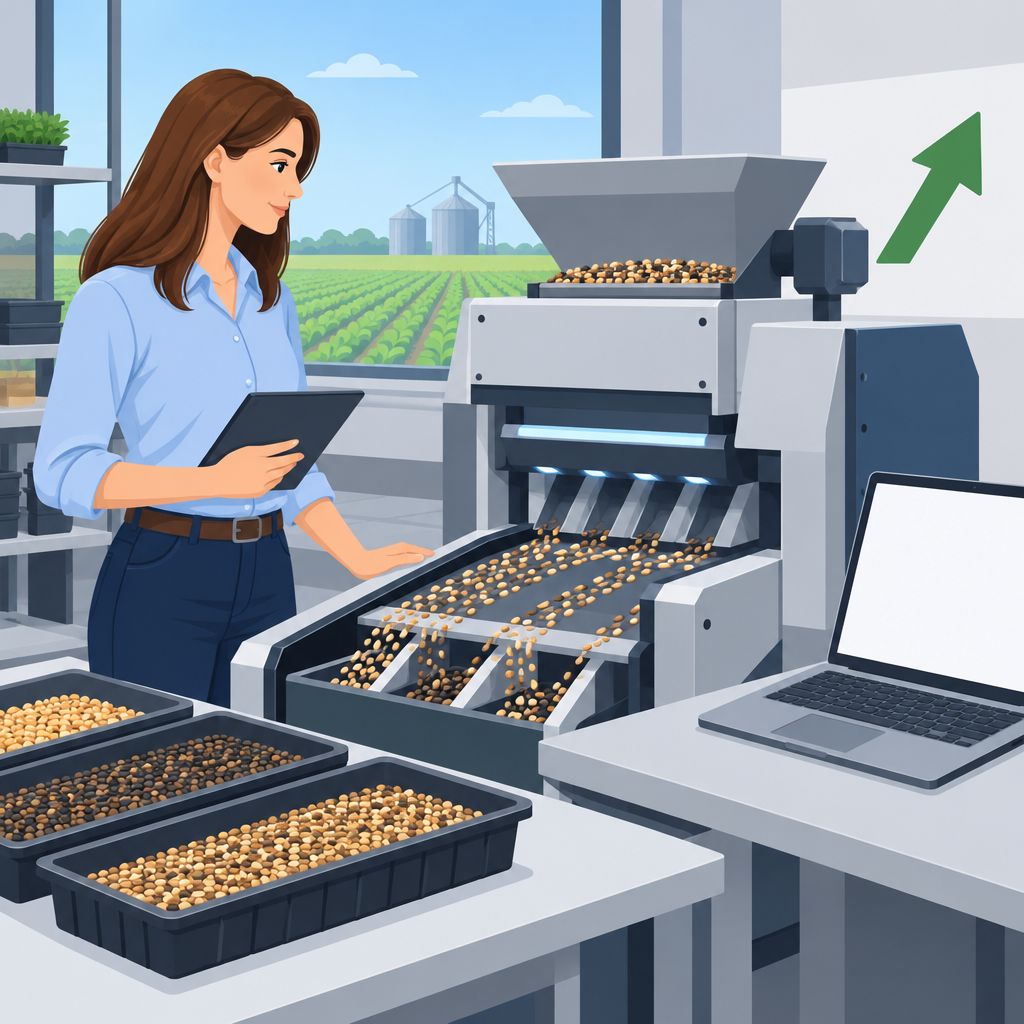
Training Requirements for Equipment Operators
Advanced processing equipment often requires operators to develop specialized technical skills.
New technologies may demand different abilities than traditional processing methods.
As a result, seed processors must provide additional training for their employees.
Training programs can require considerable time and financial resources.
Meanwhile, some operators may resist changes or need more time to adapt.
Effective training helps employees operate and maintain new technology correctly.
Maintenance and Repair Requirements
Seed processors must maintain new equipment after installing advanced technology.
Routine maintenance keeps machines operating smoothly and helps prevent expensive breakdowns.
However, specialized systems may require technical expertise that facilities lack internally.
In those cases, processors may need to outsource maintenance and repair services.
Outsourcing can increase adoption costs and create additional logistical challenges.
Practical Implementation of Processing Technology
Technological advances can deliver important benefits when processors address adoption challenges carefully.
Processors should evaluate equipment costs before selecting new systems.
They should also prepare operators through suitable training programs.
Additionally, facilities need reliable plans for ongoing maintenance and repairs.
Transform Your Career Today
Unlock a personalized career strategy that drives real results. Get tailored advice and a roadmap designed just for you.
Start NowBy managing these requirements, seed processors can improve operational efficiency and processing quality.
Learn More: How to Build Trust as an Agricultural Loan Officer
Success Stories from Advanced Seed Processing Technology
Companies using advanced seed processing technology have reported meaningful results.
These results include stronger yields, broader business growth, and benefits for agricultural production.
Together, these outcomes show how processing investments can support companies and farmers.
Increased Crop Yields
Advanced equipment and techniques help companies improve seed quality.
As a result, farmers can achieve higher yields per acre.
These gains can strengthen profitability and help companies respond to growing global food demand.
Business Expansion Through Quality Seeds
Companies can also extend operations beyond their traditional markets.
High-quality seeds may offer greater resilience against diseases and environmental stress.
Therefore, producers can reach more customers, increase revenue, and establish stronger positions within the seed industry.
Benefits for Agricultural Production
Advanced processing supports agricultural production beyond individual company results.
More productive and efficient seeds can improve farming practices for individual farmers.
Furthermore, these improvements can support food security and sustainability globally.
Technology can also conserve natural resources and reduce farming’s environmental impact.
Future Trends in Seed Processing Technology
Seed processing technology continues to evolve rapidly.
Several trends now shape the industry’s future direction.
These developments emphasize efficiency, precision, and sustainability.
Integration of AI and Machine Learning
- AI and machine learning enhance efficiency and accuracy in seed processing.
- These technologies analyze large amounts of data to optimize seed sorting and processing.
- Processors can improve seed quality and uniformity through AI and machine learning algorithms.
- Furthermore, these tools support autonomous seed processing systems.
- Seed processors will continue adopting these technologies to increase efficiency and productivity.
Precision Seed Placement Technologies
- Precision placement technologies help farmers optimize seed positioning in soil.
- These systems control seed spacing, planting depth, and crop density precisely.
- Accurate placement can improve crop yields and reduce input costs.
- Meanwhile, technological advances encourage wider adoption across the industry.
- Farmers will increasingly use these tools to improve planting efficiency.
Sustainable Seed Processing Methods
- Sustainability drives the development of new seed processing methods.
- Seed processors increasingly adopt environmentally friendly processes to reduce waste and energy consumption.
- These methods conserve resources and minimize environmental impacts.
- By applying sustainable practices, processors can meet demand for responsibly produced seeds.
- This trend reflects growing awareness of sustainability’s importance in agriculture.
These trends will guide seed processing toward greater efficiency, precision, and sustainability.
As processors embrace innovation, the industry can continue developing its productivity and capabilities.
Advancing Agricultural Food Security
Technological advances in seed processing now strengthen modern agriculture.
These advances improve processing efficiency and help producers maintain consistent seed quality.
As a result, farmers can support higher crop productivity.
Furthermore, technology helps farmers respond to growing global food demand.
Researchers have also developed genetically modified seeds with resistance to pests, diseases, and adverse environmental conditions.
These traits can help crops withstand several agricultural challenges.
Continued research and development can further improve seed processing technologies.
Therefore, agricultural stakeholders should invest in innovation across this field.
Such investment can support sustainable agricultural practices and future food security.
At the same time, responsible innovation can help preserve natural resources.
These developments can help agriculture feed a growing population while protecting natural resources.
Additional Resources
Google search results for Technological Advances in Seed Processing Agricultural
Bing search results for Technological Advances in Seed Processing Agricultural


