




Importance of Pipelayers and Plumbers
Construction projects rely on pipelayers and plumbers for essential pipe systems.
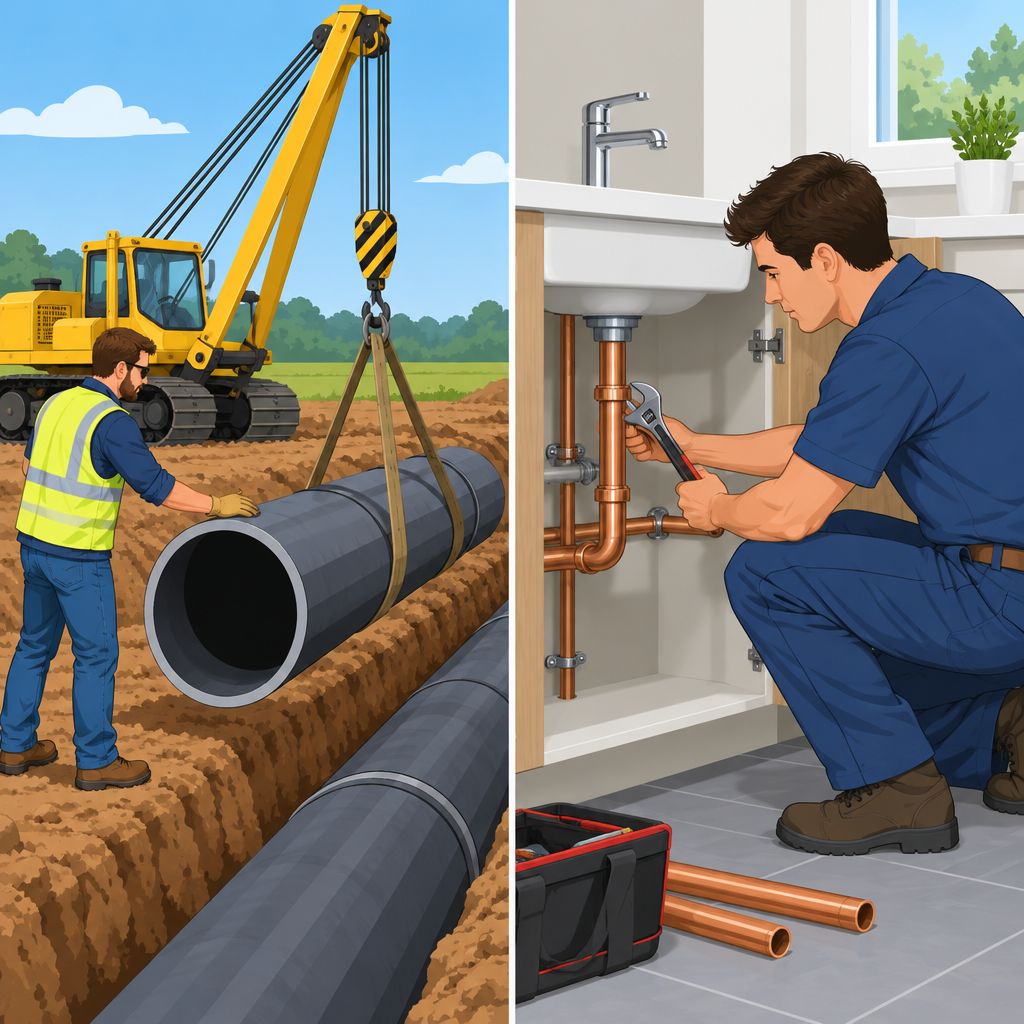
Pipelayers install underground pipes for drainage and water systems.
Plumbers install and repair pipes in residential settings.
Specific Roles and Responsibilities
Pipelayers excavate trenches for underground pipe installations.
They position pipes and connect them securely.
Plumbers install fixtures, repair leaks, and maintain functioning plumbing systems.
Job Description
Pipelayers install and repair underground pipes.
Plumbers fix leaks and install plumbing fixtures.
Both trades involve specialized tasks related to pipe systems.
- Pipelayer: Pipelayers are responsible for installing and repairing underground pipes.
- Plumber: Plumbers fix leaks and install plumbing fixtures as part of their typical tasks.
Primary Duties of a Pipelayer
A pipelayer is a skilled worker who installs and repairs underground pipelines.
Pipelayers work on construction sites.
They lay and connect pipes that carry water, gas, and sewage.
Pipelayers typically work outdoors and use various tools and equipment.
- Mark the location of pipes on the construction site.
- Dig trenches to lay pipes according to the blueprints.
- Install pipes using specialized tools and equipment.
- Connect pipes to the main water, gas, or sewer lines.
- Test pipes for leaks and ensure they meet building codes.
Typical Tasks Carried Out by Plumbers
Plumbers are skilled tradespeople who specialize in plumbing systems.
They install and maintain plumbing systems in residential and commercial buildings.
Plumbers work in homes, offices, and industrial facilities.
They handle a wide range of plumbing tasks.
- Repair and replace leaky faucets and pipes.
- Unclog drains and fix sewer lines.
- Install and repair water heaters and boilers.
- Maintain and repair toilets and sinks.
- Inspect plumbing systems for potential issues and recommend solutions.
Training and education distinguish pipelayers from plumbers.
Both trades require practical knowledge and specialized skills.
However, each profession follows a different training path.
Training and Education
Pipelayers typically develop their skills through practical workplace experience.
Many pipelayers begin in entry-level positions and receive on-the-job training.
This hands-on experience helps them learn essential installation techniques.
- Many pipelayers receive on-the-job training after starting in entry-level positions.
- Some employers require technical certification in pipe installation or related areas.
Plumbers usually follow a more structured combination of workplace and classroom training.
They often begin as apprentices under the guidance of experienced professionals.
Trade school programs can also provide formal instruction in plumbing.
- Plumbers often complete apprenticeship programs to develop practical trade skills.
- Many plumbers attend trade schools for formal plumbing education.
These programs cover subjects such as pipefitting and sewer systems.
Consequently, both professions require training that supports competent work.
You Might Also Like: Creating Eco-Friendly Landscapes: Best Practices
Skills and Qualities
- Pipelayers must possess physical strength to handle heavy materials and equipment on construction sites.
- Knowledge of construction materials helps pipelayers ensure proper pipe installation.
- Attention to detail helps pipelayers accurately position and align pipes for optimal functionality.
- Problem-solving skills help pipelayers troubleshoot issues during pipe installation.
- Effective communication helps pipelayers coordinate with other workers on construction sites.
- Plumbers need problem-solving abilities to diagnose and fix plumbing issues efficiently.
- Attention to detail helps plumbers install every plumbing component correctly.
- Technical skills help plumbers use various tools and equipment for plumbing repairs.
- Customer service skills help plumbers address clients’ plumbing needs effectively.
- Adaptability helps plumbers handle unexpected challenges and project changes smoothly.
Discover More: Pest Control Worker: Career Advancement Tips
Pipelayer Work Environments
- Pipelayers typically work outdoors and face various weather conditions.
- They often work on construction sites while laying water, sewer, or gas system pipes.
- Additionally, pipelayers may work in trenches while using heavy equipment to install and connect pipes.
- Some assignments require pipelayers to work in confined spaces or at great heights.
- Therefore, pipelayers need physical fitness and comfort in challenging environments.
Plumber Work Environments
- Plumbers work in residential homes, commercial buildings, and construction sites.
- Depending on the assignment, they repair, install, or maintain plumbing systems.
- Residential plumbers often assist homeowners with clogged drains or leaky pipes.
- Meanwhile, commercial plumbers handle larger projects in offices or warehouses.
- As a result, plumbers must adapt to different environments and job requirements.
Uncover the Details: How to Clean and Maintain Different Types of Roofs
Tools and Equipment
Different tools help pipelayers and plumbers complete pipe-related tasks efficiently.
Furthermore, each trade uses equipment suited to its specific work.
These tools support pipe installation, connection, repair, and maintenance.
Pipelayer Tools
Pipelayers use shovels to dig trenches for pipeline installation.
They use pipe cutters to cut pipes to the required length.
Additionally, welding machines help them join pipes together securely.
- Shovels
- Pipe cutters
- Welding machines
Plumber Tools
Plumbers use wrenches to tighten and loosen nuts and bolts.
They use pipe fittings to connect pipes securely.
Moreover, drain snakes help them clear clogged drains.
Transform Your Career Today
Unlock a personalized career strategy that drives real results. Get tailored advice and a roadmap designed just for you.
Start Now- Wrenches
- Pipe fittings
- Drain snakes
Learn More: Fence Erector's Guide to Installing Privacy Screens
Salary and Job Outlook
Salary and job outlook help compare career opportunities for pipelayers and plumbers.
Several factors influence earnings in both professions, including experience, location, and industry.
The following ranges describe typical earnings and employment prospects for each trade.
Salary Range for Pipelayers
- Pipelayers typically earn between $30,000 and $60,000 per year.
- Experience, location, and industry can significantly influence a pipelayer’s salary.
- Pipelayers in urban areas or specialized pipeline fields may earn higher wages.
- Entry-level pipelayers usually earn closer to the lower end of the range.
- Experienced professionals may earn closer to the higher end of the range.
- Infrastructure demand can support steady job growth for pipelayers.
Potential Earnings for Plumbers
- Plumbers may earn between $50,000 and $90,000 per year.
- Construction, residential, and commercial demand contributes to plumbers’ potential earnings.
- Specialized plumbers may command higher salaries in certain fields.
- Pipefitting, steamfitting, and green plumbing technologies can provide specialized opportunities.
- Experienced plumbers with strong reputations and client bases may earn more.
- Plumbers also benefit from a positive job outlook.
- The need for plumbing services may grow in the coming years.
Both professions offer decent earnings and job security.
Plumbers generally earn higher salaries than pipelayers.
Both trades remain vital for maintaining infrastructure and functional buildings and homes.
Career Advancement
Experienced workers can pursue supervisory, management, specialist, business, licensing, or teaching opportunities.
Training, certifications, and licenses can support progression into higher-paying roles.
Industry networking and practical leadership can also help workers advance.
Advancement in the Pipelaying Industry
Experienced pipelayers can move into supervisory roles.
Leadership skills may help pipelayers pursue project manager positions.
Training, certifications, specialization, and networking can support career growth.
- Supervisor roles are common for experienced pipelayers.
- Project manager positions may be available for those with leadership skills.
- Training programs and certifications can lead to higher-paying roles.
- Opportunities exist to specialize in specific pipelaying techniques.
- Networking with industry professionals can open doors for career growth.
Advancement in the Plumbing Field
Experienced plumbers can pursue business ownership, licensing, contracting, specialization, or teaching.
A master plumber license can lead to higher-paying jobs.
Specialized knowledge and leadership can help plumbers manage teams or train apprentices.
- Starting a plumbing business can be a lucrative option for experienced plumbers.
- Obtaining a master plumber license can lead to higher-paying jobs.
- Plumbers can specialize in commercial plumbing or green energy systems.
- Becoming a plumbing contractor allows plumbers to manage a team.
- Plumbers can teach or train future plumbers through apprenticeship programs.
How Pipelayers and Plumbers Differ
Pipelayers install pipes in trenches, while plumbers maintain and repair building plumbing systems.
New construction projects commonly employ pipelayers for water, sewer, and drainage installations.
Plumbers usually address leaks, blocked drains, and fixture installations within existing buildings.
Thus, each trade supports a different stage of pipe system development.
Pipelayers often handle larger diameter pipes than plumbers typically manage.
Meanwhile, plumbers work with various pipe sizes and must understand building codes.
Pipelayers commonly join larger construction crews during outdoor projects.
Plumbers may work independently or represent a plumbing company.
Physical endurance helps pipelayers work with materials and equipment outdoors.
Plumbers rely on knowledge of pipe materials and applicable building requirements.
Pipelayers may learn through workplace training or vocational programs.
Plumbers generally complete apprenticeship programs before practicing independently.
How Each Trade Supports Infrastructure
These roles complement each other across construction and building maintenance.
Pipelayers establish essential pipe networks for new developments.
Plumbers preserve those systems through ongoing service and repairs.


