




Creating Eco-Friendly Landscapes
Creating eco-friendly landscapes significantly reduces our environmental impact.
Sustainable landscaping practices help communities protect natural resources.
They also create beautiful outdoor spaces for present and future generations.
Environmental Benefits
Native plants and efficient irrigation systems conserve water resources.
These approaches minimize water usage and help prevent water pollution.
Additionally, sustainable plant selection and proper soil management improve soil health.
They also reduce erosion and prevent nutrient runoff.
Benefits for Human Health
Eco-friendly landscapes reduce exposure to harmful chemicals and pesticides.
As a result, they create healthier and safer outdoor spaces for people.
Furthermore, these landscapes promote biodiversity and support wildlife habitats.
They provide food and shelter for pollinators and other beneficial organisms.
Choose Native Plants
Native plants match local climate and soil conditions.
They can support healthy growth while reducing maintenance needs.
Additionally, suitable plant choices can help create a thriving ecosystem.
Benefits of Using Native Plants
- Native plants require less water and maintenance, reducing harmful pesticides and fertilizers.
- They attract local wildlife, including birds, bees, and butterflies.
- These plants suit local climate and soil conditions, promoting healthy growth and longevity.
How to Select Native Plants for Your Region
- Research native plant species indigenous to your area.
- Visit a native plant nursery or botanical garden for expert advice.
- Consider sunlight, soil type, and water availability in your landscape.
- Choose plants adapted to your specific microclimate for optimal success.
Drought-Resistant Options
- Choose native drought-tolerant plants, such as succulents, grasses, and wildflowers.
- Mulch garden beds to retain moisture and reduce water evaporation.
- Install drip irrigation to deliver water directly to plant roots.
- Group plants with similar water requirements to minimize waste.
Water Conservation Practices for Landscapes
Eco-friendly landscapes can reduce water usage through practical conservation methods.
These methods also help lower water bills and maintenance costs.
Additionally, efficient watering practices support more sustainable outdoor spaces.
Rainwater Harvesting Systems
Rainwater harvesting can reduce landscape water use by collecting rainfall from your roof.
The system stores this water in a tank for later plant watering.
Furthermore, rainwater contains no chemicals and can benefit plants more than tap water.
Drip Irrigation for Efficient Watering
Drip irrigation delivers water directly to plant roots.
As a result, this method minimizes evaporation and runoff.
It also targets specific areas, which helps prevent unnecessary water waste.
Xeriscaping for Reduced Water Use
Xeriscaping uses water-efficient plants and reduces the water needed for landscape maintenance.
This approach includes drought-tolerant plants, mulch, and natural drainage systems.
Consequently, xeriscaping can significantly reduce landscape water requirements.
By applying these practices, you can create a sustainable outdoor space.
You can also reduce environmental impacts and save money over time.
Gain More Insights: Pest Control Worker: Career Advancement Tips
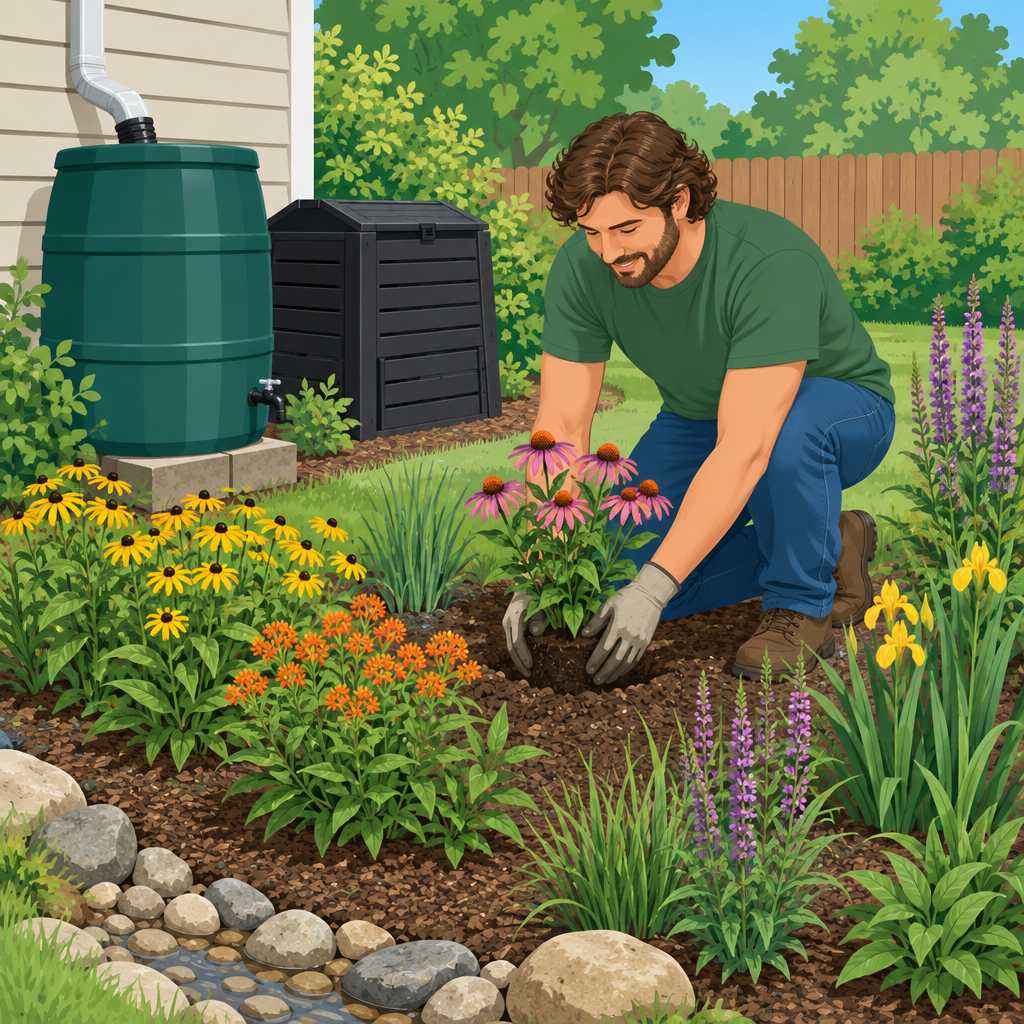
Compost and Mulch
Composting and mulching support healthier soil and stronger plant growth.
These practices also reduce waste, conserve moisture, and limit weed growth.
Gardeners can use simple materials and routines to improve growing conditions.
Benefits of Composting and Mulching
Composting turns organic waste into nutrient-rich soil for plants.
Meanwhile, mulch protects soil surfaces and helps plants use available moisture.
Together, these practices improve soil fertility while reducing reliance on chemical fertilizers.
- Improves soil structure and fertility
- Reduces the need for chemical fertilizers
- Helps retain moisture in the soil
- Reduces greenhouse gas emissions
How to Start a Compost Pile
Starting a compost pile requires little effort and a suitable location.
Choose a spot with good drainage and access to sunlight.
Then combine green nitrogen-rich materials with brown carbon-rich materials.
- Choose a location with good drainage and access to sunlight.
- Add a mix of green nitrogen-rich and brown carbon-rich materials.
- Turn the pile regularly to aerate it and speed decomposition.
- Keep the pile moist but not waterlogged.
- Allow several months for the pile to become dark, crumbly compost.
Using Natural Mulch to Retain Moisture and Reduce Weeds
Natural mulch helps garden soil retain moisture and limits weed growth.
Use straw, wood chips, or leaves around plants.
Transform Your Career Today
Unlock a personalized career strategy that drives real results. Get tailored advice and a roadmap designed just for you.
Start NowSpread the material evenly, then replace it when needed.
- Use straw, wood chips, or leaves as mulch.
- Spread mulch around plants to retain moisture.
- Block sunlight with mulch to suppress weed growth.
- Replace mulch as needed to maintain its effectiveness.
Gain More Insights: How to Clean and Maintain Different Types of Roofs
Environmental Concerns With Synthetic Chemicals
Synthetic pesticides and fertilizers can damage soil health.
They can also affect water quality and wildlife.
Eco-friendly landscapes avoid these chemicals to protect natural systems.
- They can contaminate soil and water sources.
- They can harm beneficial insects and pollinators.
- They may create health risks through exposure.
- They can disrupt ecosystem balance.
Natural Alternatives for Garden Care
Gardeners can choose natural alternatives instead of synthetic products.
Neem oil comes from neem trees and helps repel garden pests.
Organic fertilizers provide nutrients without harmful synthetic chemicals.
- Neem oil acts as a natural insect repellent for garden pests.
- Compost provides essential nutrients for plant growth.
- Manure supports plant nutrition without synthetic chemicals.
- Bone meal supplies nutrients to growing plants.
Integrated Pest Management Practices
Integrated pest management helps gardeners control pests with fewer synthetic pesticides.
This approach combines biological, cultural, physical, and monitoring practices.
These methods work with nature to support a balanced garden ecosystem.
- Introduce natural predators to manage pest populations.
- Practice crop rotation to deter pests and improve soil health.
- Use companion planting to discourage pests naturally.
- Protect plants with row covers or traps.
- Monitor gardens regularly for pests and diseases.
- Take early action when gardeners find signs of problems.
Delve into the Subject: Fence Erector's Guide to Installing Privacy Screens
Create Wildlife Habitats
Wildlife habitats can make a landscape more welcoming to birds, insects, amphibians, and other creatures.
These spaces provide safe areas where wildlife can thrive and support a healthier ecosystem.
Consequently, habitat features can promote biodiversity while adding beauty and interest to your garden.
Incorporating Bird Feeders and Bee-Friendly Plants
Bird feeders can attract several bird species to your garden.
These birds can help control pests naturally while adding activity to your outdoor space.
Meanwhile, bee-friendly flowers and herbs provide food for pollinators and support declining bee populations.
- Adding bird feeders can attract different bird species and help control pests naturally.
- Planting bee-friendly flowers and herbs attracts pollinators and supports declining bee populations.
- Welcoming birds and bees can promote a balanced ecosystem that benefits plants and the environment.
Building a Small Pond for Amphibians and Insects
A small pond or water feature can provide habitat for frogs, toads, and other amphibians.
These amphibians can help control insect populations naturally within the garden.
Additionally, water sources can attract beneficial insects that support natural pest management.
- Constructing a small pond can provide habitat for frogs and toads.
- Water sources can attract dragonflies and ladybugs, which help manage garden pests.
- Adding water can create a mini ecosystem that supports diverse wildlife.
Importance of Biodiversity in a Healthy Ecosystem
Biodiversity helps maintain healthy and resilient ecosystems.
Different plants and animals can balance natural systems and support long-term sustainability.
By creating wildlife habitats, you can help preserve biodiversity and protect endangered species.
- Biodiversity supports healthy, resilient ecosystems through varied plant and animal communities.
- Wildlife habitats can help preserve biodiversity and protect endangered species.
- Encouraging diverse wildlife adds interest while supporting a healthier environment.
Discover More: Daily Tasks and Responsibilities of a Maintenance Worker
Sustainable Hardscaping
Sustainable hardscaping supports eco-friendly landscapes while reducing environmental impacts.
These choices can create attractive outdoor spaces and promote healthier ecosystems.
Therefore, thoughtful material selection and design can improve landscape sustainability.
Permeable Materials for Driveways and Walkways
Choose gravel or permeable pavers instead of traditional concrete or asphalt.
These materials allow rainwater to seep into the ground.
As a result, they can reduce runoff and help prevent erosion.
Reclaimed Materials for Hardscaping Projects
Use reclaimed wood, concrete, and bricks to reduce waste.
Recycling these materials can also lower the carbon footprint of hardscaping projects.
Additionally, reclaimed materials can add character while reducing environmental impact.
Hardscaping Designs That Reduce Heat Islands
Heat islands occur when urban areas become hotter than surrounding rural areas.
Human activities and hard surfaces can contribute to these higher temperatures.
Therefore, use light-colored materials and plant trees to provide shade.
Sustainable hardscaping can create beautiful outdoor spaces while minimizing environmental impact.
Permeable surfaces, reclaimed materials, and thoughtful designs support responsible landscape development.
Ultimately, these practices can help promote a healthier ecosystem.
Transform Your Career Today
Unlock a personalized career strategy that drives real results. Get tailored advice and a roadmap designed just for you.
Start NowSustainable Landscaping Supports Biodiversity
Creating eco-friendly landscapes helps preserve the environment and promote biodiversity.
Even small steps, such as planting native species or reducing water usage, can make a significant impact.
Adopting sustainable outdoor practices helps us combat climate change and protect wildlife.
Explore these additional resources for more information about eco-friendly landscaping.
- 10 Tips for a Greener Garden
- The Benefits of Rainwater Harvesting
- Creating Pollinator-Friendly Habitats


