




Real-Life Scenarios in Life Skills Education
Real-life scenarios strengthen life skills teaching.
Authentic situations make lessons more engaging and practical.
Students can apply their knowledge in real-world settings.
Engagement Through Relevant Learning
Real-life scenarios provide meaningful context for learning.
Students recognize how concepts connect with everyday experiences.
As a result, students often show greater motivation and interest.
Problem-Solving Through Practical Situations
Practical situations help students develop critical thinking skills.
Students apply their knowledge to identify useful solutions.
This process strengthens creative and logical thinking.
Preparation for Life Beyond School
Life skills teaching prepares students for experiences beyond the classroom.
Real-life scenarios simulate challenges from personal and professional settings.
Students therefore build skills for navigating future challenges effectively.
Empathy Through Different Perspectives
Real-life scenarios encourage empathy and understanding among students.
Students explore situations from different perspectives.
Consequently, they develop greater empathy and deeper understanding.
Meaningful Applications of Life Skills
Real-life scenarios create meaningful and impactful learning experiences.
Students receive opportunities to apply knowledge in practical situations.
Educators can therefore prepare students more effectively for future success.
Benefits of Incorporating Real-Life Scenarios
- Real-life scenarios help students apply concepts in practical situations.
- They enhance critical thinking and problem-solving skills.
- These activities improve students’ decision-making abilities.
Real-life scenarios offer significant benefits in life skills teaching.
They help educators create engaging and effective learning experiences.
Students can connect classroom concepts with situations they may encounter daily.
Applying Concepts in Practical Situations: Students can use theoretical knowledge within realistic contexts.
This approach helps students understand how concepts address everyday problems.
For example, students can create a household budget to explore financial planning.
They can also examine how different choices affect financial decisions.
Enhancing Critical Thinking and Problem-Solving: Practical situations encourage students to analyze information carefully.
Students evaluate available options and develop suitable solutions.
For instance, resolving a peer conflict can develop empathy and conflict resolution skills.
Furthermore, these activities prepare students to manage challenges more thoughtfully.
Improving Decision-Making Abilities: Realistic situations require students to consider options and consequences.
Students learn to weigh advantages and disadvantages before choosing an action.
For example, selecting a healthy meal can reinforce nutrition awareness.
Consequently, students gain confidence when making informed choices in different situations.
These experiences support students’ academic, personal, and professional development.
Methods for Bringing Real-Life Situations into Life Skills Lessons
- Teachers can use case studies to connect lesson content with everyday situations.
- Role-playing activities let students practice responses within realistic classroom situations.
- Guest speakers can share personal experiences that illustrate important life skills.
- Additionally, community field trips can expose students to authentic learning environments.
Choosing Scenarios That Reflect Students’ Experiences
- Relevant scenarios can increase students’ engagement and motivation during lessons.
- Moreover, relatable examples show students how classroom skills apply beyond school.
- Scenarios that reflect familiar experiences can make learning more meaningful and memorable.
- Realistic situations also encourage students to practice critical thinking and problem-solving skills.
Authentic Scenarios for Different Life Skills Lessons
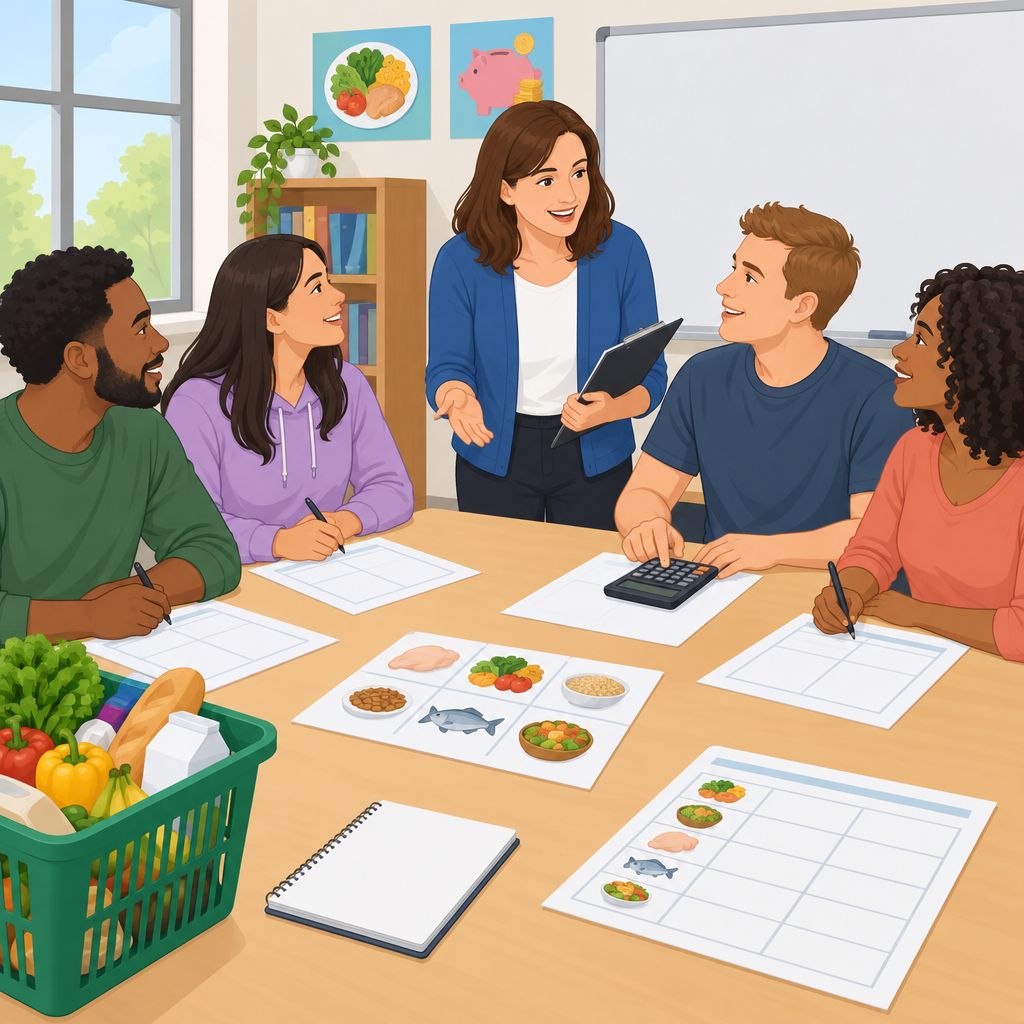
- During financial literacy lessons, students can budget for one week of groceries.
- For communication lessons, students can practice resolving conflicts with their peers.
- In job readiness lessons, teachers can simulate interviews and provide performance feedback.
- For decision-making lessons, students can compare the advantages and disadvantages of different choices.
See Related Content: Impact of Community Health Workers on Healthcare Access
Interactive Real-Life Scenario Activities
Students retain information more effectively when they actively engage with realistic learning situations.
Active participation also helps students connect new knowledge with their personal experiences.
Therefore, interactive techniques can make life skills lessons more memorable and practical.
- Role-playing lets students act out different scenarios during hands-on learning activities.
- Thought-provoking questions encourage students to consider how they would handle real-life situations.
- Multimedia, including videos and audio clips, can make scenarios more vivid and accessible.
- Group activities help students solve problems while developing collaboration and communication skills.
Active Participation in Scenario-Based Learning
Clear expectations help students understand the purpose and process of each scenario-based activity.
Constructive feedback guides students as they develop stronger problem-solving and decision-making skills.
Transform Your Career Today
Unlock a personalized career strategy that drives real results. Get tailored advice and a roadmap designed just for you.
Start NowOpen discussions give learners opportunities to explain their choices and examine different perspectives.
Finally, practical connections show students how these skills apply beyond the classroom.
- Provide clear instructions about activity objectives and each student’s responsibilities.
- Offer feedback that supports improvement and encourages thoughtful decision-making.
- Facilitate discussions that deepen understanding and promote critical thinking.
- Emphasize real-world applications to demonstrate the practical value of learned skills.
Technology for More Realistic Learning Scenarios
Technology can add realism and immersion to scenario-based activities.
Interactive tools also capture attention and encourage students to explore situations more actively.
Additionally, digital resources can support different learning preferences and provide flexible access to information.
Immediate feedback helps students recognize progress and adjust their approaches during activities.
- Interactive simulations and virtual reality can make scenarios more engaging and relatable.
- Online databases, virtual labs, and interactive tutorials can expand available learning resources.
- Adaptive technology can match scenarios to individual learning styles and paces.
- Real-time feedback can show students how their performance changes during activities.
Learn More: Measuring Success as a Community Outreach Coordinator
Assessing Student Learning Through Real-Life Scenarios
- Assess understanding and application through realistic scenarios.
- Provide feedback and guidance during scenario-based assessments.
- Use reflection and self-assessment to strengthen learning.
Scenario-based assessment gives educators practical evidence of student learning.
It reveals whether students understand concepts and can use them in practical circumstances.
It also shows how learners analyze choices, respond to challenges, and apply responsible decision-making.
Methods for Assessing Life Skills Application
Educators can design tasks that ask students to budget for a household.
Other tasks can address team conflicts or responsible health choices.
These assessments measure knowledge, judgment, and application together.
Role-playing activities let students demonstrate responses to realistic situations.
Educators can observe communication, problem-solving, and decisions during each performance.
Such observations reveal readiness to use life skills beyond the classroom.
Feedback and Guidance During Scenario-Based Assessment
Feedback helps students recognize strengths and identify specific areas for improvement.
Constructive guidance shows learners how to improve decisions and solve problems more effectively.
Educators can offer support, resources, and advice when students encounter difficult situations.
That guidance helps learners learn from mistakes and develop confidence.
Personalized responses also help students strengthen competence across different contexts.
Reflection and Self-Assessment for Continued Growth
Reflection encourages students to examine their actions, decisions, and results.
Self-assessment helps learners recognize progress and set goals for further development.
Students can use feedback to adjust strategies for future situations.
This process builds metacognition because learners evaluate and adapt their own performance.
Regular reflection supports continuous growth in life skills.
Discover More: How to Find Mental Health Technician Jobs
Addressing Challenges in Using Real-Life Scenarios
Teachers often struggle to find relevant scenarios for different life skills topics.
However, advance planning helps teachers fit scenarios into existing lesson plans despite time constraints.
Teachers can use free online resources or personal experiences when resources remain limited.
Moreover, relatable scenarios encourage participation, while feedback helps students improve their responses.
Teachers should adapt each scenario to classroom dynamics and individual student needs.
Finally, teachers can revise scenarios after reviewing student learning outcomes and feedback.
Strategies for Overcoming Classroom Challenges
Colleagues can collaborate to create a shared bank of scenarios for different life skills lessons.
Additionally, technology can provide interactive practice beyond regular class time.
Guest speakers and community members can describe experiences related to the topic.
Hands-on group projects require students to apply scenarios while solving problems.
Peer learning lets students create and share scenarios with classmates.
Flexibility and Adaptation in Scenario-Based Teaching
Flexibility helps teachers adjust scenarios according to student feedback and learning needs.
Student feedback enables teachers to align activities with emerging learning needs.
Transform Your Career Today
Unlock a personalized career strategy that drives real results. Get tailored advice and a roadmap designed just for you.
Start NowAdaptation keeps activities relevant and engaging as students’ needs change.
Flexible planning supports diverse backgrounds and interests within one classroom.
Teachers should reflect regularly and modify activities to sustain a responsive learning environment.
Through this process, teachers create more personalized and impactful learning experiences.
You Might Also Like: Integrating Medication in Substance Abuse Treatment
Collaborating with External Partners for Real-Life Scenarios
External partners can connect life skills lessons with practical situations beyond the classroom.
Community organizations, businesses, and experts can offer perspectives that classroom activities cannot provide alone.
These collaborations can help students examine how people use life skills in everyday settings.
Exploring Partnership Opportunities
Teachers can explore partnerships with community organizations, businesses, or individual experts.
Partners should match the learning objectives and students’ interests.
Additionally, each partner can contribute scenarios that support practical classroom projects.
Benefits of External Collaborations
External partners let students apply life skills within authentic contexts.
Consequently, students can develop a deeper understanding of how these skills support everyday decisions.
Such collaboration also expands students’ perspectives through contact with different experiences and viewpoints.
Tips for Establishing Partnerships
Effective partnerships require clear communication, shared expectations, and consistent planning.
Teachers should define the project goals before contacting potential partners.
Regular communication can help both sides respond to challenges and maintain progress.
- Identify partners whose interests align with the learning objectives.
- Contact organizations or individuals to discuss possible collaborations.
- Explain the partnership goals and expectations clearly.
- Establish a timeline that assigns responsibilities and identifies project deliverables.
- Maintain open communication and schedule regular project check-ins.
- Acknowledge external partners and celebrate their contributions.
- Evaluate the collaboration and consider future partnership opportunities.
Real-Life Scenarios for Life Skills
When educators teach life skills, real-life scenarios can make lessons more effective.
These examples connect classroom practice with everyday decisions and future responsibilities.
Students can examine choices, discuss responses, and apply practical skills.
Financial Literacy
Financial literacy scenarios help learners practice budgeting, saving, spending, and donating.
These situations show how limited resources require careful decisions.
Students can compare needs, goals, and available money.
- Jeremy wants to buy a new video game but has limited savings, so he creates a budget.
- Sarah receives her first paycheck and decides how much money to save, spend, and donate.
Communication
Communication scenarios help learners express concerns and respond thoughtfully.
Role-play allows students to explore different approaches during difficult conversations.
Public speaking practice can also build confidence during presentations.
- Emma and her friend disagree, so they role-play communication styles that could resolve the conflict.
- John feels nervous about presenting at school, so he practices strategies for improving public speaking.
Decision-Making
Decision-making scenarios encourage learners to compare choices carefully.
Students can identify advantages, disadvantages, priorities, and possible consequences.
This process helps them organize information before choosing an option.
- Alex compares two job offers by weighing their salaries and benefits.
- Lisa considers whether studying abroad or staying home better suits her college plans.
Problem-Solving
Problem-solving scenarios require learners to identify challenges and consider practical responses.
Brainstorming helps students generate several possible solutions.
They can then select the response that best addresses the immediate problem.
- Mike’s car breaks down while he travels to work, so he considers practical transportation solutions.
- Anna feels overwhelmed by poor time management, so she organizes her tasks with problem-solving strategies.
Relevant scenarios help students connect life skills with everyday choices.
They also provide opportunities to practice skills before facing similar situations independently.
Educators can select examples that match students’ experiences and future goals.
Preparing Students for Future Challenges
Integrating real-life scenarios into life skills teaching creates a dynamic and relevant learning environment.
Students apply classroom learning to daily situations, which strengthens their confidence and competence.
Furthermore, practical application encourages learners to examine choices and develop thoughtful responses.
These experiences also help educators connect instruction with students’ everyday lives.
By engaging with realistic situations, students practice critical thinking and problem-solving skills.
Transform Your Career Today
Unlock a personalized career strategy that drives real results. Get tailored advice and a roadmap designed just for you.
Start NowConsequently, learners become better prepared to use life skills during future challenges.
Teachers can continue exploring innovative ways to make lessons interactive and meaningful.
Experiential learning therefore supports holistic development and equips students for success.


