




Health and Safety for Janitors and Custodians
Health and safety supports janitors’ and custodians’ well-being.
These workers face various risks and hazards during their daily routines.
Therefore, recognizing these challenges remains crucial for their protection.
Proper Training
Proper training gives janitors and custodians practical guidance for daily tasks.
Without adequate instruction, they may face preventable accidents and injuries.
Employers should provide training covering chemicals, equipment, and lifting practices.
Chemical Safety
- Workers should learn how to handle cleaning chemicals safely.
- They should understand proper dilution ratios, storage requirements, and potential chemical hazards.
- This instruction helps prevent accidental exposure and chemical-related illnesses.
Equipment Operation
- Additionally, workers need equipment training to prevent accidents and damage.
- They should practice using floor buffers, vacuums, and pressure washers correctly.
- Improper equipment operation can cause injuries and costly repairs.
Proper Lifting Techniques
- Janitors and custodians often lift heavy objects during their duties.
- Training in proper lifting techniques can prevent back injuries and strains.
- Workers should lift with their legs and request help when necessary.
Therefore, comprehensive training equips cleaning staff with practical knowledge and essential workplace skills.
Employers must ensure that cleaning staff receive instruction that supports safe and effective work.
Personal Protective Equipment for Janitorial Work
Janitors and custodians encounter injuries and harmful substances during their daily work.
PPE helps them reduce exposure to these workplace hazards.
They should select equipment that matches the risks they face.
- Gloves protect hands from chemicals, sharp objects, and germs.
- Goggles protect eyes from cleaning chemical splashes and other hazardous materials.
- Face masks help prevent inhalation of dust, fumes, and other airborne particles.
Without adequate PPE, workers may develop skin irritations, burns, respiratory problems, and other serious health issues.
For this reason, janitors and custodians should prioritize PPE during their work.
See Related Content: Tips for Maintaining a Clean and Organized Home
Ergonomic Practices
Ergonomic practices help janitors and custodians prevent musculoskeletal injuries.
Improper posture and repetitive motions can strain the body and cause long-term health issues.
Janitors and custodians can use practical strategies to maintain posture and reduce repetitive motions.
Proper Posture
- Stand or sit upright with your shoulders back to maintain a neutral spine position.
- Adjust work surface heights to avoid excessive bending or reaching.
- Use ergonomic tools, including adjustable chairs and lifting equipment, to support your body.
- Take regular breaks to stretch and rest your muscles, preventing fatigue and strain.
Reducing Repetitive Motions
- Alternate tasks to prevent continuous use of the same muscles and joints.
- Bend at the knees and lift with your legs instead of your back.
- Use equipment that automates repetitive tasks and reduces physical strain.
- Rotate jobs to give different muscle groups a break from repetitive movements.
These ergonomic practices can reduce musculoskeletal injury risks for janitors and custodians.
They also promote health and safety in the workplace.
Learn More: Future Trends in the Fishing Industry
Safe Handling and Storage of Cleaning Chemicals
- Follow proper procedures for handling and storing cleaning chemicals.
- Always read labels and instructions carefully before using any chemicals.
- Dilute chemicals correctly to help prevent accidents and injuries.
- Use chemicals only in well-ventilated areas to avoid inhaling harmful fumes.
- Wear appropriate gloves and goggles when handling chemicals.
- Store chemicals in a designated area away from food, drinks, and other cleaning supplies.
- Keep chemicals in original containers with labels intact for easy identification.
- Never mix different chemicals because they may create toxic fumes or dangerous reactions.
- Clean spills immediately, following proper procedures and wearing protective gear.
- Dispose of chemicals according to local regulations and guidelines to prevent environmental contamination.
Explore Further: Day in the Life of a Sheet Metal Worker
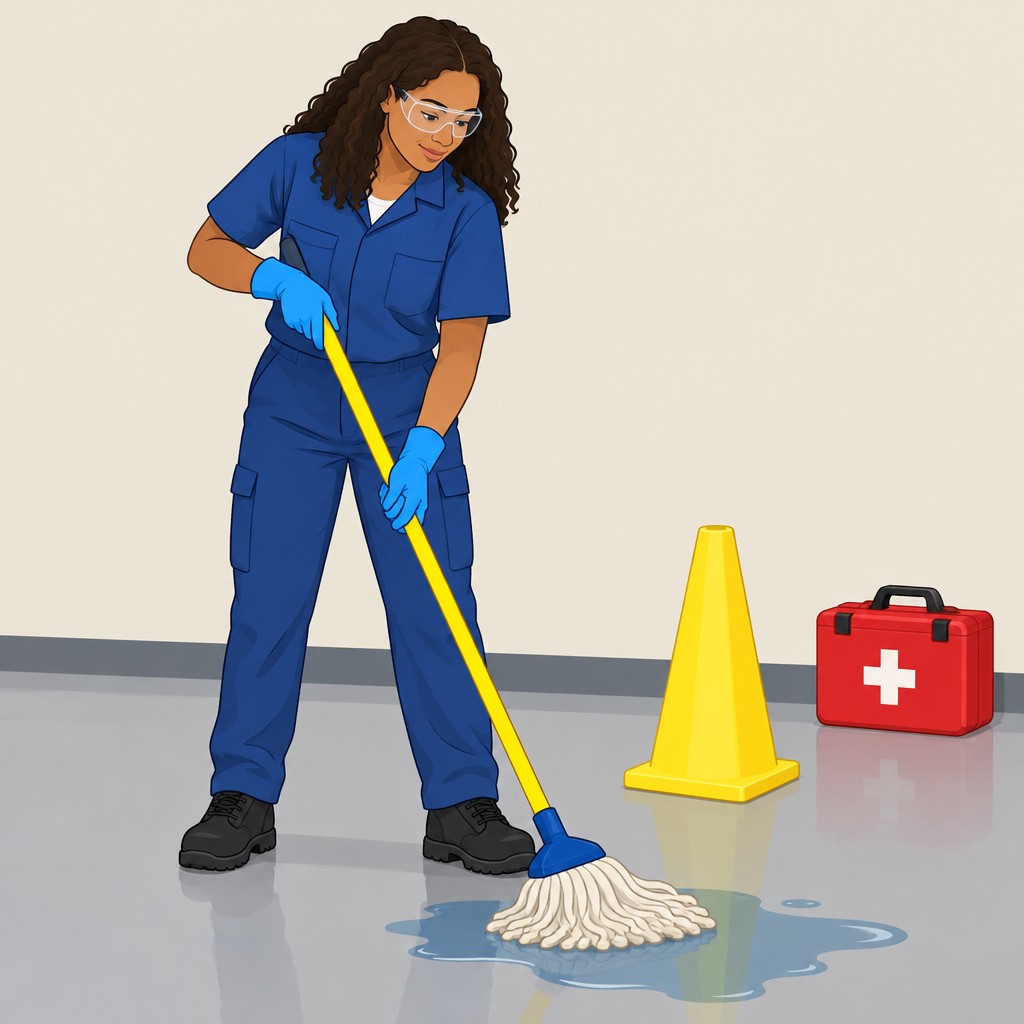
Slips and Falls from Wet Floors
Wet floors commonly cause slips and falls during janitorial work.
Janitorial teams can prevent accidents by cleaning spills promptly.
Slip-resistant shoes help janitors and custodians maintain traction.
Workers should walk carefully whenever surfaces remain wet.
Place wet-floor signs near hazards to warn everyone nearby.
Regularly inspect and replace worn floor mats to preserve traction.
A consistent cleaning schedule helps workers keep floors dry and safe.
Non-slip cleaning products can reduce slippery surface conditions.
Supervisors should reinforce safe lifting methods during routine safety discussions.
Team members should report every safety hazard they discover.
Regular safety sessions encourage workers to follow safe practices.
Proper lighting improves visibility and helps workers notice potential hazards.
Handrails can provide support in high-risk areas, including staircases and ramps.
Routine inspections help teams identify hazards in equipment and facilities.
A safety committee can review concerns and recommend preventive actions.
Workers should use gloves and goggles when tasks require them.
Proper lifting posture helps prevent strains and sprains.
Supervisors should verify that janitors use correct cleaning methods.
Employers should offer support and resources after work-related injuries or accidents.
Transform Your Career Today
Unlock a personalized career strategy that drives real results. Get tailored advice and a roadmap designed just for you.
Start NowRecognizing safety-focused employees can strengthen a workplace safety culture.
Teams should regularly evaluate safety procedures as work environments change.
Open communication lets employees share safety concerns and practical suggestions.
Departments can collaborate to resolve hazards affecting janitorial staff.
Delve into the Subject: Common Mistakes by Power Line Installers
Emergency Preparedness
Emergency preparedness protects janitors and custodians at work.
It helps teams respond quickly when workplace hazards arise.
It also supports safer decisions during urgent situations.
Importance of Being Prepared
- Immediate response can prevent injuries or minimize damage.
- Proper preparation and training can save lives during critical situations.
- Prepared teams can reduce panic and confusion during emergencies.
- This commitment demonstrates concern for employee well-being.
Creating an Emergency Response Plan
- First, identify potential risks and hazards in the workplace.
- Next, establish protocols for fires, chemical spills, and other emergencies.
- Then, assign roles and responsibilities to each team member.
- Finally, train every employee on the emergency response plan.
Conducting Regular Drills
- Practice evacuation procedures with every staff member.
- Review the response plan annually and update it when necessary.
- Simulate various emergencies to test the plan’s effectiveness.
- After each drill, provide feedback and conduct a debrief.
By prioritizing emergency preparedness, janitors and custodians can support a safe work environment.
Their preparation also helps protect other people in the workplace.
Mental Health Awareness
Janitors and custodians face mental health challenges because demanding work conditions can affect their well-being.
Long hours, physical fatigue, and repetitive tasks can increase stress and contribute to burnout.
Additionally, isolation and limited recognition can affect their mental well-being.
- Janitors and custodians face mental health challenges due to demanding work conditions.
- Long hours, physical fatigue, and repetitive tasks can lead to stress and burnout.
- Isolation and lack of recognition for their work can also impact their mental well-being.
Coping Strategies
Several coping strategies can help workers manage stress and support mental resilience.
Support from colleagues can provide emotional assistance and shared understanding.
Employers may also provide counseling services or employee assistance programs.
- Seek support from colleagues by forming a network to share experiences and provide emotional assistance.
- Utilize mental health resources provided by the employer, such as counseling services or employee assistance programs.
- Take regular breaks during work hours to relax and alleviate stress.
- Engage in physical activities outside work, such as exercise or yoga, to promote mental well-being.
- Practice mindfulness and self-care techniques to manage stress and improve mental resilience.
- Set realistic goals and priorities to avoid feeling overwhelmed by workloads or expectations.
- Communicate openly with supervisors about concerns or difficulties faced at work.
Regular self-care supports overall well-being and productivity in janitorial roles.
Workers should reach out for help when needed and prioritize a healthy work-life balance.
Workplace Health and Safety Priorities
Janitors and custodians should prioritize their health and safety during daily work duties.
By wearing proper PPE, taking frequent breaks, and staying hydrated, they can reduce injuries and illnesses.
Additionally, employers should provide training and resources that support cleaning staff well-being.
Consequently, prioritizing worker health and safety helps create a safe and productive workplace for everyone.


