




Vehicle Maintenance for Delivery Drivers
Maintaining your vehicle remains crucial for delivery drivers.
Regular maintenance supports optimal performance and efficiency.
It prevents breakdowns and ensures smooth operations.
Regular Oil Changes
- Regular oil changes help preserve engine health and support long-term engine operation.
- Fresh oil lubricates moving parts, reduces friction, and helps control engine heat.
- Over time, oil collects dirt and debris, which reduces its protective ability.
- Consequently, delayed oil service can increase wear, reduce fuel efficiency, and cause engine failure.
- Timely oil changes help protect the engine from unnecessary damage and costly repairs.
Oil Change Timing for Delivery Driving
- Driving habits, vehicle age, and oil type determine the appropriate service interval.
- Because delivery routes involve frequent starts and stops, they can place added strain on the engine.
- Conventional oil generally requires replacement every 5,000 to 7,500 miles.
- Synthetic oil generally lasts 7,500 to 10,000 miles between changes.
- However, stop-and-go traffic, heavy towing, and extreme temperatures may require more frequent service.
- Check the owner’s manual for intervals suited to your vehicle and driving conditions.
Benefits of Consistent Oil Service
Consistent oil service keeps engine components properly lubricated.
Following the manufacturer’s recommendations helps you avoid unnecessary repair costs.
Therefore, timely oil changes help preserve dependable engine performance during delivery work.
Tire Care for Delivery Vehicles
Maintaining correct tire pressure and tread supports safer deliveries and better fuel efficiency.
Neglecting tire care can increase accident risks, reduce gas mileage, and create costly repair needs.
Therefore, inspect the tires routinely to keep the delivery vehicle reliable on the road.
Regular Tire Pressure Checks
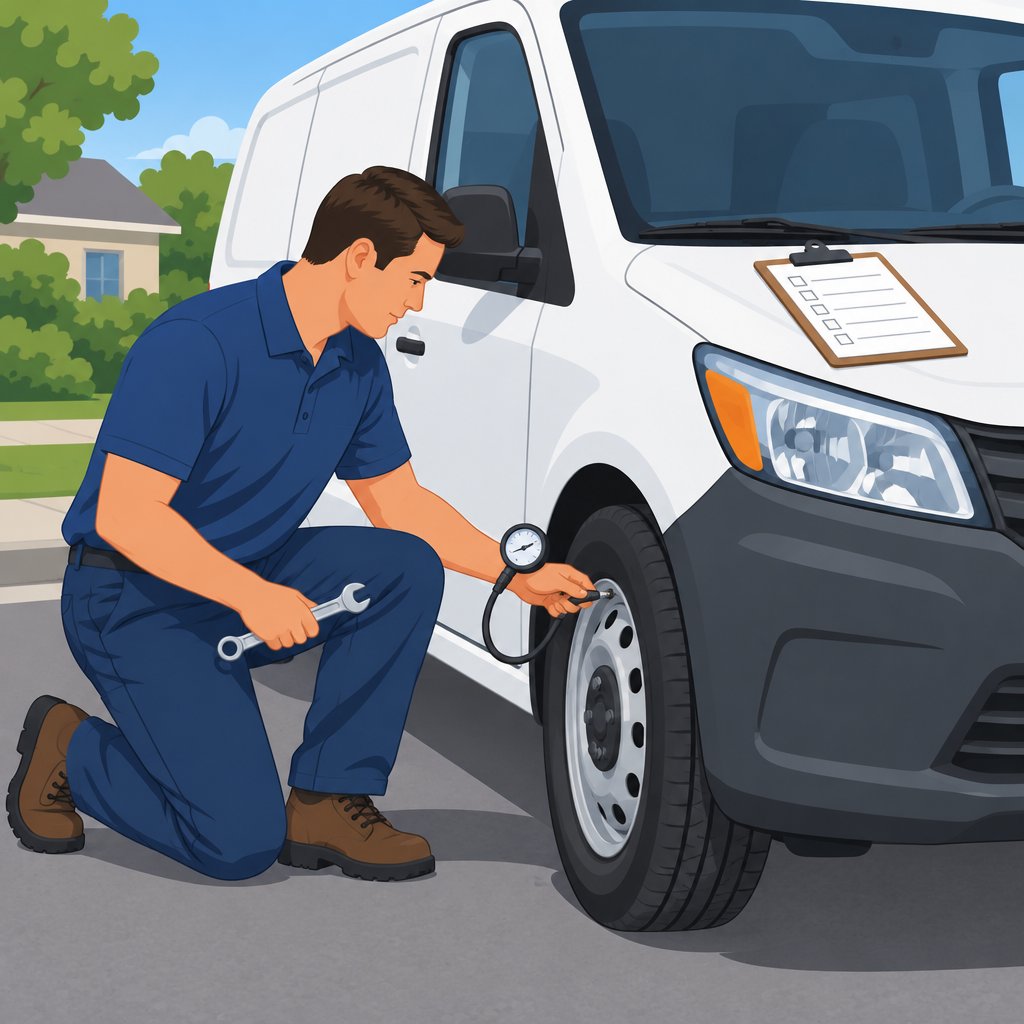
Check every tire with a pressure gauge at least once each month.
Use the vehicle manufacturer’s recommended pressure for accurate maintenance.
You can find the recommended pressure inside the driver’s side door jamb or owner’s manual.
Correct Tire Inflation
Add air when pressure falls below the recommended PSI.
Meanwhile, remove air when tires exceed the recommended pressure.
Check pressure while tires remain cool because driving increases tire temperature.
Tread Wear Inspection
Inspect tire tread regularly because sufficient depth improves traction on wet or slippery roads.
Use a tread depth gauge or penny test to examine the grooves.
Replace any tire when its tread reaches 2/32 of an inch or less.
Even Tire Wear Through Rotation
Rotate the tires every 5,000 to 8,000 miles to promote even wear.
Regular rotation can extend tire life and support consistent vehicle performance.
Have a mechanic perform the rotation if you lack suitable tools or experience.
Timely Tire Replacement
Replace tires that show visible damage, bulges, cracks, punctures, or uneven wear.
Also replace tires older than six years, regardless of their remaining tread.
Timely replacement helps preserve traction, fuel efficiency, and dependable delivery operations.
See Related Content: Analyzing Data for Better Distribution Decisions
Monitoring Essential Fluid Levels
Essential fluids support safe and reliable delivery vehicle operation.
Therefore, inspect each fluid regularly and follow the vehicle manufacturer’s recommendations.
Address unusual fluid changes promptly to help prevent avoidable mechanical problems.
- Coolant
- Brake fluid
- Transmission fluid
Coolant Level Monitoring
Check the coolant level only when the engine is cold.
Next, locate the translucent reservoir and compare the fluid level with its markings.
The coolant should remain between the minimum and maximum marks.
If the level falls below minimum, add the recommended coolant and water mixture.
However, frequent significant drops may indicate a system leak requiring professional attention.
Brake Fluid Level Monitoring
Inspect the brake fluid reservoir near the brake master cylinder under the hood.
Usually, the reservoir includes a full line that shows the proper level.
If the fluid sits below that line, add the type recommended in the vehicle manual.
Low brake fluid can weaken braking performance and create serious safety hazards.
Transmission Fluid Condition
Transmission fluid helps the vehicle shift gears smoothly and supports transmission performance.
Consult the vehicle manual to locate the dipstick for the transmission system.
Fresh transmission fluid should appear transparent red.
Transform Your Career Today
Unlock a personalized career strategy that drives real results. Get tailored advice and a roadmap designed just for you.
Start NowIf the fluid looks discolored or smells burnt, schedule a transmission fluid change.
Simply adding more fluid will not correct those underlying conditions.
Finally, follow the recommended service intervals to support transmission longevity.
Gain More Insights: Technological Advances Impacting Dock Workers Today
Brake Inspection
- Listen for squeaking or grinding noises, steering wheel vibrations, or a brake warning light.
- Address brake issues promptly to protect yourself and other road users.
- Visually inspect brake pads through the wheel spokes for thickness and signs of wear.
- Measure rotor thickness with a caliper or brake rotor measuring tool.
- Additionally, inspect the brake fluid reservoir for proper level, discoloration, or contaminants.
See Related Content: How to Conduct Effective Logistics Audits
Proper alignment and suspension help delivery drivers maintain smooth vehicle operation.
Together, they also support vehicle performance during daily driving.
Impact of Misaligned Wheels
- Misaligned wheels create uneven tire wear, which can reduce traction and fuel efficiency.
- Additionally, alignment problems can make the steering wheel vibrate.
- They may also cause the vehicle to pull to one side, making driving more difficult and dangerous.
Impact of Worn Suspension Components
- Worn suspension components can create a bumpy ride and reduce handling ability.
- They can also compromise braking performance during driving.
- Furthermore, worn parts increase wear on other vehicle components and may cause additional damage.
Spotting Alignment or Suspension Issues
- First, inspect tire wear patterns for uneven areas.
- Notice whether the steering wheel vibrates or the vehicle pulls to one side.
- Also, listen for clunking or squeaking when crossing bumps or turning corners.
When to Seek Professional Help
- Seek professional inspection when these signs appear or when alignment or suspension problems seem likely.
- A qualified inspection can address suspected alignment or suspension problems.
- Regular maintenance checks can help prevent major alignment or suspension problems from developing.
Drivers can support vehicle performance and road safety by addressing alignment and suspension issues promptly.
This proactive approach helps maintain smoother driving.
Uncover the Details: Freight Agent Career Paths and Specializations
Vehicle Cleanliness for Delivery Drivers
Maintaining a clean vehicle helps delivery drivers present themselves professionally.
It also supports customer satisfaction during each delivery.
A consistent cleaning routine keeps the cabin, surfaces, and exterior presentable.
Interior Cleaning Practices
Vacuum the floors and seats regularly to remove dirt, crumbs, and debris.
Use a microfiber cloth on the dashboard, steering wheel, and door handles.
Empty trash and remove clutter often to keep the interior organized.
- Keep the floors and seats free from loose debris.
- Wipe interior surfaces with a clean microfiber cloth.
- Remove waste before it accumulates inside the vehicle.
Odor Control Inside the Vehicle
Air fresheners or odor eliminating sprays can help the vehicle smell fresh.
Baking soda or charcoal bags can absorb unwanted odors inside the vehicle.
Avoid eating in the vehicle to prevent lingering food smells.
- Use an air freshener when the interior needs a fresher scent.
- Place baking soda or charcoal bags inside the vehicle.
- Keep food smells from lingering by avoiding meals inside.
Exterior Washing and Drying
Wash the vehicle regularly to remove dirt, road grime, and bird droppings.
Car wash soap and a soft sponge help reduce the risk of scratches.
Dry the vehicle with a microfiber towel to help prevent water spots.
- Wash away road grime before it builds up on the exterior.
- Choose soft washing materials to protect the paint.
- Dry every washed surface with a microfiber towel.
Protection from Weather and Sun
Parking in a garage or under a carport can help protect the vehicle from sun damage.
A car cover can shield the vehicle from rain, snow, and hail.
Wax or sealant protects the paint and can enhance its shine.
- Use covered parking whenever it is available.
- Cover the vehicle during harsh weather conditions.
- Apply wax or sealant to support exterior paint protection.
Cleanliness During Delivery Work
Keep microfiber cloths, glass cleaner, and trash bags available inside the vehicle.
Regularly wipe high touch surfaces, including the gear shift and door handles.
Organizers or storage bins can keep supplies secure and the cabin orderly.
- Carry basic cleaning supplies for quick touch ups.
- Clean the steering wheel and other frequently touched surfaces.
- Use storage containers to organize items during deliveries.
Professional Detailing Services
Professional detailing can provide a deeper cleaning inside and outside the vehicle.
Regular detailing helps maintain the vehicle’s appearance and prolong its lifespan.
Detailing can also reveal potential maintenance issues at an earlier stage.
- Schedule professional detailing when deeper cleaning becomes necessary.
- Use detailing to support the vehicle’s appearance over time.
- Ask detailers to identify visible maintenance concerns.
Address Minor Repairs Promptly
Delivery drivers can prevent minor vehicle issues from becoming larger, more expensive problems.
Prompt repairs also help protect vehicle safety during frequent trips.
In addition, timely attention supports dependable performance and reduces avoidable downtime.
Importance of Prompt Repairs
Early attention can stop small defects from developing into costly repairs.
Ignoring a minor issue can compromise vehicle safety and increase accident risk.
Regular attention helps the vehicle operate smoothly and efficiently during deliveries.
Common Minor Repairs for Delivery Drivers
Several smaller repairs deserve attention during routine delivery work.
Drivers can monitor accessible components and arrange service when necessary.
The following areas can affect visibility, engine protection, and daily vehicle performance.
Transform Your Career Today
Unlock a personalized career strategy that drives real results. Get tailored advice and a roadmap designed just for you.
Start Now- Working lights and signals improve visibility and support safer driving during nighttime deliveries.
- Replace worn wiper blades to preserve visibility during inclement weather.
- Regularly replacing air filters can improve fuel efficiency and protect the engine.
Promptly replacing worn components can extend vehicle life, minimize downtime, and reduce future repair costs.
Vehicle Readiness for Reliable Deliveries
Regularly checking lights and fluid levels helps delivery drivers avoid preventable disruptions.
Additionally, these checks support safer travel and help drivers complete deliveries on schedule.
An organized vehicle makes daily work more manageable and reduces unnecessary hassle.
Keeping emergency supplies nearby helps drivers respond effectively when unexpected problems occur.
Furthermore, consistent care can extend vehicle life and reduce expenses over time.
By protecting their vehicles, delivery drivers can improve their driving experience and support dependable service.


