




Urban gardening involves growing plants in cities and towns, often within limited spaces.
Recently, urban gardening has gained popularity because it benefits the environment.
The Role of Horticulturists
Horticulturists play a crucial role in urban gardening by providing plant care expertise.
They help gardeners select suitable plants for urban environments.
Additionally, they consider factors such as light and soil quality.
Horticulturists also teach urban gardeners proper planting and maintenance techniques.
Furthermore, they recommend sustainable methods that support healthy, long-lasting urban gardens.
They can also help gardeners address pests and diseases when problems arise.
By working closely with gardeners, horticulturists support successful garden development.
Their knowledge and skills help maximize the beauty and productivity of urban spaces.
Consequently, horticulturists help create and maintain thriving urban gardens.
Benefits of Urban Gardening
Urban gardening offers benefits to individuals, communities, and the environment.
- Access to Fresh Produce. Urban gardens provide fresh fruits, vegetables, and herbs for individuals.
- Fresh produce encourages healthier diets and reduces reliance on processed foods.
- Community Engagement. Urban gardening brings people together and strengthens social connections.
- Neighbors can work together toward shared gardening goals.
- Mental Health Benefits. Gardening can support mental well-being and encourage relaxation.
- These activities may reduce stress, anxiety, and depression while promoting mindfulness.
- Physical Activity. Maintaining an urban garden requires physical labor and supports regular exercise.
- This activity contributes to overall health and wellness.
Community Health and Well-being
Urban gardening supports the health and well-being of people within a community.
- Improved Food Security. Urban gardens provide fresh, nutritious produce in communities facing food insecurity.
- This support matters especially in food deserts and low-income neighborhoods.
- Education and Skill-building. Gardening teaches planting, watering, and harvesting skills.
- Participants also learn about sustainable practices through hands-on activities.
- Promotion of Biodiversity. Urban gardens provide habitats for plants, insects, and wildlife.
- These habitats contribute to healthier ecosystems within urban areas.
- Air Quality Improvement. Plants absorb carbon dioxide and release oxygen.
- Consequently, urban gardens can reduce pollution levels and create healthier surroundings.
Environmental Impact of Urban Gardening
Urban gardening supports sustainability and conservation efforts in cities.
- Reduced Urban Heat. Urban gardens provide green spaces that absorb heat and lower temperatures.
- Therefore, they help mitigate the urban heat island effect and support climate efforts.
- Rainwater Absorption. Green spaces absorb rainfall and reduce stormwater runoff.
- This process helps prevent flooding, improve water quality, and protect natural water bodies.
- Carbon Sequestration. Plants absorb carbon dioxide from the atmosphere.
- As a result, urban gardens can help reduce greenhouse gas emissions.
- Waste Reduction and Recycling. Urban gardens encourage composting and organic waste recycling.
- Composting reduces landfill waste and creates nutrient-rich soil for healthier plants.
Horticulturists support urban gardening with expertise, guidance, and practical assistance.
Their knowledge helps communities create healthier and more sustainable urban spaces.
Responsibilities of Horticulturists in Urban Gardening
Horticulturists support successful urban gardens through careful planning, plant selection, and sustainable maintenance.
They apply specialized knowledge to create attractive and functional spaces within city environments.
These professionals also help gardens benefit communities while supporting environmental health.
- Planning and designing urban garden spaces
- Selecting appropriate plant species for urban environments
- Implementing sustainable gardening practices
Planning and Designing Urban Garden Spaces
First, horticulturists design garden spaces according to the specific conditions of urban environments.
They evaluate available space, sunlight exposure, soil quality, and climate conditions before developing a plan.
Consequently, thoughtful designs maximize space and create visually appealing gardens that function effectively.
Selecting Appropriate Plant Species for Urban Environments
Next, horticulturists choose plant species that can tolerate common urban conditions.
They consider pollution levels, temperature changes, and restricted growing areas when evaluating suitable plants.
Additionally, they may select resilient species that attract pollinators and support local biodiversity.
Implementing Sustainable Gardening Practices
Horticulturists also apply sustainable methods to maintain urban garden spaces responsibly.
For example, they use composting, rainwater harvesting, and integrated pest management.
Furthermore, they can teach community members practical techniques that encourage environmentally friendly gardening.
Delve into the Subject: Importance of Dairy Science Labs and Facilities
Expertise Required for Urban Gardening
Urban gardening demands specialized knowledge and practical skills.
Horticulturists help urban gardens thrive despite challenging city conditions.
Their work combines scientific knowledge with practical garden management.
- Knowledge of plant biology and ecology
- Understanding of urban landscapes and soil conditions
- Skills in pest and disease management
Plant biology and ecology form the foundation of effective urban gardening.
Horticulturists study plant growth, nutrient requirements, and environmental relationships.
They use this knowledge to select suitable plants and support healthy growth.
Additionally, horticulturists assess urban landscapes and varying soil conditions.
Limited space often requires gardeners to use available areas efficiently.
Soil quality also varies considerably across urban environments.
Therefore, horticulturists adapt gardening practices to local physical conditions.
Finally, pest and disease management protects gardens from serious damage.
Transform Your Career Today
Unlock a personalized career strategy that drives real results. Get tailored advice and a roadmap designed just for you.
Start NowHorticulturists identify common threats and apply suitable prevention methods.
They also treat pests and diseases when problems appear.
These combined skills help horticulturists create productive and attractive urban gardens.
Such gardens provide fresh produce while supporting a sustainable, healthy environment.
See Related Content: Entomology Internships: Gaining Practical Experience
Collaborations and Partnerships in Urban Gardening
Collaborations help urban gardening initiatives reach more people and use resources effectively.
Partnerships also connect horticulturists with knowledge, funding, land, and community support.
These relationships can strengthen gardens and encourage long-term community participation.
- Working with local communities and organizations
- Partnering with city governments for urban garden projects
- Engaging with schools and educational institutions
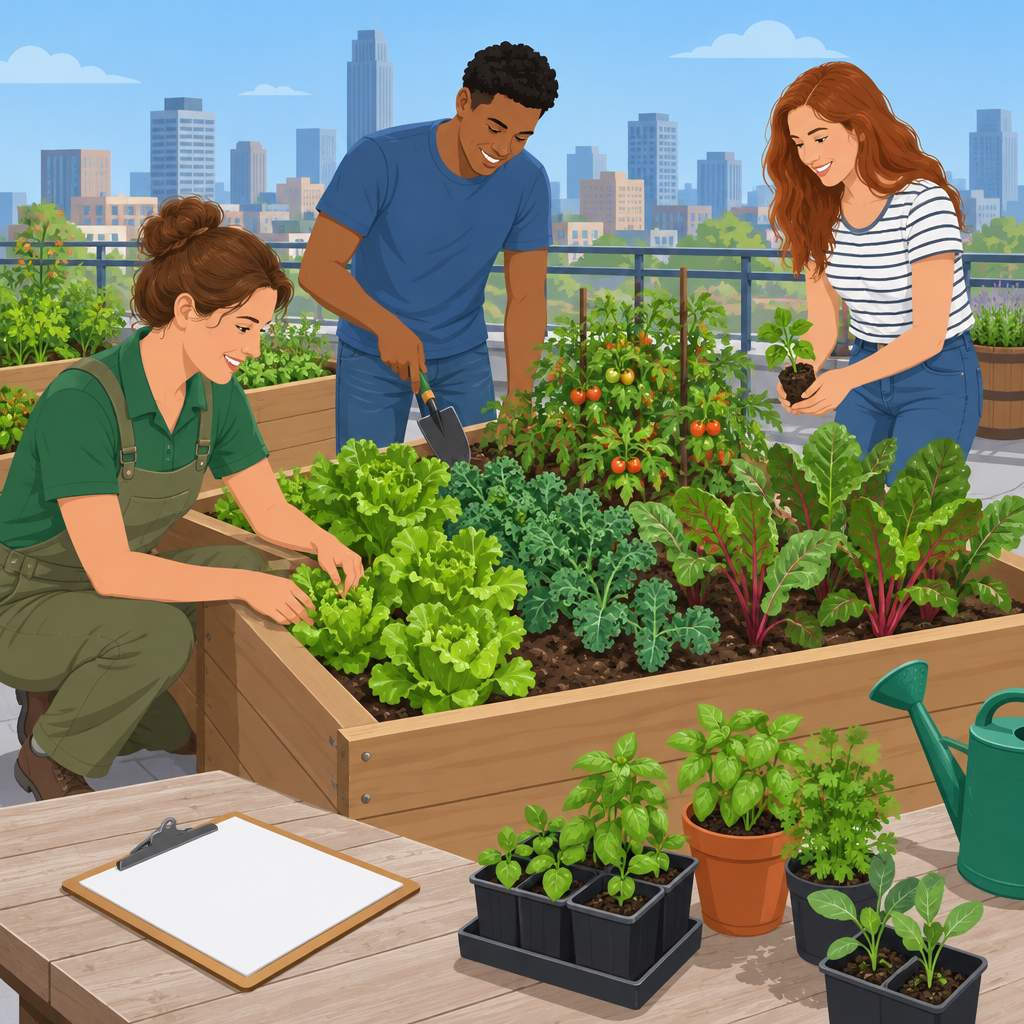
Working with Local Communities and Organizations
Community involvement forms a central part of successful urban gardening projects.
By partnering with local groups, horticulturists can understand residents’ needs and preferences.
These partnerships also help residents develop ownership and pride in nearby gardens.
Neighborhood associations, non-profit organizations, and community centers can identify suitable garden locations.
They can also help secure funding, gather resources, and support ongoing maintenance.
As a result, horticulturists can build reliable networks for garden management.
Partnering with City Governments for Urban Garden Projects
City governments influence urban landscapes and support sustainable development.
Horticulturists can work with municipal officials to promote green spaces in urban areas.
They can also advocate for land access that supports community gardens.
Moreover, municipal partnerships can connect gardening initiatives with local planning policies.
Policy integration can provide long-term support and recognition for urban agriculture.
Government collaboration may also provide resources, expertise, and infrastructure for expanding projects.
Engaging with Schools and Educational Institutions
Schools can help promote environmental awareness and sustainable gardening practices.
Horticulturists can introduce students to gardening principles through practical learning activities.
These experiences can demonstrate the value of growing food locally.
Teachers and educators can help design programs that include gardening within school curricula.
Such programs can inspire students to become future gardeners and environmental stewards.
Universities and research institutions can also support innovative urban gardening techniques and practices.
Ultimately, collaboration enables urban gardens to benefit communities and the environment.
Shared expertise, resources, and support can help these projects remain active and effective.
See Related Content: Poultry Scientist's Role in Sustainable Farming
Innovation in Urban Gardening
- Utilizing technology for urban garden management
- Experimenting with vertical gardening and hydroponics
- Incorporating green roofs and living walls
Urban gardening has evolved significantly over the years.
Horticulturists lead innovative practices in urban garden management.
They use digital tools to streamline processes, monitor plant health, and optimize resource usage.
Additionally, vertical gardening and hydroponics help horticulturists use limited urban space efficiently.
Vertical gardens let plants grow upward, while hydroponics uses nutrient-rich water instead of soil.
Meanwhile, horticulturists continue experimenting with both techniques in urban environments.
Furthermore, green roofs and living walls introduce greenery onto rooftops and vertical surfaces.
Green roofs provide insulation, reduce heat absorption, and help manage stormwater runoff.
Living walls add greenery while improving air quality and biodiversity.
These innovations shape the future of urban agriculture.
Gain More Insights: How Animal Nutritionists Support Farm Management
Transform Your Career Today
Unlock a personalized career strategy that drives real results. Get tailored advice and a roadmap designed just for you.
Start NowChallenges Faced by Horticulturists in Urban Gardening
Urban gardening presents unique challenges for horticulturists.
Limited space and sunlight can restrict plant growth.
Moreover, urban soil contamination and design demands require careful planning.
Limited Space and Access to Sunlight
Urban areas often provide little space for traditional gardens.
Therefore, horticulturists use vertical gardens, rooftop gardens, and community plots.
Tall buildings and limited green space can block sunlight.
Soil Contamination in Urban Areas
Urban soil may contain heavy metals, pesticides, and other toxins.
Consequently, horticulturists test soil before planting crops.
They may also use remediation techniques to reduce contamination and protect consumers.
Balancing Aesthetics with Practicality in Garden Design
Urban garden design must combine visual appeal with practical needs.
Horticulturists consider space, sunlight exposure, and soil quality when planning layouts.
They also choose attractive plants suited to the urban environment and climate.
Despite these obstacles, horticulturists create vibrant and sustainable gardens that benefit communities and the environment.
Educational and Advocacy Roles of Horticulturists
Horticulturists educate communities about urban gardening through practical workshops and accessible classes.
These efforts help residents grow food, improve surroundings, and develop stronger connections with nature.
Furthermore, education gives participants confidence to begin and maintain urban gardens.
- Teaching workshops and classes on urban gardening
Horticulturists organize hands-on workshops and informative classes for people interested in urban gardening.
Sessions address soil preparation, plant propagation, pest management, and sustainable gardening practices.
Consequently, participants gain practical tools for starting urban gardens successfully.
Beyond instruction, horticulturists advocate for urban gardening within communities and at policy levels.
They explain gardening’s value to the public, policymakers, and other stakeholders.
Through this advocacy, they encourage broader participation in urban gardening.
- Promoting the benefits of urban gardening to the public
Horticulturists highlight access to fresh produce, stronger community engagement, and improved mental well-being.
They also emphasize environmental sustainability as an important benefit of urban gardening.
Additionally, they showcase successful garden projects and share stories that demonstrate gardening’s positive influence.
- Advocating for policies that support urban gardening initiatives
Horticulturists encourage policies that create supportive conditions for urban gardening initiatives.
They engage local officials, urban planners, and community leaders about green spaces and community gardens.
They also support regulations and incentives for urban farming projects.
As a result, their advocacy helps communities develop more sustainable and resilient cities.
Education and advocacy allow horticulturists to strengthen urban gardening initiatives.
Their efforts help people cultivate healthier communities and deeper connections with nature.
Supporting Sustainable Urban Gardening
Horticulturists play a crucial role in urban gardening by cultivating plants effectively within limited spaces.
Additionally, residents can explore community gardens, rooftop spaces, and vertical gardens in their communities.
Therefore, everyone can support urban gardening initiatives to promote sustainable living, greener cities, and a healthier environment.
Additional Resources
Google search results for The Role of Horticulturists in Urban Gardening Agricultural
Bing search results for The Role of Horticulturists in Urban Gardening Agricultural


