




Importance of Entomology Internships
- Entomology internships offer hands-on experience with insects.
- Practical experience in entomology supports career growth.
- This blog post highlights the significance of entomology internships.
What is Entomology?
Entomology is the scientific study of insects.
It examines insect biology, behavior, ecology, and classification.
Because insects support many ecosystems, entomology remains an essential field of study.
- Definition of entomology
- Importance of studying insects
- Various career opportunities in entomology
Definition of Entomology
The term “entomology” comes from the Greek word “entomon,” meaning insect.
It also includes “logia,” meaning study.
Entomology examines insects and their relationships with organisms and the environment.
Importance of Studying Insects
Scientists have described over a million insect species.
Millions of additional species may remain undiscovered.
Insects influence ecosystems as pollinators, decomposers, and prey for other organisms.
They also affect economies as crop pests and disease transmitters.
Beneficial insects provide pollination and natural pest control.
Therefore, researchers study insect biology and behavior to develop sustainable pest management strategies.
Various Career Opportunities in Entomology
Entomology offers diverse career opportunities for people interested in insects.
Professionals can focus on pest management, conservation, research, or education.
Each path supports a different way to study and manage insect populations.
- Research entomologist
- Extension specialist
- Pest control consultant
- Forensic entomologist
- Conservation biologist
- Agricultural entomologist
- Urban entomologist
- Educator or professor
Benefits of Entomology Internships
When students pursue entomology internships, they can apply classroom knowledge in professional settings.
These placements also connect students with experienced researchers, scientists, and educators.
Additionally, internships can clarify career goals and strengthen professional preparation.
Gain Field-Based Skills
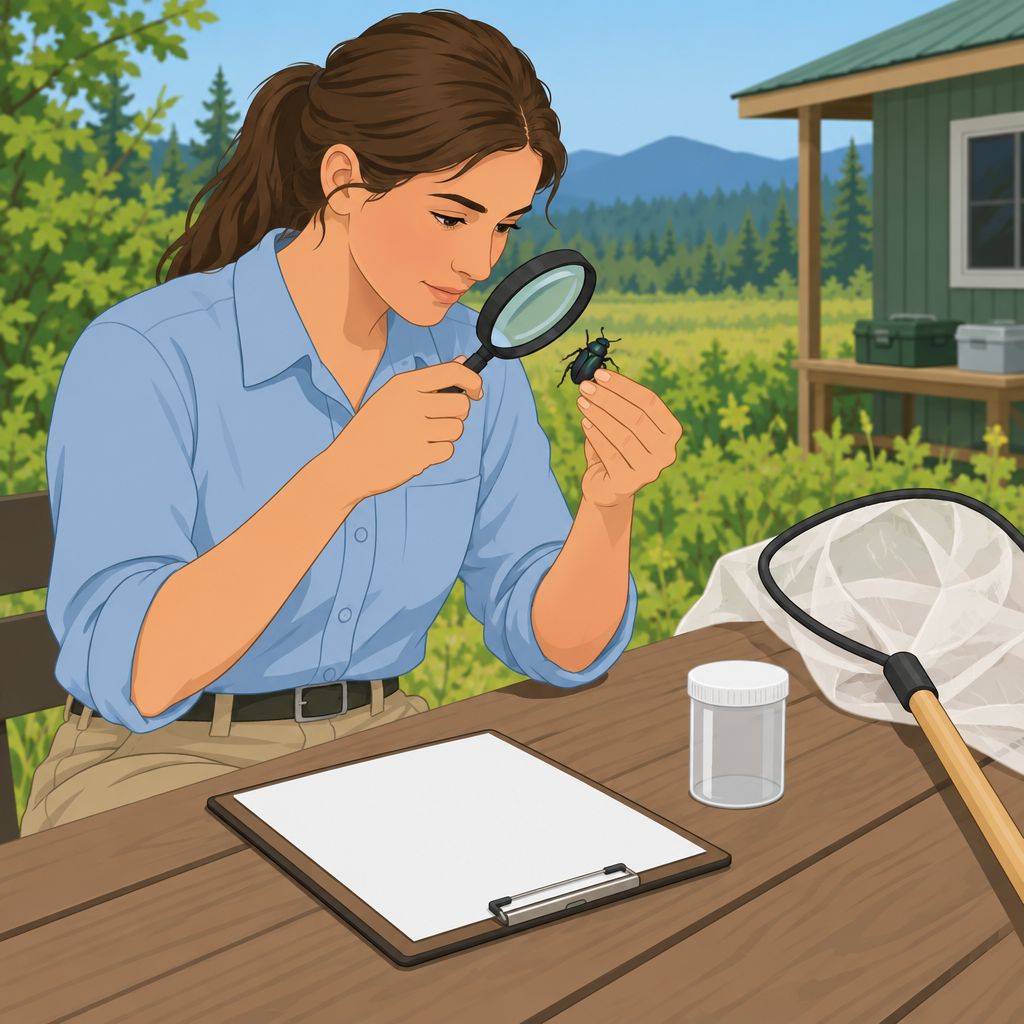
Interns handle specimens, conduct experiments, and observe insects in natural habitats.
This work helps them develop practical skills that classroom lessons cannot fully provide.
Furthermore, direct observation reveals the complexity of insect behavior.
Build Professional Connections
Interns meet professionals working as researchers, scientists, and educators.
These conversations may create mentorship and collaboration opportunities.
Moreover, professional relationships can support future decisions and career development.
Explore Employment and References
Organizations may use internships to identify students for full-time positions.
Interns who demonstrate skill, commitment, and enthusiasm may receive employment offers.
Even without an immediate offer, supervisors can provide valuable future references.
Professional Growth Through Entomology Internships
Together, these benefits help students grow as developing entomology professionals.
Internships combine workplace learning, professional connections, and possible employment pathways.
Students interested in insects can consider applying for an internship to advance their studies.
See Related Content: Poultry Scientist's Role in Sustainable Farming
Finding Entomology Internships
Finding an entomology internship requires planning, research, and consistent outreach.
First, identify opportunities that match your interests and career goals.
Then, use multiple resources to discover suitable positions.
- Research organizations or companies that offer internships.
- Check with universities or scientific research institutions.
- Use online resources and job boards.
Researching Organizations and Companies
Begin by researching organizations and companies that provide entomology internships.
Government agencies, conservation groups, pest control companies, and research institutions may offer relevant opportunities.
Targeting suitable employers helps align your internship search with your interests and career goals.
Checking Universities and Research Institutions
Universities and scientific research institutions can provide useful leads for entomology internships.
Many academic institutions maintain relationships with organizations involved in entomology.
Contact professors or advisors to learn about opportunities that other sources may not advertise.
Transform Your Career Today
Unlock a personalized career strategy that drives real results. Get tailored advice and a roadmap designed just for you.
Start NowUsing Online Resources and Job Boards
Online resources and job boards can expand your search for entomology internships.
Use the Entomological Society of America, Indeed, Glassdoor, or LinkedIn to find listings.
Furthermore, search filters can narrow results by location, internship type, company, or organization.
Combining research, professional outreach, and online searches can help you locate a suitable internship.
Learn More: How Animal Nutritionists Support Farm Management
Application Process
Applying for entomology internships requires careful attention to each part of the application.
Strong materials help applicants present relevant preparation clearly.
Therefore, applicants should connect their experiences with each organization’s internship requirements.
- Guidelines for submitting a strong resume and cover letter
- Tips for writing a compelling personal statement
- Importance of preparing for interviews
Strong Resumes and Cover Letters
Your resume should highlight relevant coursework, research experience, and entomology-related internships.
Tailor each resume to the specific internship and emphasize the most relevant preparation.
Use keywords from the internship description to demonstrate your fit for the position.
Meanwhile, your cover letter should explain your passion for entomology and your career goals.
Customize every cover letter to address the organization offering the internship.
Compelling Personal Statements
Some entomology internships require applicants to submit a personal statement.
Use this statement to present your passion for entomology and relevant experiences.
Also, explain how the internship will help you develop additional skills.
Keep your writing concise, focused, and articulate throughout the statement.
Interview Preparation
After submitting your application, prepare for potential interviews.
Research the organization and become familiar with its work.
Then, discuss how your skills and experiences support its mission.
Practice common interview questions before speaking with the organization.
Finally, explain how the internship supports your career goals in entomology.
Gain More Insights: The Role of Drones in Modern Irrigation Practices
Day-to-Day Responsibilities of Entomology Interns
Entomology interns manage varied responsibilities that build practical skills in the field.
These tasks help interns contribute to ongoing research projects.
Additionally, daily assignments develop knowledge needed for future entomology careers.
- Assisting with research projects
- Collecting and analyzing data
- Participating in fieldwork and lab experiments
Assisting with Research Projects
Interns often assist senior entomologists or researchers with active research projects.
For example, they may conduct literature reviews, prepare experiments, and collect field samples.
Furthermore, interns can support research planning, design, data collection, and analysis.
Collecting and Analyzing Data
Entomology interns collect and analyze data produced by research projects.
They may record field observations, take measurements, and organize information for analysis.
Meanwhile, interns learn to use data collection tools and software programs accurately.
Data analysis helps interns identify patterns in insect behavior or population dynamics.
Participating in Fieldwork and Lab Experiments
Interns often participate in fieldwork and laboratory experiments with research teams.
This experience teaches them to conduct experiments, handle specimens, and operate specialized equipment.
Fieldwork may include collecting insect samples, observing behavior, or assisting with pest control measures.
In contrast, laboratory experiments may examine insect physiology, genetics, or ecology under controlled conditions.
Through these responsibilities, interns develop practical skills and expand their entomology knowledge.
They also gain experience with research projects, data collection, fieldwork, and laboratory experiments.
Discover More: Role of an Agricultural Loan Officer Explained
Transform Your Career Today
Unlock a personalized career strategy that drives real results. Get tailored advice and a roadmap designed just for you.
Start NowSkills and Qualifications Needed
Entomology internships require specific skills and qualifications.
These skills help interns excel in the field.
They also support accurate research and effective fieldwork.
- Biology or entomology background: Foundational knowledge helps interns understand insect science principles.
- Strong research and analytical skills: Interns must research thoroughly and analyze data effectively.
- Attention to detail: Precision helps interns identify species and document findings accurately.
- Ability to work independently: Interns should remain self-motivated during experiments and fieldwork.
These qualifications can strengthen the internship experience and support future entomology careers.
Challenges During Entomology Internships
Entomology internships expose interns to demanding fieldwork and laboratory responsibilities.
These experiences test practical skills, endurance, and professional judgment.
Furthermore, interns develop confidence by addressing challenges with determination and adaptability.
Long Hours in the Field or Laboratory
Interns often spend extended periods conducting fieldwork or completing laboratory tasks.
These demanding schedules require focus, dedication, and effective time management.
Additionally, long hours can test physical endurance and mental concentration.
- Interns may work for extended hours in field or laboratory settings.
- Physical demands can challenge interns throughout their assignments.
- Careful scheduling helps interns manage demanding responsibilities effectively.
Handling Difficult or Dangerous Insects
Interns may encounter insects that require careful handling or present potential hazards.
They need knowledge and skill to identify and manage these insects safely.
Moreover, interns must respond carefully when unexpected situations arise.
- Some insects can challenge interns during handling procedures.
- Proper knowledge supports safer identification and handling practices.
- Careful preparation helps interns manage different insect species responsibly.
Balancing Internship Responsibilities with Academic Coursework
Interns often balance workplace responsibilities with academic coursework.
Therefore, they must organize their time to address both commitments effectively.
Although this balance can prove challenging, it supports success in both areas.
- Interns must manage assignments from their internships and courses.
- Effective planning helps them give both responsibilities proper attention.
- Consistent effort supports progress toward academic and professional goals.
By addressing these obstacles, interns strengthen practical abilities and professional confidence.
They also prepare themselves for future work in entomology.
Building a Career Through Internship Experience
Internships provide valuable practical experience in entomology.
Therefore, students should actively pursue opportunities that develop hands-on skills.
Ultimately, internship experience can support a successful career in entomology.
Additional Resources
Google search results for Entomology Internships: Gaining Practical Experience Agricultural
Bing search results for Entomology Internships: Gaining Practical Experience Agricultural


