




Introduction
Geology studies the Earth’s structure, composition, and processes.
It plays a crucial role in industries including construction, water management, and resource extraction.
Geology also provides essential information for extracting valuable minerals from the Earth.
Understanding Geological Processes
Geological processes create mineral deposits over long periods.
Knowledge of geological context helps mining teams plan efficient operations.
Geologists examine rock formations and mineral composition to evaluate potential resources.
Geological Processes That Form Mineral Deposits
Mineral deposits develop through several geological processes over millions of years.
Hydrothermal activity moves hot fluids through Earth’s crust.
These fluids carry dissolved minerals and deposit them as they cool within rock formations.
Magmatic segregation concentrates minerals as magma cools and crystals form.
Sedimentary processes also accumulate minerals in layers over time.
Understanding these processes helps miners predict deposit locations and choose efficient extraction methods.
Importance of Geological Context at Mining Sites
Geological context includes surrounding rock formations, mineral compositions, and structural features.
First, this information helps miners identify deposits and select suitable extraction methods.
It also helps exploration teams optimize fieldwork and reduce waste.
Furthermore, geological knowledge supports environmental impact assessments.
Mining teams can then develop measures that reduce harm to environments and communities.
Methods for Studying Rocks and Mineral Composition
Geologists use several methods to examine rock formations and mineral composition.
Through geological mapping, they observe and record exposed rock characteristics.
This information reveals composition, structure, potential deposits, and geological hazards.
Additionally, remote sensing techniques help geologists analyze broad areas.
Satellite imagery and geophysical surveys can reveal deposits hidden below the surface.
By combining field observations with advanced technologies, geologists guide exploration and extraction efforts.
Mineral Exploration and Resource Estimation
Geologists play a crucial role in identifying potential mining sites.
- They study geological formations and analyze mineral presence.
- Geophysical surveys, geochemical analysis, and drilling support exploration.
- Remote sensing and GIS technology also help locate mineral deposits.
Accurate resource estimation supports successful mining operations.
- It helps determine a mining project’s viability and profitability.
- Geologists use exploration data to estimate mineral quantity and quality.
- This information guides mineral extraction and processing plans.
Geologists’ expertise in exploration and estimation remains invaluable to mining operations.
Delve into the Subject: Day in the Life of a Heavy Equipment Operator
Geological Assessment of Mining Sites
Mining teams need geological assessments before operations begin.
These studies clarify site conditions and support safer, more efficient planning.
They also guide environmental decisions throughout the mining process.
Importance of Geological Assessments Before Mining Operations
Assessments reveal whether valuable minerals occur within the site.
Teams then use geological information to plan targeted extraction activities.
Furthermore, early evaluation helps operators address hazards and regulatory responsibilities.
- Geologists identify potential mineral deposits within the assessed area.
- Mining teams plan efficient operations by studying the site’s geological structure.
- Assessments reveal unstable ground and other potential geological hazards.
- Operators target mineral-rich areas to optimize resource extraction.
- Proper assessments help mining operations meet environmental requirements.
Evaluation of Geological Risks and Challenges
Geological assessments show where mining could destabilize the ground.
They also help teams understand hazards before operations create additional pressure.
Consequently, operators can develop measures that reduce environmental and safety risks.
- Assessments identify areas that could experience landslides or subsidence.
- Geologists evaluate hazards so teams can implement effective mitigation measures.
- Studies help predict groundwater contamination during mining operations.
- Teams assess seismic risks associated with mining activities.
- Risk evaluation helps operators minimize mining’s environmental impact.
Environmental Sustainability Through Geological Assessment
Proper assessment helps mining teams protect surrounding ecosystems.
It also supports responsible decisions about land, water, and waste.
Additionally, geological findings guide restoration after mining activities end.
- Assessments help protect biodiversity by limiting habitat destruction.
- Teams can prevent soil erosion and preserve the land’s integrity.
- Site geology guides proper waste disposal during mining operations.
- Operators monitor nearby water sources and maintain their quality.
- Assessment findings support reclamation plans for restoring mined areas.
You Might Also Like: Assembler Job Listings: Where to Find the Best Jobs
Transform Your Career Today
Unlock a personalized career strategy that drives real results. Get tailored advice and a roadmap designed just for you.
Start NowGeotechnical Studies and Risk Management
Geotechnical studies evaluate rock and soil stability, along with their engineering properties, at mining sites.
Geologists conduct these studies to clarify site conditions and identify potential operational risks.
Consequently, their findings support safer decisions for mining structures, workers, and environmental protection.
- Geologists lead geotechnical studies at mining sites.
- They identify geological hazards that could threaten mining operations.
- Their expertise strengthens on-site safety and risk management.
By examining unstable rock formations, faults, and ground movement, geologists identify hazards before accidents occur.
Mining companies can then apply measures that reduce risks and protect workers.
These actions also help limit potential environmental effects.
Additionally, geologists analyze collected data to design strategies that maintain mining structure stability.
They use knowledge of rock formations, soil properties, and geological processes to guide risk prevention.
Therefore, mining companies can make informed choices that safeguard workers and assets.
Delve into the Subject: The Importance of Attention to Detail in Housekeeping
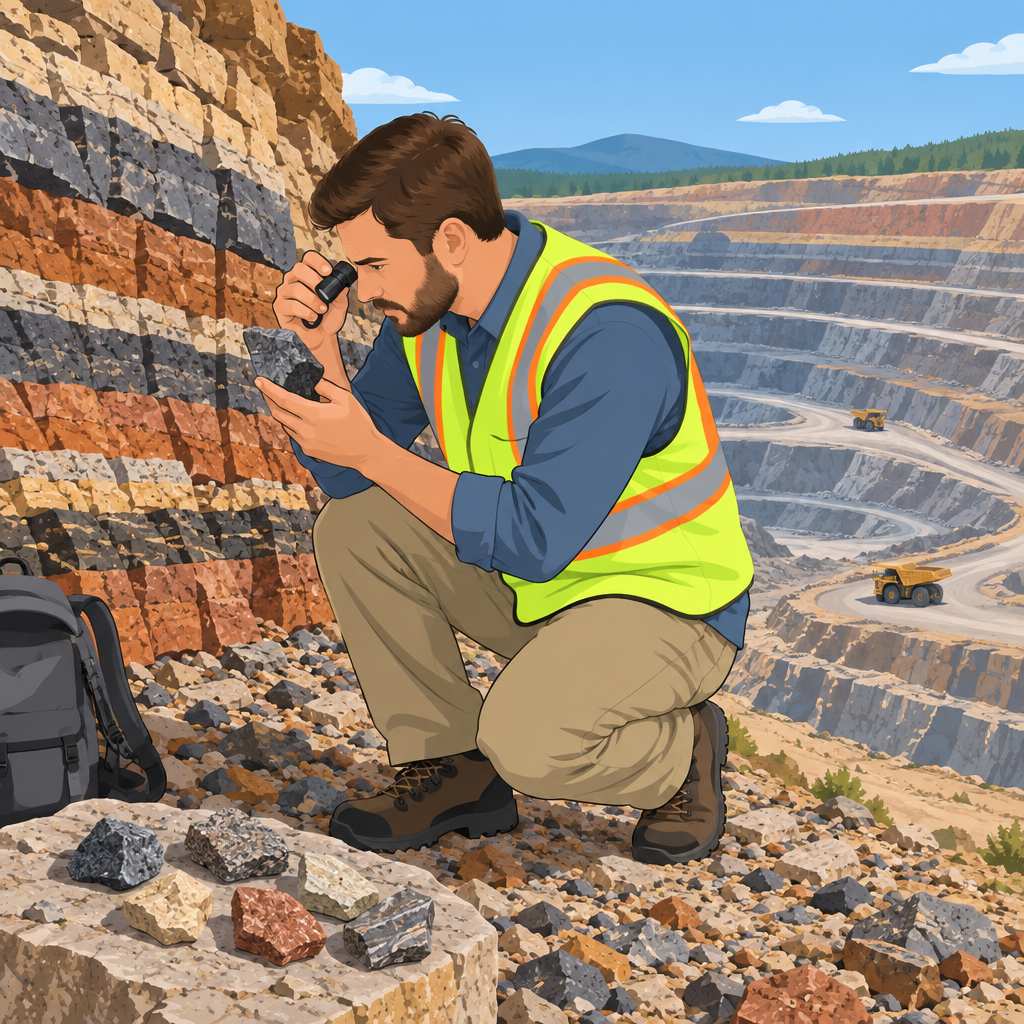
Geological Mapping and Spatial Analysis
Geological mapping records rock types, geological structures, and mineralization across a specific area.
It represents these features clearly, helping mining companies understand regional geological conditions.
Therefore, mapping supports informed decisions about exploration, extraction, and mine development.
Importance of Geological Mapping for Mining Site Planning
Geological mapping provides detailed information about subsurface geology before companies establish mining sites.
Mining teams can identify areas with strong mineral potential and plan operations accordingly.
Furthermore, geological maps reveal hazards that could affect workers, infrastructure, and surrounding environments.
These hazards include ground instability, rockfalls, and possible groundwater contamination.
Mining companies can then apply measures that reduce risks and protect nearby environments.
Spatial Analysis for Selecting Mining Locations
Spatial analysis helps mining companies interpret geological information within its geographic context.
By combining mapping with spatial analysis, teams can compare mineral grades, ore distribution, and site accessibility.
This comparison helps companies select suitable locations for mining activities.
Spatial analysis also produces maps showing mineral resource distribution across a mining site.
These maps guide the layout of mine pits, waste rock piles, and processing facilities.
Consequently, planners can support efficient extraction while reducing potential environmental effects.
Technology Integration for Efficient Mining Operations
Mining companies increasingly combine geological data with digital technologies to improve operational efficiency.
Geographic Information Systems allow teams to visualize and analyze geological information digitally.
GIS supports decisions about site selection, resource management, and environmental planning.
Meanwhile, remote sensing provides information about terrain, vegetation cover, and land use patterns.
Satellite imagery and LiDAR help companies plan and monitor mining activities.
Together, these technologies help mining companies coordinate operations and support sustainable practices.
You Might Also Like: Creating Therapeutic Landscapes: Design Techniques
Environmental Impact Assessment
- Geologists evaluate how mining operations may affect the environment.
- They assess risks to nearby ecosystems, water sources, and air quality.
- Additionally, geological knowledge helps teams manage environmental risks effectively.
- Geological assessments identify hazards such as land subsidence and groundwater contamination.
- By analyzing site geology, geologists predict how mining activities could affect surrounding areas.
- Thorough assessments support regulatory compliance and sustainable mining practices.
- Geologists provide insights that promote environmentally responsible mining operations.
- They also collaborate with environmental engineers and regulatory agencies to address issues proactively.
The Significance of Geology in Mining Operations
Geology plays a crucial role in identifying mineral deposits.
Furthermore, geological surveys determine resource locations and quantities.
Mining teams can optimize operations by understanding geological structures.
Meanwhile, geologists analyze rock formations to predict potential risks and challenges.
By mapping geological features, mining teams can plan efficient extraction processes.
Additionally, geological data guides decisions and resource management strategies.
Geological expertise supports compliance with environmental regulations and sustainability practices.
Consequently, geology increases mining efficiency and reduces costs.
Geologists provide insights that support mining project success and longevity.
Transform Your Career Today
Unlock a personalized career strategy that drives real results. Get tailored advice and a roadmap designed just for you.
Start NowLong-Term Value of Geological Expertise
Geology remains indispensable for resource identification and risk assessment in mining operations.
Geologists help mining teams support project success and sustainability.
Therefore, future mining endeavors should integrate geological expertise for optimal outcomes.
Additional Resources
Bing search results for The Importance of Geology in Mining Operations Construction and Manual Labor


