



Introduction
A fish and game warden plays a vital role in conserving wildlife.
Their equipment is crucial for performing their duties effectively.
This blog post will delve into the importance of the tools and gear that fish and game wardens rely on in their daily tasks.
Essential Equipment Used by Fish and Game Wardens
- Fish and game wardens carry firearms to protect themselves and enforce wildlife laws against poachers.
- Wardens need boats to patrol lakes, rivers, and coastal areas to monitor and enforce fishing regulations.
- Wardens use ATVs to access remote areas where traditional vehicles cannot go and to respond to emergencies quickly.
- Radios and cellphones enable wardens to coordinate with colleagues and respond to calls efficiently.
Specialized Gear Supporting Conservation Efforts
- Wardens rely on night vision goggles for conducting surveillance and tracking illegal activities in low-light conditions.
- Cameras and GPS devices help wardens track animals, gather data, and detect poaching hotspots.
- Wardens use tranquilizer guns to safely capture and relocate wild animals that pose a threat to human safety.
- Wardens wear protective gear such as bulletproof vests and helmets to stay safe while performing their duties.
Importance of Equipment in Wildlife Protection and Conservation
The equipment fish and game wardens rely on is essential for ensuring the protection and conservation of wildlife.
Without these tools and gear, wardens would struggle to enforce regulations and safeguard endangered species effectively.
Communication Equipment
- Two-way radios for coordinating with other Wardens and emergency response teams.
- Cell phones for regular communication with headquarters and other personnel.
- GPS devices for navigation in remote areas.
Fish and game wardens rely heavily on various types of equipment to perform their duties effectively.
Communication equipment is one of the essential tools that help wardens coordinate with each other.
These tools also enable wardens to respond to emergencies efficiently.
Importance of Two-Way Radios
Two-way radios are a crucial piece of equipment for fish and game wardens.
They allow wardens to stay in constant communication with each other.
They also facilitate contact with emergency response teams.
In remote areas, where cell phone reception may be limited or nonexistent, two-way radios provide reliable communication.
Wardens can quickly coordinate their efforts during search and rescue missions.
They also use radios during law enforcement operations and other critical situations.
Real-time transmission and reception of information ensure safety and mission success.
Roles of Cell Phones in Field Communication
Cell phones are another important communication tool for fish and game wardens.
While two-way radios offer immediate communication in the field, cell phones provide additional connectivity.
They enable contact with headquarters and other personnel.
Wardens can also communicate with the public through cell phones.
These devices allow calls, text messages, and mobile data access for critical information.
Moreover, cell phones can capture photos and record videos.
They help document evidence during investigations effectively.
Reliable cell phone service is vital for wardens to stay connected and informed.
Navigation Benefits of GPS Devices
GPS devices are essential for navigation in remote areas.
Traditional maps may not always be accurate or up to date in such regions.
Fish and game wardens often operate in rugged terrain, dense forests, or vast bodies of water.
GPS technology helps wardens pinpoint their location and navigate safely.
These devices provide real-time mapping, tracking, and routing capabilities.
Wardens can find specific locations and respond quickly to incidents.
GPS devices also aid in locating individuals in distress efficiently.
This technology enhances situational awareness for better decision-making in the field.
Overall, GPS devices are indispensable for navigating and operating in challenging environments.
Enhancing Operational Effectiveness with Communication Technologies
Communication equipment such as two-way radios, cell phones, and GPS devices are essential tools.
Fish and game wardens rely on them to perform their duties effectively.
These tools facilitate coordination, communication, and navigation in the field.
They enable wardens to respond promptly to emergencies and enforce laws.
Communication technologies also help protect natural resources.
By leveraging the latest communication equipment, wardens enhance their operational capabilities.
These advances improve their effectiveness in managing and conserving wildlife and habitats.
Firearms
- Fish and game wardens rely on high-powered rifles for tranquilizing dangerous animals.
- Shotguns are essential for hunting and providing protection in the field.
- Handguns are carried for self-defense purposes while on duty.
The use of firearms is a critical aspect of the equipment that fish and game wardens rely on to effectively carry out their duties.
Transform Your Career Today
Unlock a personalized career strategy that drives real results. Get tailored advice and a roadmap designed just for you.
Start NowThese weapons serve various purposes, from tranquilizing dangerous animals to protecting themselves in the wilderness.
High-Powered Rifles for Animal Tranquilization
Fish and game wardens often encounter situations where they need to tranquilize potentially dangerous animals.
In such cases, they rely on high-powered rifles equipped with tranquilizer darts.
These rifles are essential for safely immobilizing animals without causing them harm.
Versatility and Protection with Shotguns
Shotguns are another type of firearm that fish and game wardens rely on for hunting and protection.
These weapons are versatile and effective for a variety of tasks in the field.
Wardens use shotguns for hunting game, such as deer or waterfowl, as well as for self-defense against aggressive wildlife.
Handguns as a Self-Defense Tool
In addition to high-powered rifles and shotguns, fish and game wardens also carry handguns for self-defense while on duty.
Handguns are compact and easily accessible, making them ideal for situations where wardens need to protect themselves quickly.
Wardens are trained to use handguns safely and responsibly in the field.
Firearms play a crucial role in the equipment arsenal of fish and game wardens.
These weapons provide wardens with the necessary tools to carry out their duties effectively and ensure their safety while working in challenging and often unpredictable environments.
Proper training and maintenance of firearms are essential for wardens to perform their jobs with skill and responsibility.
Delve into the Subject: Day in the Life of a US Park Ranger
When it comes to equipment, fish and game wardens rely on a variety of tools.
These tools help them perform their duties effectively.
One important category of equipment is non-lethal weapons.
Non-lethal weapons allow wardens to handle potentially dangerous situations without causing permanent harm.
Let us take a closer look at the non-lethal weapons that fish and game wardens use.
Pepper Spray
Pepper spray is a vital tool for fish and game wardens when dealing with aggressive wildlife or suspects.
This spray can be used to deter animals or individuals without causing permanent harm.
Pepper spray is easy to carry and can quickly incapacitate a threat.
It allows wardens to maintain control of the situation.
Tasers
Tasers are another important non-lethal weapon that fish and game wardens rely on.
They are particularly useful for incapacitating animals or suspects from a safe distance.
Tasers deliver a powerful electrical shock that temporarily immobilizes the target.
This shock gives wardens the opportunity to safely intervene and handle the situation.
Tasers are effective in quickly subduing threats without causing lasting harm.
Baton
A baton is a versatile tool that fish and game wardens use for self-defense in close combat situations.
When physical force is necessary, a baton can defend against an attack or gain control of a suspect.
Batons help wardens maintain order and ensure their safety in confrontational situations.
Non-lethal weapons are essential equipment for fish and game wardens.
They enable wardens to perform their duties while minimizing harm to both wildlife and individuals.
By using tools such as pepper spray, Tasers, and batons, wardens can protect themselves and others in dangerous situations.
Find Out More: Correctional Officer Support Networks
Protective gear ensures the safety of fish and game wardens.
- Bulletproof vests for protection against firearms
- Kevlar gloves for handling injured animals safely
- Helmets for head protection during high-risk operations
Fish and game wardens operate in challenging environments.
Sometimes they face armed poachers or wildlife in distress.
They use various protective gear to remain safe and effective.
Bulletproof Vests
A bulletproof vest is among the most vital protective gear pieces.
Transform Your Career Today
Unlock a personalized career strategy that drives real results. Get tailored advice and a roadmap designed just for you.
Start NowThe vest protects wardens from firearms during patrols or operations.
This ballistic protection can save lives in dangerous moments.
Kevlar Gloves
Handling injured animals carries risks of bites or scratches.
Kevlar gloves offer puncture and cut resistance for safety.
These gloves let wardens manage and transport animals without injury.
Helmets
Wardens wear helmets during high-risk operations like rescues or raids.
Helmets protect against head injuries from falls and debris.
They are essential for safety in unpredictable field environments.
Acquiring proper protective gear helps wardens respond with confidence.
Bulletproof vests, Kevlar gloves, and helmets improve response capabilities.
This equipment protects wardens and the animals they serve.
Discover More: Working as a TSA Officer: Insights from Industry Experts
When it comes to equipment fish and game wardens rely on, surveillance tools play a crucial role in their day-to-day operations.
Trail Cameras
Trail cameras are essential for monitoring wildlife populations and activities in remote areas.
These cameras are typically placed in strategic locations to capture images and videos of animals in their natural habitats.
Fish and game wardens use trail cameras to study animal behavior, track populations, and gather valuable data for conservation efforts.
Night Vision Goggles
Night vision goggles are indispensable for tracking animals in low light conditions.
Fish and game wardens often need to conduct surveillance operations during the night, when many animals are most active.
Night vision goggles enhance visibility in darkness, allowing wardens to observe wildlife without disturbing them.
Drones
Drones have revolutionized aerial surveillance for fish and game wardens.
These unmanned aircraft can access remote and hard-to-reach areas, providing valuable insights into wildlife populations and habitat conditions.
Drones equipped with high-resolution cameras enable wardens to monitor forests, wetlands, and other ecosystems from above, assisting in conservation efforts.
The surveillance equipment utilized by fish and game wardens enhances their ability to protect wildlife, enforce regulations, and preserve natural habitats.
These tools are essential for effective conservation and management of diverse ecosystems.
Discover More: Physical Fitness Standards for Highway Patrol Officers
Traps and Capture Equipment
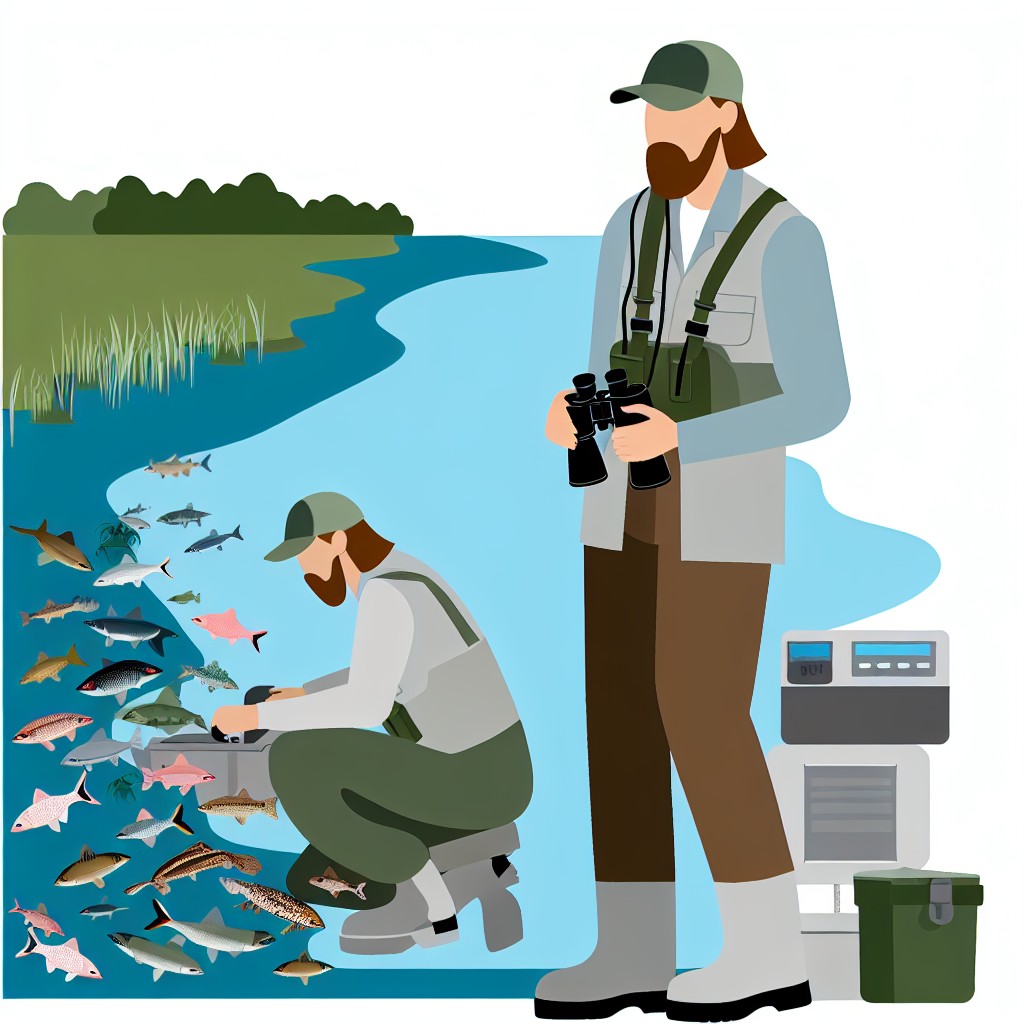
- Live traps are essential for capturing and relocating wildlife in a safe and humane manner.
- Tranquilizer darts and blowguns are used to sedate animals from a distance, ensuring the safety of both the animal and the wardens.
- Nets and snares are crucial tools for capturing animals without causing harm or injury to them.
Fish and game wardens rely heavily on these traps and capture equipment to handle various wildlife situations.
They need to relocate a bear causing trouble in a residential area or tranquilize a wounded deer for treatment.
Having the right tools at their disposal is key to ensuring the safety of both humans and animals.
Live traps come in various shapes and sizes.
Wardens can capture anything from small rodents to larger mammals like raccoons or coyotes.
These traps are designed to securely contain the animal without causing any harm.
This design makes it easier to transport animals to a more suitable location without causing unnecessary stress.
Tranquilizer darts and blowguns are essential for situations where wardens need to sedate an animal from a safe distance.
This equipment is especially useful when dealing with potentially dangerous wildlife.
It allows wardens to immobilize the animal without putting themselves in harm’s way.
By using tranquilizers, wardens can safely handle animals that may otherwise pose a threat to themselves or the public.
Nets and snares are commonly used by wardens to capture animals quickly and efficiently.
These tools safely restrain animals without causing injuries.
This safety makes it easier for wardens to handle and transport the animals.
Nets are typically used for capturing birds or smaller animals.
Transform Your Career Today
Unlock a personalized career strategy that drives real results. Get tailored advice and a roadmap designed just for you.
Start NowSnares are more effective for larger mammals like deer or elk.
Traps and capture equipment are essential tools for fish and game wardens in their daily work.
These tools allow wardens to handle wildlife situations in a safe and humane manner.
They minimize harm to both animals and humans.
By having access to a variety of traps and capture equipment, wardens can effectively respond to a wide range of wildlife-related incidents.
Such readiness ensures the protection of both wildlife and the public.
Boats and Watercraft
- Patrol boats for monitoring waterways and enforcing fishing regulations.
- Kayaks for navigating shallow or narrow water bodies.
- Dive gear for conducting underwater inspections and rescues.
Fish and game wardens rely heavily on a variety of equipment to carry out their duties.
One crucial set of tools at their disposal is boats and watercraft.
These allow them to patrol, monitor, and enforce regulations in different water bodies.
Patrol Boats
Patrol boats are essential for wardens to monitor waterways.
They enforce fishing regulations and respond to emergencies.
The boats have powerful engines and advanced technology.
This equipment enables wardens to cover large distances quickly and efficiently.
Kayaks
Wardens use kayaks to navigate shallow or narrow water bodies.
These watercraft access areas larger vessels cannot reach.
Kayaks are lightweight, maneuverable, and quiet.
This makes them ideal for covert operations or reaching secluded sites.
Dive Gear for Underwater Operations
Fish and game wardens often conduct underwater inspections and rescues.
Dive gear includes wetsuits, masks, fins, and underwater communication devices.
This equipment allows wardens to explore underwater environments safely.
They can retrieve evidence and assist in search and rescue operations efficiently.
Boats and watercraft are indispensable for fish and game wardens.
These tools help enforce regulations and protect wildlife effectively.
They ensure conservation of natural resources in various aquatic environments.
With proper equipment, wardens complete their vital mission precisely and effectively.
Medical Supplies
- First aid kits for treating injuries in the field.
- EpiPens for allergic reactions to insect stings or snake bites.
- Snake bite kits for emergency treatment in remote areas.
Fish and game wardens often work in remote locations and encounter various risks while on duty.
It is crucial for them to have access to necessary medical supplies.
These supplies help them respond to emergencies promptly and effectively.
They ensure the safety and well-being of themselves and others.
First aid kits are among the most essential medical supplies for fish and game wardens.
These kits typically contain bandages, antiseptic wipes, adhesive tape, gauze pads, and scissors.
They also include other items necessary for treating injuries.
Whether it is a minor cut, scrape, or more serious wound, having a first aid kit on hand is important.
It allows wardens to provide immediate care until further medical attention can be sought.
In addition to general first aid supplies, EpiPens are vital for wardens.
They may experience severe allergic reactions to insect stings or snake bites.
Anaphylaxis can occur rapidly in response to certain allergens.
This leads to symptoms like difficulty breathing, swelling of the throat, and a drop in blood pressure.
EpiPens deliver a dose of epinephrine, a life-saving medication.
This medication can reverse the effects of a severe allergic reaction until emergency medical help arrives.
Transform Your Career Today
Unlock a personalized career strategy that drives real results. Get tailored advice and a roadmap designed just for you.
Start NowSnake bite kits are another crucial medical supply for fish and game wardens.
These kits are especially important when working in remote areas where prompt medical assistance may be limited.
Snake bites can be life-threatening and cause swelling, pain, numbness, and difficulty breathing.
A snake bite kit typically includes a suction device, antiseptic wipes, bandages, and instructions for emergency treatment.
By having these kits on hand, wardens can administer immediate aid to themselves or others in case of emergencies.
Medical supplies play a significant role in ensuring the safety of fish and game wardens in the field.
By being equipped with first aid kits, EpiPens, and snake bite kits, wardens are better prepared to handle emergencies.
These supplies enable wardens to carry out their duties effectively and protect themselves and others.
Equipment Fish and Game Wardens Rely On
Fish and Game Wardens rely on a variety of equipment.
They use this equipment to carry out their duties effectively.
Firearms
One of the most crucial tools for Fish and Game Wardens is their firearms.
These weapons are essential for protection and enforcement.
Binoculars
Binoculars are indispensable for Wardens to survey large areas.
They monitor wildlife activities from a distance.
Boats
Whether patrolling lakes, rivers, or coastal areas, boats are vital.
Boats allow Wardens to access remote locations efficiently.
GPS Devices
GPS devices help Wardens navigate through challenging terrains.
They accurately track their location during operations.
Radios
Communication is key for Fish and Game Wardens.
Radios enable them to stay connected with colleagues and authorities.
Essential Roles of Equipment in Wildlife Enforcement
Firearms, binoculars, boats, GPS devices, and radios play a crucial role.
These tools ensure the safety of Wardens and success in their duties.
Additional Resources
Here’s your reminder to have all required safety equipment for your …
Fish and Wildlife Officer Dress Code, Grooming, and Personal …