




Emergency management directors coordinate and manage emergency response operations.
Role of an Emergency Management Director
They coordinate emergency response operations during disaster situations.
They ensure responders use available resources efficiently during emergencies.
Furthermore, they help protect communities by guiding organized disaster response efforts.
Importance of Effective Emergency Response Teams
A well-trained emergency response team supports a swift and effective response to emergencies.
These teams provide assistance, manage resources, and help save lives during crisis situations.
Moreover, their expertise and coordination help minimize the impact of disasters.
Finally, their rapid decisions can make a significant difference in protecting lives and property.
Duties and Responsibilities of an Emergency Management Director
An Emergency Management Director guides preparedness and response efforts during crises.
The role requires clear planning, strong partnerships, and careful attention to community needs.
Additionally, the Director maintains systems that help organizations respond effectively during emergencies.
- Coordination of emergency response activities
- Development of emergency response plans
- Collaboration with other agencies and organizations
Coordination of Emergency Response Activities
The Director oversees response efforts during crises and disasters.
They help response teams, government agencies, and community stakeholders communicate clearly.
Furthermore, they direct personnel, equipment, and supplies toward the most urgent needs.
They also manage logistics and communication systems throughout the response.
Development of Emergency Response Plans
The Director creates procedures for responding to disasters and emergency situations.
They assess risks, identify vulnerabilities, and evaluate available resources.
Next, they develop response strategies with other important stakeholders.
The Director reviews and updates these plans regularly to maintain their effectiveness.
Plans may address hurricanes, wildfires, terrorist attacks, and industrial accidents.
They also reflect the specific risks and needs of each community.
Collaboration with Other Agencies and Organizations
Effective emergency management depends on cooperation among many organizations.
The Director builds relationships with local, state, and federal agencies.
They also engage nonprofit organizations, private companies, and community groups.
These partnerships provide additional resources, expertise, and support during emergencies.
Moreover, the Director coordinates exercises and drills with partner organizations.
Those activities test plans, reveal gaps, and strengthen cooperation among participants.
Qualifications and Skills Required
Emergency Management Directors need qualifications that support effective crisis leadership.
They also need practical experience, strong communication, and steady decision-making abilities.
These qualities help directors guide emergency response teams during demanding situations.
- Experience in emergency management or related field: Professional experience builds knowledge of emergency procedures and response practices.
- Strong leadership and communication skills: Clear direction and communication help teams work toward shared emergency objectives.
- Ability to remain calm and organized in high-stress situations: Composure helps directors prioritize tasks and make timely decisions.
Experience in Emergency Management or Related Fields
Experience in emergency management gives candidates a foundation for directing emergency response teams.
This background develops knowledge of emergency planning, response, and recovery efforts.
It also introduces established frameworks, protocols, and practices for managing crisis operations.
Experience in public safety, disaster preparedness, or homeland security can also support this career path.
These related fields share principles that candidates can apply to emergency management leadership.
Therefore, varied professional experience can strengthen a director’s ability to address emergencies.
Leadership and Communication Skills
Leadership enables an Emergency Management Director to guide teams through complex response efforts.
Directors provide direction, make critical decisions, and establish clear objectives for their teams.
They also motivate team members and encourage coordinated action during high-pressure situations.
Communication helps directors share instructions, updates, and important information with relevant participants.
Transform Your Career Today
Unlock a personalized career strategy that drives real results. Get tailored advice and a roadmap designed just for you.
Start NowClear messages reduce confusion and help team members understand their responsibilities.
Furthermore, effective communication supports cooperation among response teams and other stakeholders.
Calm and Organized Decision-Making
Emergency situations can create uncertainty, pressure, and rapidly changing demands.
An Emergency Management Director must remain composed while evaluating urgent needs.
This composure supports logical decisions and effective resource allocation during emergencies.
Organization allows directors to manage several tasks without losing sight of response priorities.
They can track resources, monitor progress, and maintain focus on established goals.
As a result, calm and organized leadership helps sustain effective emergency response operations.
Find Out More: Why Choose a Career as a Deputy Sheriff?
Training and Certification
- Complete FEMA courses, including Incident Command System (ICS) and National Incident Management System (NIMS).
- Earn the Certified Emergency Manager (CEM) credential or a similar certification.
- Continue professional development to remain current with emergency management practices.
Proper training gives Emergency Management Directors essential knowledge for managing emergency response teams.
FEMA courses introduce fundamental principles for coordinating response and recovery activities.
In particular, ICS and NIMS training establishes a consistent framework for emergency operations.
These courses also help directors understand responsibilities during complex emergency situations.
Additionally, CEM certification demonstrates competency in emergency management.
The credential can also strengthen a director’s professional credibility.
Meanwhile, continuing education keeps directors informed about current emergency management practices.
Conferences, workshops, and training sessions provide opportunities to expand professional knowledge.
Regular learning helps directors adapt their approach as emergency management practices develop.
Therefore, training and certification prepare directors to lead response teams with greater confidence.
Explore Further: Emergency Management Director: Media Relations During Emergencies
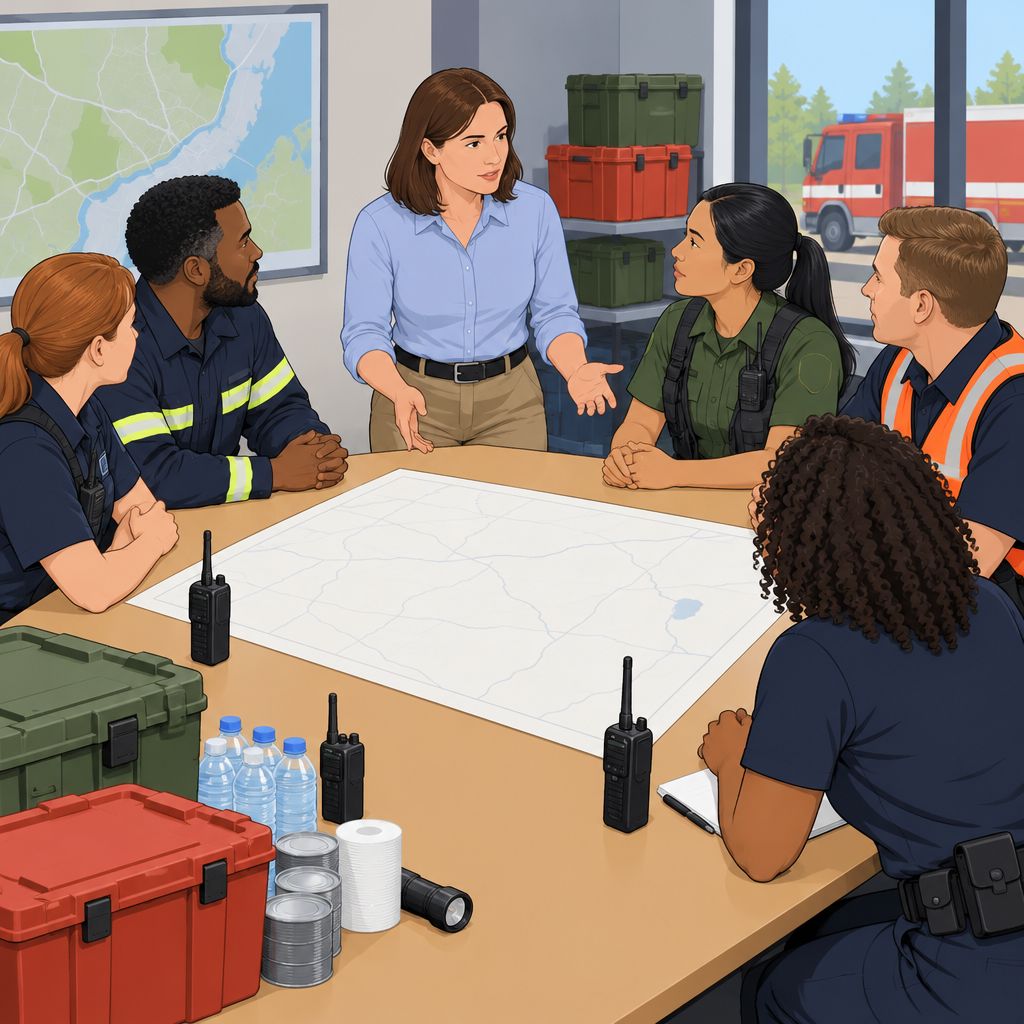
Building and Managing Emergency Response Teams
Effective emergency response teams support prompt and organized action during emergencies.
Strong preparation helps teams protect community safety and well-being.
Therefore, leaders must develop capable teams, provide resources, and test readiness regularly.
Recruiting and Training Team Members
First, identify the specific skills that emergency response roles require.
Next, advertise openings through various channels to attract qualified candidates.
Then, conduct thorough interviews and background checks before selecting team members.
- Identify the specific skill sets required for emergency response roles.
- Advertise openings through various channels to attract qualified candidates.
- Conduct thorough interviews and background checks before selecting team members.
- Provide comprehensive training in emergency protocols, first aid, and safety measures.
Providing Equipment and Emergency Resources
Reliable equipment allows team members to perform their responsibilities safely.
Regular inspections help leaders identify problems before emergencies occur.
Additionally, accurate inventories help teams maintain access to essential supplies.
- Inspect and maintain equipment regularly to ensure proper functionality.
- Keep an updated inventory of emergency supplies and resources.
- Establish strong vendor partnerships to secure necessary equipment and resources.
- Conduct regular audits to confirm team members can access essential tools.
Testing Team Readiness Through Drills
Regular drills help teams practice emergency procedures in a controlled setting.
Scenario-based exercises reveal strengths and weaknesses in team performance.
Afterward, feedback sessions help leaders improve future training and response efforts.
- Develop a schedule for regular drills and exercises.
- Simulate various emergencies to assess team response capabilities.
- Provide feedback and conduct debriefing sessions after every drill.
- Adjust training protocols according to drill results.
Regular assessment strengthens team readiness for different emergency situations.
Furthermore, continuous improvement helps teams respond efficiently when emergencies occur.
These practices help emergency management directors support safer and more effective community responses.
Explore Further: How to Prepare for CBP Officer Written Tests
Communication and Coordination
Emergency response teams rely on clear communication and coordinated actions during crises.
These practices help responders share information, use resources, and address changing conditions.
They also connect team members, partner agencies, and the public during emergencies.
- Communication protocols within the team
- Collaboration with law enforcement and fire departments
- Public communication during emergencies
Importance of Communication and Coordination
Effective communication supports successful emergency response operations.
Transform Your Career Today
Unlock a personalized career strategy that drives real results. Get tailored advice and a roadmap designed just for you.
Start NowMoreover, coordination helps teams manage crises and disasters more consistently.
Seamless information sharing can influence the outcome of an emergency situation.
Establishing Team Communication Protocols
Emergency management directors establish clear communication protocols for their teams.
They define roles, assign responsibilities, and establish communication channels.
They also ensure that team members understand effective emergency communication practices.
Collaborating With External Partners
Response teams must collaborate with external partners during emergencies.
Law enforcement and fire departments contribute specialized expertise and resources.
Therefore, partnerships help agencies coordinate their response more effectively.
Communicating With the Public
Response teams should communicate with the public clearly and concisely.
They provide situation updates, explain recommended actions, and address public concerns.
Consequently, effective public communication can build confidence and support appropriate responses.
Challenges Affecting Communication and Coordination
Several challenges can weaken communication and coordination during emergency response operations.
Technical problems and human errors can interrupt essential information exchange.
Additionally, agencies may struggle to coordinate different systems, protocols, and procedures.
- Communication breakdowns caused by technical issues or human error
- Limited interoperability among agency communication systems
- Coordination difficulties among agencies with different procedures
Strategies for Improving Emergency Communication
Emergency management directors can apply practical strategies to address these communication challenges.
Regular practice helps teams strengthen protocols and improve coordination.
Furthermore, shared agreements and consistent messaging can support collaboration during emergencies.
- Regular training and drills for communication protocols
- Communication platforms and software for streamlined information exchange
- Mutual aid agreements with neighboring agencies
- A designated communication officer for consistent messaging
Strengthening Emergency Response Outcomes
Clear protocols help emergency response teams share information and coordinate decisions.
Strong partnerships connect agencies with the expertise and resources required during emergencies.
Consistent public messaging helps communities remain informed and prepared to respond appropriately.
Explore Further: Ethics and Accountability for ICE Agents
Response and Recovery Efforts
During emergencies, Emergency Management Directors coordinate immediate actions that protect lives and property.
They work with fire departments and law enforcement to support swift, effective crisis responses.
By aligning response teams, directors help reduce casualties and property damage.
- Immediate response to emergencies protects lives and property.
Once responders contain the threat, directors guide recovery efforts to restore damaged infrastructure and disrupted services.
- Recovery efforts restore infrastructure and essential services.
They collaborate with FEMA and nonprofit organizations to support affected communities during recovery.
This support may include financial assistance, volunteer coordination, and essential supply distribution.
- Directors work with government agencies and nonprofit organizations to support affected communities.
Through this coordinated approach, directors help communities recover from disaster impacts.
Evaluation and Improvement
Emergency management directors should evaluate every emergency response carefully.
This evaluation reveals strengths and weaknesses in the response plan and its execution.
Consequently, directors can improve future emergency responses through informed adjustments.
Reviewing Response Efforts
First, directors should review how quickly the emergency response team mobilized.
They should also examine communication effectiveness and coordination among team members.
Additionally, directors should gather feedback from everyone involved in the response.
This feedback identifies successful practices and highlights areas requiring improvement.
Identifying Areas for Improvement
Based on the review, directors can identify specific improvements for future responses.
For example, they may strengthen communication protocols or update response procedures.
They may also provide additional training for emergency response team members.
Furthermore, directors should examine response times, resource allocation, and decision-making processes.
These findings help leaders target changes that improve coordination among response teams.
Transform Your Career Today
Unlock a personalized career strategy that drives real results. Get tailored advice and a roadmap designed just for you.
Start NowImplementing Changes to Response Plans
After identifying weaknesses, directors must implement appropriate changes to response plans.
They may revise standard operating procedures or update communication protocols.
Meanwhile, additional training exercises can help teams practice updated procedures.
Directors must communicate every change clearly to all team members.
Training sessions can reinforce updated procedures and support consistent implementation.
Applying Lessons Learned
Lessons from past emergencies can shape stronger response strategies.
By examining successes and shortcomings, directors can make informed improvement decisions.
For instance, reviews may reveal resource gaps or coordination problems with external agencies.
They may also show opportunities to streamline decision-making processes.
Directors should incorporate these lessons into response plans for future emergencies.
Continuously Evaluating and Adjusting
Emergency management requires continuous evaluation and adjustment.
As challenges change, directors must adapt strategies to maintain effective response capabilities.
New technologies may also require updates to existing approaches.
Regular evaluations and team feedback support ongoing improvement.
Finally, directors should monitor emergency management best practices and adjust strategies accordingly.
Strengthening Community Resilience
Emergency Management Directors strengthen disaster readiness by aligning capable teams with essential resources.
They also sustain effective management through leadership, communication, problem-solving, and sound decision-making.
Furthermore, ongoing training helps personnel respond to varied disasters with greater confidence.
Well-equipped teams can act promptly when emergencies challenge community safety.
Clear coordination enables members to support one another during demanding response efforts.
Continued investment in resources helps communities improve their resilience to disasters.
Directors should regularly assess team efficiency and effectiveness.
These assessments can guide practical improvements in future emergency management efforts.
Dedicated, skilled, and collaborative teams support stronger emergency preparedness and response.
Additional Resources
Bing search results for Emergency Management Director: Emergency Response Teams Protective Services


