




Introduction
Deputy sheriffs assist communities by maintaining peace and order.
As sworn officers, they enforce laws and uphold public safety.
Moreover, their authority supports effective law enforcement across communities.
Importance of Investigative Duties
Investigative duties help deputy sheriffs uncover and solve crimes.
These efforts support justice and strengthen public safety.
Furthermore, deputies gather evidence and interview witnesses during investigations.
They use those findings to help bring offenders to justice.
This proactive work can help prevent future crimes and maintain neighborhood security.
Thorough investigations uphold the rule of law and build community trust.
By serving and protecting the public, deputies demonstrate their dedication.
Deputy Sheriff Duties and Jurisdiction
Deputy sheriffs serve as sworn peace officers within county sheriffs’ offices.
Their work combines public protection, law enforcement, emergency response, and custody responsibilities.
Because counties assign varied duties, daily assignments can extend beyond routine patrols.
Responsibilities of Deputy Sheriffs
Deputy sheriffs enforce applicable federal, state, and local laws within authorized jurisdictions.
They respond to emergencies, protect people from harm, and help preserve public order.
Additionally, they arrest suspected offenders and support investigations by gathering evidence and interviewing witnesses.
- They enforce federal, state, and local laws within their jurisdiction.
- They respond to emergency calls and provide assistance during crises.
- They conduct investigations by gathering evidence and interviewing witnesses.
- They arrest suspected offenders and take them into custody when necessary.
Differences Between Deputy Sheriffs and Other Officers
An elected sheriff typically appoints deputy sheriffs to serve within a specific county.
Police officers generally serve cities or towns, while deputy sheriffs commonly operate throughout county jurisdictions.
Their assignments may also include court security and service of legal documents.
- Deputy sheriffs receive authority through county sheriffs’ offices.
- Their jurisdiction usually covers the boundaries of their respective counties.
- Their responsibilities can extend beyond regular patrol and arrest duties.
- Specialized training prepares them for rural communities and large-scale emergencies.
- They collaborate with state police and federal agencies during complex incidents.
Investigative Tasks of Deputy Sheriffs
Deputy sheriffs interview witnesses and suspects to gather information for criminal investigations.
They collect, document, and preserve evidence at crime scenes.
These actions help investigators develop evidence-based cases against suspects.
- Interviewing witnesses and suspects
- Collecting and preserving crime scene evidence
- Analyzing evidence in forensic laboratories
- Coordinating investigations with other law enforcement agencies
- Preparing reports that detail investigative findings
Deputy sheriffs maintain the chain of custody when they document and store collected evidence.
They work with forensic experts to examine DNA, fingerprints, and ballistics.
They also cooperate with federal agencies and neighboring police departments during joint investigations.
Importance of Thorough Criminal Investigations
Thorough investigations help provide justice for victims and their families.
Deputy sheriffs increase the likelihood of identifying and apprehending suspects by following leads carefully.
Proper procedures also reduce errors that could contribute to wrongful convictions.
- Supporting justice for victims and their families
- Reducing the risk of wrongful convictions
- Deterring future criminal activity through successful prosecutions
Detailed reports give prosecutors and courts a clear account of investigative steps and collected evidence.
Successful prosecutions can discourage future criminal activity.
Consequently, careful investigations support fair outcomes and strengthen public safety.
Gain More Insights: Parole Officer: Evaluating Program Effectiveness
Crime Scene Processing
Deputy sheriffs first secure the crime scene to prevent evidence contamination.
They establish a perimeter that keeps unauthorized personnel outside the area.
Next, they assess the scene and determine the crime’s apparent scope.
They document observations, weather conditions, time, and potential hazards.
Then, they photograph the entire scene from multiple angles.
These photographs preserve details before anyone disturbs the scene.
Evidence Preservation Procedures
Evidence preservation helps investigators identify suspects and connect them to the crime.
Deputy sheriffs wear gloves and use sterile tools to reduce contamination risks.
Transform Your Career Today
Unlock a personalized career strategy that drives real results. Get tailored advice and a roadmap designed just for you.
Start NowThey follow established collection protocols so evidence remains admissible in court.
Additionally, proper documentation and chain of custody procedures protect evidence integrity.
Systematic handling reduces errors and helps prevent tampering during the investigation.
Physical Evidence Collection
Deputy sheriffs use tweezers, swabs, and evidence bags for different materials.
They collect fingerprints, DNA samples, fibers, and other relevant physical evidence.
For firearm investigations, they preserve shell casings, bullets, and weapon fragments.
They collect bloodstains and hair samples with sterile swabs.
This method limits contamination and protects biological evidence during later analysis.
They also collect and preserve documents, electronic devices, and other evidentiary items.
Evidence Handling and Investigative Outcomes
Deputy sheriffs carefully label and package each item to preserve its condition.
They maintain organized records that support the evidence’s history and reliability.
Consequently, well-preserved evidence can strengthen cases and support justice for crime victims.
Find Out More: Required Skills for a Nuclear Security Officer
Evidence Collection Methods
Deputy sheriffs use several methods to gather evidence during criminal investigations.
First, they interview witnesses who may have seen or heard relevant events.
These conversations can reveal useful information and identify additional investigative leads.
Additionally, deputies collect physical evidence, including DNA, fingerprints, weapons, and other crime scene items.
They carefully document and preserve each item for later examination.
Surveillance can also monitor suspects, track movements, or support undercover operations.
Furthermore, deputies analyze phone records, emails, social media posts, and other electronic data.
These methods provide information that can help investigators develop a criminal case.
Documentation and Evidence Integrity
Proper evidence documentation supports admissibility in court.
Deputies record how they collect, handle, store, and examine each item.
Those records establish a clear account of the evidence’s history.
Moreover, chain of custody records show who handled evidence throughout the investigation.
This documentation helps establish the evidence’s authenticity and integrity.
Detailed records also support investigative findings by connecting evidence with case developments.
Finally, handling records help prevent contamination, tampering, or uncertainty about an item’s condition.
By documenting where, when, and by whom deputies handled evidence, investigators protect its integrity.
This careful process helps deputies present reliable evidence during criminal proceedings.
Through these practices, deputy sheriffs support efforts to solve crimes and bring perpetrators to justice.
See Related Content: Career Transitioning from Wildland Firefighting
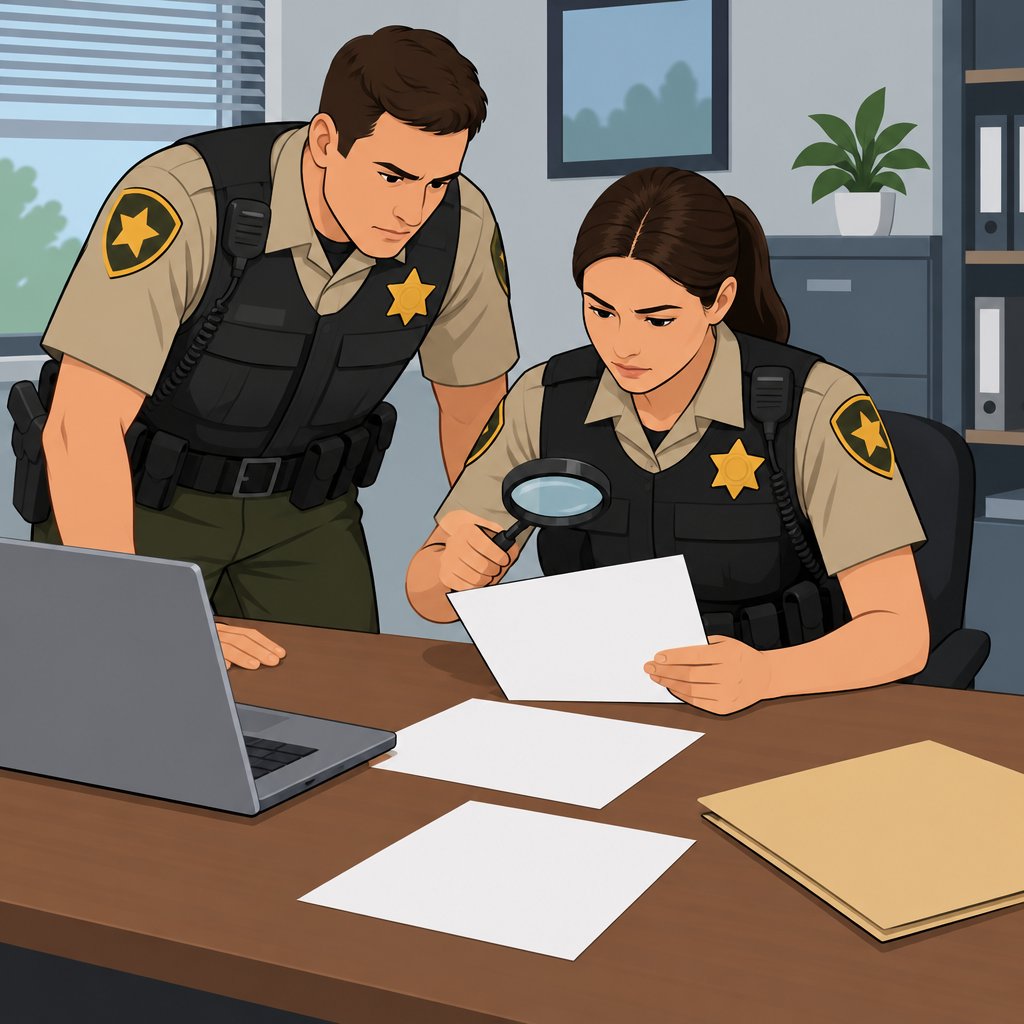
Interviewing Witnesses and Suspects
Deputy sheriffs interview witnesses and suspects while investigating criminal activities.
These interviews help deputies gather information and develop evidence for criminal cases.
Furthermore, careful questioning can support accountability while protecting people who may face wrongful accusations.
Strategies for Interviewing Individuals
Deputies establish rapport to encourage cooperation during interviews.
They listen actively and observe body language for useful insights.
Additionally, open-ended questions can invite detailed responses without directing the individual.
- Deputies build connections with witnesses and suspects to gain trust and cooperation.
- They listen carefully to spoken answers and observe body language during interviews.
- Open-ended questions encourage witnesses and suspects to provide detailed responses.
- Deputies remain neutral so their conduct does not influence interview responses.
- They monitor their own nonverbal cues because body language affects communication.
Importance of Accurate Interview Information
Accurate information helps deputies build cases that can withstand court review.
Witness statements and suspect interviews may help identify people responsible for crimes.
Transform Your Career Today
Unlock a personalized career strategy that drives real results. Get tailored advice and a roadmap designed just for you.
Start NowMoreover, thorough interviews can help exonerate innocent individuals and support justice.
- Interview information can help deputies assemble strong cases for court.
- Witnesses and suspects may provide information that identifies perpetrators.
- Thorough interviews can help protect innocent people from wrongful accusations.
- Reliable information helps deputies hold responsible parties accountable.
- Interview findings may help deputies prevent future criminal activities.
Effective interviews help deputies gather reliable information during criminal investigations.
Gain More Insights: How to Become a Fish and Game Warden
Collaboration with Other Agencies
Deputy sheriffs often work closely with various law enforcement agencies.
This collaboration supports thorough investigations.
It also helps agencies pursue justice and protect community safety.
How Deputy Sheriffs Coordinate with Law Enforcement Agencies
- Deputies share information with local police departments to coordinate efforts.
- They collaborate with federal agencies such as the FBI or DEA for assistance.
- They work with state agencies such as the State Bureau of Investigation for support.
Effective communication helps agencies resolve cases involving multiple law enforcement organizations.
Furthermore, cooperation allows personnel to share information, resources, and expertise.
As a result, agencies can work more efficiently toward positive outcomes.
Importance of Effective Communication and Cooperation
- Communication enhances information flow among agencies during comprehensive investigations.
- Cooperation prevents duplicated efforts and ensures investigators follow every lead.
- Agencies can exchange evidence and intelligence more seamlessly.
- Shared resources support a coordinated and strategic approach to complex cases.
- These efforts improve the likelihood of apprehending suspects and achieving justice.
Collaborative efforts play a vital role in resolving criminal cases successfully.
Moreover, agencies can combine their communication, resources, and expertise.
These practices support justice and help ensure community safety and security.
Documenting Investigative Findings
Deputy sheriffs must meticulously document every aspect of their investigations.
This documentation includes evidence collection, witness statements, and suspect interviews.
Detailed records support future reference when cases require review or further investigation.
They also help investigators satisfy legal requirements and protect evidence integrity.
- Future Reference: Detailed records provide easy reference when cases require review or further investigation.
- Legal Requirements: Proper documentation helps investigations withstand courtroom challenges.
- Chain of Custody: Deputies document evidence handling from collection through courtroom presentation.
Deputy sheriffs record each investigative step to establish a reliable foundation for their findings.
They record observations, actions, and newly discovered leads throughout each investigation.
- Recordkeeping: Deputies maintain detailed notes about observations, actions, and new investigative leads.
- Evidence Collection: Deputies document physical evidence with photographs, videos, and written descriptions.
- Witness Statements: Deputies record statements verbatim and note inconsistencies or later changes.
- Suspect Interviews: Deputies document statements, demeanor, and reactions during suspect questioning.
Accurate documentation makes investigations thorough, transparent, and legally sound.
It strengthens cases while protecting the rights of everyone involved.
Investigative Duties and Justice
Deputy sheriffs investigate crimes by gathering information that can help resolve cases.
Through careful examination, they connect relevant details and clarify what happened.
Furthermore, their work supports lawful outcomes and strengthens confidence in justice.
Deputies pursue leads and question witnesses to develop a clearer understanding of each case.
They also examine details that may influence the direction of an investigation.
Consequently, their diligence can significantly affect how investigators understand a case.
Victims and families may gain closure when deputies help clarify unresolved events.
Thus, investigative responsibilities remain central to the pursuit of justice.
Investigations and Community Protection
Deputy sheriffs support public safety by investigating offenses and identifying those responsible.
Their efforts can help prevent additional crimes by addressing threats through lawful action.
Moreover, apprehending offenders may discourage others from committing similar offenses.
Deputies also remain alert to potential dangers affecting the communities they serve.
By responding to those concerns, they help reduce risks and protect residents from harm.
Careful investigations give deputies a stronger foundation for addressing criminal conduct.
As a result, their dedication helps neighborhoods remain safer and more peaceful.
Effective investigative work therefore contributes directly to the protection of public safety.
Investigative Work and Community Stability
Deputy sheriffs strengthen law enforcement by carrying out investigations with care and persistence.
Their responsibilities support accountability when criminal activity affects individuals or communities.
In addition, thorough investigations help connect lawful enforcement with the needs of victims.
Deputies’ attention to investigative details can influence whether cases receive proper consideration.
Transform Your Career Today
Unlock a personalized career strategy that drives real results. Get tailored advice and a roadmap designed just for you.
Start NowThrough this work, they help preserve peace, order, and public trust.
Additional Resources
Google search results for Investigative Duties of Deputy Sheriffs Protective Services
Bing search results for Investigative Duties of Deputy Sheriffs Protective Services


