




Introduction to Cyber Forensics
Cyber forensics analysts play a crucial role in investigating cybercrimes.
They gather digital evidence that supports legal proceedings.
Their expertise helps investigators examine digital information effectively.
Responsibilities of Cyber Forensics Analysts
Cyber forensics analysts identify, preserve, and analyze digital evidence.
They use specialized tools to examine digital devices.
Additionally, their techniques help uncover hidden digital information.
Collaboration with Government Agencies
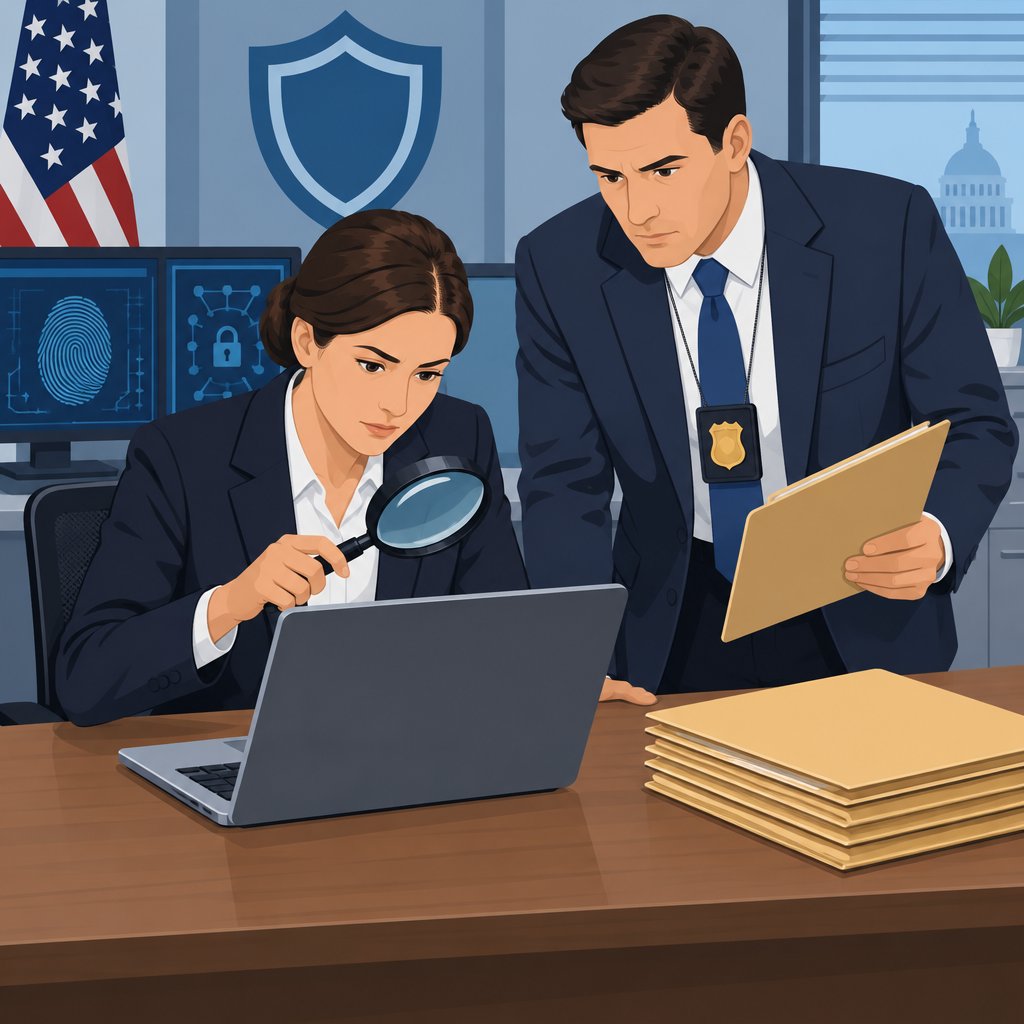
Collaboration with government agencies strengthens the forensic investigation process.
These agencies have resources and authority for thorough investigations.
Furthermore, cooperation supports compliance with legal procedures and regulations.
It also enables analysts to access classified information and databases.
Finally, government agencies can support complex cybercrime investigations.
Cyber Forensics Analyst Overview
Cyber forensics examines digital evidence to uncover information about cybercrimes.
Analysts collect, preserve, analyze, and present evidence for legal proceedings.
They need technical expertise, careful attention to detail, and knowledge of forensic methods.
- Cyber forensics investigates digital information connected to suspected crimes.
- Analysts preserve evidence while maintaining its integrity.
- Forensic tools help analysts examine devices, systems, and stored data.
Core Investigation Activities
Analysts investigate security incidents and examine digital devices for suspicious activity.
They reconstruct digital events to clarify an incident’s scope and impact.
Additionally, analysts prepare clear reports that explain their findings.
- Analysts identify and analyze security incidents.
- They collect electronic evidence using forensically sound methods.
- They examine devices for compromise or unauthorized access.
- They reconstruct digital activities connected to cyber incidents.
- They present findings in detailed and understandable reports.
Professional Skills and Qualifications
Successful analysts understand computer systems, networks, and data storage technologies.
They also apply cybersecurity principles and established industry practices.
Furthermore, analysts solve complex problems while protecting sensitive information.
- Analysts should understand computer systems and network technologies.
- They should understand data storage technologies.
- They may use EnCase, FTK, and Sleuth Kit.
- They need strong critical thinking and problem-solving abilities.
- They must work carefully under pressure and maintain confidentiality.
Government and Law Enforcement Collaboration
Government agencies work with analysts to investigate cybercrimes and support law enforcement efforts.
Analysts also contribute to counterintelligence operations and cybersecurity initiatives.
For example, the FBI, CIA, and DHS rely on digital forensic support.
- Analysts assist government investigations involving digital evidence.
- They support law enforcement activities and criminal investigations.
- They contribute technical knowledge to counterintelligence operations.
National Security and Professional Integrity
Analysts help identify cyber threats affecting critical infrastructure and government systems.
They may also help protect classified information from digital threats.
Throughout each investigation, analysts follow legal requirements and strict ethical standards.
- Analysts protect the integrity of digital evidence.
- They follow legal guidelines for evidence handling.
- They maintain ethical standards during investigations.
- They support national efforts against cyber threats.
Collaboration with Government Agencies
Government collaboration matters because agencies help combat cybercrime and protect national security.
Cyber forensics analysts often collaborate with law enforcement, intelligence, and defense agencies.
These partnerships benefit government agencies by providing expertise for solving complex cybercrimes.
Meanwhile, analysts gain valuable real-world experience and access to important resources.
Discover More: How to Build a Strong Big Data Engineer Portfolio
Role in Criminal Investigations
Cyber forensics analysts assist government agencies during criminal investigations.
They extract and analyze data from computers, smartphones, servers, and other electronic devices.
Their findings can reveal crucial information that supports law enforcement investigations.
Assistance During Criminal Investigations
Analysts examine digital evidence to help investigators understand criminal activity.
They connect online actions with digital footprints and related electronic records.
Furthermore, their technical analysis helps investigators reconstruct events and trace suspects.
- They identify and track cyber criminals through online activities and digital footprints.
- Analysts provide technical support while collecting evidence from computers, smartphones, and servers.
- They analyze data to reconstruct digital events, including hacking incidents and data breaches.
- By examining emails, social media accounts, and online transactions, analysts can trace suspects.
- Courts can use forensic reports prepared by these experts as evidence during legal proceedings.
High-Profile Investigations Involving Cyber Forensics
Several high-profile investigations relied on cyber forensics to examine digital evidence.
These cases involved election interference, hacking, ransomware, online crime, and major data breaches.
In each example, forensic analysis helped investigators examine digital activity and identify relevant evidence.
Transform Your Career Today
Unlock a personalized career strategy that drives real results. Get tailored advice and a roadmap designed just for you.
Start Now- The investigation into the 2016 United States presidential election interference involved Russian hackers.
- During the 2014 Sony Pictures hack, cyber forensic analysts helped identify the culprits.
- Digital forensic analysis helped investigators solve the 2017 WannaCry ransomware attack.
- In the Silk Road case, cyber forensic evidence contributed to the site operator’s conviction.
- During the Equifax data breach investigation, cyber forensic experts uncovered the attack’s source.
Legal Challenges and Investigative Limitations
Cyber forensics analysts must follow legal requirements when collecting and analyzing digital evidence.
They also face technical obstacles when suspects use encryption or anonymizing tools.
Additionally, evolving technology requires analysts to maintain specialized training and adequate resources.
- Courts may question digital evidence because of concerns about authenticity and integrity.
- Inconsistent acquisition and preservation procedures can create legal disputes.
- Privacy laws require analysts to handle data from suspects’ devices carefully.
- Limited training and resources can make it difficult to keep pace with evolving technologies.
- Advanced encryption and anonymizing tools can conceal anonymous perpetrators.
You Might Also Like: Essential Skills for a Successful CRM Developer Career
Data Collection and Analysis
- Methods used by cyber forensics analysts to collect and analyze digital evidence
- Importance of maintaining evidence integrity when working with government agencies
- Tools and technologies used during data collection and analysis
Analysts use several methods to collect and analyze digital evidence.
Disk imaging copies storage device contents onto another medium for examination.
This approach keeps the original data intact during the investigation.
Meanwhile, network forensics examines traffic to identify breaches or malicious activity.
Analysts review packet captures, log files, and network configurations during this process.
Memory forensics examines volatile computer memory, including random access memory.
It can reveal active processes, hidden malware, or encryption keys.
Evidence Integrity During Government Collaboration
Evidence integrity remains essential during investigations involving government agencies.
Altered or mishandled evidence can weaken an investigation’s outcome.
It can also invalidate findings presented in court.
Therefore, analysts follow strict procedures to preserve digital evidence.
These procedures help analysts provide reliable findings to government agencies.
Agencies can then pursue appropriate legal or regulatory actions against cybercriminals.
Consequently, careful evidence handling strengthens trust between public and private organizations.
Forensic Tools and Analytical Technologies
Cyber forensics analysts use specialized tools to collect and examine digital evidence.
Forensic Toolkit, EnCase, and Sleuth Kit support storage device acquisition.
These platforms also support keyword searches and detailed report generation.
Additionally, hardware write blockers prevent changes during evidence acquisition.
They help preserve original evidence throughout the investigation.
Furthermore, artificial intelligence and machine learning improve analytical efficiency.
These technologies automate analysis, identify patterns, and detect anomalies.
As a result, analysts can examine evidence more accurately and quickly.
Delve into the Subject: Essential Tools and Platforms for IoT Development
How Cyber Forensics Analysts Help Government Agencies Detect Cybersecurity Threats
Cyber forensics analysts investigate digital evidence to help government agencies detect cybersecurity threats.
They examine data breaches, malware infections, and cyber attacks using advanced tools and techniques.
Additionally, analysts identify indicators of compromise, trace attack origins, and collect evidence for legal proceedings.
By reconstructing digital events, they reveal hidden activity and clarify an incident’s scope.
Furthermore, forensic software and malware analysis tools help analysts identify malicious code and network vulnerabilities.
Strategies That Prevent Cyber Attacks and Data Breaches
Government agencies prevent attacks by enforcing strong access controls and protecting sensitive systems.
They encrypt sensitive data, conduct regular security audits, and patch known vulnerabilities.
Meanwhile, intrusion detection and prevention systems monitor network traffic and block malicious activity.
Robust incident response and disaster recovery plans help agencies minimize damage and restore critical systems.
Agencies also share threat intelligence with cybersecurity experts, law enforcement, and industry partners.
Challenges Involved in Staying Ahead of Evolving Cyber Threats
Government agencies face persistent challenges as cyber threats continue to evolve.
Rapid technological advances create new vulnerabilities and attack methods for cybercriminals to exploit.
Moreover, connected devices, cloud services, and digital platforms create additional access points.
Transform Your Career Today
Unlock a personalized career strategy that drives real results. Get tailored advice and a roadmap designed just for you.
Start NowAgencies must therefore update security controls and train employees to protect sensitive information.
Another challenge involves the shortage of skilled cybersecurity professionals, including cyber forensics analysts.
Workforce Development for Cybersecurity Resilience
Government agencies address workforce shortages through training programs, certification courses, and development initiatives.
These efforts build qualified teams that can detect and respond to sophisticated cyber attacks.
In addition, information-sharing partnerships strengthen agency security and improve responses to emerging threats.
Such cooperation helps agencies remain prepared while protecting government systems and sensitive information.
Discover More: Role of Automation in Cloud Engineering
Training and Continuing Education for Cyber Forensics Analysts
Continuous training and education help analysts track technological advancements and emerging cyber threats.
Because cybercrime evolves rapidly, professionals need regular instruction to strengthen their skills and knowledge.
Additionally, ongoing learning helps analysts remain prepared to address changing investigative demands.
- Professionals can pursue certifications and courses that demonstrate expertise and proficiency.
- The Certified Cyber Forensics Professional certification from (ISC)2 validates cyber forensics expertise.
- Government agencies can provide specialized training programs and workshops for cyber forensics analysts.
These collaborations allow professionals to work on real-world cases and learn from experienced investigators.
Moreover, analysts can study the techniques and tools that government agencies use during cybercrime investigations.
This hands-on experience strengthens their skills and supports their professional development.
By staying current with industry trends, analysts can contribute to a safer digital environment.
Strategic Value and Future Growth of Cyber Forensics
Cyber forensics analysts support government agencies by analyzing digital evidence.
They help investigators solve cybercrimes while protecting national security and public safety.
Moreover, this collaboration strengthens efforts to combat cyber threats.
It also helps agencies preserve the integrity of critical infrastructure.
Looking ahead, cyber forensics is expected to grow significantly as technology continues to advance.
Consequently, demand for skilled professionals will increase across the industry.
These experts will remain essential for safeguarding sensitive information and responding effectively to cyber incidents.


