




Crime scene investigations help solve crimes and support the pursuit of justice.
Investigators rely on specialized tools to gather evidence and maintain accuracy.
Modern technology has made investigative procedures more efficient and effective.
Advancements in Crime Scene Investigation Tools
Forensic light sources help investigators detect trace evidence that remains invisible to the naked eye.
These sources can reveal blood, bodily fluids, and fibers during evidence searches.
Meanwhile, digital cameras capture detailed crime scene images for documentation and analysis.
Importance of Evidence Collection Tools
Fingerprinting kits allow investigators to collect and analyze prints left at crime scenes.
Investigators can use fingerprints to identify suspects and connect individuals with the crime.
Additionally, DNA collection kits help gather biological evidence from relevant locations.
Technology’s Impact on Investigations
Three-dimensional scanners create accurate crime scene reconstructions for investigative analysis.
These reconstructions can clarify how a crime occurred and support evidence interpretation.
Furthermore, data analysis software organizes evidence and helps investigators identify important relationships.
DNA Collection and Analysis
Collecting DNA evidence at a crime scene supports forensic investigation.
Investigators use swabs to collect DNA samples from weapons, clothing, and other objects.
Moreover, DNA analysis can link suspects to crime scenes, victims, or other evidence.
It can provide evidence that helps convict or exonerate individuals.
Investigators use specific tools for DNA collection and analysis.
Swabs collect biological material from various surfaces.
DNA sequencers analyze and compare genetic profiles from collected samples.
Furthermore, DNA analysis can help identify unknown victims or suspects.
Investigators compare genetic material from crime scenes with profiles in DNA databases.
This method has revolutionized forensic science and helped solve cold cases.
It has also helped exonerate individuals who faced wrongful convictions.
Fingerprint Analysis
Fingerprint analysis helps investigators identify suspects and connect them with criminal activity.
Investigators collect and examine prints using careful procedures.
These comparisons can support case development and establish a person’s presence at a crime scene.
Fingerprint Collection and Analysis
Investigators collect fingerprints with precision to preserve accurate ridge details.
They use dusting, chemical processing, and lifting to capture latent prints.
After collection, analysts compare prints with known database records to identify potential suspects.
Fingerprinting Tools Used by Investigators
Investigators select tools according to the surface and the condition of each print.
These tools help reveal, preserve, and examine hidden ridge patterns.
Proper tool use protects the print and supports accurate comparison during analysis.
- Fingerprint powder enhances latent prints on various surfaces.
- Fingerprint brushes apply powder evenly to reveal hidden prints.
- Fingerprint lifting tape preserves developed prints for further analysis.
Fingerprint Analysis in Suspect Identification
Fingerprint analysis provides evidence that can link individuals to crime scenes.
By comparing scene prints with database records, investigators can identify possible suspects.
These comparisons can also connect individuals with other criminal activities.
Moreover, fingerprint evidence can establish a suspect’s presence at a crime scene.
Unique ridge patterns make fingerprints a reliable method of individual identification.
Consequently, investigators use fingerprint analysis to help solve cases and support victims.
Find Out More: Real-Life Stories from DEA Agents: Field Experiences
Forensic Imaging Technology in Crime Scene Analysis
Forensic imaging technology captures crime scene details that investigators cannot see with the naked eye.
Transform Your Career Today
Unlock a personalized career strategy that drives real results. Get tailored advice and a roadmap designed just for you.
Start NowInvestigators use it to document and analyze scenes in greater detail.
It also helps them uncover evidence that traditional methods might miss.
- Investigators can view crime scenes from different perspectives and create accurate recreations.
- Three-dimensional scanners document evidence in detail for analysis and courtroom presentation.
- Virtual reconstructions help investigators examine crime scenes during the investigation process.
Tools Used in Forensic Imaging
Several tools expand investigators’ ability to document and examine crime scenes.
These tools reveal details across different lighting conditions and materials.
Each tool supports detailed evidence analysis during an investigation.
- Three-dimensional scanners capture intricate details and create models for evidence analysis.
- Infrared cameras detect heat signatures and capture images in low-light conditions.
- X-ray scanners show internal details and help identify concealed evidence.
Forensic Imaging in Crime Scene Reconstruction
Forensic imaging technology helps investigators reconstruct crime scenes and identify important evidence.
It preserves crucial evidence without requiring investigators to alter the scene.
Accurate imaging also reduces errors and limits potential misinterpretations.
- Evidence preservation allows investigators to retain scene details without altering the original setting.
- Accurate documentation supports reliable examination and interpretation of crime scene evidence.
- Advanced imaging tools improve evidence analysis and support better case resolutions.
These capabilities have strengthened how investigators document, analyze, and reconstruct complex crime scenes.
Delve into the Subject: Emergency Management Director: Career Advancement Tips
Ballistics Analysis
Ballistics analysis examines firearms and ammunition involved in criminal activities.
Investigators study bullets, casings, trajectories, calibers, and firing distances.
These findings can clarify how firearms contributed to a crime.
Tools Used in Ballistics Analysis
Investigators use ballistic imaging systems to examine firearms and ammunition.
Comparison microscopes reveal markings on bullets and casings.
Meanwhile, gunshot residue kits support analysis of firearm evidence.
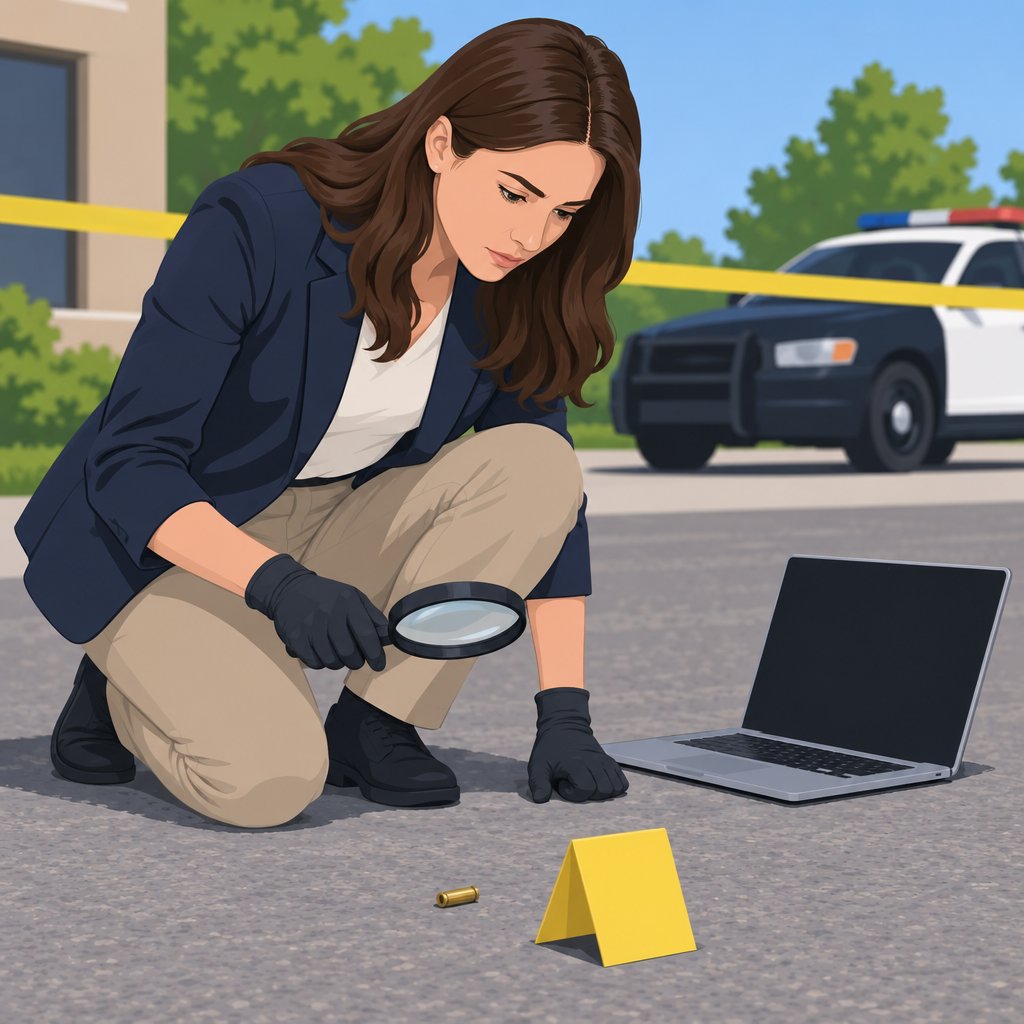
Matching Bullets and Casings to Firearms
A firearm barrel leaves unique markings on bullets during firing.
Forensic experts compare those markings with evidence from specific firearms.
They also use firearm marking databases to support the comparison process.
Linking Weapons to Crimes and Suspects
When investigators recover a firearm, ballistic analysis can connect it with crime scene evidence.
Matching bullets and casings to a weapon can identify possible suspects.
Furthermore, this process can help investigators locate additional evidence related to the case.
Delve into the Subject: How DNA Analysis Revolutionized Forensic Science
Chemical Analysis in Crime Scene Investigations
Chemical analysis provides crucial information about substances discovered during crime scene investigations.
Investigators use specialized instruments to determine chemical compositions and assess each substance’s potential relevance.
Additionally, this process helps investigators identify drugs, poisons, and other unknown substances.
- Chemical analysis identifies substances found at crime scenes.
- Mass spectrometers and chromatographs support detailed substance analysis.
- Results can reveal drugs, poisons, and other potentially important compounds.
Mass Spectrometers and Chromatographs
Mass spectrometers examine molecules according to their mass-to-charge ratios.
Therefore, investigators can identify specific compounds by comparing results with known databases.
Chromatographs separate mixtures into individual components for further examination.
Investigators can then identify separated compounds and determine their concentrations.
Identifying Drugs, Poisons, and Unknown Substances
Investigators analyze collected samples to detect illegal drugs, including cocaine, heroin, and methamphetamine.
These findings can clarify possible motives or reveal connections to drug-related activities.
Chemical testing also detects toxic substances that may have harmed individuals.
Furthermore, investigators can compare unknown substances with databases or established standards.
This comparison helps determine the nature of substances that investigators cannot immediately recognize.
Consequently, chemical evidence can connect substances with suspects and clarify circumstances surrounding a crime.
Gain More Insights: Community Engagement by State Troopers
Digital Forensics in Technology-Related Investigations
Digital forensics supports investigations involving crimes that use technology.
This field includes collecting, preserving, examining, analyzing, and presenting digital evidence.
Investigators acquire data from computers, smartphones, and tablets using specialized tools and techniques.
Transform Your Career Today
Unlock a personalized career strategy that drives real results. Get tailored advice and a roadmap designed just for you.
Start NowDigital Evidence Acquisition and Preservation
Forensic software, hardware write blockers, and specialty cables help investigators retrieve information.
These methods help investigators preserve acquired data during the investigative process.
After acquisition, investigators analyze the data to uncover evidence for criminal investigations.
Analysis of Digital Evidence
Evidence may include emails, text messages, social media posts, browsing history, deleted files, timestamps, and activity logs.
Investigators examine these details to identify relevant digital activity.
They also assess digital records to understand activities connected with an investigation.
Digital Activity and Suspect Tracking
Digital forensics helps investigators trace online activities, communication patterns, and digital footprints.
This information can provide leads that help law enforcement identify and locate people involved in criminal activities.
Consequently, digital forensics supports suspect tracking through the examination of online activity.
Technology’s Role in Accurate Evidence Collection
Advanced tools help crime scene investigators collect evidence accurately and promptly.
Furthermore, technology improves the efficiency and effectiveness of forensic science.
Readers can explore current investigative tools to understand their role in solving crimes.
Additional Resources
Google search results for Top Tools Used by Crime Scene Investigators Today Protective Services
Bing search results for Top Tools Used by Crime Scene Investigators Today Protective Services


