




Restoring Degraded Lands
Degraded lands are areas that have suffered damage or depletion.
Restoration matters because it supports biodiversity and ecosystem health.
These damaged areas can harm the environment in several ways.
For example, soil erosion can increase, while wildlife can lose habitat.
Nearby communities also experience effects from degraded lands.
Additionally, contaminated water sources may threaten human health.
Restoration efforts can reduce these negative impacts.
Reestablishing vegetation cover can help stabilize soil structure.
Meanwhile, reversing degradation can improve air and water quality.
These actions also strengthen ecosystem resilience to climate change.
Restoration projects can create employment opportunities for local communities.
Furthermore, conservation efforts work best when local communities participate.
By restoring damaged land, people can support both nature and communities.
Key Factors Driving Land Degradation
Effective restoration begins by identifying the forces that damage land.
These forces may include deforestation, overgrazing, urbanization, and improper land management practices.
Consequently, identifying these pressures helps conservationists select suitable restoration responses.
Assessing the Extent of Degradation
Next, practitioners assess how severely degradation affects each area.
They evaluate soil quality, vegetation cover, and water availability during this assessment.
This evaluation clarifies the extent of damage and supports better restoration planning.
Tracking Changes with GIS and Satellite Imagery
GIS mapping and satellite imagery help practitioners track land changes accurately.
These tools reveal land use changes, vegetation loss, and soil erosion over time.
Moreover, repeated observations show how degradation patterns develop across affected areas.
Benefits of GIS Mapping and Satellite Imagery
These technologies provide several benefits for conservation planning and restoration monitoring.
They also connect spatial evidence with decisions about land management.
Furthermore, they help teams compare environmental conditions across different periods.
- They visualize spatial data and reveal trends in land degradation.
- They monitor changes in land cover and vegetation health over time.
- They support informed conservation measures and restoration efforts.
- They clarify how human activities affect environmental conditions.
- They help assess restoration projects and conservation initiatives.
Careful assessment and monitoring give conservationists stronger evidence for protecting natural resources.
By tracking conditions over time, they can make more informed conservation decisions.
Restoration Goals for Degraded Lands
Restoration work needs clear, achievable goals that guide decisions and measure progress.
These goals can address biodiversity, soil health, and water quality.
Furthermore, stakeholder input can help teams prioritize restoration areas and allocate resources effectively.
- Establish clear objectives for restoring degraded lands.
- Determine specific targets for biodiversity, soil health, and water quality.
- Engage stakeholders to prioritize areas for restoration efforts.
First, define what successful restoration should achieve before starting any work.
Clear objectives make progress easier to track throughout the restoration process.
Next, establish specific targets that give restoration efforts a focused direction.
These targets can measure changes in biodiversity, soil health, and water quality.
Meanwhile, local communities, government agencies, and conservation organizations can contribute valuable priorities.
Engaging these stakeholders supports effective resource allocation and strengthens long-term restoration efforts.
See Related Content: Ethical Considerations in Artificial Insemination
Exploring Various Restoration Approaches
Several approaches can help restore degraded land.
For example, reforestation, wetland restoration, and regenerative agriculture address different restoration needs.
Each technique offers benefits and challenges, so land managers should compare options carefully.
Transform Your Career Today
Unlock a personalized career strategy that drives real results. Get tailored advice and a roadmap designed just for you.
Start Now- Reforestation can support the recovery of areas that have lost trees.
- Wetland restoration focuses on recovering damaged wetland ecosystems.
- Regenerative agriculture applies farming practices that support degraded land recovery.
- Land managers should identify specific needs and goals before selecting an approach.
Considering Ecological Suitability
Ecological conditions strongly influence the success of land restoration.
Therefore, restoration teams should assess the degraded land before choosing a technique.
Matching methods to local conditions can improve the suitability of restoration efforts.
- Assess the soil before selecting a restoration technique.
- Consider the site’s topography when planning restoration activities.
- Account for the local climate during restoration planning.
- Align the chosen approach with the area’s natural ecosystem.
Consulting with Experts and Local Communities
Restoration planning benefits from knowledge shared by specialists and local communities.
Experts can provide guidance based on experience with similar landscapes.
Meanwhile, community participation helps ensure that restoration plans address local needs.
- Seek advice from restoration specialists with relevant landscape experience.
- Involve local communities in restoration decision-making processes.
- Collaborate with stakeholders when creating the restoration plan.
- Design plans that support both environmental and community needs.
Discover More: Veterinary Technician's Role in Animal Rehab
Implementing Restoration Projects
Implementation begins with a detailed restoration plan that defines tasks, timelines, responsibilities, and required resources.
Such planning keeps the project organized and supports realistic progress tracking.
Teams can allocate resources carefully while maintaining focus on intended restoration outcomes.
Coordinated Restoration Practices
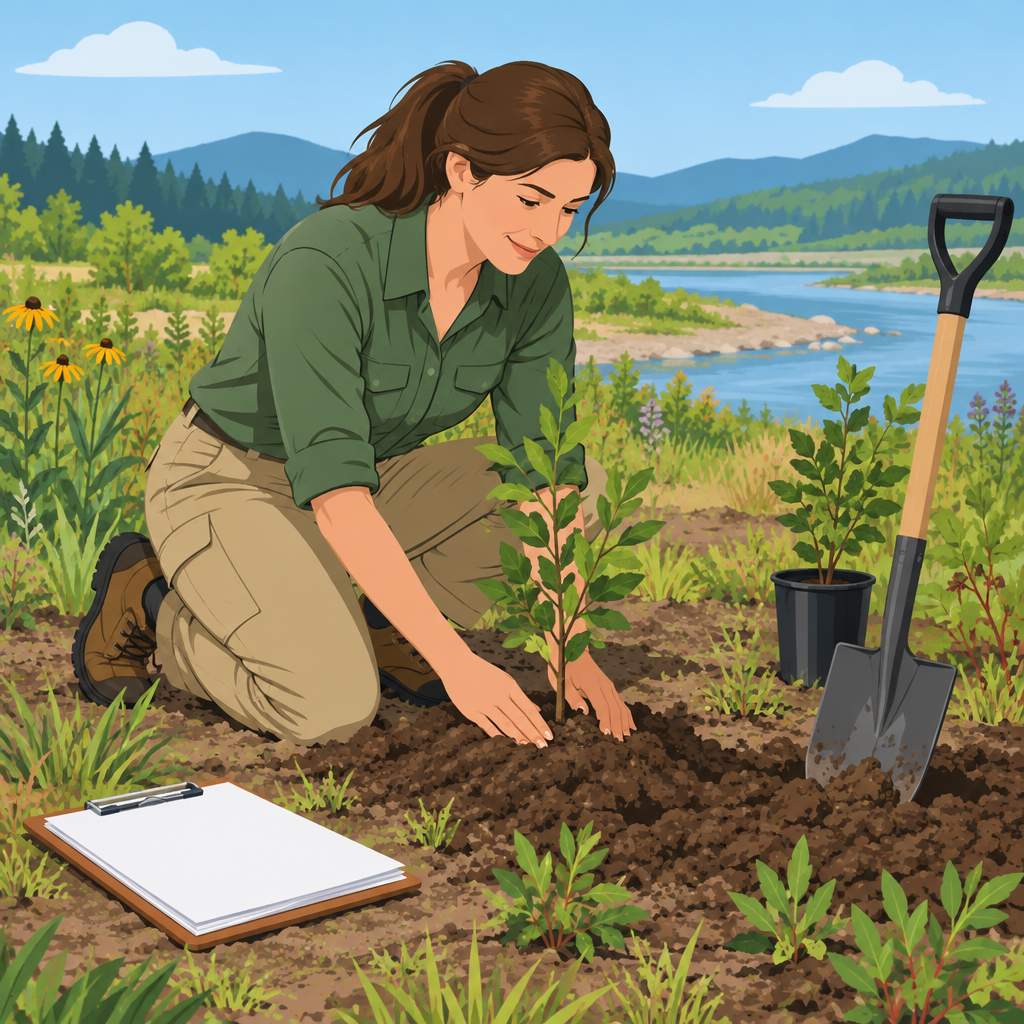
Project leaders can mobilize volunteers, community groups, and government agencies throughout the restoration process.
Volunteers may plant trees, remove invasive species, and monitor wildlife populations.
Meanwhile, community groups can support fundraising, advocacy, and outreach efforts.
Government agencies can provide technical assistance, regulatory guidance, and funding opportunities.
Adaptive Monitoring and Management
Teams should monitor progress regularly to determine whether restoration activities meet established objectives.
A monitoring plan can define performance indicators, data collection methods, and evaluation criteria.
Collected information helps teams identify successes, challenges, and necessary adjustments.
Furthermore, flexible strategies allow teams to respond to changing landscape conditions and community needs.
Collaboration strengthens shared responsibility and supports the long-term sustainability of restoration efforts.
You Might Also Like: Common Health Issues in Pets and How to Assist
Establishing Monitoring Protocols
Teams track vegetation cover, wildlife activity, and soil quality to assess restoration progress.
Additionally, regular monitoring schedules keep data collection consistent throughout the project.
Teams use GPS technology to map and document changes accurately over time.
Collecting Data on Key Indicators
Researchers measure restoration success by collecting data on important ecological indicators.
These indicators include plant species diversity, wildlife population trends, and soil nutrient levels.
Furthermore, teams use transect surveys and remote sensing technologies to gather reliable information.
Evaluating Restoration Techniques
Researchers assess how restoration techniques affect ecosystem health and functionality.
They compare data collected before and after restoration to determine each technique’s effectiveness.
Statistical analysis quantifies changes and identifies areas that require improvement.
Improving Future Restoration Projects
Project teams use evaluation findings to refine restoration strategies for future efforts.
They modify techniques according to data analysis to improve restoration outcomes.
Finally, experts and stakeholders collaborate to incorporate best practices and innovative approaches.
Gain More Insights: Dairy Scientist's Role in Herd Health Management
Engaging Communities and Building Partnerships
Engaging communities and building partnerships support successful land restoration projects.
Local stakeholders can help ensure that restoration efforts receive community support.
Their participation also helps sustain restoration activities over time.
- Local communities, landowners, and indigenous groups can participate in restoration activities.
- Educational programs can explain the importance of land restoration.
- Partnerships can connect projects with resources and expertise.
Collaboration with Local Stakeholders
Local residents, landowners, and indigenous groups often have important interests in the land.
Project teams should involve these stakeholders from the beginning.
This approach allows teams to consider community concerns and perspectives during restoration.
Community meetings, workshops, and consultations can gather valuable stakeholder input.
Transform Your Career Today
Unlock a personalized career strategy that drives real results. Get tailored advice and a roadmap designed just for you.
Start NowTeams should listen carefully to local concerns, ideas, and knowledge.
They should also include stakeholders in important decisions.
Trust and clear communication create stronger partnerships.
Educational Programs for Community Awareness
Education can increase community support for land restoration.
Programs, workshops, and outreach initiatives can explain restoration benefits.
These activities can also encourage residents to participate.
Educational efforts should describe the ecological, economic, and social value of healthy ecosystems.
They can explain how restoration may improve water quality and biodiversity.
Restoration can also support livelihoods for local communities.
Hands-on activities can empower residents to become stewards of the land.
Partnerships with Organizations and Businesses
External organizations can provide additional resources, expertise, and project support.
Project teams can partner with NGOs, government agencies, and businesses.
These partnerships can expand networks and strengthen project knowledge.
NGOs may provide technical assistance, funding opportunities, and volunteer support.
Government agencies may offer regulatory guidance and access to land-use policies.
They may also provide funding streams for environmental projects.
Businesses can contribute money, equipment, or in-kind donations.
A diverse partnership network can support restoration projects over time.
Collaboration also encourages community ownership and participation.
Applying Sustainable Practices
Implementing sustainable practices supports the restoration of degraded lands.
Sustainable land management can prevent future degradation and protect ecosystem health.
Conservation principles can balance human activities with environmental protection.
Supportive policies can sustain restoration benefits for future generations.
- Promote sustainable land management practices to prevent future degradation.
- Integrate conservation principles into land use planning and development projects.
- Advocate for policies that support long-term stewardship of restored lands.
Promoting Sustainable Land Management Practices
Sustainable agriculture techniques can reduce soil erosion and degradation.
Agroforestry can improve soil fertility and biodiversity on degraded lands.
Sustainable grazing methods can prevent overgrazing and promote soil health.
- Implement sustainable agriculture techniques, such as conservation tillage and crop rotation, to prevent soil erosion and degradation.
- Use agroforestry practices, such as planting trees on degraded lands, to improve soil fertility and biodiversity.
- Adopt sustainable grazing methods, such as rotational grazing, to prevent overgrazing and promote soil health.
Integrating Conservation Principles into Land Use Planning
Land use planning can account for ecosystem services and biodiversity conservation.
Green infrastructure can reduce urbanization impacts on degraded lands.
Community engagement can align conservation goals with local needs and values.
- Consider ecosystem services and biodiversity conservation during land use planning.
- Incorporate green infrastructure, such as green roofs and permeable pavements, into development projects.
- Engage stakeholders and local communities throughout the planning process.
Advocating for Policies Supporting Long-Term Stewardship
Conservation easements and land trusts can protect restored lands permanently.
Grants and tax incentives can encourage landowners to sustain restoration benefits.
Government agencies and NGOs can develop policies supporting long-term stewardship.
- Promote conservation easements and land trusts to protect restored lands in perpetuity.
- Support grants and tax incentives that encourage landowners to sustain restoration benefits.
- Collaborate with government agencies and NGOs on long-term stewardship policies.
Applying sustainable practices strengthens the long-term success of degraded land restoration.
These actions can support healthier ecosystems and communities.
Protecting restored lands now supports future generations.
Coordinating Long Term Restoration Outcomes
Successful restoration depends on coordinated action among government agencies, conservation organizations, and local communities.
These stakeholders can align responsibilities and support lasting progress.
Clear plans define practical timelines, budgets, and responsibilities for restoration work.
Moreover, careful budgeting helps teams use available resources efficiently.
Regular monitoring shows whether restoration activities achieve their intended results.
Transform Your Career Today
Unlock a personalized career strategy that drives real results. Get tailored advice and a roadmap designed just for you.
Start NowTeams can then adjust interventions when evidence reveals new needs.
People can support local restoration by volunteering for projects and conservation efforts.
They can also advocate for policies that protect degraded lands.
Together, communities can help restore environmental health for future generations.
Additional Resources
Google search results for Restoring Degraded Lands: A Conservation Guide Agricultural
Bing search results for Restoring Degraded Lands: A Conservation Guide Agricultural


