




Customs and Border Protection Officers
Customs and Border Protection officers play a crucial role in safeguarding national borders.
They inspect people and goods entering the country.
These duties help prevent illegal activities at border crossings.
Technology in Border Security Operations
Technological advancements have improved CBP operations by increasing efficiency and accuracy.
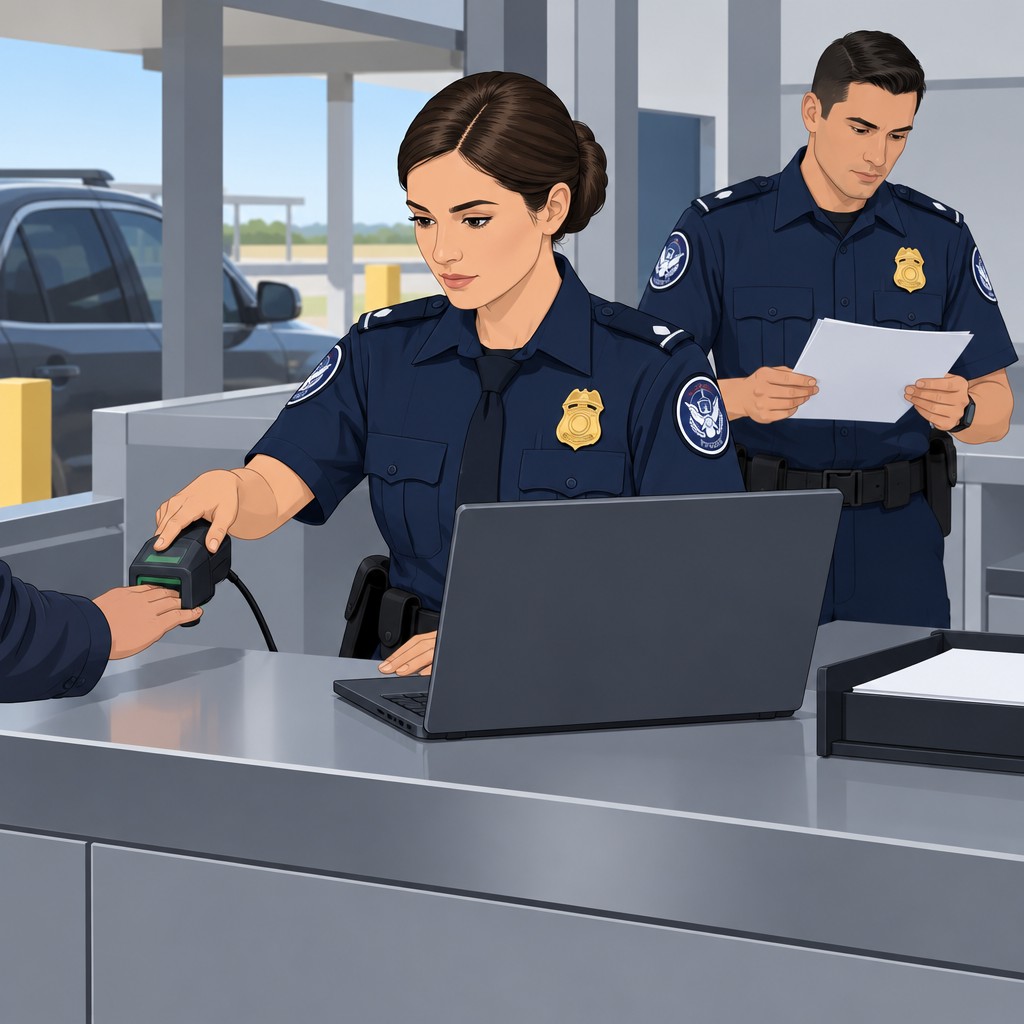
For example, facial recognition software and biometric systems help officers identify potential threats.
Additionally, these tools help officers apprehend individuals who pose risks to national security.
Meanwhile, drones and remote sensors monitor remote areas and detect illegal border crossings.
As a result, CBP officers can respond more quickly and effectively.
Therefore, technology supports border security and helps protect the nation.
By combining advanced tools with professional expertise, CBP officers can perform their duties more efficiently.
Technological Tools Used by CBP Officers
CBP officers use several advanced technologies to strengthen border security.
These tools include biometric scanners, drones, and facial recognition software.
Together, these technologies support identity checks and surveillance across border areas.
- Biometric scanners
- Drones
- Facial recognition software
How Technology Strengthens Border Security
These tools help officers verify identities, monitor remote areas, and identify potential threats.
Biometric scanners quickly and accurately verify identities of people entering or leaving the country.
As a result, they reduce the risk of unauthorized entry.
- Biometric scanners help officers verify identities quickly and accurately.
- Drones give officers aerial surveillance of remote and hard-to-reach border areas.
- Facial recognition software helps officers identify known criminals or persons of interest.
Operations Supported by Border Security Technologies
CBP officers have used these technologies during several successful operations.
The examples include drug interdiction, human trafficking prevention, and terrorism prevention.
Each operation shows how technology can support officers’ security work.
- CBP officers used drones to track drug smugglers crossing the border.
- This operation led to arrests and seizures of illegal substances.
- Facial recognition software helped officers identify human trafficking victims at border checkpoints.
- Officers then intervened and provided assistance to those victims.
- Biometric scanners helped officers apprehend people suspected of terrorist organization ties.
- These actions helped prevent potential violence and supported national security.
Emerging Technologies in CBP Operations
Technology continues to advance rapidly across Customs and Border Protection operations.
CBP increasingly uses artificial intelligence, machine learning, and blockchain technology.
These tools support stronger security, faster processing, and more efficient trade procedures.
Artificial Intelligence Applications
Artificial intelligence can analyze large volumes of operational data in real time.
As a result, AI systems can help identify potential threats more efficiently.
These systems also help prioritize attention toward higher-risk individuals or goods.
Machine Learning for Decision Support
Machine learning systems use historical data to produce predictions and recommendations.
Those recommendations can support faster and more informed operational decisions.
Furthermore, machine learning can help identify possible security risks before they develop.
Blockchain for Trade Information
Blockchain technology provides a decentralized system for storing and sharing information.
It can help track goods and document their chain of custody more effectively.
Consequently, blockchain can improve transparency, reduce fraud, and support faster transactions.
Operational Benefits of Advanced Tools
These technologies can improve the accuracy and consistency of border operations.
They can also reduce repetitive work and support more efficient resource use.
Additionally, faster information processing can help facilitate cross-border movements.
- AI algorithms can detect anomalies and patterns that human officers might overlook.
- Machine learning can automate repetitive tasks and support critical decisions.
- Blockchain can strengthen transparency and integrity within trade processes.
- Streamlined operations can reduce costs while improving overall effectiveness.
- Advanced tools can help shorten customs clearance procedures.
Supporting Officer Efficiency and Effectiveness
Technology can help CBP officers concentrate their efforts on the most important operational needs.
Real-time insights can also support timely judgments during daily activities.
Meanwhile, automated processes can reduce paperwork and other manual responsibilities.
- AI systems can help prioritize work according to relevant risk factors.
- Machine learning can provide recommendations that support informed decisions.
- Blockchain can improve the traceability and security of traded goods.
- Automated procedures can streamline operations and reduce manual processing.
- Improved customs processes can support faster trade flows and economic competitiveness.
Technology’s Role in Future CBP Operations
The integration of these technologies represents a significant development in CBP operations.
Artificial intelligence and machine learning can strengthen analysis and operational responsiveness.
Blockchain can further support secure information management and efficient trade facilitation.
Transform Your Career Today
Unlock a personalized career strategy that drives real results. Get tailored advice and a roadmap designed just for you.
Start NowFind Out More: Work-Life Balance for Border Patrol Agents
Challenges in Technology-Based Border Security
Technology has rapidly advanced in border security, and CBP officers use various tools to enhance their capabilities.
However, this reliance creates important challenges and concerns.
These concerns affect privacy, fairness, and oversight across border security operations.
- Privacy issues: Facial recognition and biometric collection raise concerns about privacy and personal data security.
- Potential algorithmic bias: Screening algorithms could discriminate against certain groups during border processing.
- Regulation and oversight: Effective safeguards must keep technological practices ethical and legally compliant.
CBP Policies and Training for Responsible Technology Use
CBP recognizes these challenges and has implemented policies and training programs.
These measures aim to improve technology use in border security.
Additionally, CBP works with experts to develop responsible practices and guidelines.
- Policy development: CBP guides data collection, storage, and sharing to protect individual privacy rights.
- Training programs: Officers learn to use technology properly and identify possible algorithmic bias.
- Expert collaboration: CBP consults technology, privacy, and civil rights experts when developing best practices.
Through oversight and training, CBP can strengthen security while protecting privacy and supporting ethical standards.
Discover More: Top Challenges Wildland Firefighters Face
Technology Supporting Contraband Detection
In a recent case at the US-Mexico border, CBP officers used advanced scanning technology to inspect a commercial truck.
The truck carried fruits and vegetables.
The officers detected hidden compartments and uncovered significant illegal narcotics.
This interception prevented the drugs from entering the country and potentially disrupted criminal activities.
Facial Recognition Supporting Criminal Apprehension
At a major airport, CBP officers used facial recognition software during an entry inspection.
The system identified a passenger who used a false identity while attempting illegal entry.
It flagged the individual through records containing previous criminal information.
Consequently, officers apprehended a wanted criminal.
Practical Benefits of Advanced Border Security Tools
Technology has improved the efficiency and accuracy of CBP operations.
X-ray scanners, biometric systems, and database analytics help officers identify suspicious individuals and fraudulent documents.
These tools also help officers detect contraband quickly.
Consequently, proactive screening supports successful interceptions and a safer border environment.
These outcomes protect national security interests and support continued investment in advanced solutions.
Discover More: Campus Security Officer: Emergency Response Skills
Comparison Between Human Intuition and Technological Tools in Border Security
Human intuition draws on experience and intuition when officers assess border security situations.
Technological tools provide data-driven analysis, precision, and consistent monitoring.
Both approaches contribute different strengths to border security operations.
- Human intuition relies on experience and intuition.
- Technological tools offer data-driven analysis and precision.
- However, human intuition remains prone to biases and errors.
- Meanwhile, technological tools process large volumes of data quickly.
- Human intuition helps officers detect subtle patterns.
- Additionally, technological tools provide advanced surveillance and monitoring capabilities.
- Human intuition can adapt rapidly to changing circumstances.
- In contrast, technological tools offer consistent and systematic monitoring.
Balancing Human Expertise and Technological Capabilities
Human expertise supports critical thinking and informed decision-making during border security operations.
Technological capabilities improve accuracy, efficiency, automation, and speed.
A balanced approach combines human judgment with technological consistency.
- Human expertise brings critical thinking and decision-making skills.
- Technological capabilities enhance accuracy and efficiency.
- A balance ensures comprehensive and effective border security measures.
- Over-reliance on technology can cause oversight and missed threats.
- Human expertise adds understanding and judgment to security decisions.
- Technological capabilities provide automation and speed.
- Effective border security requires both human and technological strengths.
- Ultimately, balance maximizes the strengths of human and technological resources.
Ongoing Training and Education for CBP Officers
Ongoing training helps CBP officers use technological tools proficiently.
Education keeps officers adaptable and informed about new tools and techniques.
Continuous learning strengthens workforce skills and supports ongoing improvement.
- Ongoing training ensures officers remain proficient in using technology.
- Education about new tools and techniques enhances effectiveness.
- Training promotes adaptability and current knowledge among officers.
- Continuous learning enables officers to navigate complex technological systems.
- Education about cybersecurity safeguards helps prevent data breaches.
- Training about privacy laws helps officers follow regulations.
- Continuous education fosters innovation and improvement.
- Investing in training develops a highly skilled and capable workforce.
You Might Also Like: Common Misconceptions About Private Investigators
Examining Future Trends in Technological Advancements for CBP Officers
Technological advancements continue to strengthen the capabilities of CBP officers.
Meanwhile, evolving border threats require officers to adopt effective tools and methods.
By using emerging technologies, CBP officers can improve border security operations.
Potential New Tools and Innovations
Several innovations could support surveillance, analysis, and identity verification at the border.
These tools can help officers respond to changing security demands.
However, officers must use each technology carefully and effectively.
- Drones can provide real-time surveillance of remote areas and help detect illegal border crossings.
- Artificial intelligence and machine learning can analyze data and identify potential threats.
- Biometric identification can improve identity verification and track individuals entering and exiting the country.
Technology’s Role in Border Security
New tools can significantly improve how CBP officers detect and prevent illicit activities.
Transform Your Career Today
Unlock a personalized career strategy that drives real results. Get tailored advice and a roadmap designed just for you.
Start NowFurthermore, technology can support a more efficient and effective border security approach.
Officers can combine technological capabilities with operational judgment during security activities.
The Evolving Nature of Border Security
Border security remains a dynamic field that demands continuous adaptation and improvement.
As threats become more sophisticated, CBP officers must continue adopting useful technologies.
Collaboration with private companies and research institutions can help drive innovation.
Continuous Adaptation and Improvement
CBP officers need regular training to use new technologies effectively.
Additionally, feedback systems should capture officers’ views about each tool’s effectiveness.
Continuous evaluation can ensure that officers remain prepared for modern border security challenges.
Technological Advancements Transforming CBP Operations
CBP officers now use advanced technologies to strengthen border security operations.
Advanced scanning devices help officers detect potential threats efficiently.
Meanwhile, biometric identification systems support accurate identity checks.
Real-time data analytics help officers make informed decisions quickly.
Additionally, drones and surveillance cameras improve monitoring across remote border areas.
Mobile applications give officers access to critical information during operations.
Significance of Technological Advancements for CBP Officers
These technologies streamline border security operations and reduce potential risks.
Enhanced situational awareness helps officers respond proactively to emerging threats.
Furthermore, continued investment helps CBP address evolving security challenges.
Continued Support and Investment in Border Security Technology
Policymakers and stakeholders should continue supporting advanced technologies for CBP officers.
Research and development funding can provide frontline officers with necessary operational tools.
Therefore, technology advancement remains essential for protecting national security and maintaining border integrity.
Additional Resources
Google search results for CBP Officers and Technological Advancements Protective Services
Bing search results for CBP Officers and Technological Advancements Protective Services


