




Role of a Campus Security Officer
A campus security officer protects students, staff, and visitors.
The officer supports a safe and secure campus environment.
Emergency response skills help officers protect their community during crises.
Emergency Response Skills
Emergencies can arise at any time on a campus.
Therefore, officers must respond quickly and effectively.
Officers need training for active threats, including active shooter situations.
They must respond with speed and precision during these incidents.
Additionally, first aid and CPR knowledge can save lives.
Immediate medical assistance can help when professional care is not yet available.
Officers should also understand evacuation procedures.
They can guide people safely from buildings during fires or other emergencies.
Communication, Equipment, and Preparation
Effective communication helps officers coordinate with law enforcement and emergency responders.
Clear coordination supports an organized response during crises.
Officers should know how to operate emergency equipment.
Fire extinguishers and AEDs can help prevent situations from escalating.
Regular training drills keep officers prepared for emergencies.
Preparation exercises strengthen their ability to respond effectively.
Officers must think quickly when circumstances change.
They should adapt their actions to dynamic emergency situations.
These skills help officers protect and serve their campus community.
Importance of Communication Skills
Communication supports emergency response on campus.
Officers must share information clearly with students, faculty, and responders.
Strong communication reduces confusion and supports coordinated decisions.
- Clear communication keeps students, faculty, and emergency responders informed during emergencies.
- Effective communication helps officers assess stressful situations and respond appropriately.
- Communication supports successful coordination with law enforcement agencies.
Clear Communication During Emergencies
During emergencies, officers give students and faculty concise instructions.
They also exchange timely details with emergency responders.
Consequently, everyone can understand the situation and choose appropriate actions.
Communication Under Stress
High stress can challenge clear thinking and communication.
Officers gather necessary information while remaining calm and focused.
This approach supports an organized response and can help save lives.
Coordination with Law Enforcement Agencies
Officers often work with law enforcement agencies during emergencies.
Effective communication enables organizations to share critical information and resources.
Open communication supports a timely, coordinated response that prioritizes campus safety.
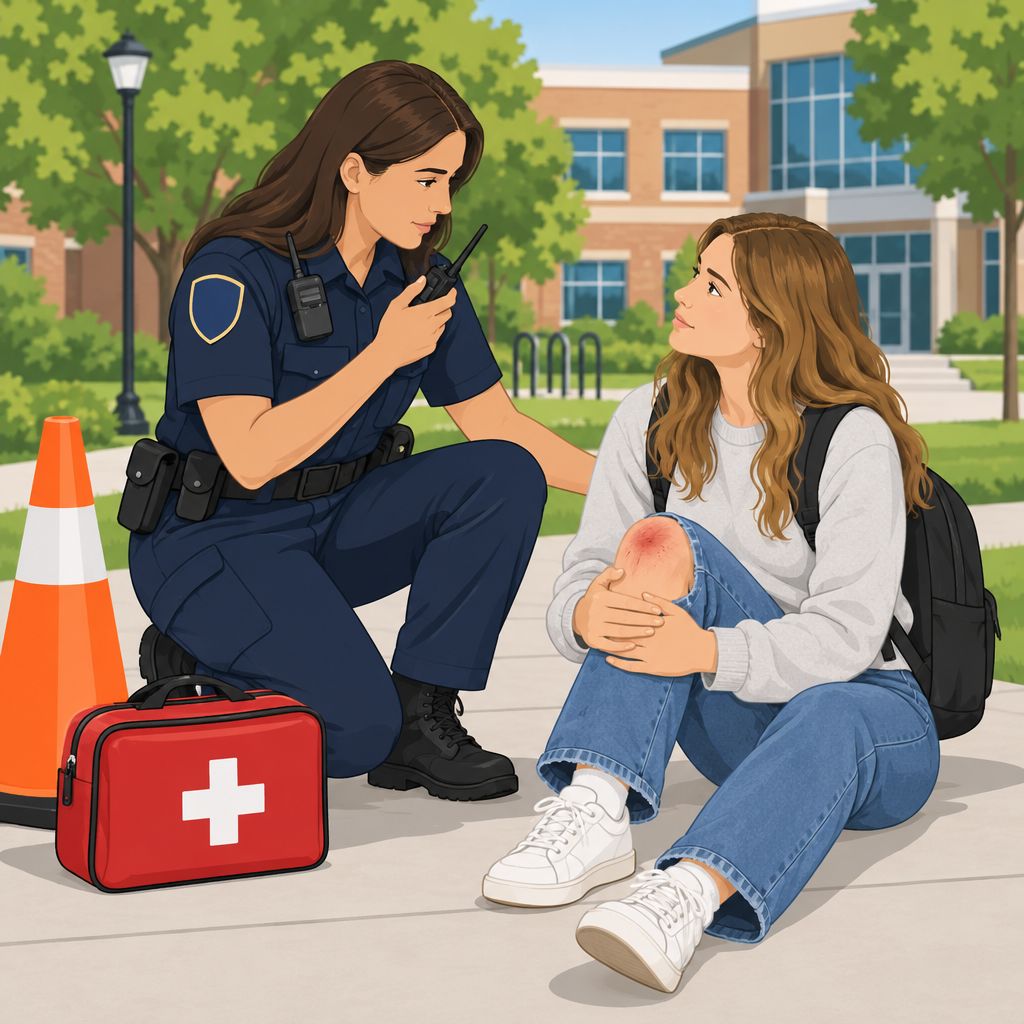
Training and Certifications for Emergency Preparedness
- Campus security officers must hold First Aid and CPR certifications.
- Officers receive ongoing training for active shooter scenarios and other emergencies.
- Simulation exercises help officers practice responses in realistic situations.
First Aid and CPR certifications prepare officers to provide immediate medical assistance.
These certifications give officers essential skills for responding to urgent medical needs.
Meanwhile, ongoing training develops responses for active shooter situations, natural disasters, and medical emergencies.
Regular instruction helps officers maintain current emergency response techniques.
Simulation exercises place officers in realistic situations that require trained responses.
Through these exercises, officers can identify improvement areas and strengthen their response capabilities.
Consequently, certifications and continued training equip officers to manage campus emergencies more effectively.
Uncover the Details: Common Misconceptions About Private Investigators
Transform Your Career Today
Unlock a personalized career strategy that drives real results. Get tailored advice and a roadmap designed just for you.
Start NowAwareness and Prevention
- Proactive identification of potential security threats
- Regular patrols of campus grounds
- Community reporting of suspicious activities
It is crucial for campus security officers to proactively identify potential security threats.
By staying alert, officers can identify threats before they escalate into emergencies.
Officers should conduct regular patrols of campus grounds.
These patrols help officers verify that campus areas remain secure.
They also support the quick identification and response to suspicious activity.
Additionally, students, faculty, and staff should report suspicious activities.
Such reports can help prevent potential security threats from materializing.
Together, awareness and prevention efforts create a safer campus environment.
Find Out More: Volunteer Opportunities with Fish and Game Wardens
Quick Decision Making During Campus Emergencies
- Assess situations quickly and accurately
- Implement appropriate emergency response protocols
- Recognize when situations require escalation
Quick decision making remains essential during campus emergencies.
Every second matters when an officer faces a crisis or threat.
First, the officer must assess the situation rapidly and accurately.
This assessment helps the officer select an appropriate response.
For example, the officer may secure an area or evacuate a building.
The officer may also contact emergency services for additional support.
Campus security teams establish protocols to guide emergency actions.
Officers must apply those protocols decisively and confidently.
However, some emergencies may exceed an officer’s control or expertise.
In those situations, the officer should escalate the matter promptly.
Escalation may involve contacting local police, campus administration, or emergency response teams.
This decision brings appropriate resources and support to the emergency.
Additionally, collaboration with other authorities supports an effective response.
These actions help protect everyone affected by the emergency.
Gain More Insights: Park Rangers and Emergency Response Situations
First Aid and Medical Training
Campus security officers need first aid and medical training to respond effectively during campus emergencies.
This training helps them provide immediate care while awaiting medical professionals.
It also prepares them to identify urgent conditions and support coordinated treatment.
- Administer first aid to injured individuals
- Recognize signs of medical emergencies
- Collaborate with medical professionals during emergency situations
Administering First Aid to Injured Individuals
Officers may apply bandages or perform CPR, depending on the injury.
Proper first aid training helps them provide essential care before medical professionals arrive.
They must respond quickly while following appropriate care procedures.
Recognizing Signs of Medical Emergencies
Officers must recognize signs of medical emergencies during campus incidents.
These signs can include symptoms of heart attacks, strokes, and allergic reactions.
They can then assess the situation and provide timely assistance.
Collaborating with Medical Professionals in Emergency Situations
Serious emergencies may require officers to work with medical professionals.
Officers can share information about the patient’s condition and assist with medical procedures.
They may also coordinate transportation to a medical facility when needed.
You Might Also Like: Top States Hiring Fish and Game Wardens
Crisis Management
Developing crisis response plans for various scenarios strengthens a campus security officer’s emergency response skills.
These plans can guide responses to natural disasters, active shooter situations, and medical emergencies.
A well-designed plan can help protect lives during a crisis.
Transform Your Career Today
Unlock a personalized career strategy that drives real results. Get tailored advice and a roadmap designed just for you.
Start Now- Coordinating with campus officials during a crisis supports effective communication and decision-making.
Security officers work closely with school administrators, law enforcement, and emergency responders to coordinate the response. - Implementing safety strategies remains the central goal of crisis management.
These strategies may include evacuation procedures, lockdown protocols, medical triage, or other emergency tactics.
Such measures help protect students and staff on campus.
Maintaining Emergency Response Readiness
Emergency response skills help campus security officers act quickly and effectively during crises.
Moreover, continuous training and preparedness help officers manage various emergency situations.
Additionally, security officers should follow current emergency response practices to protect the campus community.
Additional Resources
Google search results for Campus Security Officer: Emergency Response Skills Protective Services
Bing search results for Campus Security Officer: Emergency Response Skills Protective Services


