




Tools Used by Agricultural Workers
Agricultural tools play a crucial role in improving efficiency and productivity.
These tools assist agricultural workers with various tasks.
As a result, workers can complete their jobs more easily and effectively.
Hand Tools in Agriculture
- Shovels, hoes, and pruners serve as common agricultural hand tools.
- Farmers use these tools when planting, weeding, and pruning plants.
- Additionally, hand tools support precise work throughout the field.
Common Hand Tools Used in Agriculture
Hand tools support essential activities throughout agricultural work.
For example, shovels help workers dig and move soil.
Meanwhile, hoes remove weeds, and pruners cut and maintain plants.
Hand Tools for Planting, Weeding, and Pruning
Workers use hand tools to place seeds carefully in the soil.
They also remove unwanted plants and shape growing vegetation.
As a result, these tools support essential planting, weeding, and pruning activities.
Precision Work with Agricultural Hand Tools
Hand tools give agricultural workers control during detailed field tasks.
For instance, workers can adjust planting depth and target individual weeds.
Furthermore, pruners create clean cuts that support healthier plants.
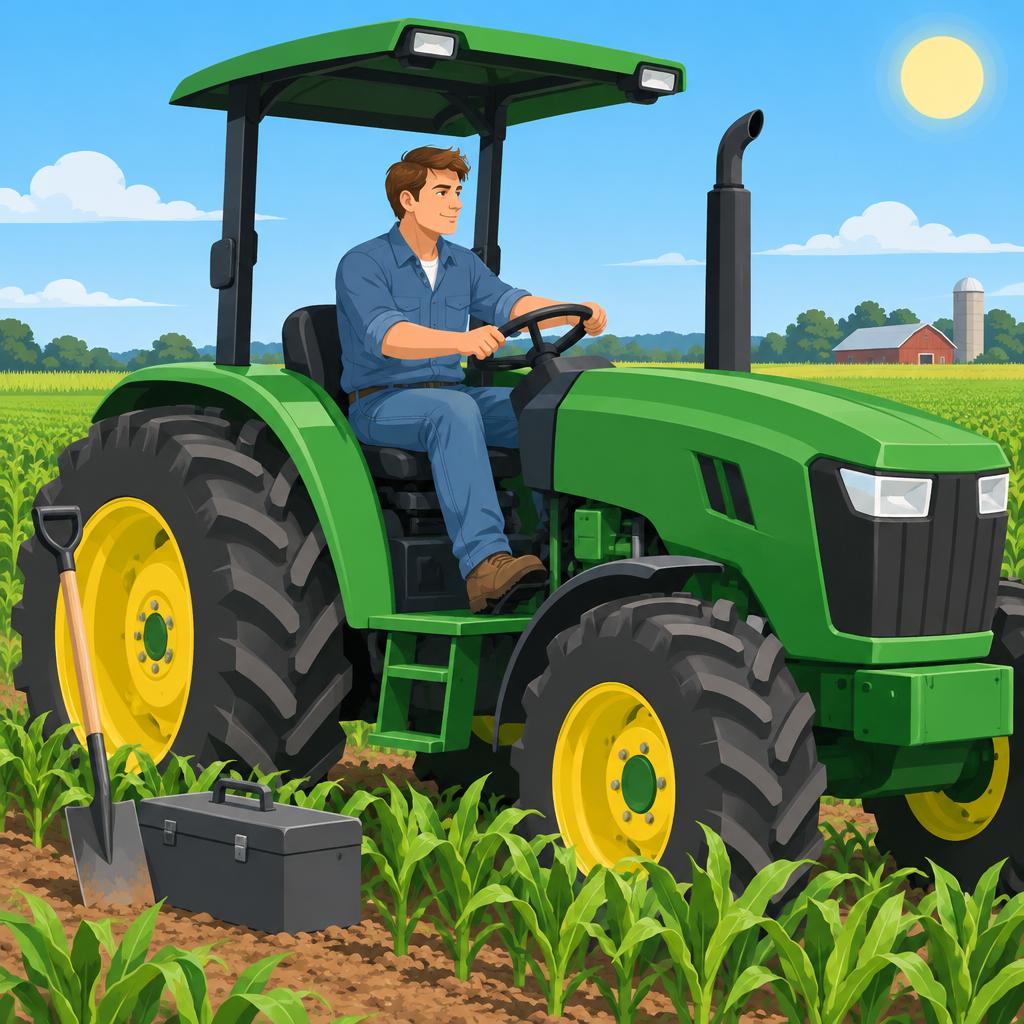
Tractors and Farm Equipment
Tractors support essential agricultural tasks, including plowing, planting, and harvesting.
Farmers choose different tractor types for specific agricultural tasks.
Common agricultural tractors include utility, row-crop, and orchard models.
Utility tractors handle various tasks and suit small to medium-sized farms.
Meanwhile, row-crop tractors support planting and cultivating corn, soybeans, and cotton.
Orchard tractors operate in orchards and vineyards with narrow rows and low clearance.
During plowing, tractors turn over soil and break up clumps before planting.
Planting places seeds at the correct depth and spacing.
Harvesting gathers mature crops from fields, and tractors make this process more efficient.
In addition, combine harvesters and balers support modern agricultural operations.
Combine harvesters cut, thresh, and clean wheat, barley, and oats in one pass.
Balers compress and bind hay, straw, or silage into compact bales.
These bales simplify storage and transport.
Together, these machines increase efficiency, reduce labor costs, and improve farm productivity.
Explore Further: Understanding the Miner's Role in Construction Projects
Irrigation Equipment and Crop Growth
Irrigation equipment supports crop growth and helps agricultural workers increase yields.
Farmers use irrigation systems to deliver water where plants need it.
Additionally, proper equipment helps maintain consistent water access during crop production.
Types of Agricultural Irrigation Systems
Agricultural workers use several irrigation systems, including drip irrigation and sprinklers.
Drip irrigation delivers water directly to the base of each plant.
Meanwhile, sprinklers distribute water through connected pipes and nozzles.
Importance of Proper Irrigation
Proper irrigation gives plants adequate water and nutrients for healthy growth.
However, insufficient irrigation can cause stunted growth and reduced yields.
In severe cases, inadequate water supplies can contribute to crop failure.
Benefits of Efficient Irrigation Equipment
Efficient irrigation equipment can improve crop yields while supporting water conservation.
Drip systems deliver water directly to plant roots and reduce unnecessary waste.
Therefore, each plant receives an appropriate amount of water for continued growth.
Selecting and Maintaining Irrigation Systems
Agricultural workers can strengthen farming operations by selecting suitable irrigation systems.
Transform Your Career Today
Unlock a personalized career strategy that drives real results. Get tailored advice and a roadmap designed just for you.
Start NowThey should also maintain their equipment properly to support reliable crop production.
Ultimately, the right irrigation approach can enhance crop growth and increase yields.
Discover More: Daily Duties and Responsibilities of a Janitor/Custodian
Precision Agriculture Technology
Precision agriculture relies on technology to improve how agricultural workers manage fields and resources.
These tools help farmers monitor conditions, place inputs accurately, and manage crop production.
GPS, drones, and sensors provide important information for more informed farming decisions.
- GPS technology helps farmers track and map fields accurately, improving crop and resource placement.
- Drones help farmers monitor crop health, assess field conditions, and spray crops precisely.
- Sensors collect data about soil moisture, nutrient levels, and other factors affecting crop growth.
Input Optimization and Yield Improvement
Precision agriculture helps farmers use land and resources more effectively.
Technology supports higher yields while helping farmers use fewer resources.
These improvements can increase profits and support more sustainable farming operations.
Efficiency and Sustainability on the Farm
Technology tools improve farm efficiency by supporting accurate monitoring and timely decisions.
Farmers can also reduce waste by applying resources only where and when needed.
Meanwhile, collected data supports crop management, irrigation, and harvesting decisions.
- GPS technology helps farmers map fields and track machinery, reducing time and fuel waste.
- Drones and sensors help farmers monitor crops and soil health more effectively.
- Precision technology helps farmers apply fertilizer, pesticides, and water where they provide the most benefit.
- Data analysis helps farmers make smarter decisions about crop management, irrigation, and harvesting.
GPS, drones, and sensors help agricultural workers optimize operations, increase yields, and promote sustainability.
Delve into the Subject: Essential Tools for Pest Control Workers
Pruning Shears and Scissors
Pruning shears and scissors help agricultural workers maintain plant health and shape plant growth.
Different pruning tools serve specific purposes during agricultural work.
Therefore, workers can select suitable tools for precise plant maintenance.
Types of Pruning Shears
Pruning shears help workers cut branches and maintain healthy plant structures.
Each shear type supports a different cutting requirement.
For example, workers can choose bypass, anvil, or ratchet pruners.
- Bypass pruners make precise cuts on live branches without causing damage.
- Anvil pruners use one blade against a flat surface for cutting deadwood.
- Ratchet pruners provide extra leverage when workers cut thicker branches.
Types of Pruning Scissors
Pruning scissors support detailed cutting around small branches, stems, and dense foliage.
Workers can select different blade shapes for specific trimming conditions.
These options improve control when workers reach confined areas or manage plant density.
- Straight blade scissors cut small branches and stems with precision.
- Curved blade scissors trim plants in tight or difficult-to-reach spaces.
- Thinning shears reduce foliage density without damaging the plant.
Importance of Pruning for Plant Health
Pruning supports plant health by directing growth and removing harmful plant parts.
It also helps workers control plant size and shape.
Furthermore, regular pruning can support healthier and more attractive plant growth.
- Pruning stimulates new shoots and leaves, which promotes overall plant health.
- Removing dead or diseased branches helps prevent infection from spreading.
- Shaping plant growth helps workers control plant size and appearance.
Benefits of Quality Pruning Tools
High-quality pruning tools help workers make precise and clean cuts.
Sharp, durable tools also support efficient work and reduce unnecessary effort.
Consequently, reliable shears and scissors benefit both workers and plants.
- Sharp blades create clean cuts and reduce the risk of plant damage.
- Quality tools make pruning tasks easier and faster, saving time and effort.
- Well-made shears and scissors last longer and provide better value.
Investing in dependable pruning tools simplifies agricultural work and supports healthy, well-shaped plants.
Find Out More: Eco-Friendly Cleaning Products for Housekeepers
Protective Gear
PPE helps agricultural workers manage hazards during demanding field tasks.
Protective gear creates a practical barrier between workers and common workplace dangers.
Therefore, workers should select equipment that matches each task and hazard.
Personal Protective Equipment Used by Agricultural Workers
Agricultural workers use several PPE types for different forms of exposure.
Gloves shield hands from chemicals, sharp objects, and extreme temperatures.
Goggles and helmets address separate eye and head protection needs.
- Gloves protect hands from chemicals, sharp objects, and extreme temperatures.
- Goggles shield eyes from dust, debris, and chemical splashes.
- Helmets protect heads from falling objects and overhead hazards.
Importance of PPE for Workplace Safety
Suitable PPE reduces the likelihood of cuts, burns, and eye injuries.
It also limits workers’ exposure to harmful chemicals and pesticides.
Furthermore, protective equipment can help prevent accidents causing serious injuries or fatalities.
Transform Your Career Today
Unlock a personalized career strategy that drives real results. Get tailored advice and a roadmap designed just for you.
Start Now- PPE reduces risks associated with cuts, burns, and eye injuries.
- Protective equipment limits exposure to harmful chemicals and pesticides.
- Proper gear helps prevent accidents that may cause severe harm.
How Protective Gear Prevents Agricultural Injuries
Workers can reduce injury risks by wearing protective gear during hazardous agricultural tasks.
For instance, gloves help prevent cuts, punctures, and chemical burns during handling activities.
Meanwhile, goggles protect eyes, while helmets guard against impacts and falling objects.
- Gloves help prevent cuts, punctures, and chemical burns.
- Goggles protect eyes from dust, debris, and chemical irritation.
- Helmets guard heads during falls, collisions, or falling-object incidents.
Using appropriate PPE gives agricultural workers a proactive way to manage workplace hazards.
Workers who choose suitable gear can perform their duties with greater protection.
Soil Testing Kits
Agricultural workers use soil testing kits to assess soil nutrient levels and pH.
These kits help workers make informed fertilization and crop management decisions.
The kits support field testing through portable tools and, sometimes, digital analysis.
Tools Included in Soil Testing Kits
- Soil testing kits typically include pH meters, nutrient testers, and soil sample collection equipment.
- Portable formats allow agricultural workers to perform tests directly in the field.
- Some advanced kits include digital analyzers that provide detailed nutrient analysis results.
Assessing Soil Nutrients and pH
- Soil testing identifies nutrient deficiencies or excesses that can affect crop growth and health.
- Furthermore, soil pH influences nutrient availability and contributes to overall soil health.
- Workers can adjust fertilization practices after they identify soil nutrient levels and pH.
Benefits for Fertilization and Crop Management
- Soil testing kits support precise fertilization and help minimize material waste.
- Accurate soil assessments help workers avoid over-fertilization, nutrient runoff, and soil degradation.
- Regular testing allows workers to monitor soil health and adjust management practices over time.
Essential Equipment for Agricultural Work
Modern agricultural workers rely on specialized equipment to complete demanding tasks efficiently.
Harvesters and plows support important stages of agricultural work.
Irrigation systems help workers manage water distribution across production areas.
Together, these tools help workers maintain productive daily operations.
Benefits of Quality Agricultural Tools
Suitable tools improve work quality while helping agricultural workers complete tasks with greater consistency.
Moreover, reliable equipment can support safer working conditions during demanding agricultural duties.
Workers who invest in quality tools can increase output and reduce accident risks.


