




Essential Tools for Pest Control Workers
Pest control workers help maintain public health and safety by eliminating pests.
They also help prevent diseases from spreading through pest activity.
However, harmful chemicals and aggressive pests create risks during their work.
Protective Gear
Protective gear includes gloves, goggles, and respirators.
These items shield workers from chemical exposure while they handle pests.
They also help prevent injuries during pest control tasks.
Sprayers and Applicators
Sprayers and applicators help workers apply pesticides and other solutions.
Handheld and backpack sprayers suit different job requirements.
Therefore, workers can select equipment that matches the task.
Traps and Baits
Traps and baits help capture and control pests.
Workers use them especially for rodents and insects.
They choose different options to target specific pests and prevent infestations.
Inspection Tools
Inspection tools help workers identify pest infestations.
Flashlights, magnifying glasses, and moisture meters reveal pest activity.
They also help workers assess the problem across different areas.
Protective Clothing
Protective clothing includes durable coveralls and boots.
This clothing shields workers from pests and pesticides.
It also helps prevent contamination and supports worker safety.
Supporting Safe Pest Control Work
Equipping workers with these tools supports effective pest control work.
Together, the tools help workers address pests while managing workplace risks.
As a result, they contribute to a healthier and safer public environment.
Personal Protective Equipment for Pest Control
Pest control workers need gloves, goggles, and respirators for protection.
Proper PPE helps shield workers from harmful chemicals and pests.
Therefore, high-quality protective equipment supports safer pest control operations.
- Gloves, goggles, and respirators provide important protection.
- PPE helps reduce contact with hazardous substances.
- Reliable equipment supports worker safety during pest control services.
Types of Protective Equipment
Different PPE items protect specific areas of the body during pest control work.
For example, gloves protect the skin, while goggles protect the eyes.
Meanwhile, respirators help protect workers from toxic fumes and dust.
- Choose chemical-resistant gloves to prevent skin contact with pesticides.
- Wear safety goggles to guard against chemical splashes and debris.
- Use respiratory protection when handling toxic fumes or dust.
Importance of Wearing PPE
Wearing PPE reduces the risk of pesticide exposure during pest control operations.
It also helps prevent skin irritation, respiratory problems, and eye injuries.
As a result, PPE supports the safety and well-being of pest control workers.
- PPE reduces exposure to pesticides and related hazards.
- Protective equipment helps limit skin, eye, and respiratory injuries.
- Consistent use promotes safer working conditions.
Recommended PPE Brands
Several established brands provide protective equipment for pest control work.
3M focuses on respiratory protection products for workers.
Honeywell and DuPont offer additional protective equipment options.
- 3M is known for respiratory protection products.
- Honeywell offers gloves, goggles, and other PPE.
- DuPont provides chemical-resistant suits and gloves.
Where to Purchase Protective Equipment
Workers can purchase PPE through several convenient sources.
Specialized safety equipment stores provide a broad selection of protective products.
Online retailers and pest control suppliers also offer useful purchasing options.
- Visit safety equipment stores for various PPE products.
- Use online retailers for convenient purchasing.
- Check pest control suppliers for industry-specific equipment.
Equipping workers with suitable PPE helps protect their health during essential pest control services.
Investing in quality protective gear supports the well-being of the entire team.
Sprayers and Applicators
Sprayers and applicators support targeted pest treatment in indoor and outdoor settings.
Each tool serves a specific purpose during pesticide or other treatment applications.
Transform Your Career Today
Unlock a personalized career strategy that drives real results. Get tailored advice and a roadmap designed just for you.
Start NowTherefore, workers should match equipment choices to the treatment area and application needs.
- Backpack Sprayers: These tools let workers move freely while treating affected areas.
- Dusters: These applicators treat wall voids, cracks, and crevices where pests hide.
Choosing the Right Sprayer
Choosing the right sprayer helps workers apply treatments effectively and efficiently.
Outdoor areas often require equipment that distributes pesticides across broad spaces.
Meanwhile, indoor treatments benefit from precise tools that limit applications to affected locations.
- For larger outdoor areas, workers can use a pump-action backpack sprayer for broad pesticide coverage.
- For indoor treatments, a duster supports precise applications in specific areas containing pests.
Sprayer Maintenance and Cleaning
Regular maintenance keeps sprayers functional and supports consistent treatment performance.
Cleaning the tank and nozzle helps prevent clogs and uneven spray patterns.
Additionally, inspections can identify leaks or damaged components before the next application.
- Clean the sprayer tank and nozzle regularly to maintain a consistent spray pattern.
- Check for leaks or damage, then replace worn components to maintain performance.
- Store sprayers in a cool, dry place away from direct sunlight.
These practices help workers keep application equipment ready for future pest treatments.
Discover More: Eco-Friendly Cleaning Products for Housekeepers
Inspection Tools
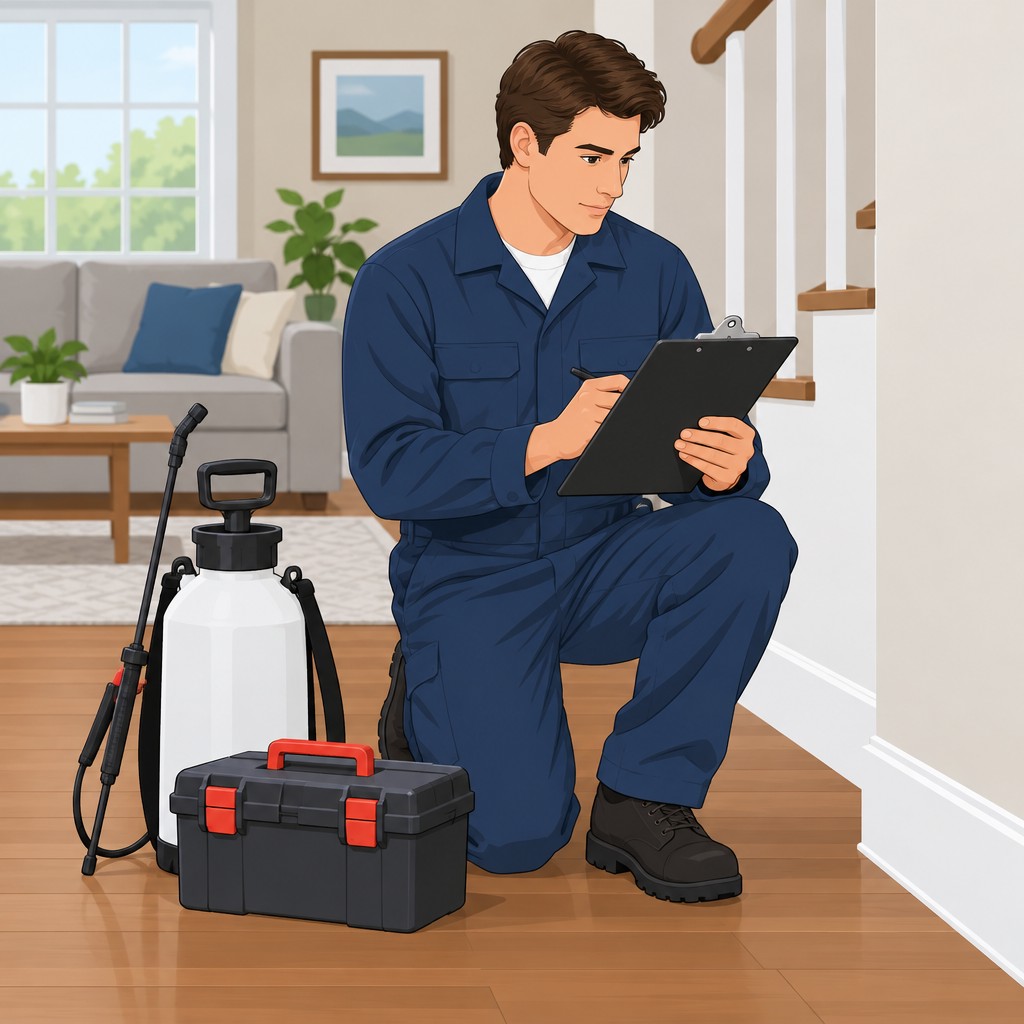
Inspection tools help pest control workers locate and assess infestations.
Accurate findings support an effective treatment plan.
Therefore, workers should examine hiding areas, entry points, and nesting locations.
Flashlights
Flashlights illuminate dark and difficult-to-reach areas.
They help workers examine places where pests may hide.
Additionally, adjustable brightness and long battery life support thorough inspections.
Moisture Meters
Moisture meters detect excess moisture in building materials.
Excess moisture can attract pests such as termites and mold.
Workers can target areas with high moisture levels for treatment and prevention.
Thermal Imaging Cameras
Thermal imaging cameras detect temperature changes within a space.
They can help workers identify pests hidden behind walls or ceilings.
For example, workers may use them to locate rodents or termites.
Thorough Inspection Practices
Thorough inspections help workers assess the extent of pest problems accurately.
Workers can identify entry points, hiding spots, and nesting areas.
This comprehensive approach helps prevent infestations from going unnoticed.
Choosing Reliable Inspection Tools
Durable tools can withstand regular use in various environments.
Advanced features, such as adjustable settings and digital displays, can improve reading precision.
Regular maintenance and calibration help workers obtain accurate inspection results.
- Invest in durable and reliable tools for regular use in various environments.
- Choose tools with adjustable settings or digital displays for precise readings.
- Maintain and calibrate tools regularly to support accurate inspection results.
Discover More: The Impact of Regulations on Construction
Types of Traps
Trap tools help workers monitor and control pest populations.
Different traps serve specific purposes during pest management.
Workers should select traps based on the pest and control objective.
- Snap traps use mechanical action and usually kill pests instantly.
- Glue boards use sticky surfaces to capture pests that contact them.
- Live traps capture pests without killing them, supporting safe removal and relocation.
Monitoring Pest Activity
Strategic trap placement helps workers monitor pest activity and population levels.
Traps reveal the pest types present, their numbers, and their behavior patterns.
Therefore, workers can use trap results to design effective pest control plans.
Effective Trap Placement
First, workers should identify the target pest before choosing a trap.
Next, they should place traps along walls, near entry points, or along travel routes.
Additionally, suitable bait can attract pests and improve trap effectiveness.
- Identify the target pest before selecting an appropriate trap.
- Place traps where pests commonly travel, including walls and entry points.
- Use suitable bait to attract pests toward the trap.
- Check and reset traps regularly to maintain their effectiveness.
Safe Trap Disposal
Proper disposal prevents additional infestation and reduces contamination risks.
Workers should handle trapped pests carefully and follow safe disposal procedures.
They should also clean and sanitize reusable traps before setting them again.
Transform Your Career Today
Unlock a personalized career strategy that drives real results. Get tailored advice and a roadmap designed just for you.
Start Now- Wear gloves when handling trapped pests to avoid direct contact.
- Seal each trapped pest inside a plastic bag before disposal.
- Place the sealed bag inside an outdoor trash bin.
- Clean and sanitize reusable traps before deploying them again.
By using traps correctly, workers can support organized and effective pest management.
These procedures also protect workers and help preserve environmental well-being.
See Related Content: How to Create a Maintenance Schedule That Works
Selecting Chemicals and Baits for Effective Pest Control
Effective pest control depends on selecting chemicals and baits that match the target pest.
Different pests require different treatments, so workers should choose products designed for the specific pest.
Consequently, suitable products can support effective control when workers follow label directions.
Regulations and Safety Precautions
Workers must follow regulations and safety precautions when handling or applying pesticides.
Pesticides can harm people when workers use them incorrectly.
Therefore, workers should read labels carefully and follow every instruction.
Labels also identify precautions that workers must follow during pesticide use.
Environmentally Friendly Pest Control Products
Environmentally friendly products provide an option for people concerned about environmental impact.
These products aim to control pests while reducing harm to the environment.
Users can look for non-toxic and biodegradable options when available.
Where to Purchase Pest Control Products
People can purchase pest control products from hardware stores, garden centers, and online retailers.
However, buyers should choose reputable sources when purchasing pesticides.
Reputable sellers can help buyers obtain products that are high quality, safe, and effective.
You Might Also Like: Key Differences Between Pipelayers and Plumbers
Climbing and Access Equipment
Pest control workers need suitable climbing and access equipment for tasks in elevated or difficult-to-reach areas.
This equipment helps workers reach necessary locations during pest control duties.
Therefore, workers should combine appropriate equipment with proper training and careful safety practices.
Types of Climbing and Access Equipment
Different structures and job requirements call for different climbing and access equipment.
Workers should select equipment that matches the working height and access conditions.
Moreover, each item should support controlled and secure movement during the task.
- Ladders provide access to elevated areas in buildings and other structures.
- Fiberglass and aluminum ladders suit different job requirements.
- Harnesses help protect workers from falls when they work at heights.
- Full-body harnesses, waist belts, and chest harnesses support different tasks.
Training and Safety Measures
Working at heights creates significant risks for pest control workers.
Proper training teaches workers how to use climbing equipment safely.
Additionally, consistent safety checks help workers identify equipment problems before use.
- Workers should inspect climbing equipment before every use.
- They should wear suitable protective equipment, including helmets, gloves, and safety glasses.
- Workers must follow the manufacturer’s instructions and guidelines.
- Workers should avoid working alone at heights.
- A partner or supervisor should remain present during elevated work.
Selecting and Using Climbing Equipment
Careful equipment selection supports safer and more efficient pest control work.
Workers should evaluate the structure, working height, and task before choosing equipment.
Regular practice and maintenance also help workers use access equipment correctly.
- Choose ladders and harnesses according to the structure and working height.
- Confirm that each ladder has suitable height and weight capacity.
- Practice using harnesses and fall protection equipment before beginning work.
- Maintain three points of contact while climbing or working from a ladder.
- Inspect and maintain climbing equipment regularly.
Following these practices helps workers use climbing and access equipment safely.
Workers can then perform elevated pest control duties with greater control and care.
Data Collection and Reporting Tools
Pest control workers use digital tools to record field observations and treatment information.
These tools support organized reporting during routine pest management activities.
Accurate records also help teams review conditions and coordinate their work.
Digital Tools for Pest Data
- Pest control workers use tablets, software programs, and cameras to collect data.
- Tablets provide portable devices for entering information in the field.
- Software programs organize and analyze collected information efficiently.
- Cameras capture visual evidence of pest infestations for documentation.
Value of Accurate Data Collection
- Accurate data helps workers track pest trends and identify problem areas.
- It enables teams to evaluate treatments and adjust strategies when necessary.
- Reliable records support informed decisions and better pest management outcomes.
- Regular monitoring reveals changes in pest populations over time.
User-Friendly Data Collection Tools
- Choose tools that field workers can understand and use easily.
- Select software with customizable features that match specific work requirements.
- Consider tools that sync data in real time to support collaboration.
- Train staff to use each tool effectively during data collection.
Daily Data Collection Workflows
- Integrate data collection tools into daily schedules for consistent recording.
- Set reminders or alerts during routine inspections to prompt data collection.
- Ensure every team member receives training on correct tool usage.
- Review collected data regularly to identify patterns and guide decisions.
Data collection and reporting tools help workers monitor pest trends and treatment performance.
Furthermore, consistent records help teams make informed decisions during pest control activities.
User-friendly tools can streamline daily processes and improve efficiency when workers use them consistently.
Tools That Support Effective Pest Control Work
Pest control workers rely on varied tools to complete their responsibilities effectively.
Protective gear helps workers handle chemicals and pests more safely.
Sprayers, dusters, traps, and vacuums help workers treat and remove pests from residential and commercial properties.
Transform Your Career Today
Unlock a personalized career strategy that drives real results. Get tailored advice and a roadmap designed just for you.
Start NowFurthermore, high-quality tools can improve performance and support efficient pest control practices.
Workers should stay informed about new tools and technologies within the industry.
Regularly upgrading their toolkits can strengthen their skills and support effective pest management services.
Consequently, suitable tools help workers protect people and properties from pest infestations.
Additional Resources
Google search results for Essential Tools for Pest Control Workers Construction and Manual Labor
Bing search results for Essential Tools for Pest Control Workers Construction and Manual Labor


