




Data Privacy Compliance and IT Auditing
Data privacy compliance helps organizations protect sensitive information from unauthorized access.
Additionally, IT auditors help organizations ensure that data privacy regulations receive effective implementation.
Therefore, this section explores the significant role of IT auditors in data privacy compliance.
IT auditors play a crucial role in data privacy compliance.
They assess whether organizations follow applicable laws and regulations.
Understanding Data Privacy Regulations
GDPR protects the personal information of individuals in the European Union.
CCPA applies to businesses operating in California.
- Key Data Privacy Laws: GDPR and CCPA establish requirements for protecting personal information.
- Data Protection Principles: These principles include transparency, purpose limitation, data minimization, accuracy, integrity, and confidentiality.
- Importance of Compliance: Compliance builds customer trust, avoids costly fines, and protects organizational reputation.
Auditors need a deep understanding of these regulations to evaluate privacy practices effectively.
Moreover, audits reveal compliance gaps and support corrective actions that reduce related risks.
Auditors also work closely with information technology and security teams.
They evaluate privacy controls, monitor data handling processes, and verify regulatory alignment.
Regular reviews help organizations maintain compliance and strengthen their privacy practices.
Conducting Risk Assessments
IT auditors identify potential data privacy issues affecting organizational information assets.
They assess the likelihood and impact of data breaches, unauthorized access, and sensitive information misuse.
Additionally, these assessments help auditors understand the risks facing protected information.
Implementing Privacy Controls
After identifying risks, IT auditors implement controls that support data privacy compliance.
They establish policies, procedures, and technical safeguards for organizational data.
These measures protect data confidentiality, integrity, and availability while reducing unauthorized access and data leaks.
Auditing Privacy Systems Regularly
IT auditors regularly review systems and processes to evaluate data privacy measures.
They examine security configurations, access controls, encryption protocols, and other safeguards.
Furthermore, regular audits reveal deficiencies and confirm whether controls meet regulatory requirements.
Uncover the Details: Benefits of Integrating IT Governance with Business Goals
Collaboration with IT and Compliance Teams
IT auditors work with IT professionals to secure sensitive data and strengthen privacy controls.
They also coordinate with compliance teams to align technical practices with applicable regulations.
This collaboration helps organizations address privacy concerns through coordinated action.
- IT professionals implement technical solutions that support data privacy.
- Compliance teams help align privacy practices with relevant regulations.
- Different departments communicate to address data privacy concerns.
IT auditors identify weaknesses in existing systems through close collaboration with technical teams.
Teams can then address risks through cybersecurity measures, encryption protocols, and access controls.
These controls protect sensitive information from unauthorized access and breaches.
Compliance teams interpret and implement data privacy laws within the organization.
Auditors use that guidance to design processes that verify privacy requirements.
Furthermore, collaboration checks data processing, retention, and sharing practices against legal obligations and industry standards.
IT auditors connect IT, legal, HR, and marketing teams when privacy concerns require shared input.
They communicate requirements, explain risks, and clarify each department’s responsibilities.
This communication strengthens transparency, accountability, and cooperation throughout the organization.
Learn More: IT Infrastructure Manager: Job Description and Duties
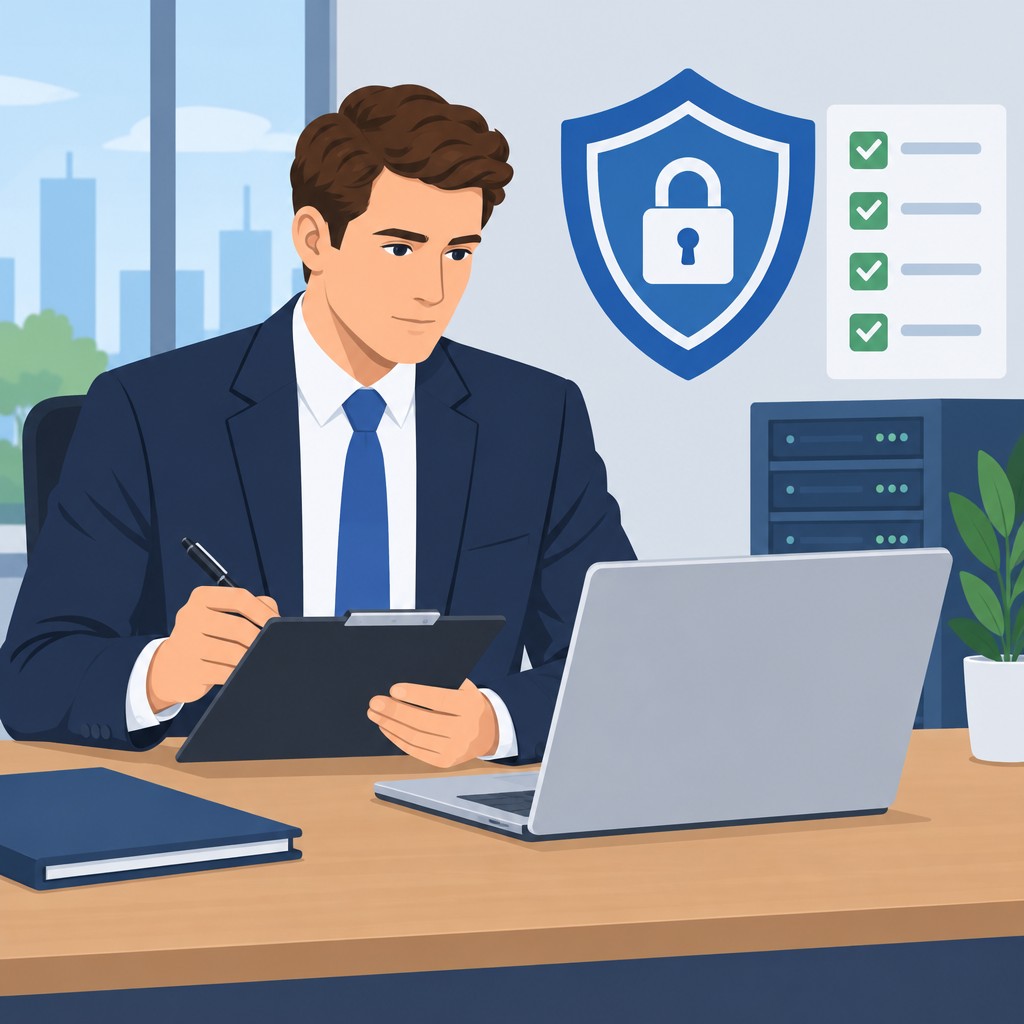
Reporting and Monitoring for Data Privacy Compliance
- Generate reports on data privacy compliance status
- Monitor compliance trends and identify improvement areas
- Recommend enhancements to data privacy measures
Reporting and monitoring support IT auditors as they help organizations maintain data privacy compliance.
IT auditors generate reports that summarize the organization’s current data privacy compliance status.
These reports identify potential gaps and concerns requiring attention under relevant regulations and standards.
Auditors also monitor compliance trends over time by analyzing data and identifying recurring patterns.
This analysis shows how consistently the organization follows data privacy requirements.
Transform Your Career Today
Unlock a personalized career strategy that drives real results. Get tailored advice and a roadmap designed just for you.
Start NowConsequently, auditors can identify improvement areas before potential issues arise.
They then recommend corrective actions that reduce risks and support continued regulatory compliance.
Recommendations may update policies and procedures, introduce technologies, or provide additional employee training.
Auditors therefore help organizations maintain strong data privacy measures and protect sensitive information from unauthorized access or misuse.
See Related Content: Why CRM Developers Are Vital to Business Success
Training and Awareness for Data Privacy
- Conduct training sessions for employees on data privacy best practices
- Raise awareness about the importance of data privacy compliance
- Ensure employees understand their roles in maintaining data privacy
Training and awareness support data privacy compliance across an organization.
IT auditors educate employees about secure practices and clarify their responsibilities.
Regular training sessions keep employees informed about current privacy trends and regulations.
This guidance helps employees handle sensitive information securely and follow legal requirements.
Furthermore, awareness efforts show employees the risks associated with non-compliance.
Consequently, employees become more vigilant when protecting data from unauthorized access or disclosure.
Employees also need clear explanations of their roles in maintaining data privacy.
IT auditors can define these responsibilities through focused training programs.
This approach helps employees understand their obligations when protecting sensitive information.
Together, training and awareness initiatives strengthen a culture of data privacy compliance.
Thus, IT auditors help reduce privacy risks by giving employees practical knowledge.
Gain More Insights: How to Become a Successful Mobile Application Developer
Responding to Data Breaches
- Developing incident response plans for potential data breaches
- Conducting post-incident reviews to identify areas for improvement
- Collaborating with stakeholders to address data breaches and mitigate potential risks
When a breach occurs, IT auditors support a prompt and effective response.
Incident response plans prepare organizations to manage these events.
These plans identify notifications, containment steps, and data restoration measures.
Post-incident reviews help auditors understand what went wrong.
They examine how the breach happened and identify improvements.
Organizations can use these findings to strengthen privacy compliance efforts.
IT auditors also collaborate with IT security, legal, and compliance stakeholders.
Together, these teams address the breach and mitigate potential risks.
By combining stakeholder expertise, auditors help develop comprehensive response strategies.
These strategies can reduce the breach’s impact on the organization.
Consequently, effective response practices help protect sensitive information and support recovery.
IT Auditors and Privacy Safeguards
IT auditors evaluate security measures that support privacy compliance.
They also identify vulnerabilities that could expose sensitive information.
Additionally, auditors help organizations establish policies and procedures for stronger privacy protection.
Business Value of Data Privacy
Data privacy deserves priority as digital activity expands.
Organizations that follow privacy regulations can preserve trust among customers and stakeholders.
Conversely, noncompliance can create serious financial and reputational harm.
Organizational Commitment to Privacy Compliance
Organizations should treat privacy compliance as an ongoing business priority.
Therefore, they can work with IT auditors to reinforce data security practices.
Such cooperation helps protect sensitive information and sustain organizational trust.
Additional Resources
Google search results for Role of IT Auditors in Data Privacy Compliance Information Technology
Bing search results for Role of IT Auditors in Data Privacy Compliance Information Technology


