




Disaster Response Coordination
Disaster response coordinators organize relief efforts during times of crisis.
They facilitate assistance by aligning resources, personnel, and response activities.
Their coordination helps agencies and communities pursue effective disaster response.
Daily Responsibilities During Disaster Response
Each day starts with reviewing updated disaster response plans and coordinating with key stakeholders.
During an ongoing disaster, the coordinator mobilizes resources, assesses the situation, and prioritizes response actions.
Moreover, the coordinator communicates with government agencies, NGOs, and community leaders.
This communication helps stakeholders coordinate relief efforts effectively.
The coordinator also directs volunteers and emergency personnel throughout the response.
This work ensures that everyone deploys efficiently and safely.
Meanwhile, the coordinator analyzes field data and feedback to guide informed decisions.
These findings support adjustments to the response plan when circumstances change.
Unexpected challenges test the coordinator’s problem-solving skills.
Quick thinking and adaptation help address changing conditions.
The coordinator maintains documentation and reports progress throughout the response.
These records support transparency and accountability in relief efforts.
Finally, the coordinator evaluates daily accomplishments and identifies areas for improvement.
The coordinator then prepares for the next day’s challenges.
Morning Routine
- Wake up early to start the day
- Review emergency alerts or updates
- Check in with team members and volunteers
The morning routine establishes a focused foundation for the day ahead.
Waking early helps the coordinator remain prepared for emergencies that may arise.
Reviewing alerts and checking in with teams keeps everyone informed and ready.
Planning and Preparation
After the morning routine, the coordinator plans and prepares for upcoming response activities.
This preparation can include reviewing response protocols and coordinating with other organizations.
Training exercises also help teams remain prepared for changing emergency conditions.
Agency Coordination
The coordinator works with agencies and organizations involved in emergency response efforts.
These partners may include government agencies, nonprofit organizations, and international aid groups.
Regular coordination helps participating organizations address response needs more effectively.
Resource Allocation
Resource allocation remains a central responsibility during disaster response activities.
The coordinator may distribute supplies, mobilize personnel, or organize logistical support.
Careful allocation helps response efforts operate smoothly as needs change.
Monitoring and Decision Making
Throughout the day, the coordinator monitors conditions and assesses response effectiveness.
Teams may collect data, conduct surveys, and communicate observations from the field.
As new information emerges, the coordinator adjusts strategies and addresses developing challenges.
Communication and Public Information
Effective communication keeps team members informed about the latest developments.
The coordinator also shares information with the public and maintains agency communication.
Clear updates support consistent action among teams and participating organizations.
Daily Review and Adaptation
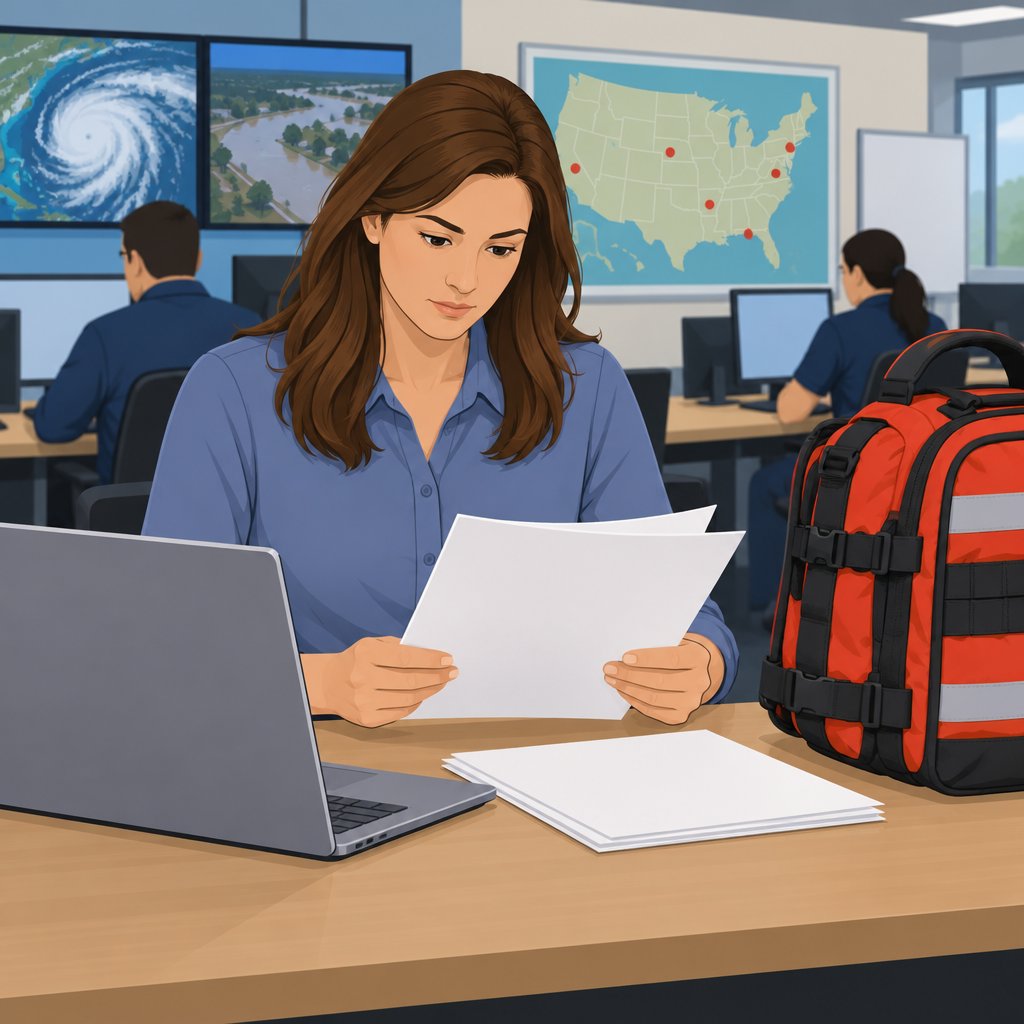
At day’s end, the coordinator reviews events and evaluates response activities.
The coordinator updates plans, communicates with stakeholders, and identifies areas for improvement.
Reflecting on each experience helps the coordinator adapt strategies for future situations.
Planning and Coordination
- Host a morning meeting to discuss daily priorities.
- Review action plans for ongoing disaster response efforts.
- Coordinate with local authorities and relief organizations.
As a disaster response coordinator, I plan and coordinate relief efforts.
I set daily priorities while keeping ongoing actions aligned with the broader response strategy.
Transform Your Career Today
Unlock a personalized career strategy that drives real results. Get tailored advice and a roadmap designed just for you.
Start NowEach morning, I gather my team to discuss priorities for the day.
During these meetings, we allocate resources, coordinate volunteers, and contact stakeholders for support.
Clear communication keeps everyone focused on shared goals.
I also review action plans for continuing response efforts.
This review helps me assess progress, address challenges, and adjust strategies when circumstances change.
Flexibility and adaptability remain essential during disaster response.
Furthermore, I work with local authorities, emergency services, and government agencies.
We share information, coordinate logistics, and collaborate on recovery efforts.
Meanwhile, I liaise with NGOs, humanitarian agencies, and community groups.
These partnerships combine resources and expertise to strengthen relief efforts.
By coordinating stakeholders across multiple fronts, I help keep relief operations organized and effective.
This demanding role requires dedication, resourcefulness, and commitment to people in need.
Gain More Insights: Work Environment and Conditions for ICE Agents
Field Work
As a disaster response coordinator, I conduct field work to assess damage and identify needs.
This direct work supports informed response decisions in affected areas.
My team and I visit impacted communities to understand conditions firsthand.
Visiting Affected Areas
When disaster strikes, my team and I visit affected areas to observe damage firsthand.
We travel through impacted regions to understand the destruction caused by the disaster.
On site, we assess homes, buildings, infrastructure, and natural resources.
This assessment clarifies immediate needs and guides our response.
Meeting with Disaster Response Teams
During field work, we meet with disaster response teams already working on site.
We exchange information about conditions affecting the communities.
We also share resources and develop strategies for providing support.
This collaboration helps teams coordinate their efforts more efficiently.
Coordinating Resource Distribution
We coordinate essential resources, including food, water, and shelter.
Local authorities, NGOs, and volunteers help us deliver aid effectively.
We plan deliveries carefully to prevent duplicated efforts.
We prioritize children, older people, and people with disabilities.
Timely assistance helps affected communities address urgent needs.
Field work connects direct assessment, teamwork, and resource distribution.
These activities help us provide targeted assistance during community crises.
See Related Content: Cybersecurity Specialist: Common Challenges and Solutions
Communication
Communication supports effective disaster response coordination.
A coordinator maintains contact with team members and volunteers throughout the day.
Clear updates help stakeholders and the public understand response activities, needs, and challenges.
Staying Connected With Team Members and Volunteers
The coordinator stays connected with team members and volunteers throughout the day.
Phone calls, text messages, emails, and in-person meetings support this contact.
These channels help everyone receive current information about response developments.
Consequently, regular contact strengthens coordination and supports timely action.
Updating Stakeholders on Progress and Challenges
The coordinator updates government agencies, non-profit organizations, donors, and other response partners.
Transform Your Career Today
Unlock a personalized career strategy that drives real results. Get tailored advice and a roadmap designed just for you.
Start NowThese updates describe progress and identify challenges affecting response efforts.
Regular communication builds trust and transparency among participating stakeholders.
Therefore, shared information helps partners work toward the same goal.
Managing Media and Public Information
The coordinator manages communication with media representatives and the public.
This work includes arranging interviews, preparing press releases, and managing social media channels.
Clear, accurate messages explain the situation and the response efforts.
They also tell the public how to help or stay safe during a disaster.
Uncover the Details: Interview Tips for Aspiring Deputy Sheriffs
Crisis Management
- The disaster response coordinator responds promptly when emergencies or sudden developments arise.
- They make rapid decisions under pressure to support an effective response.
- They prioritize the safety and well-being of team members and volunteers.
During disasters, the coordinator manages urgent developments and guides the response.
They coordinate response efforts while ensuring resources address immediate needs efficiently.
As the first point of contact, the coordinator assesses conditions and selects an appropriate course of action.
They remain calm under pressure and make difficult decisions in real time.
Meanwhile, the coordinator works with emergency services, government agencies, and other organizations.
These partnerships help mobilize resources and support during the crisis.
Clear communication keeps stakeholders informed and aligns their response activities.
The coordinator also guides team members and volunteers throughout the emergency.
They provide resources and training so personnel can perform their duties safely.
Furthermore, the coordinator prioritizes tasks, delegates responsibilities, and adapts to changing circumstances.
Strong leadership combines strategic planning with quick decisions during high-pressure situations.
With confidence and determination, the coordinator addresses challenges while protecting everyone involved.
You Might Also Like: Correctional Officer Community Impact
Administrative Tasks
As a disaster response coordinator, you dedicate significant time to administrative tasks.
These responsibilities help response teams operate smoothly and efficiently.
Moreover, organized administration supports accountability throughout disaster response efforts.
- Handle paperwork and documentation related to disaster response efforts.
- Coordinate logistics, including transportation and resource allocation.
- Follow up on outstanding issues or requests.
Paperwork and Documentation
Paperwork and documentation help you track activities related to disaster response.
These records include deployed resources, financial transactions, and stakeholder communications.
By organizing this information, you support accountability and transparency during response efforts.
Logistics Coordination
Logistics coordination ensures that necessary resources remain available and properly allocated.
This work includes arranging transportation and securing essential equipment.
Furthermore, coordination with agencies and organizations helps optimize resource use.
Outstanding Issues and Requests
Following up on outstanding issues helps address gaps during disaster response efforts.
You may coordinate with response teams, government agencies, or community organizations.
These efforts can resolve shortages, communication breakdowns, and logistical challenges.
Administrative work therefore supports an organized and efficient disaster response.
Effective documentation, logistics coordination, and follow-up help protect communities during disasters.
Training and Development
- Conduct training sessions for new team members or volunteers.
- Participate in workshops or conferences to stay current on best practices.
- Mentor junior staff members and provide guidance on career development.
As a Disaster Response Coordinator, I make training and development a central part of my daily responsibilities.
I prepare team members to handle emergency situations with confidence and clarity.
Moreover, I support continuous learning so the team can strengthen its response capabilities.
Conducting Training Sessions
I conduct training sessions for new team members and volunteers.
These sessions cover disaster preparedness, response protocols, communication strategies, and first aid techniques.
Transform Your Career Today
Unlock a personalized career strategy that drives real results. Get tailored advice and a roadmap designed just for you.
Start NowConsequently, comprehensive instruction helps each participant respond effectively during disaster situations.
Participating in Workshops and Conferences
I participate in workshops and conferences to remain current on disaster response and management practices.
These events introduce new technologies, strategies, and tools that can improve our response efforts.
Therefore, current knowledge helps me lead the team and strengthen its response capabilities.
Mentoring Junior Staff Members
I mentor junior staff members and provide guidance about career development.
I help them navigate their organizational roles and support their professional growth.
By sharing knowledge and experience, I prepare them for future leadership roles within the team.
This investment helps the team remain efficient, effective, and prepared for future disaster situations.
Disaster Response Coordination and Community Recovery
Disaster response coordinators guide emergency efforts that protect affected communities.
They plan and execute response strategies while supporting safety and well-being.
Additionally, they manage resources, coordinate agencies, and make timely decisions under pressure.
These responsibilities demand organization, judgment, and sustained attention during difficult circumstances.
Although challenges can complicate their work, coordinators keep relief activities focused and responsive.
They connect assistance with people who need support during and after disasters.
Furthermore, they encourage collaboration among agencies, organizations, and other stakeholders.
This cooperation helps communities recover and rebuild after disruptive events.
By supporting coordinated action, these professionals strengthen community resilience and recovery.
Their dedication makes them essential to emergency response and disaster management.


