




School Resource Officer Programs
School Resource Officer programs strengthen safety and security in schools.
These initiatives place law enforcement officers within school settings.
Their primary goal involves creating a secure learning environment for students.
Additionally, SRO programs help prevent and address violence, substance abuse, and other threats.
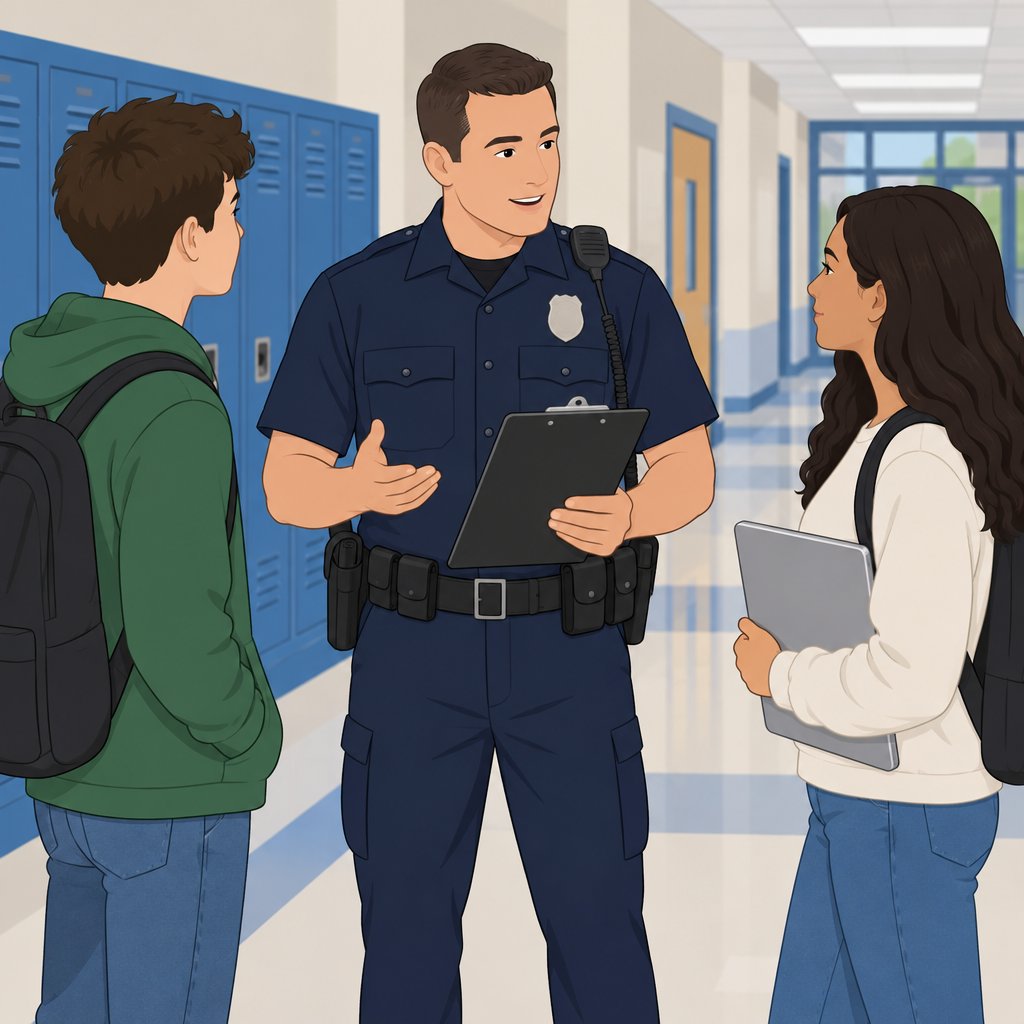
By building positive relationships, officers seek to develop trust with students.
Across the United States, school districts use different SRO structures and strategies.
Some officers emphasize community policing and mentorship within their schools.
Other officers prioritize strict enforcement of applicable laws.
These varied approaches address the distinct needs and challenges of each school district.
Ultimately, SRO programs support student safety and well-being nationwide.
Evolution of SRO Programs
SRO programs have changed considerably since their early development in American schools.
Their responsibilities expanded beyond order maintenance toward relationship building and prevention.
These changes reflected growing attention to comprehensive school safety and student needs.
Historical Background of SRO Programs
The first SRO program began in Flint, Michigan, during the 1950s.
At first, SROs mainly maintained order and discipline within schools.
Schools often viewed SROs as officers stationed there to address criminal incidents.
- The first SRO program appeared in Flint, Michigan, during the 1950s.
- Initially, SROs focused primarily on maintaining school order and discipline.
- Schools often assigned SROs to handle criminal incidents on campus.
- Over time, SROs developed positive relationships with students, staff, and community members.
Changes and Adaptations in SRO Programs
SRO training expanded to address conflict resolution, restorative justice, and adolescent development.
Programs gradually replaced strictly punitive practices with broader approaches to school safety.
SROs also began collaborating with administrators, counselors, and mental health professionals.
- SROs received training in conflict resolution, restorative justice, and adolescent development.
- Programs shifted from punitive responses toward comprehensive approaches to school safety.
- SROs collaborated with administrators, counselors, and mental health professionals.
- Prevention and early intervention became important parts of SRO programs.
Impact of School Shootings on SRO Programs
The Columbine High School shooting in 1999 increased national attention toward school safety.
Afterward, many schools implemented or expanded SRO programs across the country.
Schools viewed SROs as resources for deterring and responding to campus violence.
- The Columbine High School shooting in 1999 intensified attention toward school safety.
- Many schools subsequently implemented or expanded their SRO programs.
- Schools used SROs to deter and respond to potential campus violence.
- SROs helped develop emergency response plans and conduct active shooter drills.
Role of School Resource Officers
SROs serve within schools as law enforcement officers assigned to educational settings.
They patrol grounds, respond to incidents, investigate threats, and support school safety efforts.
They also coordinate with administrators to address security needs and emergency preparedness.
Responsibilities and Daily Duties
During daily operations, SROs maintain a visible presence across school grounds.
They respond to incidents and investigate potential threats when concerns arise.
Additionally, they help administrators develop safety plans and conduct security assessments.
These activities support students, teachers, and staff in maintaining a secure learning environment.
Relationships Within the School Community
Effective service also depends on relationships with students, faculty, and school staff.
By building trust, SROs can support students during difficult situations.
They can also address conflicts before those situations become more serious.
Furthermore, positive relationships encourage communication throughout the school community.
This cooperation helps create an environment where people feel valued and respected.
Training and Professional Qualifications
SROs complete specialized training for their responsibilities within schools.
Their preparation may include adolescent development, conflict resolution, and mental health awareness.
They also study de-escalation techniques and emergency response practices.
In addition, SROs need communication skills, empathy, and collaborative abilities.
They must adapt their approach to students with different backgrounds and circumstances.
Most SROs bring prior law enforcement experience to their school assignments.
Transform Your Career Today
Unlock a personalized career strategy that drives real results. Get tailored advice and a roadmap designed just for you.
Start NowThey must meet agency requirements, complete specialized programs, and pass background checks.
Through these qualifications, SROs support a positive and secure learning environment.
Delve into the Subject: Common Misconceptions About ICE Agents
Controversies Surrounding SRO Programs
- Debate over police presence in schools.
- Concerns about discrimination and excessive force by SROs.
- Efforts to address controversies and improve SRO programs.
One major controversy involves the ongoing debate over police presence in schools.
Critics argue that officers on campus can harm school climate and reinforce the school-to-prison pipeline.
They also believe SROs can criminalize minor infractions and disproportionately target students of color.
Furthermore, critics have raised concerns about discrimination and excessive force by SROs.
Some critics have accused SROs of using excessive force against students.
Such incidents can cause physical injuries and psychological trauma.
Critics also question whether SROs receive enough training to work effectively with young people.
They argue that officers may escalate situations instead of using de-escalation techniques.
In response, some schools provide SROs with additional training.
This training can cover conflict resolution, cultural awareness, and work with youth.
Other schools use restorative justice practices instead of traditional disciplinary measures.
Additionally, some stakeholders want schools to reevaluate the role of SROs.
They also encourage schools to consider alternative approaches to safety.
These controversies show how difficult it can be to balance safety with unintended consequences.
Therefore, stakeholders should continue discussing solutions that protect every student’s well-being and safety.
You Might Also Like: Emergency Preparedness Tips from Disaster Coordinators
Variations in SRO Program Implementation
SRO programs differ significantly in structure and organization across states.
These differences can influence program effectiveness and relationships among officers, schools, students, and communities.
Local needs and available resources often shape how communities develop and maintain these programs.
Program Structure and Organization
Some states use centralized programs that assign officers to specific schools within a district.
This structure can improve coordination and communication between schools and law enforcement.
Other states use decentralized programs, while hybrid models share officers among multiple schools.
- Centralized programs assign officers to specific schools within a district.
- Decentralized programs require individual schools to hire and manage their own officers.
- Hybrid programs share officers between schools or rotate them among different locations.
Firearms and Use of Force Policies
States also differ in their rules governing firearms for officers working on school grounds.
Some states require officers to carry firearms, while others allow districts to make that decision.
Use-of-force policies and training requirements also vary, including instruction in de-escalation and conflict resolution.
- Some states require all SROs to carry firearms while on duty.
- Some districts decide whether officers carry firearms at school.
- States establish different standards for force, de-escalation, and conflict resolution.
Collaboration Among Schools, Law Enforcement, and Communities
Strong partnerships can provide additional resources and support for SRO programs.
Task forces and committees can oversee programs, identify improvements, and develop useful practices.
Community engagement encourages communication and feedback from students, parents, and other stakeholders.
- Schools, law enforcement agencies, and community organizations can build stronger partnerships.
- Task forces and committees can review program performance and recommend improvements.
- Community engagement can strengthen trust and support safer learning environments.
Communities can tailor SRO initiatives to their specific challenges and goals.
This approach allows local partners to align program practices with available resources.
Careful coordination can support safer and more supportive learning environments for students.
Find Out More: Counterterrorism Specialist: Case Study on 9/11 Attacks
Success Stories of SRO Programs
One successful SRO program operates at a high school in Texas.
The school reported fewer bullying incidents and stronger feelings of safety among students.
Students also felt more comfortable discussing concerns with the SRO.
- A Texas high school reported fewer bullying incidents.
- Students at that school reported feeling safer.
- Students felt comfortable discussing concerns with the SRO.
- A California middle school also operates an SRO program.
- The program helped prevent student drug use and reduce truancy.
Impact of SROs on Crime Reduction
SRO programs have been associated with lower crime rates on school premises.
Their law enforcement presence can deter potential criminals from illegal activity.
Transform Your Career Today
Unlock a personalized career strategy that drives real results. Get tailored advice and a roadmap designed just for you.
Start NowStudents may also avoid bringing weapons or drugs to school when an SRO is present.
- SRO programs have been associated with reduced crime on school premises.
- Law enforcement presence can discourage illegal activity.
- Students may avoid bringing weapons or drugs to school.
- Schools with active SRO programs have reported fewer violent incidents.
Positive Relationships with Students
SROs can build positive relationships with students through daily interactions.
They can offer mentorship, guidance, and reassurance within the school environment.
Students may view an SRO as a trusted adult who can provide help.
- SROs can build positive relationships with students.
- They provide mentorship and guidance.
- They can give students a stronger sense of security.
- Students may seek help from SROs as trusted adults.
Testimonials from Stakeholders
School administrators have praised SRO programs for supporting school safety.
Parents often feel reassured when police officers remain present on school grounds.
Students have expressed appreciation for SRO support during difficult situations.
- Administrators praise SRO programs for improving school safety.
- Parents feel reassured by police presence on school grounds.
- Students appreciate SRO support during difficult situations.
- Families believe SRO programs can enhance the learning environment.
Benefits for School Communities
These examples show how SRO programs can support safety and crime reduction.
They can also help prevent violence and encourage constructive student relationships.
By providing security and support, SROs may help students thrive academically and emotionally.
Uncover the Details: The Role of Intelligence in Diplomatic Security
Challenges Faced by SRO Programs
School Resource Officer programs across the USA face challenges that can affect their effectiveness.
These challenges can influence school safety and relationships between law enforcement and students.
Addressing these concerns can strengthen SRO initiatives and support safer learning environments.
Budget Constraints and Resource Limitations
Budget constraints can limit funding for SRO programs in many school districts.
Consequently, some schools experience inadequate coverage or share officers across multiple campuses.
Limited staffing can prevent officers from building meaningful connections with students and staff.
Training and Support Needs for SROs
SROs may need additional training to address student mental health and behavioral issues.
Although officers receive basic law enforcement training, they may lack specialized knowledge.
Additional resources can help officers respond effectively during crises and support students in distress.
Strategies for Improving SRO Programs
Schools can improve SRO programs by combining collaboration, training, evaluation, engagement, and advocacy.
These strategies can address resource limitations while supporting positive relationships within school communities.
Effective implementation requires schools and law enforcement agencies to coordinate their efforts.
- Schools can collaborate with mental health professionals and counselors to support students.
- Enhanced training can develop SRO skills in de-escalation and conflict resolution.
- Training can also improve officers’ understanding of adolescent behavior.
- Regular evaluations can identify improvements and guide effective resource allocation.
- Community engagement can build trust among SROs, students, and families.
- Advocacy can support increased funding, adequate staffing, and comprehensive training opportunities.
Through these efforts, schools can create supportive environments while strengthening cooperation with law enforcement.
Collaboration, training, and resource allocation remain essential to effective SRO initiatives.
Sustaining Collaborative School Safety
SRO programs enhance school safety and foster positive relationships between law enforcement and students.
Additionally, these programs can decrease violence, prevent crime, and promote security within school communities.
Continued support and improvement can help protect students and staff.
Therefore, school administrators, law enforcement agencies, parents, and students should collaborate consistently.
Working together can sustain SRO programs across the USA and create safer learning environments.
Additional Resources
Google search results for School Resource Officer Programs Across the USA Protective Services
Bing search results for School Resource Officer Programs Across the USA Protective Services


