




Detail Orientation in Crime Scene Investigation
Crime scene investigation involves collecting, preserving, and analyzing evidence at a crime scene.
Because investigators must notice small details, accuracy remains essential throughout the process.
Detail orientation helps investigators uncover key evidence and solve cases effectively.
Accurate Evidence Collection
Careful investigators accurately document fingerprints, DNA, and trace evidence.
They record relevant details while collecting each item from the scene.
Consequently, thorough collection gives later analysis reliable material to examine.
Proper Crime Scene Preservation
Attention to detail helps investigators preserve crime scenes properly.
Investigators work to prevent contamination during evidence handling.
Therefore, proper preservation protects the evidence’s integrity for analysis.
Accurate Evidence Analysis
Detailed documentation supports accurate reconstruction of the crime scene.
Investigators analyze the evidence to clarify the sequence of events.
Additionally, accurate analysis leads to a better understanding of what happened.
Reliable Courtroom Testimony
Attention to detail remains important when investigators present evidence in court.
Accurate testimony helps make evidence reliable and admissible in legal proceedings.
Moreover, careful documentation supports clear explanations during testimony.
Accuracy Across the Investigation
Detail orientation strengthens evidence collection, preservation, analysis, and testimony.
Each stage depends on accurate work and careful documentation.
Together, these practices make detail orientation a cornerstone of successful criminal investigations.
Detail Orientation in Evidence Preservation
Attention to detail protects evidence integrity during crime scene investigations.
Investigators must record and collect findings accurately to support a successful investigation.
Every small observation can provide important information for reconstructing events.
Preserving Crime Scene Integrity
Preserving scene integrity helps investigators secure evidence that may clarify a case.
Each detail can contribute to understanding what happened.
Careful documentation and collection help investigators reconstruct events and identify possible suspects.
However, overlooked details can jeopardize an investigation.
Such oversights may contribute to wrongful convictions or allow guilty parties to escape accountability.
Accurate Evidence Collection and Documentation
Crime scene investigators document physical evidence through photographs, measurements, sketches, and written descriptions.
Moreover, careful work helps investigators avoid overlooking or mishandling evidence.
This process establishes a chain of custody for each piece of evidence.
Consequently, proper documentation supports the evidence’s admissibility in court.
Attention to detail also guides laboratory analysis.
Forensic scientists examine and interpret findings carefully to produce reliable results for court.
Consequences of Overlooking Small Details
Small omissions can affect identification, interpretation, and evidence admissibility.
For example, a missed fingerprint may prevent investigators from identifying a suspect.
Likewise, disregarded DNA may fail to clarify whether a suspect visited the scene.
An overlooked witness statement detail may distort the sequence of events.
Improperly handled physical evidence may lose its integrity and become inadmissible in court.
- A fingerprint on crucial evidence could remain undetected, preventing suspect identification.
- A trace amount of DNA could be disregarded, potentially excluding a suspect who was present.
- An overlooked witness statement detail could cause investigators to misunderstand the event sequence.
- A small physical evidence item could suffer mishandling, compromising its integrity and courtroom admissibility.
This disciplined approach supports accurate investigations and fair courtroom decisions.
It also helps investigators pursue accountability and provide closure for victims and their families.
Methods for Documenting and Analyzing Crime Scenes
Investigators use several methods to create a reliable record of a crime scene.
Transform Your Career Today
Unlock a personalized career strategy that drives real results. Get tailored advice and a roadmap designed just for you.
Start NowThese methods preserve visual information and clarify relationships among scene elements.
Together, they support careful review during later analysis.
- Photography captures the crime scene and preserves a visual reference for examination.
- Sketching shows spatial relationships between objects and other scene elements.
- Detailed notes record observations, measurements, and other relevant information.
Training and Qualifications for Detail-Oriented Skills
Education provides foundational knowledge for crime scene documentation and analysis.
Practical experience strengthens observation skills through internships or workplace training.
Certifications can validate professional expertise in crime scene investigation.
- A forensic science degree or related education develops essential investigative knowledge.
- Internships and on-the-job training help investigators refine detail-oriented abilities.
- The Certified Crime Scene Investigator certification validates expertise in this area.
Technology Supporting Detailed Crime Scene Investigation
Technology expands the amount of information investigators can capture and examine.
Digital tools also help organize evidence and support more precise analysis.
As a result, investigators can review crime scenes from multiple perspectives.
- Three-dimensional scanning documents crime scenes with precise spatial information.
- Forensic software organizes evidence and supports detailed digital analysis.
- Drones capture aerial footage that provides a broader view for examination.
Discover More: Public Safety Officer: Safety Protocols and Procedures
Attention to Detail in Investigations
Attention to detail can reveal evidence, clarify events, and strengthen courtroom support.
However, investigators can lose valuable leads when they overlook, mishandle, or inaccurately record information.
Therefore, careful observation and thorough documentation can influence each stage of an investigation.
Successful Outcomes From Detailed Investigation
For example, forensic scientists matched one hair strand to the suspect’s DNA profile during a murder investigation.
Meanwhile, detectives meticulously reviewed surveillance footage and found a detail placing the suspect at the crime scene.
Additionally, investigators examined nearby tire tracks and identified the vehicle’s make and model after a hit-and-run.
Investigation Challenges Caused by Missed Details
However, investigators overlooked fingerprints at one crime scene, creating a dead end.
Similarly, a missing piece of evidence delayed the investigation and allowed the perpetrator to evade capture.
Moreover, inaccurate witness-statement records created confusion and inconsistencies that hindered the case.
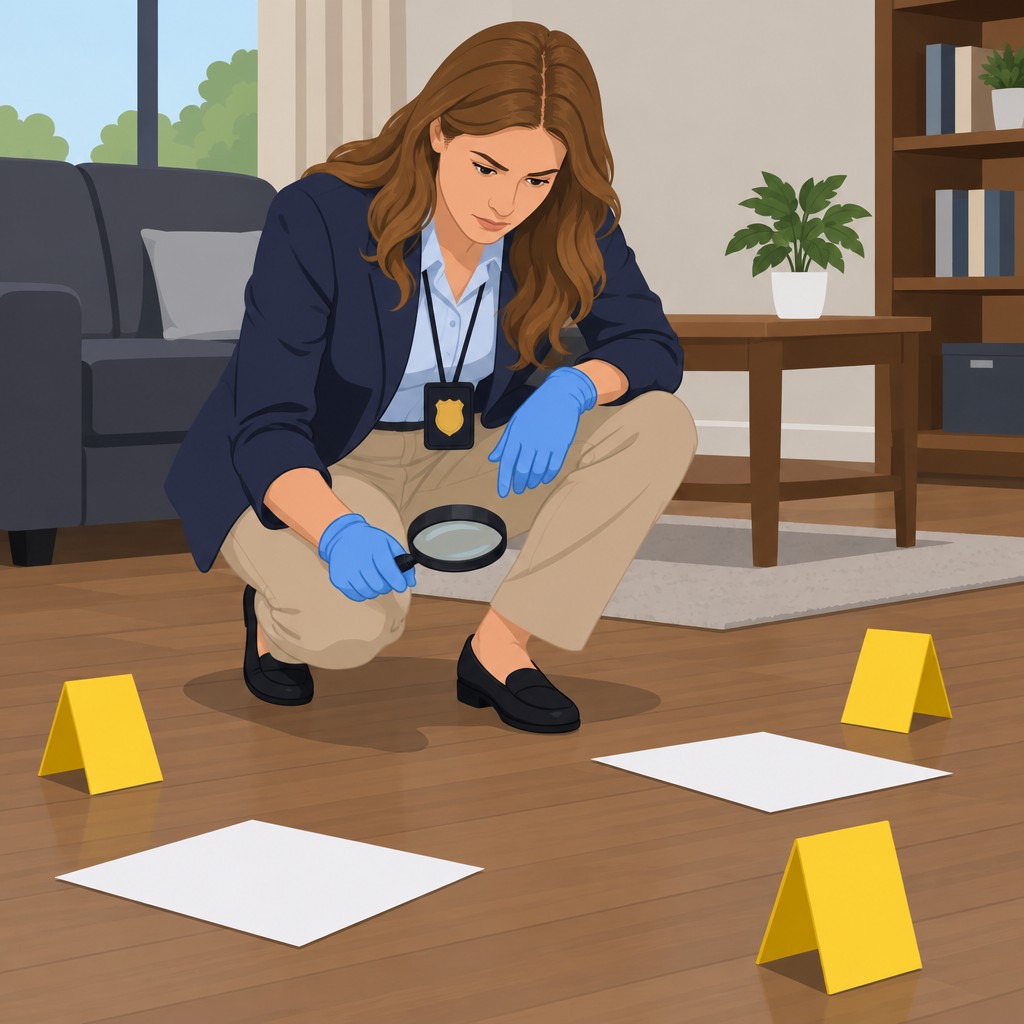
Documentation That Strengthens Case Outcomes
Detailed interview notes provided crucial information that helped investigators unravel a complex crime.
Furthermore, properly documented evidence chains preserved forensic integrity and supported the findings in court.
Thorough crime-scene documentation enabled investigators to reconstruct events with precision and accuracy.
Learn More: The Evolution of Private Investigations Over Time
Collaboration and Communication in Crime Scene Investigations
Collaboration and communication strengthen detail-oriented crime scene investigations.
Teamwork combines investigators’ resources, skills, and expertise during each case.
Clear communication helps investigators share observations and develop more accurate conclusions.
- Teamwork among investigators
- Detailed information sharing
- Successful investigative collaboration
Investigators pool different perspectives, which can reveal aspects one person might miss.
They share detailed observations so the team can connect evidence and clarify the case.
Trust and mutual respect encourage investigators to communicate openly throughout the investigation.
Examples of Successful Investigative Collaboration
Successful collaborations rely on open communication, trust, and mutual respect among team members.
During the 2013 Boston Marathon bombing investigation, various agencies worked together to collect and analyze evidence.
Their coordinated efforts led to identifying and capturing the suspects.
In another homicide investigation, forensic scientists, law enforcement officers, and medical examiners coordinated their work.
They shared detailed information and secured vital evidence for the successful prosecution of the perpetrator.
You Might Also Like: Legal Limitations Private Investigators Must Follow
Maintaining Detail Orientation During Complex Investigations
Crime scene investigations require sustained attention to detail.
Complex investigations can make it difficult to maintain consistent focus.
Investigators can improve accuracy by recognizing obstacles and applying focused strategies.
Challenges That Reduce Investigative Focus
Several conditions can interfere with an investigator’s ability to notice and evaluate important details.
Recognizing these conditions helps investigators respond before mistakes affect their work.
Therefore, investigators should monitor their working conditions and mental state throughout each investigation.
Transform Your Career Today
Unlock a personalized career strategy that drives real results. Get tailored advice and a roadmap designed just for you.
Start Now- External noise, interruptions, and chaotic environments can divert attention from important details.
- Long investigations and insufficient rest can reduce cognitive abilities and focus.
- High-pressure situations, emotional stress, and heavy workloads can impair concentration.
- Preconceived notions can prevent investigators from considering evidence objectively.
- Limited time can cause investigators to overlook crucial details.
Strategies for Sustaining Careful Attention
Investigators can protect their focus by organizing work and using reliable procedures.
Team support and brief mental breaks can also strengthen accuracy during demanding investigations.
Additionally, training and technology can help investigators work efficiently without neglecting important details.
- Prioritize tasks, create checklists, and follow a systematic approach.
- Share findings with team members and cross-check observations.
- Take short breaks to refresh the mind and reduce mental fatigue.
- Attend workshops and practice investigative skills through simulations.
- Use forensic software, digital imaging, and databases to improve accuracy and efficiency.
Self-Awareness and Continuous Improvement
Self-awareness helps investigators identify weaknesses and biases that may affect their attention to detail.
By acknowledging these limitations, investigators can address obstacles and strengthen their investigative skills.
Regular training, feedback, and reflection allow investigators to learn from mistakes.
Investigators should remain informed about current techniques, technologies, and best practices.
A growth mindset encourages investigators to pursue consistent accuracy and professional excellence.
Through continuous improvement, investigators can maintain strong detail orientation during complex investigations.
Delve into the Subject: Real-life Stories of K-9 Officers and Their Dogs
Legal Implications of Detail-Oriented Crime Scene Investigation
Detail-oriented crime scene investigation carries important legal consequences.
Investigators must examine, preserve, and document evidence carefully.
These practices help courts evaluate evidence and investigative reliability.
- Attention to detail can influence evidence admissibility.
- Thorough documentation can help build a strong case.
- Detail orientation can affect investigator credibility during legal proceedings.
Attention to Detail and Evidence Admissibility
Evidence admissibility depends partly on how investigators collect, preserve, and document evidence.
Judges and juries rely on accurate evidence during legal proceedings.
Therefore, investigators should record chain-of-custody details and label every item properly.
They should also document how personnel collect and process each piece of evidence.
Missing details or inconsistencies can raise doubts about evidence integrity.
Consequently, the court may exclude evidence when investigators cannot establish reliable handling.
Thorough Documentation and Case Development
Detailed notes, photographs, sketches, and reports create a comprehensive crime scene record.
Investigators, prosecutors, and defense attorneys can use this record during legal proceedings.
Furthermore, documentation helps establish the facts surrounding the case.
It also clarifies the sequence of events and the significance of collected evidence.
A well-organized record helps legal teams present a coherent explanation in court.
Conversely, incomplete documentation can weaken the case and create doubts about investigative reliability.
Investigator Credibility in Legal Proceedings
Investigators must demonstrate professionalism, accuracy, and careful attention during legal proceedings.
Judges, juries, and legal professionals evaluate how investigators perform their duties.
Accordingly, investigators should explain their methods clearly and support their findings with records.
Thorough work can help investigators appear reliable and trustworthy as witnesses.
That credibility can strengthen the case and support the presentation of investigative findings.
However, careless work can question investigator competence and undermine the investigation’s integrity.
Detail Orientation and Investigative Accuracy
Attention to detail can make or break a crime scene investigation.
Every small detail, including fingerprints and fibers, can provide critical evidence for solving crimes.
Detailed documentation ensures investigators do not overlook or misinterpret important information.
Protecting the Integrity of Investigations
Precise evidence collection helps investigators reconstruct the sequence of events accurately.
A meticulous approach maintains the integrity of the investigative process.
Investigators who miss crucial details may wrongly accuse people or overlook suspects.
Applying Detail Orientation to Support Justice
Detail orientation supports justice during crime scene investigations.
Investigators should prioritize careful observation throughout their work.
By noticing the smallest details, investigators can make a significant impact when solving crimes.
Transform Your Career Today
Unlock a personalized career strategy that drives real results. Get tailored advice and a roadmap designed just for you.
Start Now


