




Conflict Resolution Skills for Campus Security Officers
Conflict resolution skills help campus security officers maintain a safe and secure environment.
These skills support officers during disputes between students.
They also help officers address unauthorized access or disruptive behavior.
Campus Security Officers and Conflict Resolution
Campus security officers help protect people, property, and daily activities across the campus.
They patrol grounds, respond to incidents, enforce policies, and assist students, faculty, and staff.
Through these duties, officers support order and safety while addressing concerns as they arise.
- Patrol campus grounds to prevent crime and maintain order
- Respond to emergencies and incidents that threaten campus safety
- Enforce campus policies and regulations to ensure compliance
- Offer assistance and support to students, faculty, and staff
Importance of a Safe and Secure Campus Environment
A secure campus gives people a more supportive setting for learning and work.
Safety measures can strengthen trust and confidence within the campus community.
They can also reduce risks involving violence, theft, and other crimes while supporting institutional reputation.
- Creates a conducive learning and working environment for all
- Builds trust and confidence in the campus community
- Reduces the risk of violence, theft, and other crimes on campus
- Enhances the reputation and image of the institution
Role in De-escalating Volatile Situations
Officers can identify warning signs and assess situations that may become volatile.
They communicate clearly to lower tension and encourage peaceful resolution.
They also remain calm and work with campus stakeholders to address underlying concerns.
- Recognize and assess potentially volatile situations
- Use effective communication techniques to defuse conflicts
- Remain calm and composed to set a positive tone for resolution
- Collaborate with other campus stakeholders to address underlying issues
Building Effective Communication Skills
Effective communication helps campus security officers understand conflicts clearly.
It supports peaceful discussions when people explain their perspectives and concerns.
Therefore, clear exchanges can help officers identify issues and work toward solutions that satisfy everyone.
Importance of Clear Communication in Conflict Resolution
Clear communication allows each person to understand others’ perspectives and concerns.
It can reduce tension by encouraging focused discussion.
Additionally, respectful exchanges support peaceful resolutions.
Training in Active Listening and Effective Verbal Communication
Active listening requires full attention to the speaker’s message.
Officers should understand the message before responding appropriately.
Meanwhile, verbal communication should remain respectful, assertive, and solution focused.
Strategies for Improving Communication Skills in High-Stress Situations
Officers can strengthen communication by practicing specific techniques during tense situations.
Nonverbal cues can reinforce empathy when conversations become difficult.
Feedback and training can help officers improve after resolving a conflict.
- Practice active listening by focusing on the speaker without interrupting.
- Maintain eye contact and ask clarifying questions to ensure understanding.
- Use body language, facial expressions, and gestures to convey empathy.
- Use a calm and neutral tone during tense situations.
- Avoid aggressive language and choose words that promote empathy.
- Seek feedback from all parties after resolving a conflict.
- Attend workshops, seminars, or courses focused on communication and conflict resolution.
See Related Content: Building Rapport as a Parole Officer
Emotional Awareness in Conflict Resolution
Emotions strongly influence how people perceive and respond to campus conflicts.
They can cloud judgment, increase tension, and encourage irrational behavior.
Therefore, officers need emotional awareness to address conflicts effectively and safely.
The Role of Emotions in Conflict Resolution
Recognizing emotional reactions helps officers understand why conflicts escalate or de-escalate.
Strong emotions may affect decisions and change how individuals interpret each interaction.
By identifying these effects, officers can choose more appropriate conflict resolution strategies.
Managing Personal Emotions During Conflicts
Security officers must recognize their personal emotions during challenging situations.
Self-awareness allows officers to identify triggers before those reactions affect their conduct.
Deep breathing, brief assessments, and empathy can help officers regulate their responses.
Remaining Calm in Tense Situations
Officers need to remain calm and composed during tense or stressful encounters.
Composure supports de-escalation, encourages rapport, and helps officers make rational decisions.
As a result, officers can assess situations carefully and respond professionally.
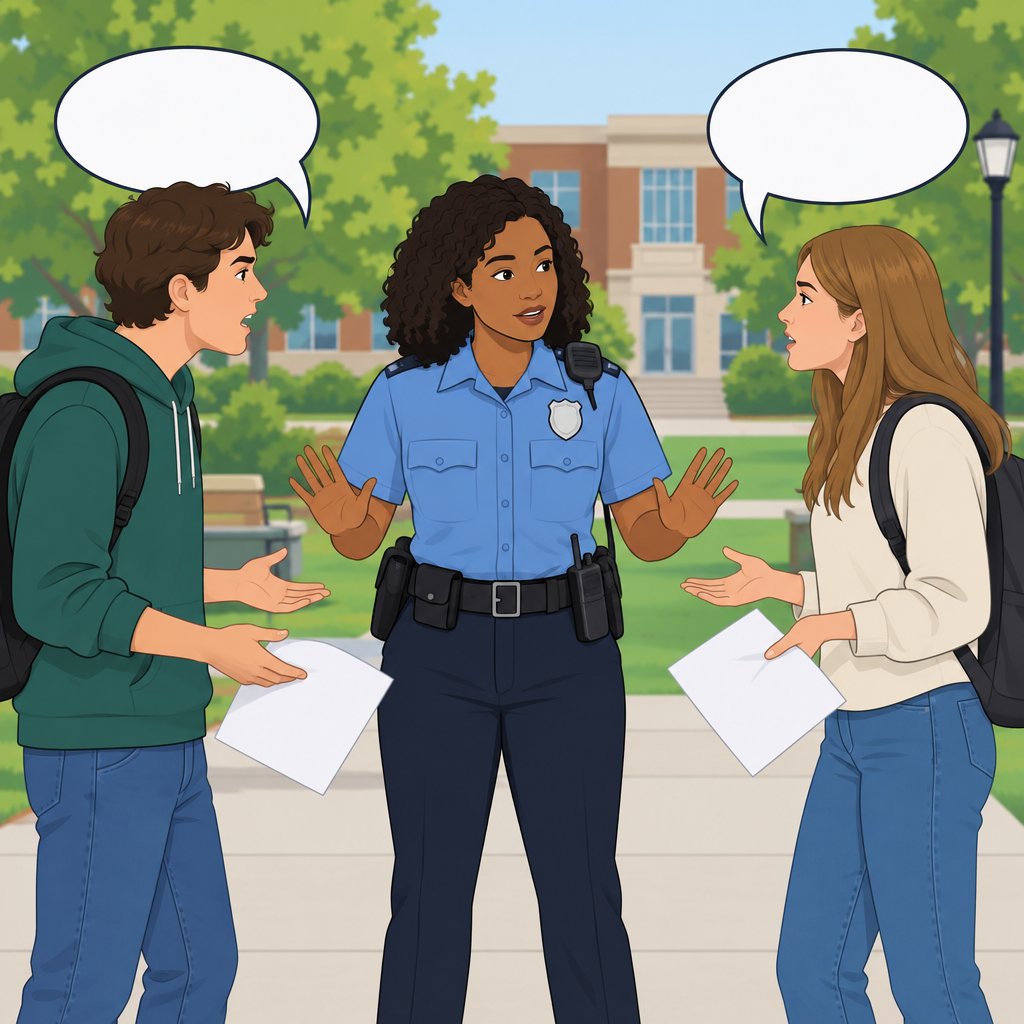
Emotional Regulation and Campus Safety
Emotional regulation helps officers address campus conflicts with greater control.
Officers who manage emotions can support safer interactions for everyone involved.
These practices help maintain a secure campus environment during difficult encounters.
Transform Your Career Today
Unlock a personalized career strategy that drives real results. Get tailored advice and a roadmap designed just for you.
Start NowUncover the Details: Nuclear Security Officer: Emergency Response
De-escalation Techniques
De-escalation techniques help campus security officers maintain safety and order during potentially volatile situations.
These methods give officers practical ways to reduce tension before conflicts become violent.
Officers can recognize escalating behavior and intervene early.
- Overview of different de-escalation strategies
- Training in non-violent conflict resolution tactics
- Role-playing scenarios to practice de-escalation skills
Non-violent conflict resolution training prepares officers to manage campus conflicts without using force.
Training teaches assertive communication, active listening, and empathy for people experiencing distress.
Additionally, officers learn to remain calm, composed, and professional during challenging encounters.
A positive attitude can project authority and control without increasing tension.
Staying level-headed helps officers diffuse potentially dangerous situations.
Role-playing scenarios let officers practice these skills in controlled settings.
Simulated conflicts test how effectively officers communicate, reduce tension, and pursue peaceful resolutions.
Furthermore, practice helps officers strengthen their responses to realistic situations.
Officers should use verbal and non-verbal communication to establish rapport with people in crisis.
Empathy, active listening, and understanding can build trust during tense encounters.
That trust can support peaceful conflict resolution.
Officers also need to identify situations requiring additional support or intervention.
They should understand their limits and request backup when necessary.
Calling other authorities can help officers reduce risks and protect everyone involved.
By mastering these techniques through training and practice, officers can prevent violence and promote safety.
These skills also support respectful resolutions across campus.
You Might Also Like: Day-to-Day Duties of Campus Security Officers
Conflict Resolution Policies and Procedures
- Campus security protocols for handling conflicts
- Legal implications of conflict resolution
- Documentation and reporting procedures
Clear policies help campus security officers manage conflicts that arise on campus grounds.
These procedures guide officers toward consistent decisions during challenging incidents.
They also support safer responses for everyone on campus.
Familiarization with Campus Security Protocols
Security officers must understand the protocols established by their campus security department.
These protocols address student altercations, theft, and unauthorized campus access.
Therefore, officers can respond promptly and appropriately when conflicts develop.
Understanding Legal Implications
Officers need a clear understanding of legal requirements during conflict resolution.
They must recognize when the law justifies using force.
Additionally, officers should follow lawful procedures to reduce potential legal consequences.
Documentation and Reporting Procedures
Officers should document every relevant detail after a conflict incident.
Accurate records provide a clear account of what occurred.
Furthermore, timely reports support legal reviews and future improvements to security procedures.
Consistent reporting helps campus security maintain a safe environment.
See Related Content: How School Resource Officers Improve School Security
Collaborating with Campus Resources
Campus resources strengthen conflict resolution for campus security officers.
These partnerships help officers manage disputes while supporting a safer, more harmonious campus environment.
Additionally, coordinated support connects involved individuals with appropriate assistance.
Counseling Services and Student Affairs Support
Counseling services and student affairs departments offer valuable support during campus conflicts.
Trained professionals can guide officers as they manage difficult situations.
Transform Your Career Today
Unlock a personalized career strategy that drives real results. Get tailored advice and a roadmap designed just for you.
Start NowMoreover, officers can refer involved individuals for mediation, counseling, or other support services.
Relationships with Campus Staff
Strong relationships with campus staff help officers address conflicts effectively.
Collaboration with faculty, administrators, residence life staff, and other personnel improves timely coordination.
These connections also provide insights that support proactive conflict prevention.
Teamwork for Complex Conflicts
Teamwork helps officers resolve complex conflicts that require several perspectives.
By working with campus resources, officers can develop comprehensive strategies for de-escalation and understanding.
Consequently, collaboration can foster community and mutual respect across campus.
Handling Confrontations with Students and Visitors
Campus security officers must manage confrontations calmly and professionally.
These situations may involve students, visitors, campus rules, or safety concerns.
Therefore, officers should protect everyone while working toward peaceful resolutions.
Managing Conflicts with Students
Officers should remain calm and neutral during confrontations with students.
They should listen actively while students explain their concerns and grievances.
Clear, assertive communication can lower tension and support peaceful solutions.
- Remain calm and approach the situation with a neutral attitude.
- Listen actively to the student’s concerns and grievances.
- Communicate clearly and assertively to de-escalate the situation.
- Offer solutions or compromises to resolve the conflict peacefully.
- Seek assistance from campus staff or authorities when necessary.
Responding to Hostile Visitors
Officers should address hostile visitors politely while firmly enforcing campus rules.
Maintaining a safe distance can reduce tension and protect everyone nearby.
When necessary, officers should request backup or law enforcement support.
- Ask the visitor politely but firmly to follow campus rules.
- Maintain a safe distance and avoid escalating the situation.
- Call for backup or law enforcement support when necessary.
- Document the incident thoroughly for future reference and follow-up actions.
- Escort threatening visitors from campus premises when appropriate.
Protecting Everyone During Confrontations
Officers must prioritize the safety and well-being of everyone involved.
They should act swiftly but cautiously to prevent injuries or property damage.
Afterward, officers should address contributing issues and help prevent similar incidents.
- Prioritize the safety and well-being of all involved parties.
- Act swiftly but cautiously to prevent physical harm or property damage.
- Use active listening and conflict resolution skills during confrontations.
- Provide support and resources to people experiencing distress.
- Follow up with measures that address the conflict’s underlying cause.
Professional conduct helps officers manage confrontations while maintaining campus safety.
Consistent attention to safety can support a more secure campus environment.
Continuous Training and Professional Development
- Importance of ongoing training in conflict resolution techniques
- Attending workshops and seminars to enhance skills
- Seeking feedback and self-evaluation for improvement
Continuous training and professional development equip campus security officers to handle conflicts effectively.
These activities provide knowledge and skills for navigating challenging situations on campus.
Furthermore, consistent preparation helps officers maintain a safe environment during difficult encounters.
Ongoing Training in Conflict Resolution Techniques
Regular training helps campus security officers strengthen their conflict resolution techniques.
Officers can use these techniques to de-escalate tensions and resolve disputes more effectively.
Additionally, continued practice prepares officers to manage confrontations before situations escalate.
Workshops and Seminars for Skill Development
Workshops and seminars provide security officers with valuable conflict resolution insights.
These events introduce practical strategies that officers can apply during campus conflicts.
Moreover, learning from experts helps officers gain perspectives and expand their response options.
Feedback and Self-Evaluation for Improvement
Feedback from supervisors and colleagues can reveal strengths and areas needing improvement.
Input from people involved in conflicts also helps officers assess their performance.
Through self-evaluation, officers can reflect on their actions and adjust future approaches.
Prioritizing professional development strengthens conflict resolution abilities among campus security officers.
As officers improve their skills, they can contribute to a safer campus community.
Ultimately, ongoing preparation supports more effective responses to challenging campus situations.
Campus Safety Through Conflict Resolution
Conflict resolution helps campus security officers maintain a safe and secure environment on campus.
Effective communication and de-escalation techniques can prevent potential conflicts from becoming dangerous situations.
Therefore, officers should continually develop and refine their conflict resolution skills for challenging scenarios.
By staying calm, empathetic, and assertive, officers can manage conflicts and protect students, faculty, and staff.
Transform Your Career Today
Unlock a personalized career strategy that drives real results. Get tailored advice and a roadmap designed just for you.
Start NowAs the first line of defense during emergencies, security officers help safeguard the campus community.
For this reason, officers should prioritize conflict resolution training and review current de-escalation practices.
These skills help officers mitigate potential threats and maintain a secure campus environment.
Skilled officers can support a positive and peaceful atmosphere across campus.
Additional Resources
Google search results for Conflict Resolution for Campus Security Officers Protective Services
Bing search results for Conflict Resolution for Campus Security Officers Protective Services


