




Introduction
A Nuclear Security Officer helps ensure safety and security within a nuclear facility.
This role focuses on maintaining both safety and security responsibilities.
Therefore, the position supports secure operations inside the facility.
Brief Overview of the Role of a Nuclear Security Officer
A Nuclear Security Officer ensures the safety of a nuclear facility.
The officer also helps maintain the facility’s security.
These responsibilities place the officer at the center of facility protection.
Importance of Emergency Response Skills in Nuclear Security
Emergency response skills help officers handle incidents quickly.
They also support effective action when threats arise within a nuclear facility.
Consequently, these skills remain crucial to nuclear security.
Duties of a Nuclear Security Officer
Nuclear security officers protect facilities and materials against potential threats.
They also conduct patrols and monitor security systems throughout the site.
These duties support controlled access, prompt detection, and reliable security readiness.
- Protecting nuclear facilities and materials
- Conducting security patrols
- Monitoring security systems
Protecting Nuclear Facilities and Materials
The officer safeguards nuclear facilities and materials against potential threats.
This responsibility requires security measures that prevent unauthorized access.
The officer also ensures that personnel follow protocols protecting the site’s safety and integrity.
During emergencies, the officer responds swiftly and decisively to contain breaches or attempted theft.
Additionally, the officer may coordinate with law enforcement and emergency responders to address threats.
Conducting Security Patrols
The officer conducts regular patrols across the premises.
These patrols help detect suspicious activity and deter potential threats.
During inspections, the officer checks perimeter fencing and access points.
The officer also monitors surveillance cameras for unauthorized individuals or unusual behavior.
By maintaining a visible presence, the officer addresses issues promptly and helps protect the facility.
Monitoring Security Systems
The officer monitors security systems and confirms that they function correctly.
This work includes overseeing access controls, alarm monitoring, and CCTV cameras.
These systems alert personnel to anomalies and support continuous security readiness.
When an alert occurs, the officer assesses the situation and takes appropriate action.
Quick, effective responses help prevent incidents that could compromise the facility’s integrity.
Training Required for a Nuclear Security Officer
Training prepares nuclear security officers to respond to threats and emergencies at nuclear facilities.
These requirements combine emergency response skills, firearms proficiency, and physical readiness.
Together, they support safe and effective action during demanding situations.
- Emergency response training
- Firearms training
- Physical fitness requirements
Emergency Response Training
Emergency response training prepares officers for incidents at nuclear facilities.
For example, simulations may involve security breaches, terrorist attacks, or natural disasters.
During these exercises, officers practice communication, established procedures, and rapid decision-making.
They also coordinate responses with law enforcement, emergency medical services, and other relevant agencies.
In addition, officers learn to use radiation detection devices, protective gear, and emergency communication systems.
This preparation supports facility security and personnel safety during a crisis.
Firearms Training
Firearms training helps officers respond effectively to armed threats at nuclear facilities.
Officers receive instruction in marksmanship, firearms safety, and proper weapon handling.
They also learn to maintain and clean their firearms.
Furthermore, training covers responses to different threats while limiting risks to others.
Transform Your Career Today
Unlock a personalized career strategy that drives real results. Get tailored advice and a roadmap designed just for you.
Start NowRegular practice helps officers maintain their skills for high-stress situations.
This preparation supports the facility’s security and defense.
Physical Fitness Requirements
Physical fitness helps officers perform their responsibilities effectively.
Officers need stamina, strength, agility, and overall physical health.
They may patrol large areas and respond quickly to alarms.
In some situations, they may confront intruders or attackers physically.
Therefore, fitness assessments may measure endurance, strength, flexibility, and general conditioning.
Regular tests and conditioning programs help officers maintain the required fitness level.
See Related Content: Day-to-Day Duties of Campus Security Officers
Emergency Response Skills in Nuclear Security
Emergency response skills are crucial for nuclear security officers.
These skills help officers protect people and facilities during emergencies.
They also support quick decisions and controlled actions when threats arise.
Rapid Responses to Potential Threats
Officers must respond swiftly when they identify potential threats.
A delayed reaction could allow an incident to escalate and create catastrophic consequences.
Therefore, decisive action helps officers protect everyone involved.
Protection for Personnel and Facilities
Nuclear security officers safeguard personnel working at the facility.
They also protect the facility during breaches and hazardous materials incidents.
Effective emergency responses can limit harm and prevent minor incidents from becoming major disasters.
Risk Management During Emergencies
Emergency situations create serious risks, especially inside a nuclear facility.
Officers can assess conditions, follow response protocols, and contain threats before they escalate.
These actions help protect people, property, the environment, and surrounding communities.
Discover More: How School Resource Officers Improve School Security
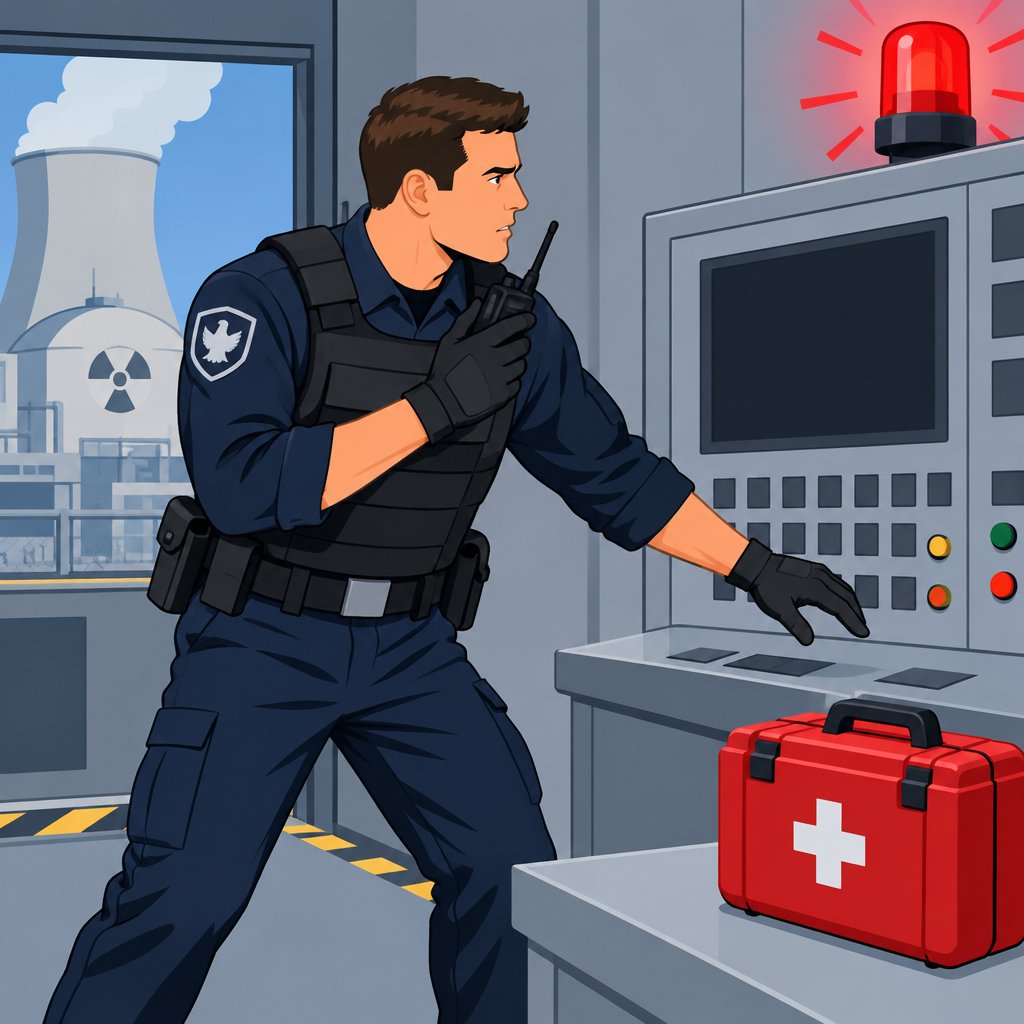
Emergency Response Plans
During a nuclear security crisis, effective management protects personnel, facilities, and nearby communities.
First, officers activate emergency response plans designed for specific nuclear facility scenarios.
These plans establish procedures for evacuation, sheltering, communication, and coordination with external agencies.
Officers must understand these plans and execute them quickly during emergencies.
Additionally, regular drills and training exercises prepare personnel for timely, coordinated responses.
Coordination with External Agencies
During a crisis, officers coordinate with local law enforcement, fire departments, and emergency medical services.
This unified response supports swift resolution and reduces risks to personnel and nearby communities.
Moreover, officers should establish direct communication lines with each external agency before emergencies occur.
They should also explain the facility’s specific challenges and response requirements.
This proactive coordination helps agencies respond efficiently during crisis situations.
Effective Crisis Communication
Clear, timely communication remains essential during a nuclear security crisis.
Officers share accurate information with facility personnel, external agencies, and the public.
This approach limits misinformation and confusion while supporting coordinated crisis actions.
Therefore, officers establish communication protocols and secure channels before emergencies occur.
These channels may include radios, mass notification systems, and social media platforms.
Crisis management in nuclear security requires a proactive, coordinated approach.
This approach supports personnel and facility safety during emergencies.
By combining plans, coordination, and communication, officers can mitigate risks and support effective responses.
Transform Your Career Today
Unlock a personalized career strategy that drives real results. Get tailored advice and a roadmap designed just for you.
Start NowExplore Further: How to Apply for a DEA Agent Position: Step-by-Step Guide
Handling Hazardous Materials
Nuclear Security Officers can handle hazardous materials by following proper procedures.
They can use protective gear and equipment to reduce exposure risks.
They also need adequate training for safe radioactive material handling.
- Proper procedures for responding to spills or leaks
- Use of protective gear and equipment
- Training on handling radioactive materials
Proper Procedures for Responding to Spills or Leaks
Nuclear Security Officers must respond quickly and effectively to hazardous material spills or leaks.
They should promptly assess the situation and contain the spill.
They must also notify the appropriate authorities.
Use of Protective Gear and Equipment
Officers must wear appropriate protective gear when handling hazardous materials.
This gear may include gloves, masks, goggles, and full-body suits.
Protective equipment minimizes exposure and reduces contamination risks.
Training on Handling Radioactive Materials
Proper training prepares Nuclear Security Officers to handle radioactive materials safely.
This training covers the safe handling, storage, and disposal of radioactive substances.
It also covers emergency response protocols for spills or leaks.
Following proper procedures helps officers handle hazardous materials effectively.
Using protective gear reduces exposure and contamination risks.
Adequate training supports facility safety and security.
Delve into the Subject: Frequently Asked Questions About DEA Agent Careers
Risk Assessment and Threat Identification
Nuclear security officers identify potential threats before those threats escalate.
They assess risks, implement security measures, and remain vigilant during facility operations.
This approach supports effective emergency responses and strengthens facility security.
Identifying Potential Security Threats
Officers stay informed about current security threats related to nuclear facilities.
Regular training and intelligence gathering help officers identify threats before they manifest.
Additionally, communication with other security agencies improves threat identification capabilities.
- Officers should monitor the latest security threat trends affecting nuclear facilities.
- Regular training helps officers recognize potential threats before they develop.
- Intelligence gathering provides information that supports early threat identification.
- Communication networks with other security agencies strengthen threat awareness.
Conducting Risk Assessments
Security teams conduct regular risk assessments to identify facility vulnerabilities.
They examine scenarios that could create emergencies within the facility.
Furthermore, experts can provide valuable insights during the assessment process.
- Regular assessments reveal vulnerabilities within the nuclear facility.
- Scenario analysis helps teams evaluate possible causes of emergencies.
- Expert collaboration strengthens the quality of risk assessment findings.
Implementing Security Measures
Security teams use assessment findings to select appropriate risk mitigation measures.
These measures can strengthen physical security, access controls, and surveillance capabilities.
Regular drills and exercises test whether the implemented measures work effectively.
- Facility teams can enhance physical security to reduce identified risks.
- Stronger access controls help manage entry into protected areas.
- Improved surveillance capabilities support security monitoring.
- Regular drills test the effectiveness of security measures.
Proactive threat identification can reduce the likelihood of emergencies at nuclear facilities.
Thorough risk assessments and robust security measures support safer facility operations.
Collaboration with Security Professionals
Nuclear Security Officers collaborate with security professionals during emergency response operations.
This collaboration supports effective operations and coordinated response strategies.
It also strengthens security measures across nuclear facilities.
Coordination with Nuclear Facility Security Staff
- Security staff communicate and coordinate regularly to support a unified emergency response.
- They share security protocols, threat assessments, and response procedures to align their efforts.
- Joint training sessions and exercises promote teamwork, readiness, and clear role awareness.
Coordination with Government Agencies
- Security professionals establish partnerships with local, state, and federal government agencies.
- These partnerships support a coordinated and integrated emergency response system.
- Regular communication protocols enable seamless information exchange during crises and security incidents.
- Joint drills, simulations, and tabletop exercises improve preparedness for various scenarios.
Information Sharing and Security Practices
- Industry conferences, seminars, and forums support knowledge exchange about nuclear security.
- Working groups and committees share insights and lessons learned about security enhancements.
- Security professionals review and update protocols using shared information and feedback.
- These updates support continuous improvement and adaptability in security measures.
Collaboration strengthens the security posture of nuclear facilities.
It also supports swift and effective emergency responses.
Emergency Response Skills Protect Nuclear Facilities
Emergency response skills help Nuclear Security Officers manage crises promptly and effectively.
These skills support the safety and security of nuclear facilities and personnel.
Moreover, trained officers can reduce risks associated with nuclear operations.
Officers must prepare for situations that may arise.
Transform Your Career Today
Unlock a personalized career strategy that drives real results. Get tailored advice and a roadmap designed just for you.
Start NowThey must also act swiftly and decisively during emergencies.
Effective responses can prevent catastrophic outcomes and safeguard lives, the environment, and communities.
Additional Resources
Google search results for Nuclear Security Officer: Emergency Response Protective Services
Bing search results for Nuclear Security Officer: Emergency Response Protective Services


